
Loading, please wait...

LOT 0659
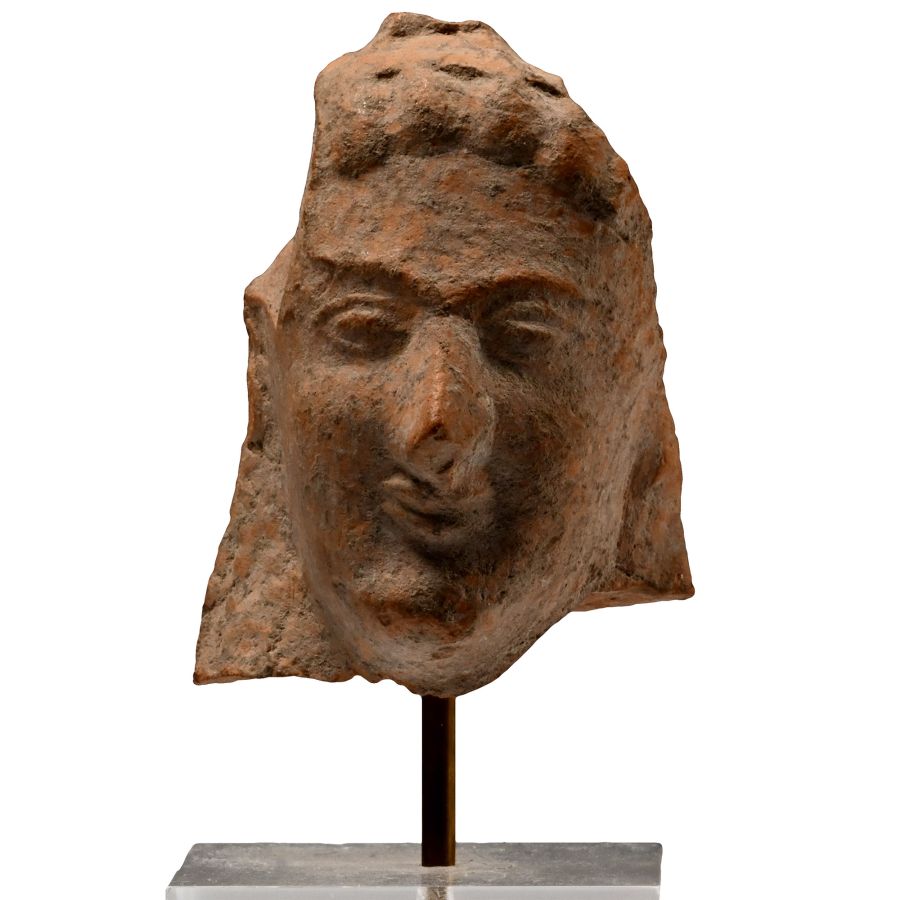
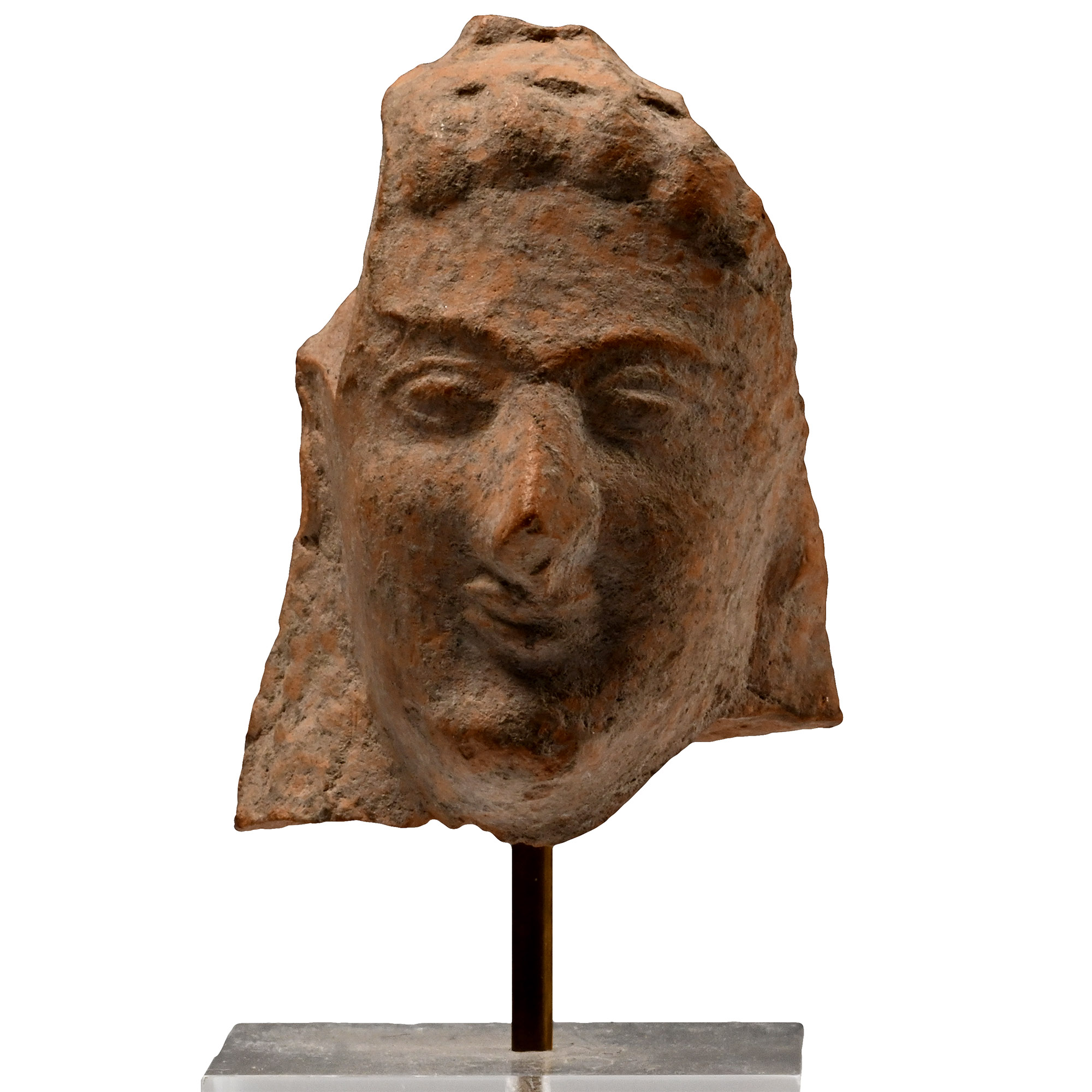
Greek Terracotta Female Protome
6TH-5TH CENTURY B.C.
3 1/8 in. (33 grams total, 79 mm including stand).
Head of a girl with long hair and curls framing the forehead; elongated, oval face with almond-shaped eyes, slender nose and round chin; the lips forming an Archaic smile; mounted on a custom-made display stand.
Provenancewith Herbert A. Cahn, Basel, 1990s.
Accompanied by a copy of an Art Loss Register certificate no.S00075470.
This lot is accompanied by an illustrated lot declaration signed by the Head of the Antiquities Department, Dr Raffaele D'Amato.
Cf. late Dedalic bust in Kingsley, B.M., The Terracottas of the Tarantine Greeks, Malibu, 1976, fig.1.
FootnotesSmall mould-made heads were used for female divinities, sphinxes and sirens, or attached to pottery as ornaments. The figure was wearing a polos, a small, drum-shaped headdress designating in this period a divinity.
CONDITIONTimeLine Auctions follows a vetting process to ensure the authenticity and legality of all items, reinforcing our commitment to integrity and responsible trading. Each antiquity, antique, and coin lot undergoes thorough examination by a vetting committee of at least ten external specialists, professional trade association members, scientists, and archaeologists: Our Vetting Process
AUCTIONS:
TimeLine is a leading auction house specialising in antiquities, ancient art, collectables, natural history, coins, medals, and books. Our auctions offer museums, collectors, historians, and enthusiasts the opportunity to acquire unique and historically significant pieces.
-
.jpg)
Hellenistic Marble Figure of Aphrodite
2nd-1st century B.C.Estimate: £6,000 - 8,000 (‡+bp*)
Opening Bid: £3,000
Carved in the round figure of the goddess standing nude with one hand on her elbow and the other on her pudendum, her hair gathered into a chignon with lateral bunches on the crown and with voids to allow for the suspension of small gold earrings; putto at her left knee; light hand partly absent; remounted on a socle base. 1.2 kg, 32.7 cm
Acquired in the 1992. Private collection, Switzerland, thence by descent. Private collection, since the late 1990s. This lot has been checked against the Interpol Database of stolen works of art and is accompanied by a search certificate number no.12860-241669. This lot has been cleared against the Art Loss Register database, and is accompanied by an illustrated lot declaration signed by the Head of the Antiquities Department, Dr Raffaele D'Amato. -

Greek Terracotta Figure Fragment Group
6th-4th century B.C.Sold for (Inc. bp): £104
Including hollow-formed busts, body fragments and other types. 632 grams total, 3.8-15.5 cm
with H.A.C., Basel, prior 1999. This lot is accompanied by an illustrated lot declaration signed by the Head of the Antiquities Department, Dr Raffaele D'Amato. -
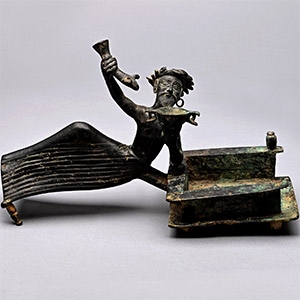
Parthian Bronze Batillum with a Reclining Banqueteer Holding a Skyphos and Rhyton
3rd-1st century B.C.Estimate: £6,000 - 8,000 (+bp*)
Opening Bid: £3,000
Comprising a square base with a raised border and supported by four stub feet, each originally surmounted by poppy-head finials (one now absent); a hollow-formed figure of a banqueteer reclining elegantly with his weight resting on his left elbow, his proper right leg drawn up beneath the folds of a finely pleated robe; in his right hand, a ram’s head rhyton and his left hand cradling a skyphos; his bearded head with a laurel wreath. 1.58 kg, 25 cm
Private New York collection, formed in the 1960s. Acquired on the North American art market, 1990s. with Cahn Auktionen AG, Basel, Switzerland, 13 November 2015, no.84 (CHF 18,000). Accompanied by an academic report by Dr Raffaele D'Amato. This lot has been checked against the Interpol Database of stolen works of art and is accompanied by a search certificate number no.12379-226873. This lot has been cleared against the Art Loss Register database, and is accompanied by an illustrated lot declaration signed by the Head of the Antiquities Department, Dr Raffaele D'Amato.
The composition reflects the iconography of elite banquet culture in the ancient world, capturing both refinement and ritual in a single expressive figure. The Greek 'συμπόσιον' 'symposium' was the later part of a formal banquet which took place after the food had been consumed, when the serving of strong drink was accompanied by music, dancing, poetic composition or recital or earnest conversation. The custom has similarities with the Roman convivium and with the customs of many Mediterranean and Western Asiatic people. The Parthian Empire was culturally diverse and included many Hellenic groups; the Arsacid court adopted a range of aspects of contemporary Greek culture, among them Greek military structures and the Greek language as a lingua franca alongside the Parthian (Iranian) language and Aramaic.
