
Loading, please wait...


LOT 0044
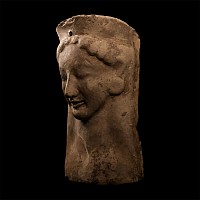
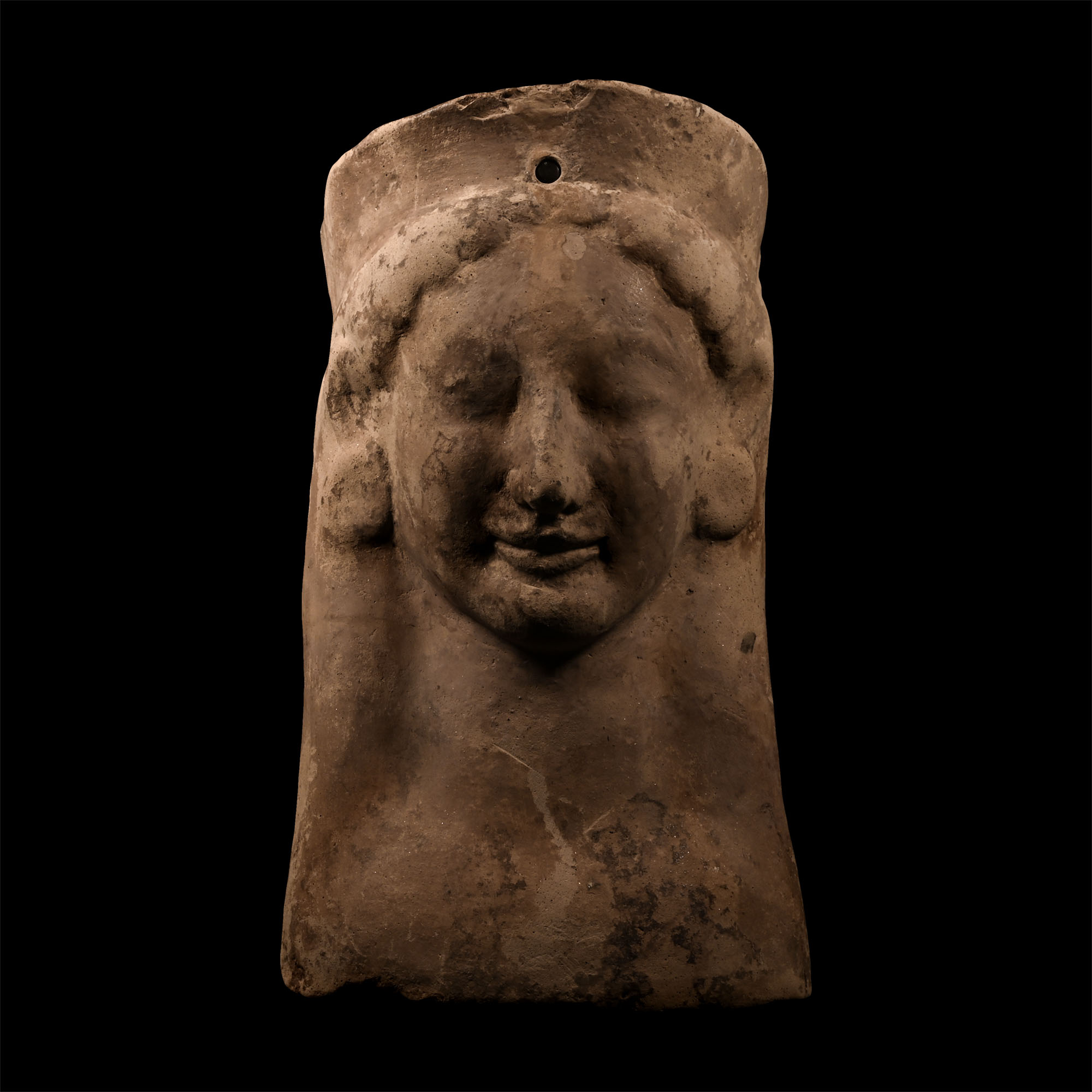
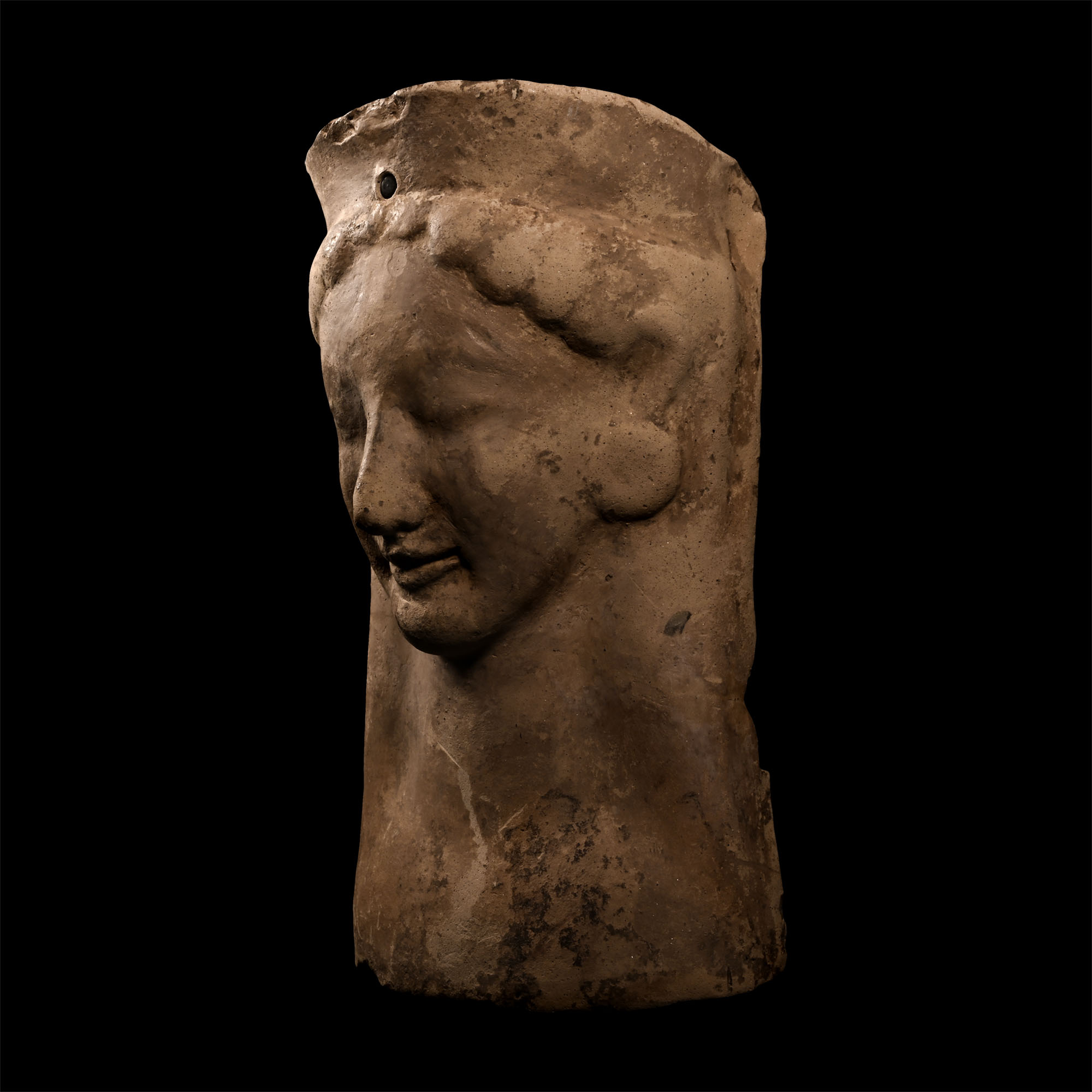
Greek Terracotta Female Protome
EARLY 5TH CENTURY B.C.
7 3/4 in. (606 grams, 19.5 cm).
Mould-made female protome with oval face, graceful nose and typical "archaic" smile; forehead framed by snail-shell curls descending to shoulder-height; with a low polos with a central perforation and large disc earrings.
ProvenanceEx Herbert A. Cahn, Kunst der Antike, Basel, 1997.
with Paul and Vreny Vosseler-Studer, Riehen.
Accompanied by a copy of an Art Loss Register certificate no.S00057826.
This lot has been checked against the Interpol Database of stolen works of art and is accompanied by search certificate number no.12474-228714.
This lot has been cleared against the Art Loss Register database, and is accompanied by an illustrated lot declaration signed by the Head of the Antiquities Department, Dr Raffaele D'Amato.
Cat.9, Griechische und Etruskische Kunstwerke archaischer Zeit, (Basel 1998) no.19.
CONDITIONTimeLine Auctions follows a vetting process to ensure the authenticity and legality of all items, reinforcing our commitment to integrity and responsible trading. Each antiquity, antique, and coin lot undergoes thorough examination by a vetting committee of at least ten external specialists, professional trade association members, scientists, and archaeologists: Our Vetting Process
AUCTIONS:
TimeLine is a leading auction house specialising in antiquities, ancient art, collectables, natural history, coins, medals, and books. Our auctions offer museums, collectors, historians, and enthusiasts the opportunity to acquire unique and historically significant pieces.
LOT 0044
Greek Terracotta Female Protome
Estimate £1,500 - 2,000€1,740 - 2,320 (for guidance only)$2,030 - 2,700 (for guidance only)
-
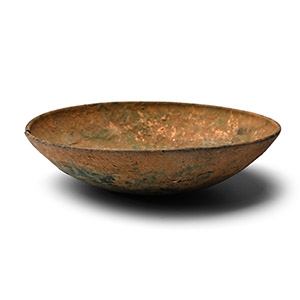
Greek Shallow Bronze Bowl
5th-3rd century B.C.Sold for (Inc. bp): £98
Shallow with chamfered rim, pierced beneath the rim to accept a chain. 152 grams, 14.5 cm
Fine condition.
From a private Netherlands collection; previously in an old collection since before 1980. From the private collection of John Meredith, acquired since the 1990s; thence by descent. This lot is accompanied by an illustrated lot declaration signed by the Head of the Antiquities Department, Dr Raffaele D'Amato. -
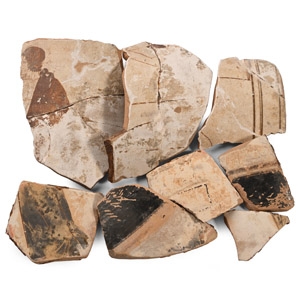
Greek White Ground Pottery Collection
5th century B.C.Sold for (Inc. bp): £312
Comprising various vessel fragments, some with linear decoration, and one important fragment with the image of a Ephebos, covered by a red-brown himation. 88 grams total, 29-75 mm
From a deceased estate, UK. Acquired on the UK art market. This lot is accompanied by an illustrated lot declaration signed by the Head of the Antiquities Department, Dr Raffaele D'Amato.
The fragment with the Ephebos is realised in a style similar to the Thanatos painter. Usually the figure of the young man is opposed to a woman, and the young man is usually holding a fillet. The hairstyle of the young man seems to point to the third quarter of the 5th century B.C. -
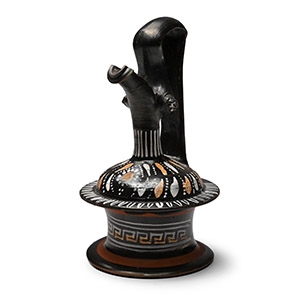
Greek Apulian Blackware Epichysis
South Italic, circa 4th century B.C.Sold for (Inc. bp): £546
With spool base, domed upper face, tall neck with spout and strap handle to the rear; the spool with meander band in cream and white, the upper face with frond pattern in cream and white, parallel vertical strokes to the base of the spout. 183 grams, 14.5 cm
From the private collection of a Canadian gentleman living in Essex, UK, formed since the 1920s-circa 1990. Property of an Essex lady until the late 1990s; thence by descent. From the private collection of an Essex gentleman since the late 1990s. This lot is accompanied by an illustrated lot declaration signed by the Head of the Antiquities Department, Dr Raffaele D'Amato.
