
Loading, please wait...

LOT 0569
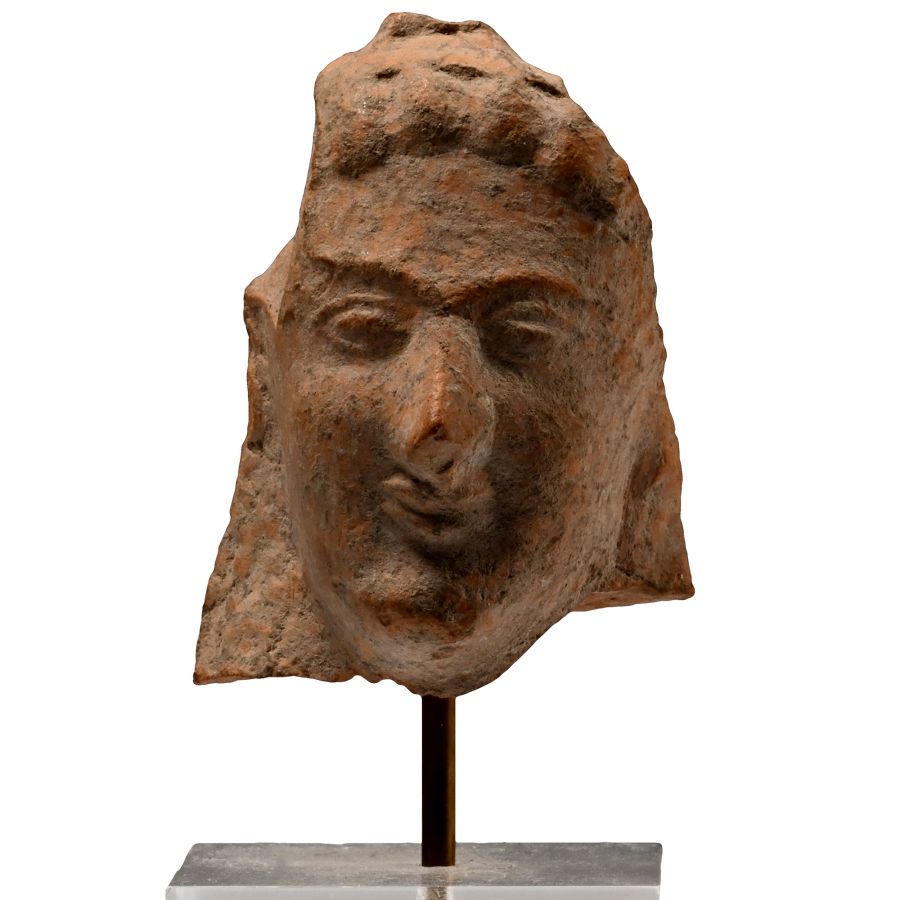
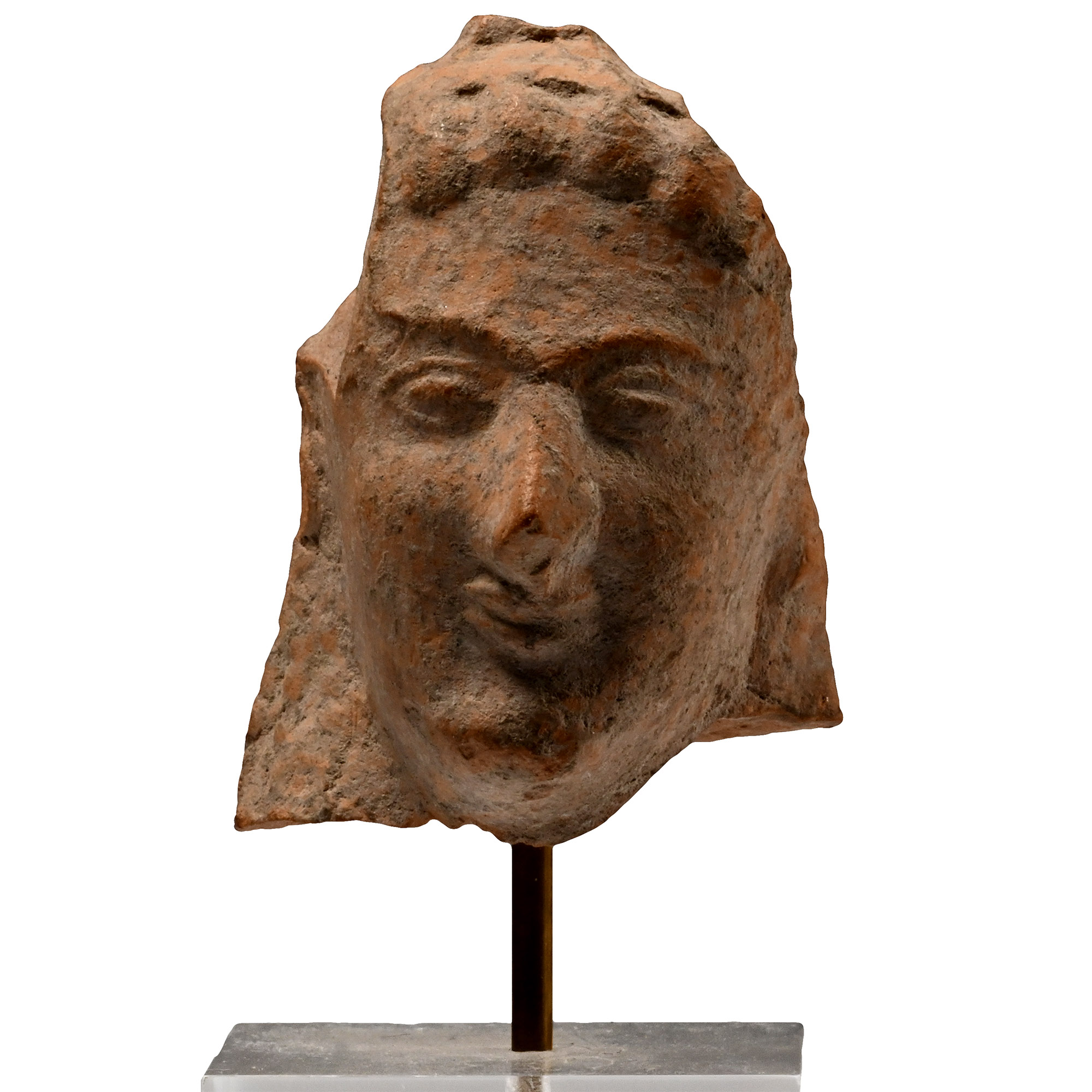
Greek Terracotta Female Protome
6TH-5TH CENTURY B.C.
3 1/8 in. (33 grams total, 79 mm including stand).
Head of a girl with long hair and curls framing the forehead; elongated, oval face with almond-shaped eyes, slender nose and round chin; the lips forming an Archaic smile; mounted on a custom-made display stand.
Provenancewith Herbert A. Cahn, Basle, 1990s.
Accompanied by a copy of an Art Loss Register certificate no.S00075470.
This lot is accompanied by an illustrated lot declaration signed by the Head of the Antiquities Department, Dr Raffaele D’Amato.
Cf. late Dedalic bust in Kingsley, B.M., The Terracottas of the Tarantine Greeks, Malibu, 1976, fig.1.
FootnotesSmall mould-made heads were used for female divinities, sphinxes and sirens, or attached to pottery as plastic ornaments. The figure was wearing a polos, a small, drum-shaped headdress designating in this period a divinity.
CONDITIONTimeLine Auctions follows a vetting process to ensure the authenticity and legality of all items, reinforcing our commitment to integrity and responsible trading. Each antiquity, antique, and coin lot undergoes thorough examination by a vetting committee of at least ten external specialists, professional trade association members, scientists, and archaeologists: Our Vetting Process
AUCTIONS:
TimeLine is a leading auction house specialising in antiquities, ancient art, collectables, natural history, coins, medals, and books. Our auctions offer museums, collectors, historians, and enthusiasts the opportunity to acquire unique and historically significant pieces.
LOT 0569
Greek Terracotta Female Protome
Estimate £400 - 600€460 - 700 (for guidance only)$540 - 810 (for guidance only)
-

Cypriot Ceramic Horse and Rider
Circa 6th century B.C.Sold for (Inc. bp): £715
Representing a warrior wearing a conical helmet, riding a horse with long neck and legs, short mane and tail; repaired. 140 grams, 14.7 cm high
Mr F.D. collection, acquired on the European art market, 1975 to present. This lot is accompanied by an illustrated lot declaration signed by the Head of the Antiquities Department, Dr Raffaele D’Amato.
The most popular animals in Cypriot coroplasts of the 8th and 7th centuries B.C. were horses, with or without riders, with long necks and decorated bodies. It is worth remembering that the horse in this period represented a status symbol for the military aristocracy and that bodies of sacrificed horses have been found in royal tombs. -
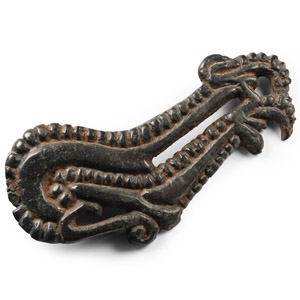
Scythian Bronze Zoomorphic Belt Mount
5th-3rd century B.C.Sold for (Inc. bp): £234
Formed as a quadruped with arched neck and slender body, beaded outline, attachment hole; high-tin bronze. 40.9 grams, 73 mm
Ex German art market, 2000s. Acquired from an EU collector living in London. From the collection of Surrey, UK, gentleman. This lot is accompanied by an illustrated lot declaration signed by the Head of the Antiquities Department, Dr Raffaele D’Amato. -
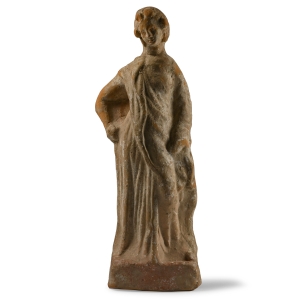
Hellenistic Terracotta Statuette of a Wreathed Young Woman
Late 4th-3rd century B.C.Estimate: £400 - 600 (‡+bp*)
Opening Bid: £180
Standing on a rectangular base, hair divided in regular stripes with voluminous locks, head slightly bowed, the bare arm resting on her right hip; the left leg is visible under the pleated undergarment chiton and slanted himation. 257 grams, 17.5 cm
Traces of white engobe and polychromy in the folds of the robe and on the base. The added chignon lost, otherwise intact.
Ex Belgian art market, 2020. This lot is accompanied by an illustrated lot declaration signed by the Head of the Antiquities Department, Dr Raffaele D’Amato.
The statuette finds comparisons among examples that can be dated between the 4th century and the middle of the 3rd century B.C. It shows some traces of the original polychromy, characterised by strongly contrasting hues, keeping in with the local style.
