
Loading, please wait...
LOT 0633
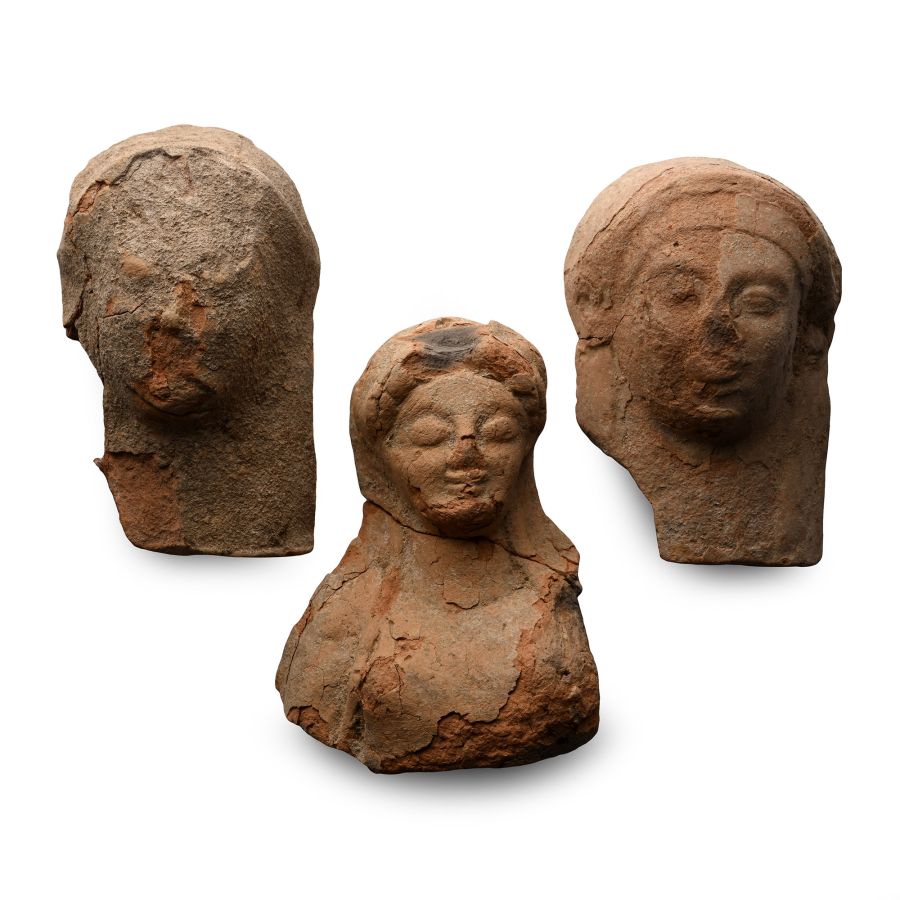
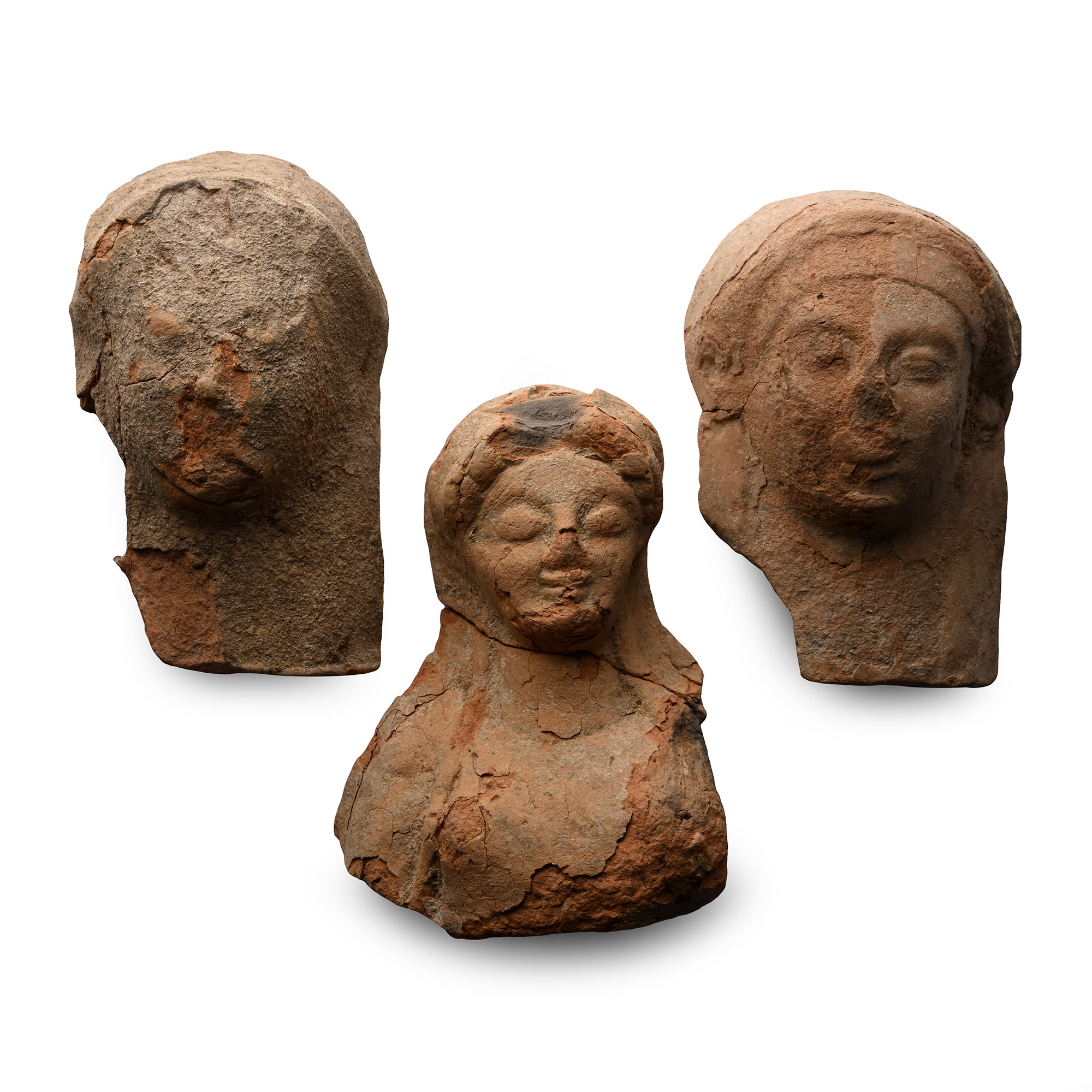
Greek Terracotta Female Protome Group
EARLY 5TH CENTURY B.C.
4 1/8 - 4 1/2 in. (376 grams total, 10.5-11.5 cm).
Each tongue-shaped in plan and hollow to the reverse, female bust in high-relief with palla head-covering. [3, No Reserve]
Provenancewith H.A.C., Basel, prior 1999.
This lot is accompanied by an illustrated lot declaration signed by the Head of the Antiquities Department, Dr Raffaele D'Amato.
Cf. Van Rooijen, G., Goddesses of Akragas, a study of terracotta votive figurines from Sicily, Leiden, 2021, no.163, for similar.
CONDITIONTimeLine Auctions follows a vetting process to ensure the authenticity and legality of all items, reinforcing our commitment to integrity and responsible trading. Each antiquity, antique, and coin lot undergoes thorough examination by a vetting committee of at least ten external specialists, professional trade association members, scientists, and archaeologists: Our Vetting Process
AUCTIONS:
TimeLine is a leading auction house specialising in antiquities, ancient art, collectables, natural history, coins, medals, and books. Our auctions offer museums, collectors, historians, and enthusiasts the opportunity to acquire unique and historically significant pieces.
-
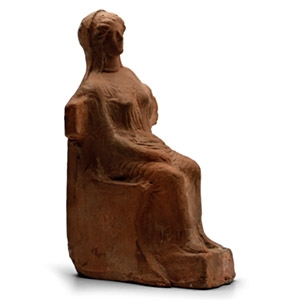
Greek Terracotta Figure of a Seated Goddess
3rd-2nd century B.C.Estimate: £600 - 800 (‡+bp*)
Opening Bid: £300
Hollow-formed figurine of a female wearing a himation seated on a high-backed chair with right hand in her lap and left arm bent over the back of the chair; triangular vent to reverse, hollow underside; Tanagra type. 255 grams, 13.8 cm
Collection of Mr C., Geneva, Switzerland (1936-2016), assembled between 1985 and 2010. This lot is accompanied by an illustrated lot declaration signed by the Head of the Antiquities Department, Dr Raffaele D'Amato. -
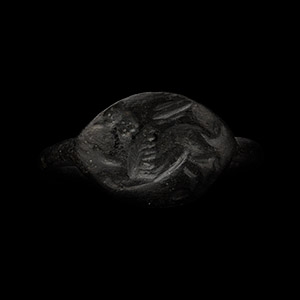
Eastern Greek Bronze Ring with Gryphon
4th-3rd century B.C.Sold for (Inc. bp): £195
Narrow hoop, scaphoid bezel with intaglio advancing gryphon motif. 1.40 grams, 21.04 mm overall, 18.91 mm internal diameter (approximate size British P, USA 7 1/2, Europe 16.23, Japan 15)
Ex German art market, 2000s. Acquired from an EU collector living in London. From the collection of a Surrey, UK, gentleman. This lot is accompanied by an illustrated lot declaration signed by the Head of the Antiquities Department, Dr Raffaele D'Amato. -
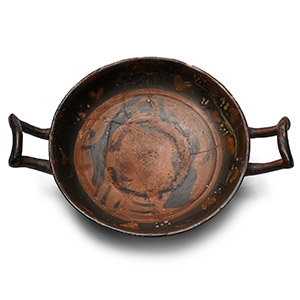
Greek Blackware Kylix
Circa 5th century B.C.Sold for (Inc. bp): £182
Broad and shallow with two strap handles, tondo displaying a wreath of ivy-leaves with tendrils and volutes underneath; the underside of the bowl with acanthus motifs; restored. 215 grams, 21.5 cm wide
Acquired on the UK art market, early 2000s. This lot is accompanied by an illustrated lot declaration signed by the Head of the Antiquities Department, Dr Raffaele D'Amato.
Drinking cups (kylikes and skyphoi), along with mixing bowls and wine coolers (kraters and psykters), wine jars (amphorae), water jars (hydrai), pitchers (oinochoai), and ladles (kyathoi), were essential equipment for drinking parties. The kylix appears to have been the most popular form of drinking cup, probably because it was especially well suited to the Greek custom of eating and drinking while reclining on a couch. These Attic kylikes were usually presented with a stemmed base, a deep bowl and two upturned loop handles, on a concave base.
