
Loading, please wait...
LOT 0603
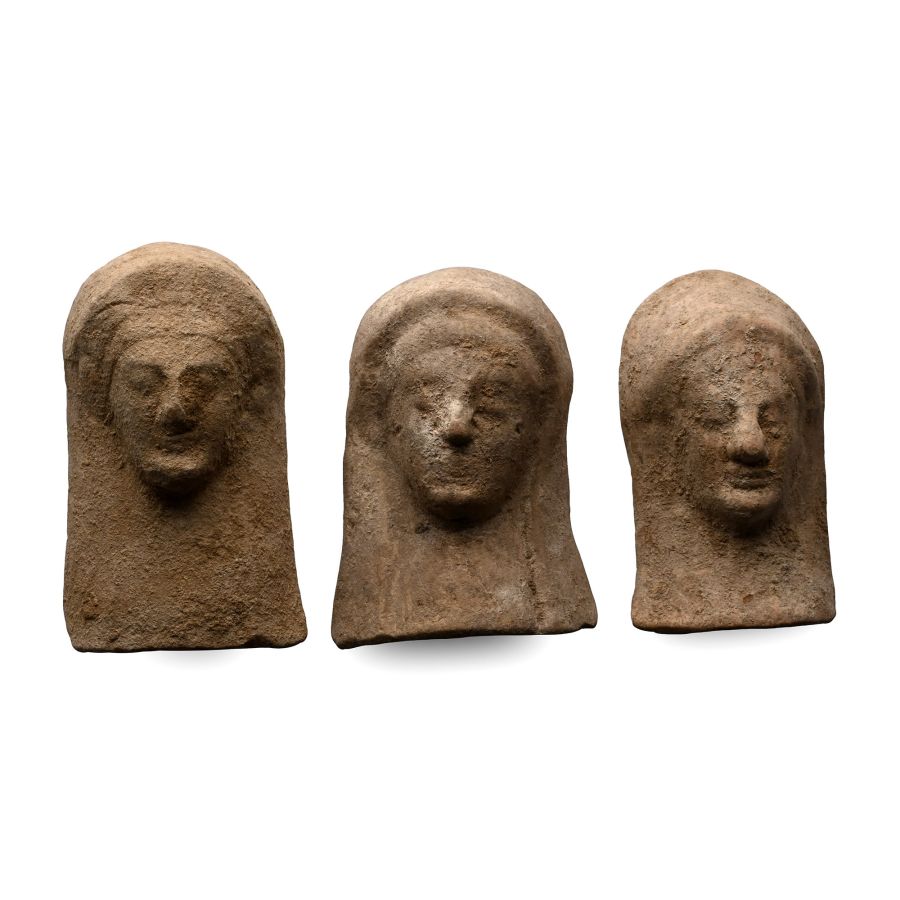
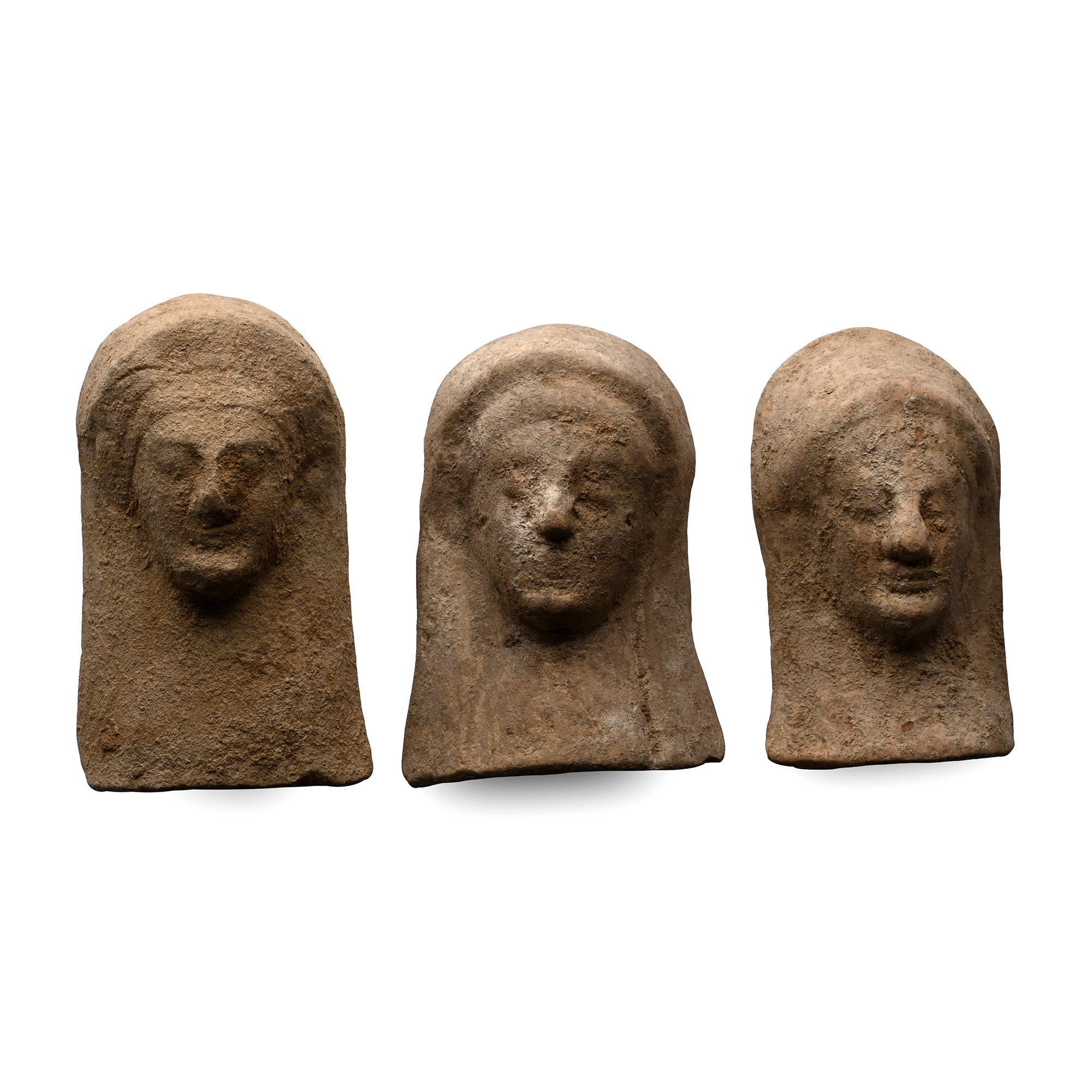
Greek Terracotta Female Protome Group
EARLY 5TH CENTURY B.C.
3 1/8 - 3 3/8 in. (157 grams total, 79-87 mm).
Each tongue-shaped in plan and hollow to the reverse, female bust in high-relief with palla head-covering. [3, No Reserve]
Provenancewith H.A.C., Basel, prior 1999.
This lot is accompanied by an illustrated lot declaration signed by the Head of the Antiquities Department, Dr Raffaele D'Amato.
Cf. Van Rooijen, G., Goddesses of Akragas, a study of terracotta votive figurines from Sicily, Leiden, 2021, no.163, for similar.
CONDITIONTimeLine Auctions follows a vetting process to ensure the authenticity and legality of all items, reinforcing our commitment to integrity and responsible trading. Each antiquity, antique, and coin lot undergoes thorough examination by a vetting committee of at least ten external specialists, professional trade association members, scientists, and archaeologists: Our Vetting Process
AUCTIONS:
TimeLine is a leading auction house specialising in antiquities, ancient art, collectables, natural history, coins, medals, and books. Our auctions offer museums, collectors, historians, and enthusiasts the opportunity to acquire unique and historically significant pieces.
-
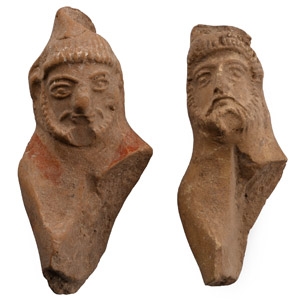
Parthian Terracotta Head Group
3rd century B.C.-2nd century A.D.Sold for (Inc. bp): £124
Each with beard, lentoid eyes and ribbed cap. 49.5 grams total, 65 mm
Fine condition.
From a private Belgian collection; previously part of a private collection formed in Germany in the 1990s. From the private collection of John Meredith, acquired since the 1990s; thence by descent. This lot is accompanied by an illustrated lot declaration signed by the Head of the Antiquities Department, Dr Raffaele D'Amato. -
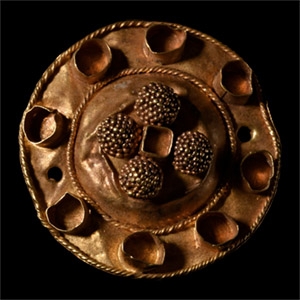
Scythian Gold Floral Mount
5th-3rd century B.C.Estimate: £400 - 600 (+bp*)
Opening Bid: £200
Discoid in plan with central dome, applied filigree trail to rim and base of dome, eight tubular cells to flange, four granulated clusters to boss and central square cell; flange pierced for attachment. 3.97 grams, 29 mm
Ex London, UK, gentleman's collection, 1980-1990s. This lot is accompanied by an illustrated lot declaration signed by the Head of the Antiquities Department, Dr Raffaele D'Amato. -
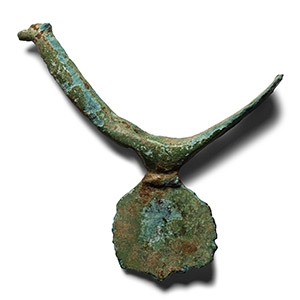
Greek Geometric Votive Gift in the Form of a Bird
8th century B.C.Estimate: £150 - 200 (‡+bp*)
Opening Bid: £50
Comprising a columnar neck with pinched detailing to the head and spatulate tail, discoid plate below. 8.47 grams, 46 mm
with Christie's, London, 25 January 2001, no.263 [Part]. Accompanied by a copy of an Art Loss Register certificate no.S00034403. This lot is accompanied by an illustrated lot declaration signed by the Head of the Antiquities Department, Dr Raffaele D’Amato. This lot is accompanied by an illustrated lot declaration signed by the Head of the Antiquities Department, Dr Raffaele D'Amato.
