
Loading, please wait...
LOT 0576
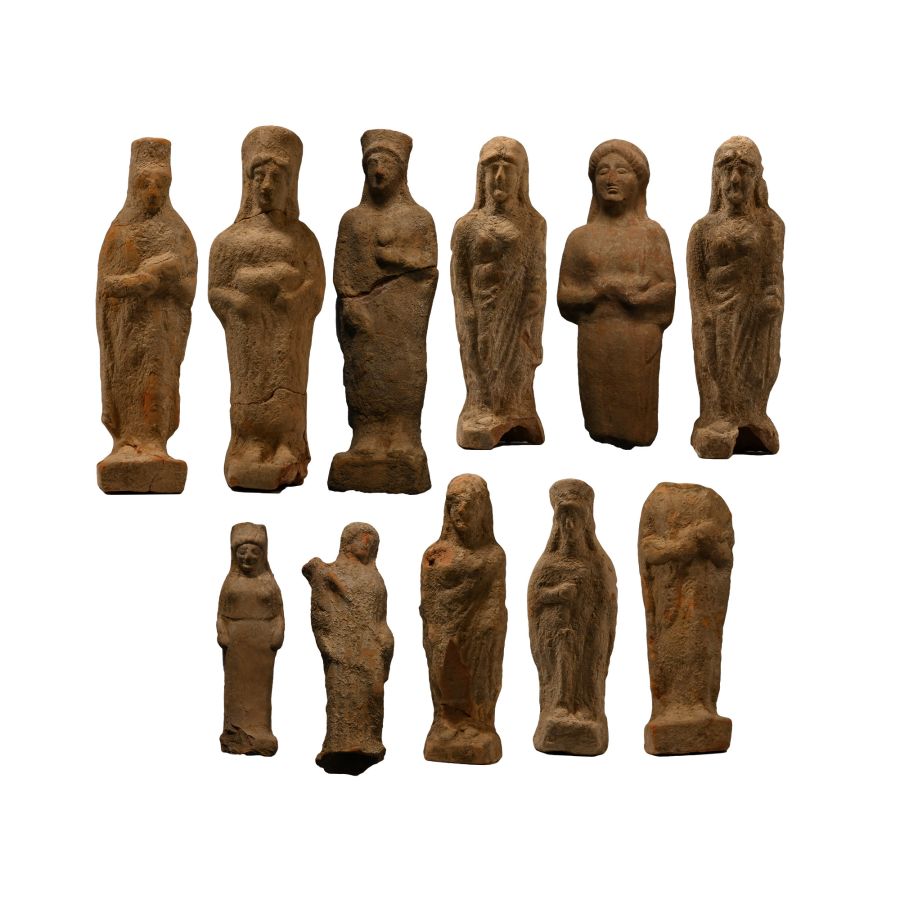
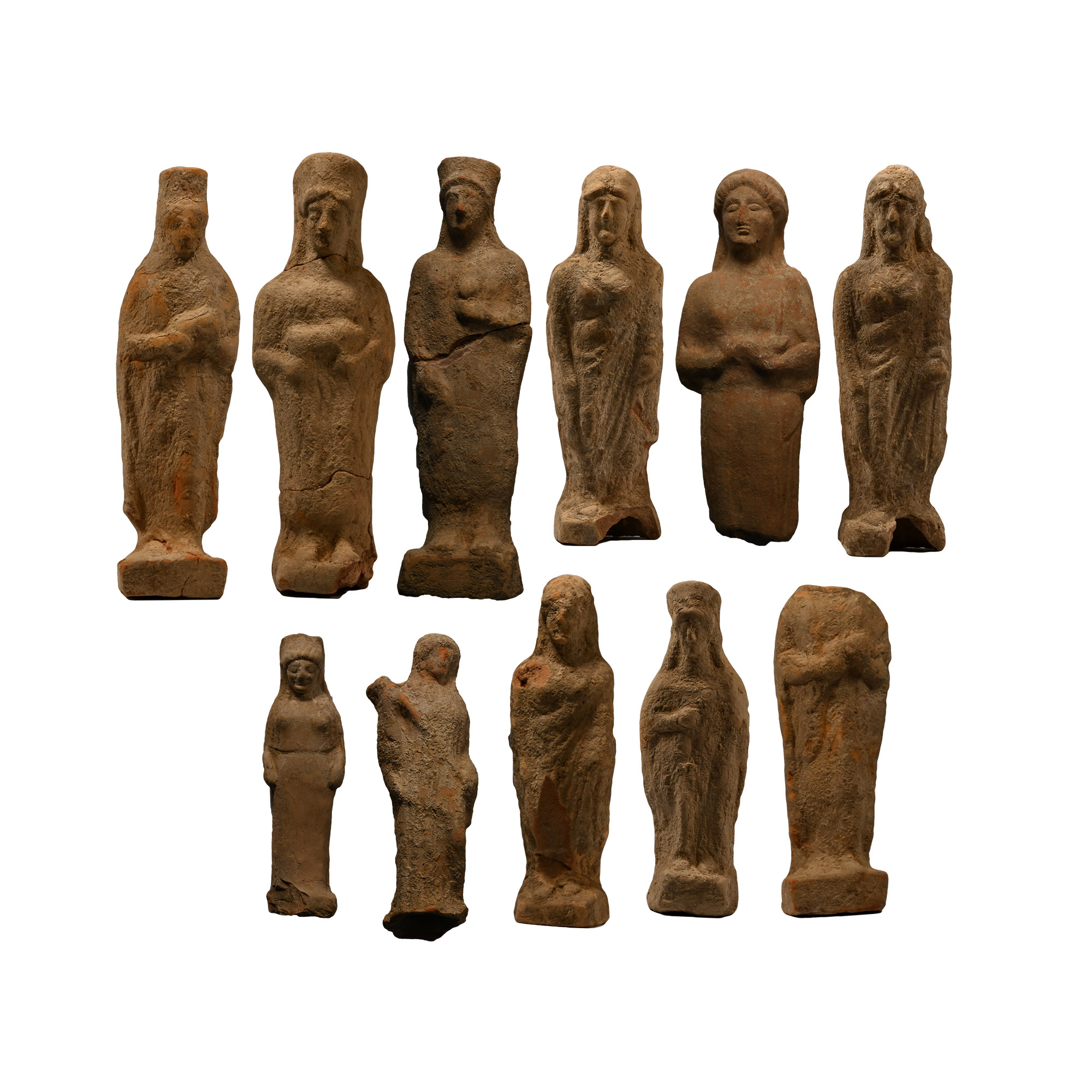
Greek Terracotta Female Figures
6TH-5TH CENTURY B.C.
5 1/4 - 8 1/8 in. (2.39 kg total, 13.5-20.8 cm).
Group of mould-made terracotta figurines comprising: three head protomes with polos or diadem; three standing figures; five seated figures; some with restoration, minor losses. [12]
ProvenanceEx M.M., 1960s.
with Herbert A.Cahn, Basel.
This lot is accompanied by an illustrated lot declaration signed by the Head of the Antiquities Department, Dr Raffaele D’Amato.
TimeLine Auctions follows a vetting process to ensure the authenticity and legality of all items, reinforcing our commitment to integrity and responsible trading. Each antiquity, antique, and coin lot undergoes thorough examination by a vetting committee of at least ten external specialists, professional trade association members, scientists, and archaeologists: Our Vetting Process
AUCTIONS:
TimeLine is a leading auction house specialising in antiquities, ancient art, collectables, natural history, coins, medals, and books. Our auctions offer museums, collectors, historians, and enthusiasts the opportunity to acquire unique and historically significant pieces.
-
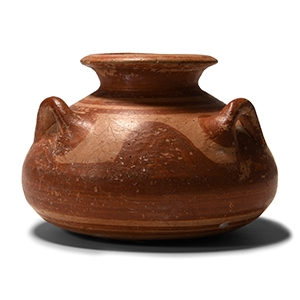
Mycenaean 'Wavy Line' Painted Alabastron
Late Helladic IIIA Period, 14th-13th century B.C.Sold for (Inc. bp): £1,170
Formed with a squat globular body, everted rim and three lug handles to the shoulder; painted reddish-brown over a cream slip with concentric bands and rings to the mouth, neck, shoulder and base, larger solid undulating forms covering the lower body. 70 grams, 69 mm
Acquired from Royal Athena Gallery, 2003. This lot has been checked against the Interpol Database of stolen works of art and is accompanied by search certificate number no.11851-206833. This lot is accompanied by an illustrated lot declaration signed by the Head of the Antiquities Department, Dr Raffaele D’Amato. -
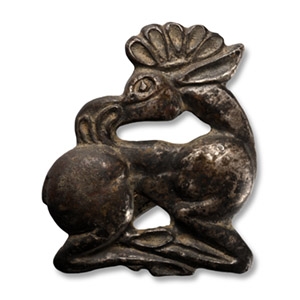
Greek Stag Looking Back Silver Belt Mount
5th-3rd century B.C.Sold for (Inc. bp): £585
Modelled in the half-round with hollowed reverse, stylised stag with radiating antlers on regardant head and curved neck, domed hips and shoulders; sliding loop to reverse. 50.7 grams, 53 mm
Ex German art market, 2000s. Acquired from an EU collector living in London. From the collection of Surrey, UK, gentleman. This lot is accompanied by an illustrated lot declaration signed by the Head of the Antiquities Department, Dr Raffaele D’Amato. -
.jpg)
Very Large Cypriot Terracotta Bichrome Ware Plate
Circa 750-600 B.C.Sold for (Inc. bp): £1,300
Broad disc with basal ring; tondo with outer band of wave-pattern in black and red on cream field, concentric inner bands with geometric and hatched patterns; two holes close to rim; repaired and partly restored with fresh painted extension of the existing design, iron retaining rim with attachment lugs. 6.7 kg, 54 cm
with Bonhams, London, 29 April 2009, no.339. Accompanied by a copy of an Art Loss Register certificate no.S00075782. Accompanied by a copy of the relevant Bonham's catalogue pages. This lot is accompanied by an illustrated lot declaration signed by the Head of the Antiquities Department, Dr Raffaele D’Amato.
