
Loading, please wait...

LOT 0035
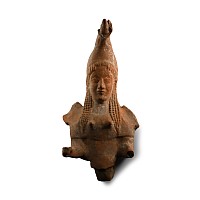
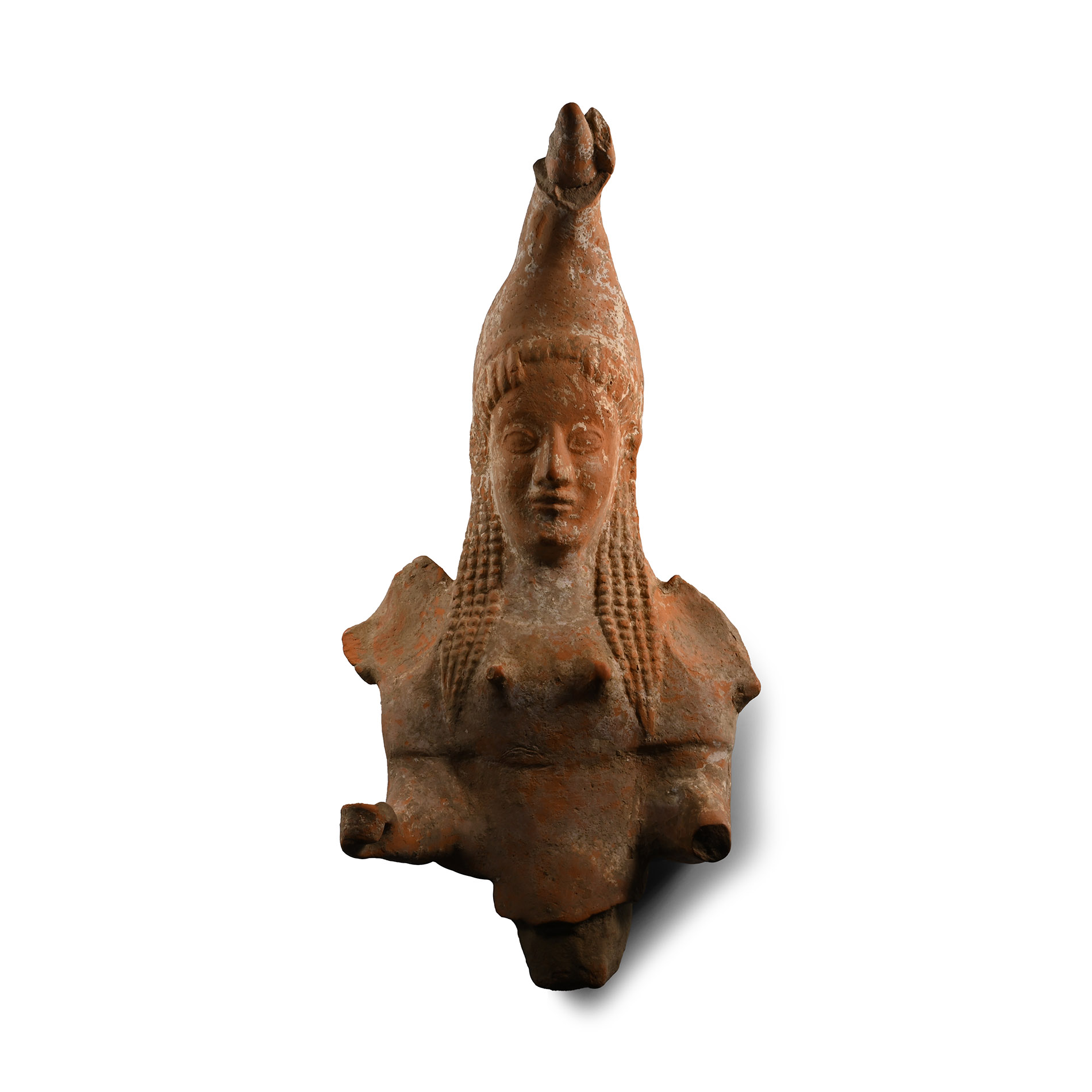
Greek Terracotta Female Antefix
ARCHAIC, 6TH-5TH CENTURY B.C.
10 1/2 in. (411 grams, 26 cm).
Mould-made figure of a female upper body with tall curved and conical headdress, hair dressed in braids falling to her shoulders and flanking her breasts, arms spread and right hand curled to grip a handle or sword-hilt; beneath, a tapering mounting peg for attachment to a roof.
ProvenanceAcquired in the mid 1980s-1990s.
Private collection, Switzerland, thence by descent.
Private collection, since the late 1990s.
Accompanied by an academic report by Dr Raffaele D'Amato.
This lot has been checked against the Interpol Database of stolen works of art and is accompanied by search certificate number no.12207-222349.
This lot has been cleared against the Art Loss Register database, and is accompanied by an illustrated lot declaration signed by the Head of the Antiquities Department, Dr Raffaele D’Amato.
Cf. a more elaborately modelled example in the British Museum under accession no.1884,1011.2.
CONDITIONTimeLine Auctions follows a vetting process to ensure the authenticity and legality of all items, reinforcing our commitment to integrity and responsible trading. Each antiquity, antique, and coin lot undergoes thorough examination by a vetting committee of at least ten external specialists, professional trade association members, scientists, and archaeologists: Our Vetting Process
AUCTIONS:
TimeLine is a leading auction house specialising in antiquities, ancient art, collectables, natural history, coins, medals, and books. Our auctions offer museums, collectors, historians, and enthusiasts the opportunity to acquire unique and historically significant pieces.
LOT 0035
Greek Terracotta Female Antefix
Estimate £2,500 - 3,500€2,900 - 4,060 (for guidance only)$3,380 - 4,730 (for guidance only)
-
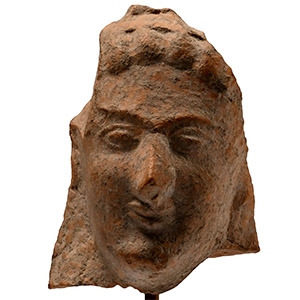
Greek Terracotta Female Protome
6th-5th century B.C.Estimate: £400 - 600 (‡+bp*)
Opening Bid: £180
Head of a girl with long hair and curls framing the forehead; elongated, oval face with almond-shaped eyes, slender nose and round chin; the lips forming an Archaic smile; mounted on a custom-made display stand. 33 grams total, 79 mm including stand
with Herbert A. Cahn, Basle, 1990s. Accompanied by a copy of an Art Loss Register certificate no.S00075470. This lot is accompanied by an illustrated lot declaration signed by the Head of the Antiquities Department, Dr Raffaele D’Amato.
Small mould-made heads were used for female divinities, sphinxes and sirens, or attached to pottery as plastic ornaments. The figure was wearing a polos, a small, drum-shaped headdress designating in this period a divinity. -
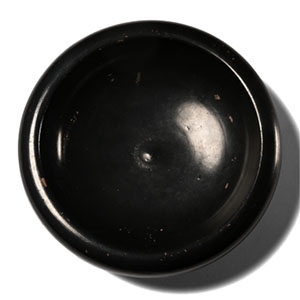
Greek Terracotta Black Glazed Bowl
4th century B.C.Sold for (Inc. bp): £260
With lustrous black glaze with metallic shimmer; shallow bowl on ring foot; fine double drill-hole in the ring for suspension; carinated inner edge, carinated lip to sidewall; base in reserve with two concentric circles in red; old collector's label 'N12960' to underside. 153 grams, 10.1 cm
Private collection Bavaria. By descent, in possession of the family since 1960s-1970s. German art market, 2013. Accompanied by a copy of an Art Loss Register certificate no.S00111200. This lot is accompanied by an illustrated lot declaration signed by the Head of the Antiquities Department, Dr Raffaele D’Amato. -
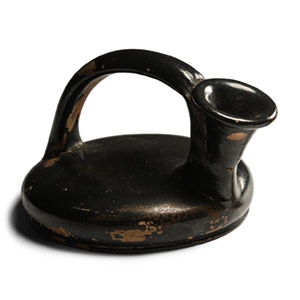
Etruscan Black-Glazed Terracotta Guttos
Circa 400-300 B.C.Sold for (Inc. bp): £715
Discoid in plan with trumpet-shaped spout and strap handle; old collector's label ' Ancient Greek / Exceedingly rare Etruscan Plaque in black ware / BC 400-300 / Excavated at Orvieto / Quite perfect / From Lord Devereaux's coll'n.'. 120 grams, 10.2 cm
Believed to have been part of the Duke of Northumberland collection. From an early 20th century collection with reference no.6/? From a Hampshire, UK, private collection. Accompanied be an early 20th century inked information packet. This lot is accompanied by an illustrated lot declaration signed by the Head of the Antiquities Department, Dr Raffaele D’Amato.
