
Loading, please wait...
LOT 0072
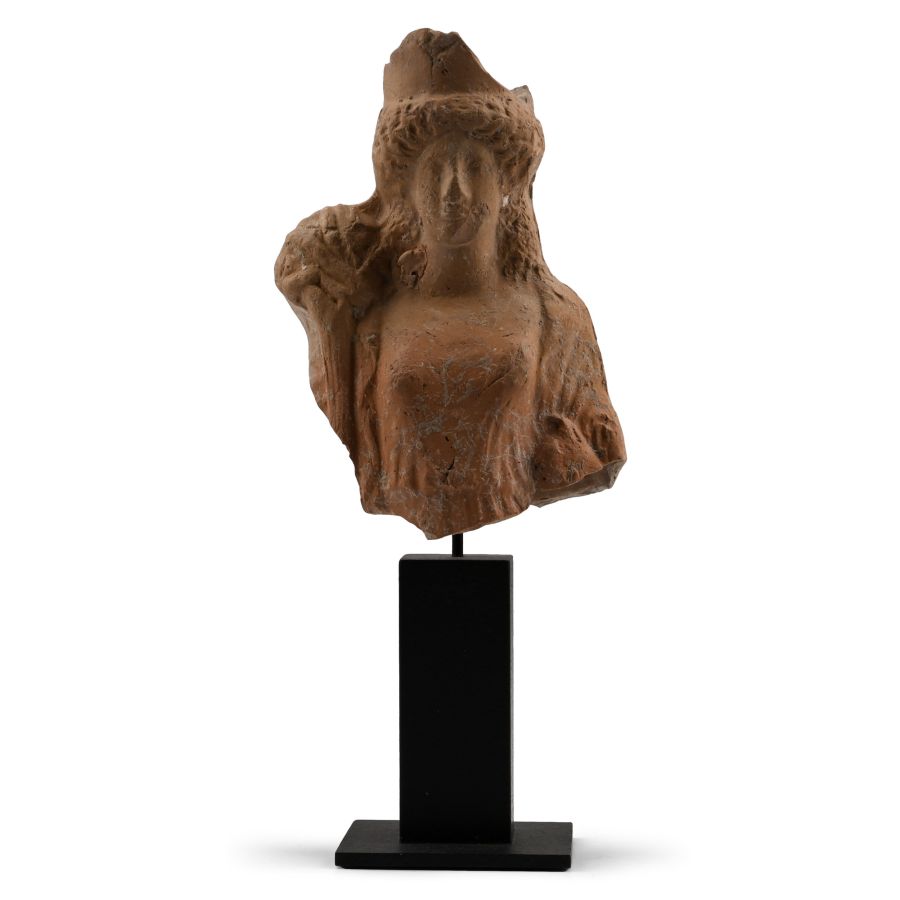
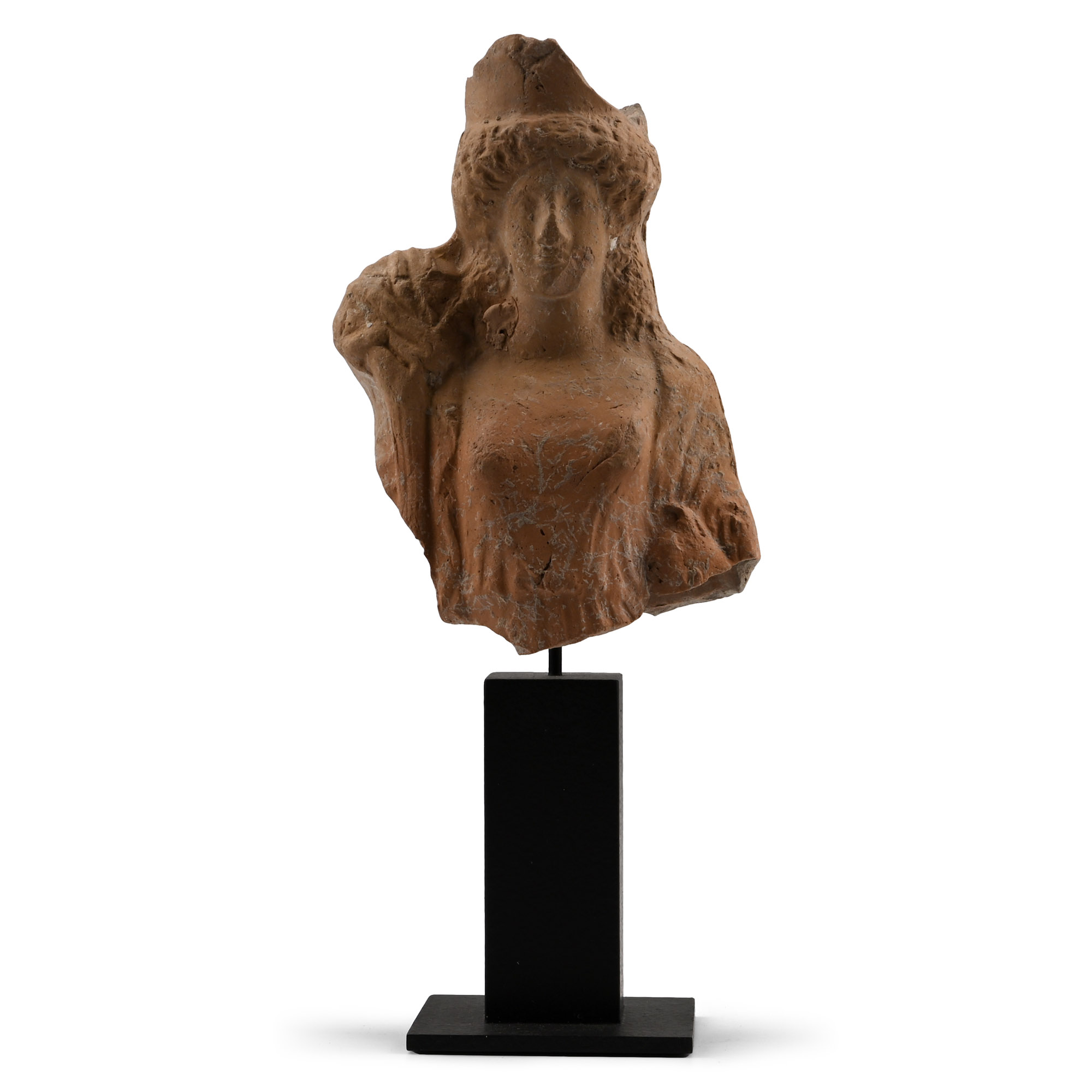
Greek Terracotta Bust of a Goddess
5TH-3RD CENTURY B.C.
7 1/4 in. (155 grams total, 18.5 cm including stand).
Hollow-formed with moulded obverse detailing of a female with copious hair and a thyrsus at her right shoulder.
ProvenanceAcquired on the European art market in the early 2000s.
with Galerie Rhéa, Zurich, Switzerland.
This lot is accompanied by an illustrated lot declaration signed by the Head of the Antiquities Department, Dr Raffaele D'Amato.
TimeLine Auctions follows a vetting process to ensure the authenticity and legality of all items, reinforcing our commitment to integrity and responsible trading. Each antiquity, antique, and coin lot undergoes thorough examination by a vetting committee of at least ten external specialists, professional trade association members, scientists, and archaeologists: Our Vetting Process
AUCTIONS:
TimeLine is a leading auction house specialising in antiquities, ancient art, collectables, natural history, coins, medals, and books. Our auctions offer museums, collectors, historians, and enthusiasts the opportunity to acquire unique and historically significant pieces.
-
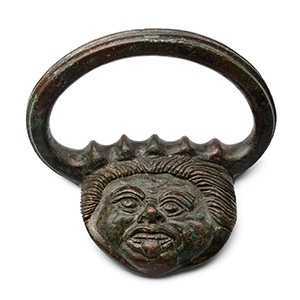
Greek Bronze Vessel Handle with Medusa
4th-3rd century B.C.Sold for (Inc. bp): £572
Comprising an ellipsoid domed plaque with grotesque gorgoneion in high-relief, ribbed loop handle. 257 grams, 94 mm
Acquired on the European art market in the early 2000s. with Galerie Rhéa, Zurich, Switzerland. This lot is accompanied by an illustrated lot declaration signed by the Head of the Antiquities Department, Dr Raffaele D'Amato. -
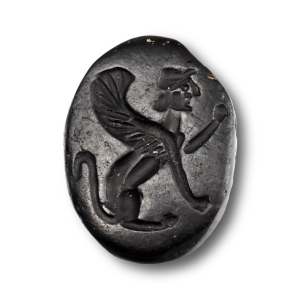
Phoenician Steatite Intaglio with Sphinx
8th-5th century B.C.Estimate: £400 - 600 (‡+bp*)
Opening Bid: £200
Intaglio sphinx sitting with one foreleg raised, arched wing to the back; supplied with a museum-quality impression. 3.52 grams, 17 mm
Acquired in the late 1980s. Private collection, since the late 1990s. This lot is accompanied by an illustrated lot declaration signed by the Head of the Antiquities Department, Dr Raffaele D'Amato. -
.jpg)
Thracian Gold Clad Ribbed Torc with Decorated Terminals
4th-3rd century B.C.Sold for (Inc. bp): £13,000
Penannular in form with round-section shank and flat tongue-shaped terminals; the shank formed as a series of transverse rings modelled to represent granulation; the outer face of each terminal formed with punched detailing to the border and transverse final bars, two rows of punched annulets separated by a median gusset; some modern polishing. 467 grams, 29 cm
Swiss private collection, 1987. Private collection, London. This lot has been checked against the Interpol Database of stolen works of art and is accompanied by a search certificate number no.12859-241328. This lot has been cleared against the Art Loss Register database, and is accompanied by an illustrated lot declaration signed by the Head of the Antiquities Department, Dr Raffaele D'Amato.
