
Loading, please wait...
LOT 0573
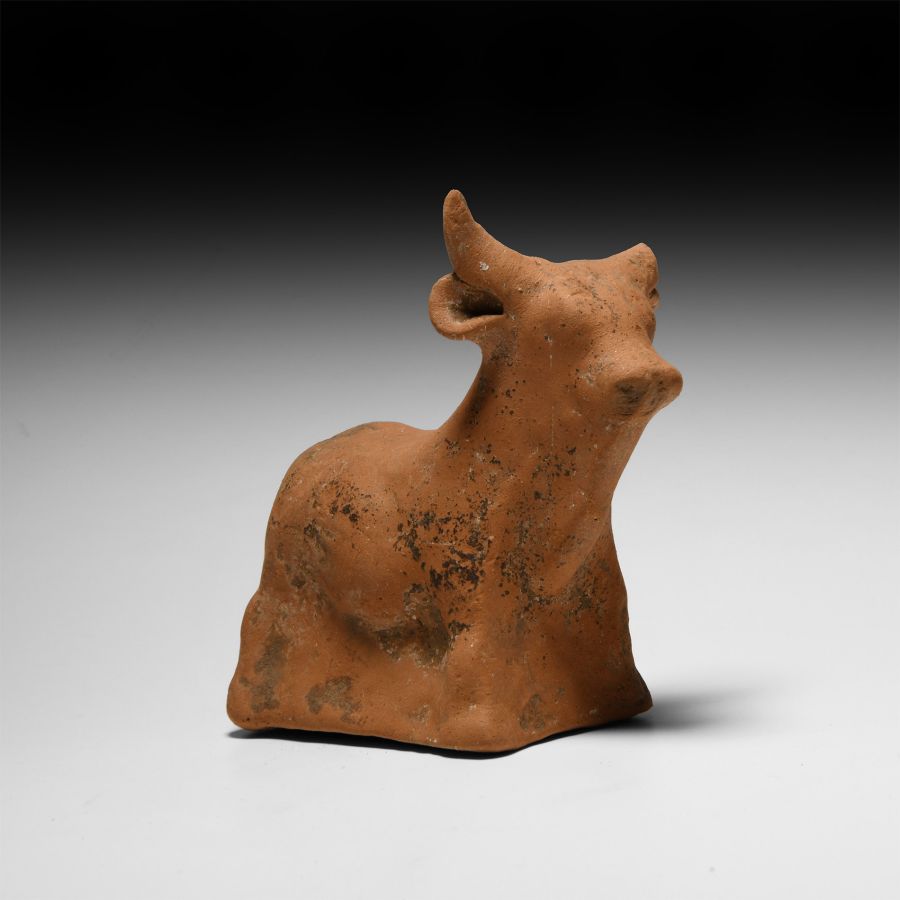
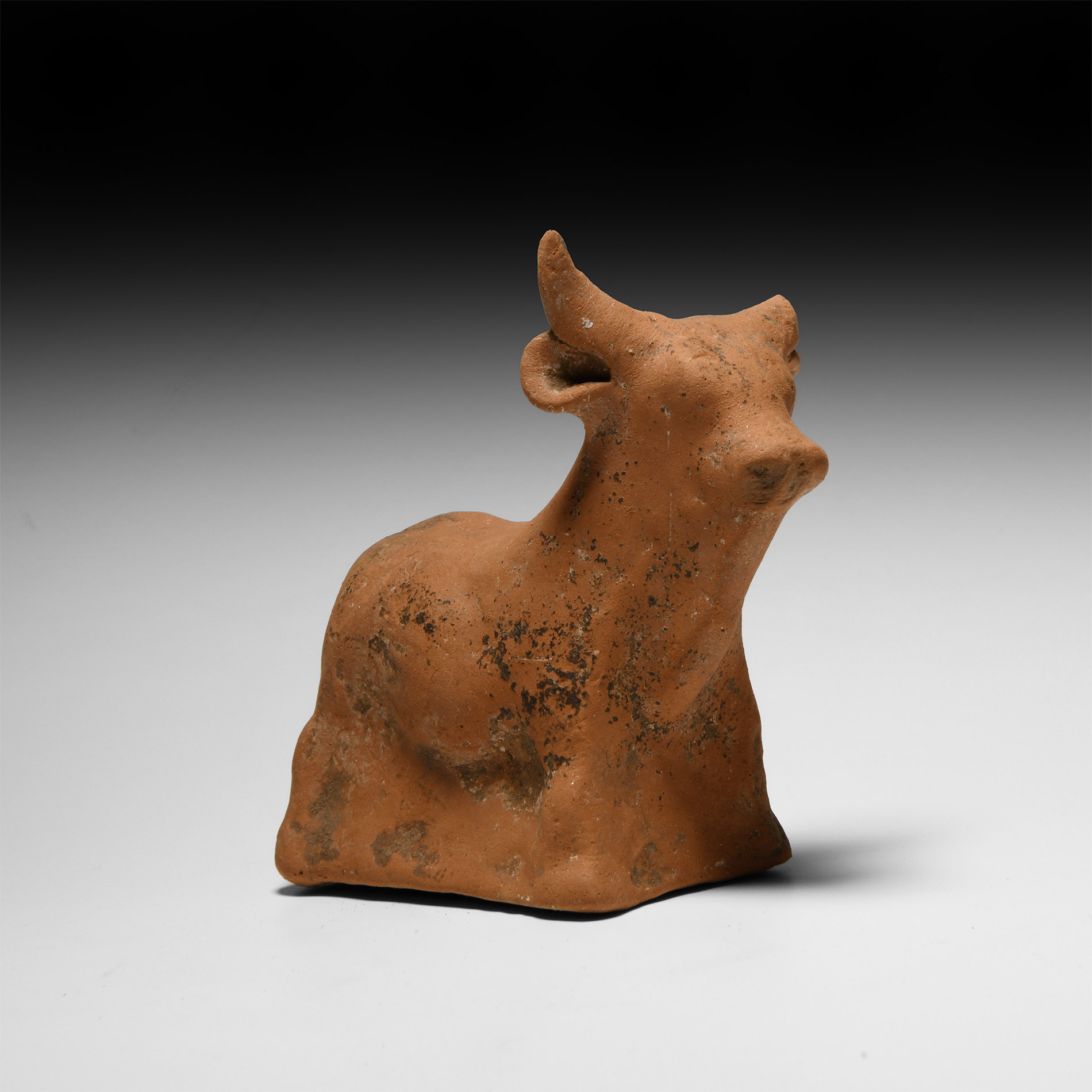
Greek Terracotta Bull Statuette
5TH-3RD CENTURY B.C.
4 3/4 in. (274 grams, 12 cm high).
A terracotta standing bull with stylised anatomical detailing; hollow-formed.
ProvenanceAcquired before 2000.
From the property of a Suffolk, UK, lady.
TimeLine Auctions follows a vetting process to ensure the authenticity and legality of all items, reinforcing our commitment to integrity and responsible trading. Each antiquity, antique, and coin lot undergoes thorough examination by a vetting committee of at least ten external specialists, professional trade association members, scientists, and archaeologists: Our Vetting Process
AUCTIONS:
TimeLine is a leading auction house specialising in antiquities, ancient art, collectables, natural history, coins, medals, and books. Our auctions offer museums, collectors, historians, and enthusiasts the opportunity to acquire unique and historically significant pieces.
-
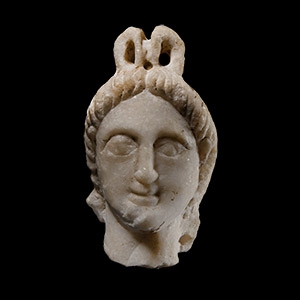
Graeco-Parthian Marble Head of a Divinity
2nd century B.C.-1st century A.D.Estimate: £2,000 - 3,000 (‡+bp*)
Opening Bid: £1,000
An alabaster bust of a goddess with elongated face and large almond-shaped eyes; braided hair with openwork topknot and socket to accept an inset stud, gathered at the rear in a chignon. 639 grams, 11.6 cm
Acquired early 1990s. Ex private American collection; thence by descent. Private Swiss collection since 1998. This lot has been checked against the Interpol Database of stolen works of art and is accompanied by search certificate no.11611-199026.
Several female figures, found in the Parthian graves of Babylonia, are represented in loose attire exhibiting strange headdresses, which give us some notion of the costume of the period. Some of them show a headgear rising into two tall conical peaks, from which a veil is suspended. Nude female figures, probably representing Assyrian Mylitta or Venus, were extremely common during the Parthian period, having been handed down from antiquity. Similar figures are universal throughout the east before the Christian era. -
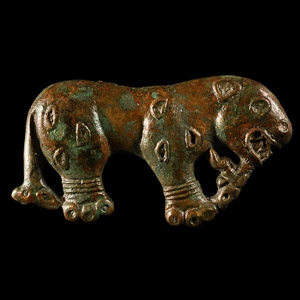
Scythian Leopard Mount
1st millennium B.C.Sold for (Inc. bp): £312
A bronze mount depicting a captured leopard advancing in profile with large teeth carefully depicted; chain attached to the foreleg, fetters on both ankles; mounting lug to the reverse. 38.3 grams, 65 mm
Acquired 1980-2015. Ex Abelita family collection. -
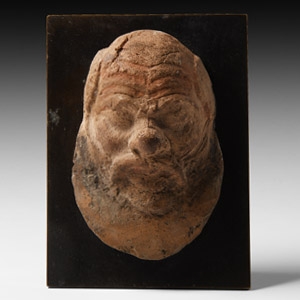
Greek Terracotta Mask of a Satyr
6th-5th century B.C.Sold for (Inc. bp): £312
A terracotta head of a satyr (probably Silenus) with furrowed brow, prominent moustache and crescent beard; traces of pigment to the surface; mounted on a custom-made display stand. 80 grams total, 66 mm high including stand
with Hotel Drouot, Succession of Former collection Colonel W. Mutiaux, Paris, 5 September 1952, lot 66. Ex collection of Eugène Muriaux (1846-1925?). From the collection M.W., Paris, France, 1950-1970. Ex collection of Françoise and Claude Bourelier.
