
Loading, please wait...


LOT 0489
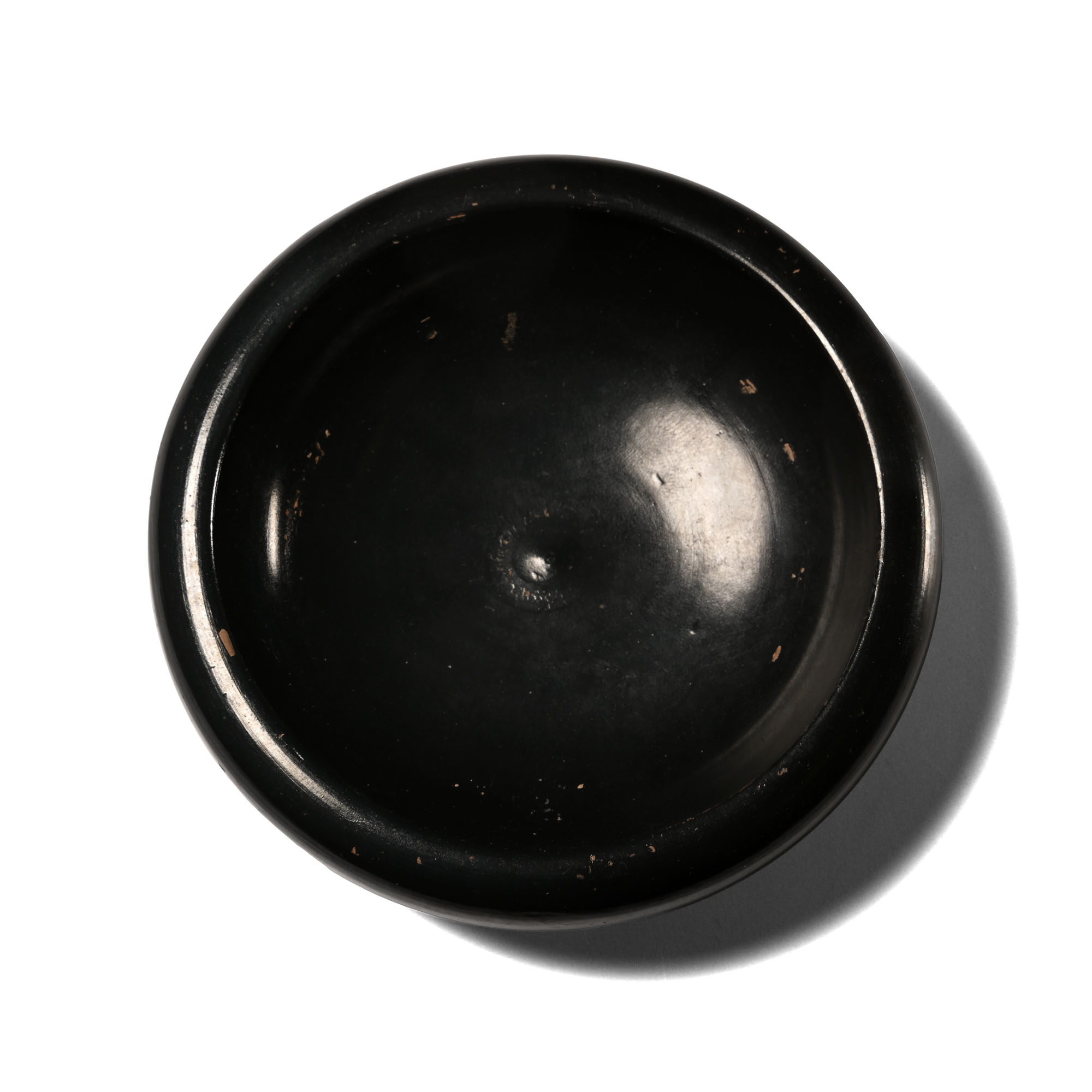
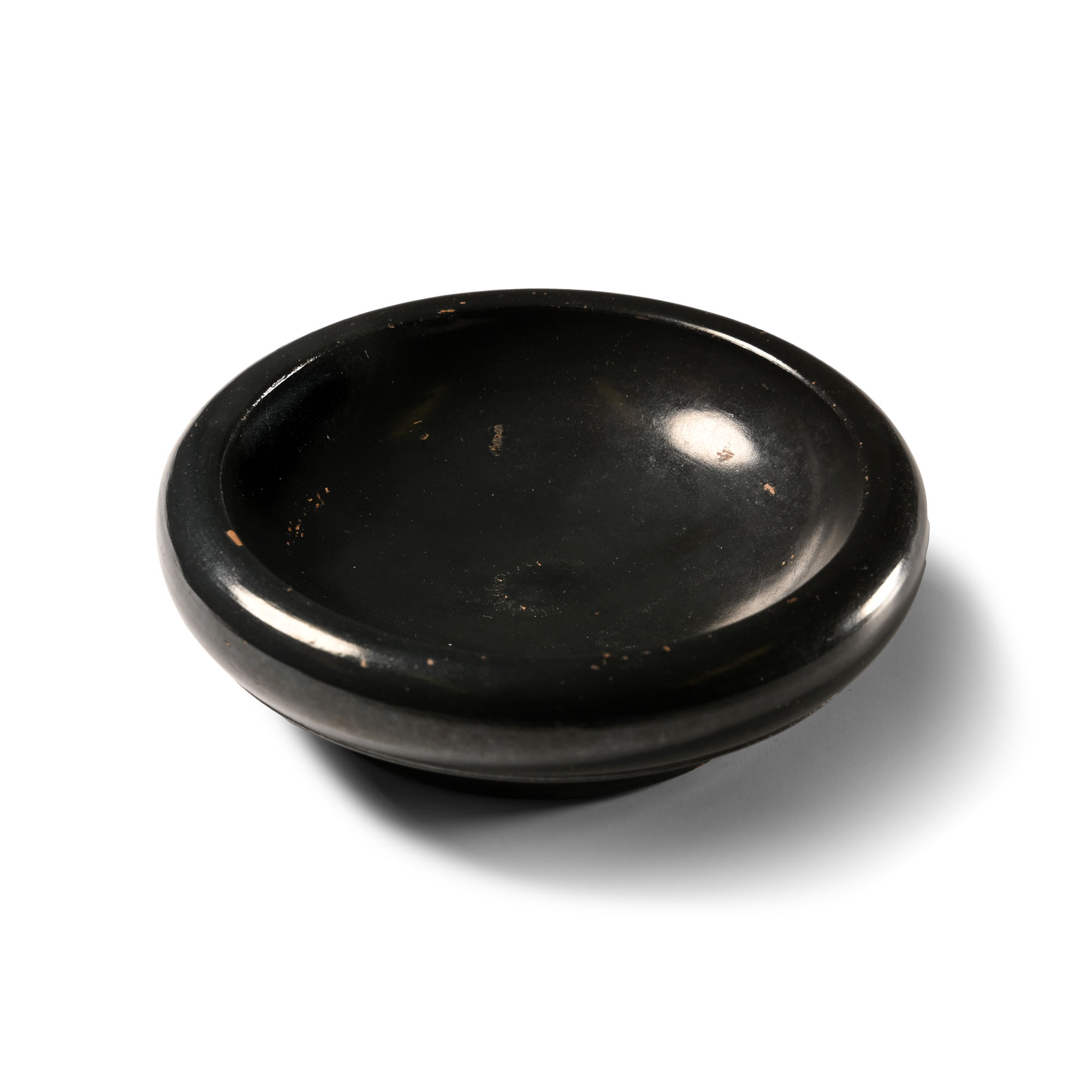
Greek Terracotta Black Glazed Bowl
4TH CENTURY B.C.
4 in. (153 grams, 10.1 cm).
With lustrous black glaze with metallic shimmer; shallow bowl on ring foot; fine double drill-hole in the ring for suspension; carinated inner edge, carinated lip to sidewall; base in reserve with two concentric circles in red; old collector's label 'N12960' to underside.
ProvenancePrivate collection Bavaria.
By descent, in possession of the family since 1960s-1970s.
German art market, 2013.
Accompanied by a copy of an Art Loss Register certificate no.S00111200.
This lot is accompanied by an illustrated lot declaration signed by the Head of the Antiquities Department, Dr Raffaele D’Amato.
TimeLine Auctions follows a vetting process to ensure the authenticity and legality of all items, reinforcing our commitment to integrity and responsible trading. Each antiquity, antique, and coin lot undergoes thorough examination by a vetting committee of at least ten external specialists, professional trade association members, scientists, and archaeologists: Our Vetting Process
AUCTIONS:
TimeLine is a leading auction house specialising in antiquities, ancient art, collectables, natural history, coins, medals, and books. Our auctions offer museums, collectors, historians, and enthusiasts the opportunity to acquire unique and historically significant pieces.
-
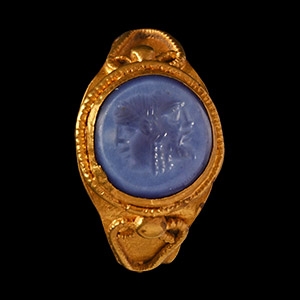
Graeco-Roman Gold Ring with Double Actor's Mask Gemstone
1st century B.C.-1st century A.D. and laterSold for (Inc. bp): £2,340
Hoop with applied filigree and granules to the shoulders, inset later nicolo intaglio with janiform bust of male and female heads. 6.00 grams, 22.90 mm overall, 17.58 mm internal diameter (approximate size British O, USA 7, Europe 14.98, Japan 14)
Ex German art market, 2000s. Acquired from an EU collector living in London. From the collection of Surrey, UK, gentleman. This lot is accompanied by an illustrated lot declaration signed by the Head of the Antiquities Department, Dr Raffaele D’Amato. -
.jpg)
Proto-Corinthian Painted Pottery Cup
7th century B.C.Sold for (Inc. bp): £650
Broadly conical in form, with rounded shoulder, inverted rim, two slender D-shaped handles and gently splayed foot; painted polychrome concentric bands to the inner and outer faces and geometric sunburst pattern around the foot; restored. 70.9 grams, 16 cm
Acquired in the 1960s-1970s. Ex European private collection. This lot is accompanied by an illustrated lot declaration signed by the Head of the Antiquities Department, Dr Raffaele D’Amato.
Cups of this typology, with glaze covering the body and even the foot occur in abundance at most sites where Corinthian imports are found. In Proto-Corinthian (soon after the middle of the seventh century) one finds both linear ornament and a neat, lively figure style, mostly with animals, which is inspired to some extent by eastern motifs such as lions and panthers. -
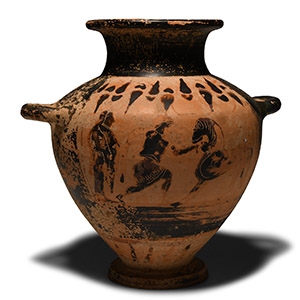
Greek Black Glazed Terracotta Hydria with Figures
6th-5th century B.C.Sold for (Inc. bp): £1,040
Tall vessel with narrow base and loop handles to the shoulder, strap handle to the rear; reserved figural scene of a horse in profile with handler and rider behind. 515 grams, 18.6 cm
Private collection of Mr S.A., Switzerland, 1990, thence by descent. This lot has been checked against the Interpol Database of stolen works of art and is accompanied by search certificate no.12047-211885. This lot is accompanied by an illustrated lot declaration signed by the Head of the Antiquities Department, Dr Raffaele D’Amato.
