
Loading, please wait...
LOT 0096
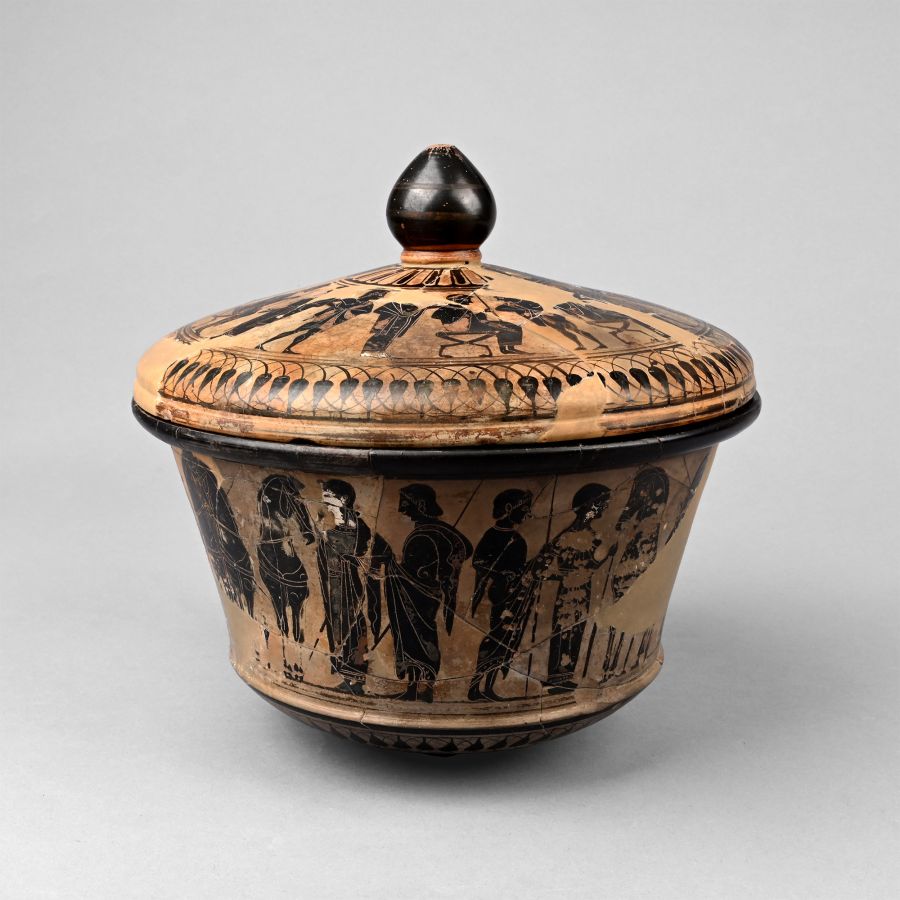
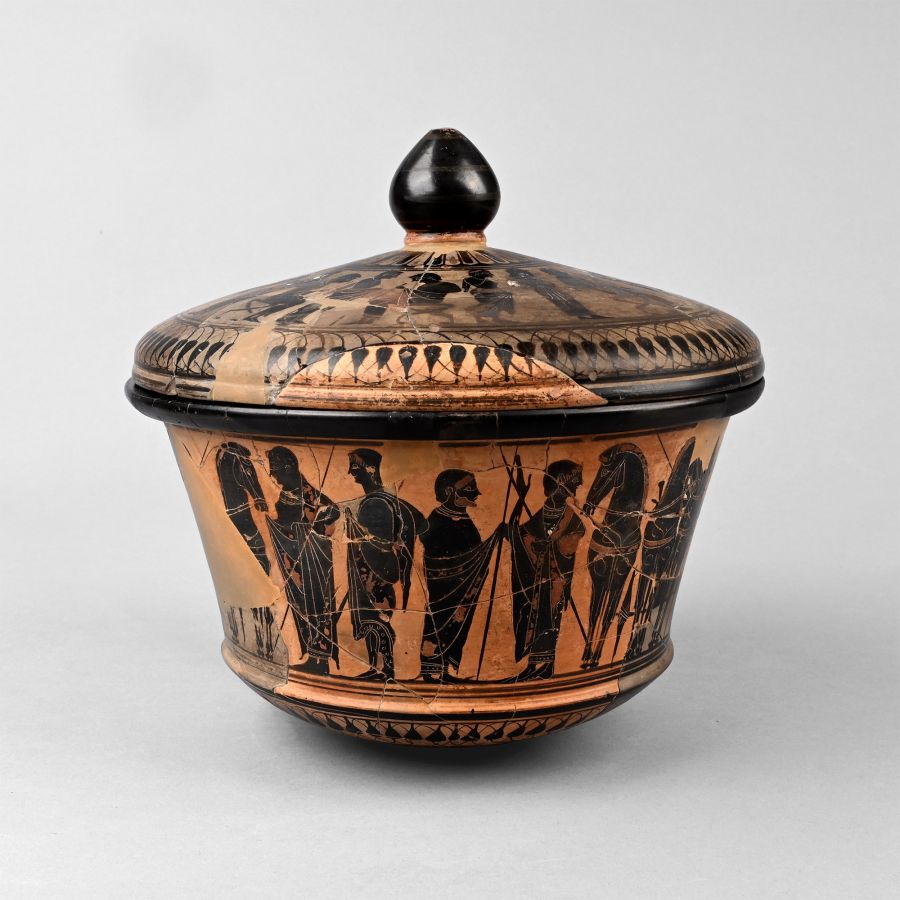
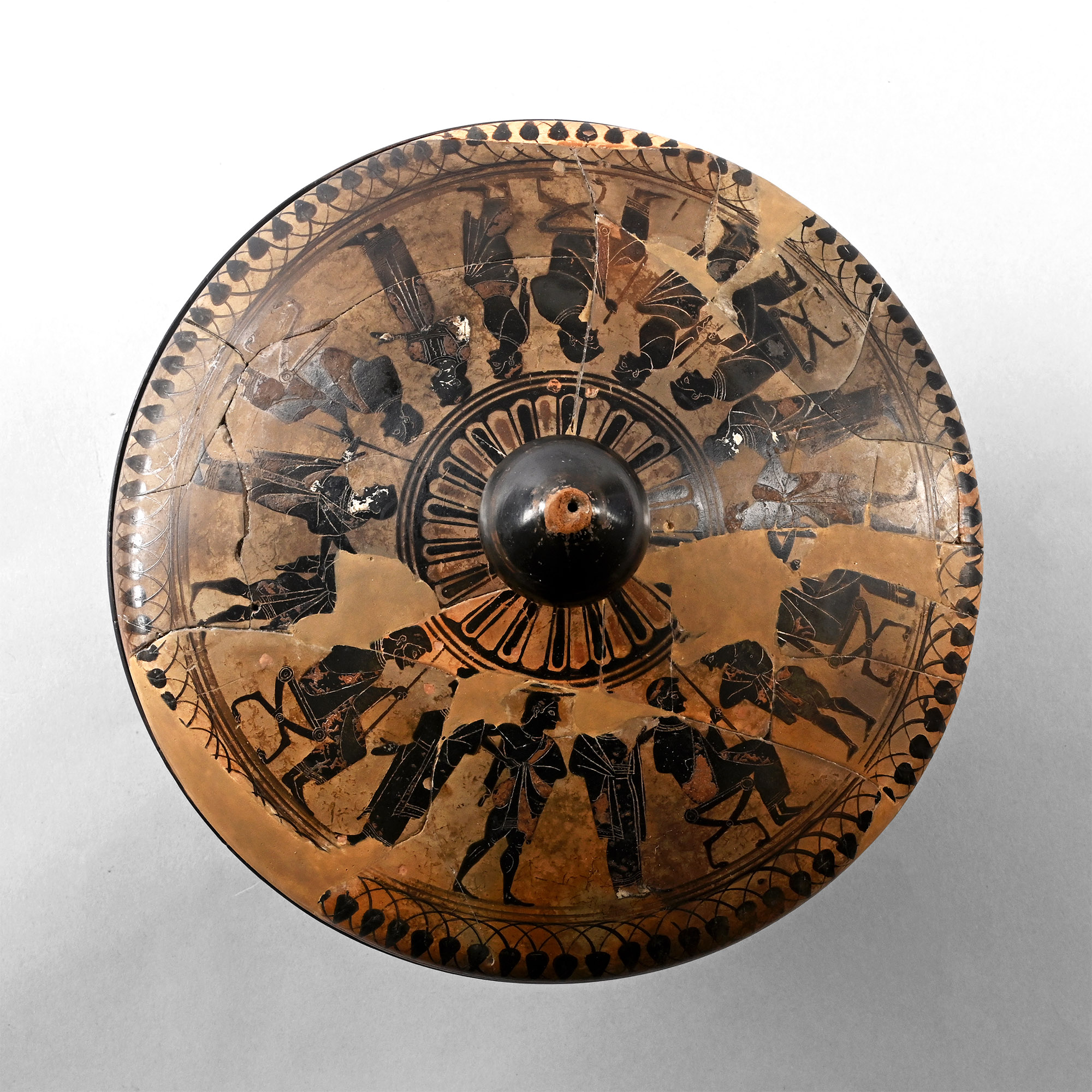
Greek Terracotta Black-Figure Pyxis with Chariot
ATTIC, 6TH CENTURY B.C.
8 7/8 in. (1.05 kg, 22.5 cm wide).
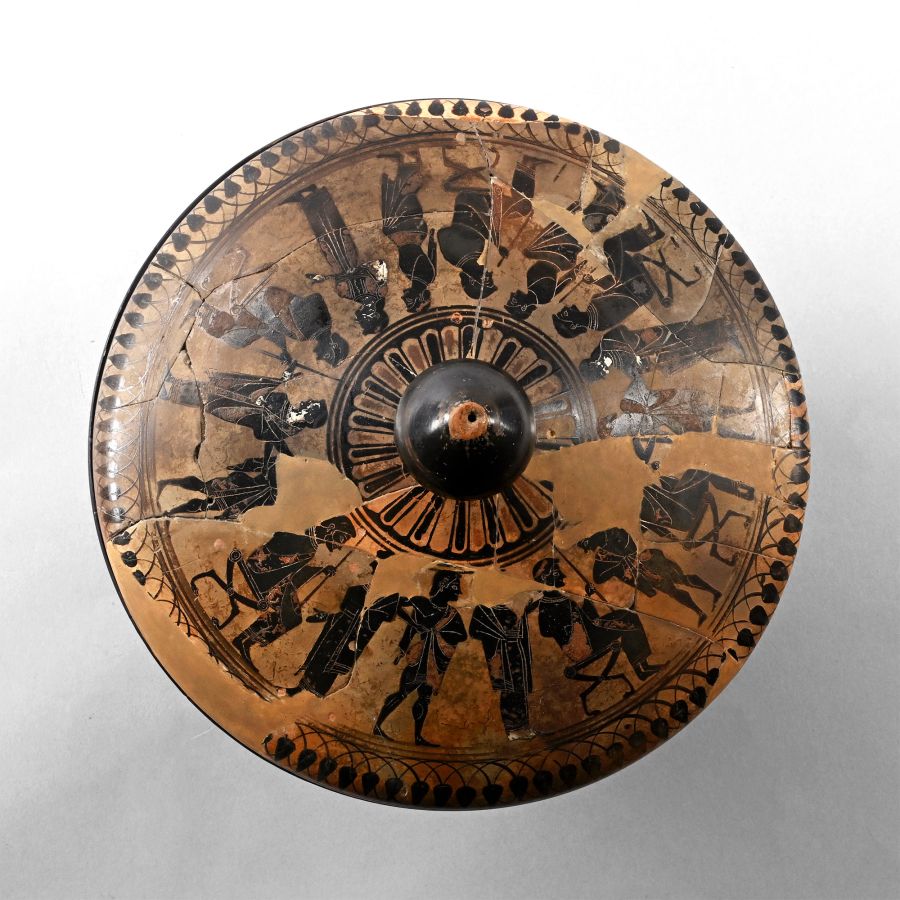
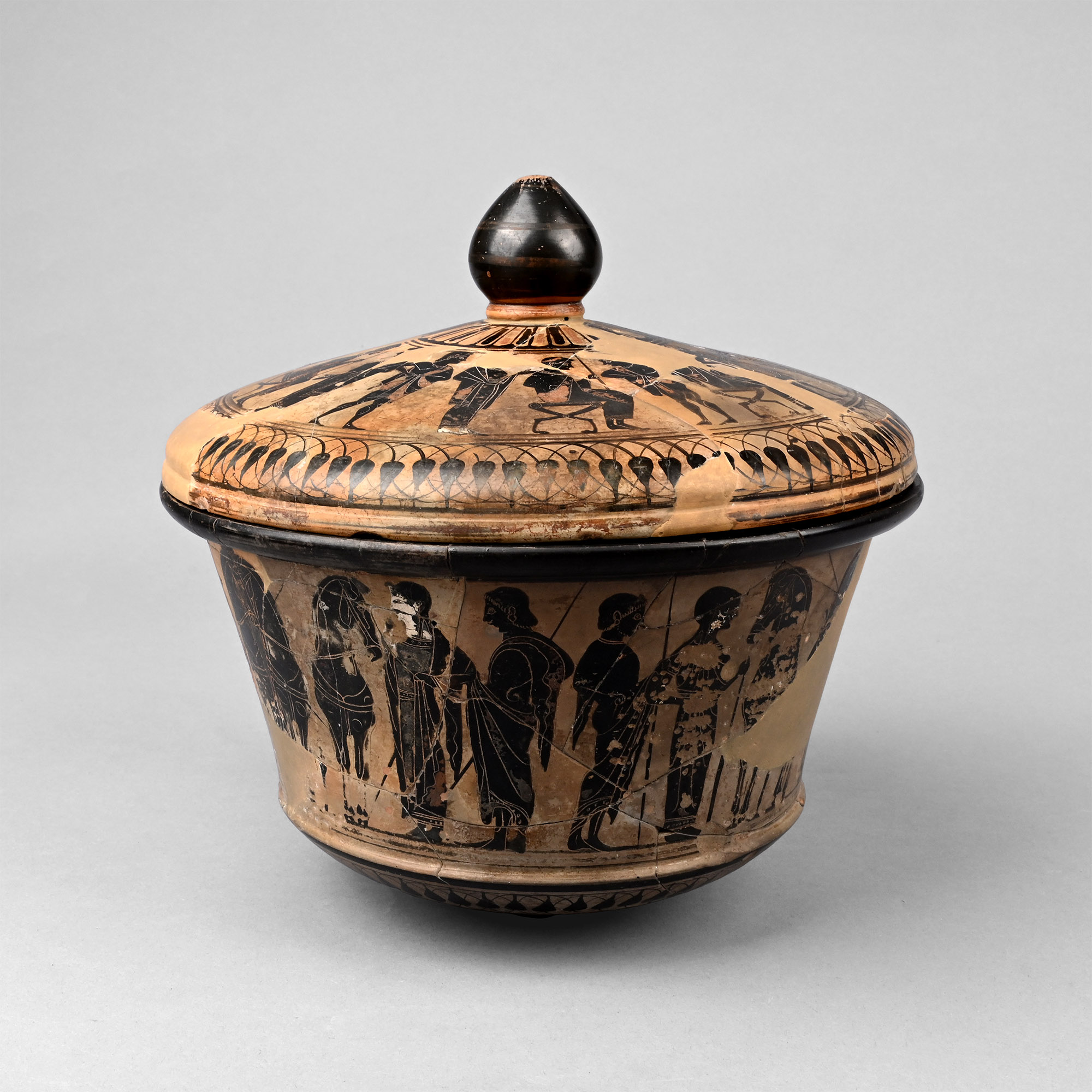
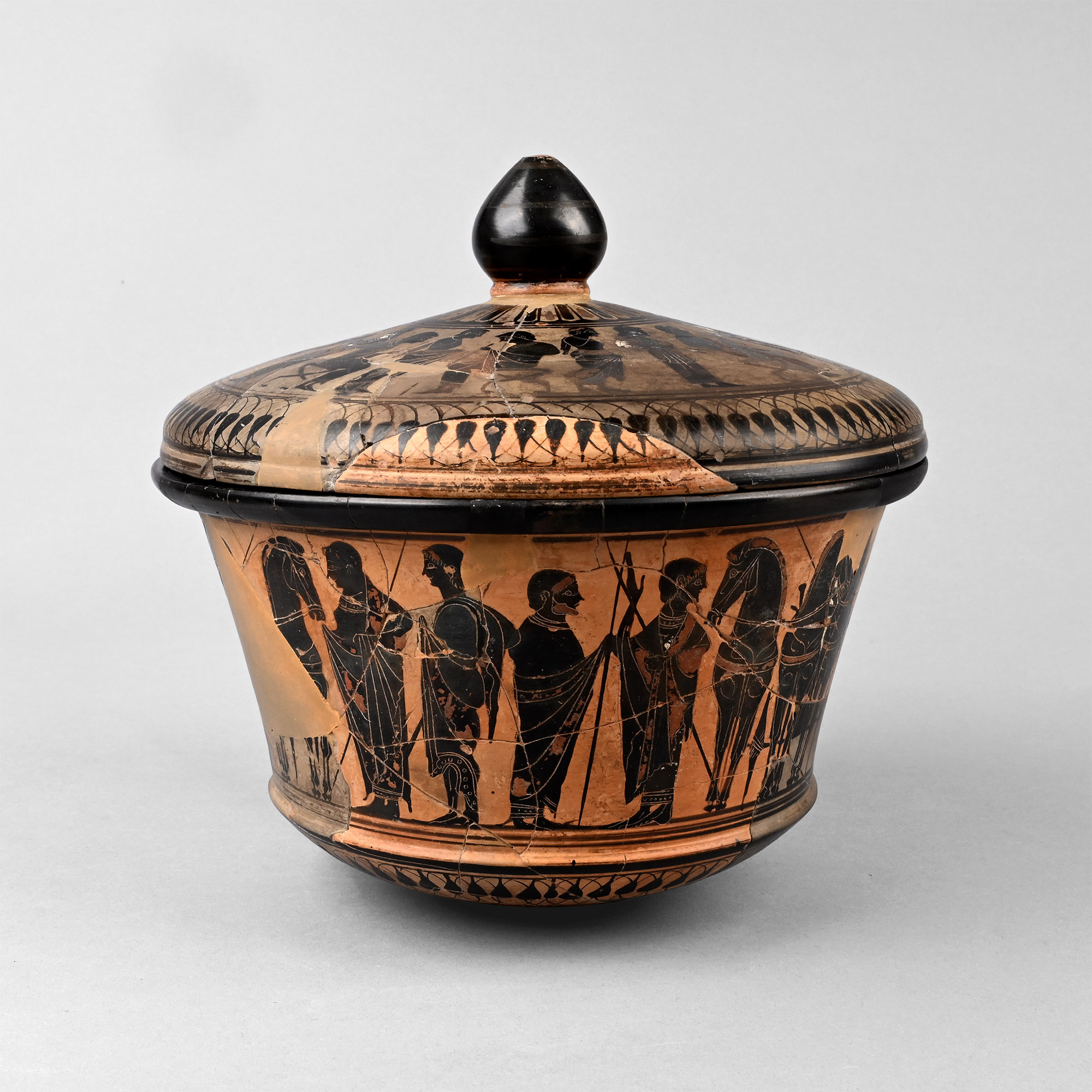
Squat vessel with rounded foot and carination with band of tendrils, flared sidewall with carination and rim, broad watchglass lid with central knop handle; blackware frieze to the sidewall, chariot with four horses and attendants carrying spears and dressed in chitons and himatia, among them a noblewoman dressed in a long chiton and chlamys; lid with frieze of profile figures seated on folding chairs with attendants and petitioners, and two women in long robes within a band of coiled tendrils; repaired and restored.
ProvenancePrivate collection, Mrs Lambelet, Neuchâtel, Switzerland, acquired before 1972; thence by descent.
Private collection N.S., acquired in 2012.
Accompanied by an academic report by Dr Raffaele D'Amato.
This lot has been checked against the Interpol Database of stolen works of art and is accompanied by search certificate number no.13223-249242.
Cf. fragment of a similar pyxis in the British Museum, inv. no. 1886.0401.1289 (Nycostenic pyxis) in Beazley J.D., Payne, H.G., ‘Attic Black Figured fragments from Naukratis,’ in Journal of Hellenic Studies, vol.49, pp.253-272, p.265 no.44.
FootnotesMany Athenian vases depict a quadriga, often in racing or military scenes, but in this case, the depicted scene is peaceful and could be linked to a wedding. The painting can be divided into two scenes: the first, on the sides, is the bridal procession, where the bride is conducted on the chariot which will bring her to the groom, accompanied by her father and relatives; the second, the lid painting, where the nuptial feast is prepared, and the conversing guests are waiting for the bride.
CONDITIONTimeLine Auctions follows a vetting process to ensure the authenticity and legality of all items, reinforcing our commitment to integrity and responsible trading. Each antiquity, antique, and coin lot undergoes thorough examination by a vetting committee of at least ten external specialists, professional trade association members, scientists, and archaeologists: Our Vetting Process
AUCTIONS:
TimeLine is a leading auction house specialising in antiquities, ancient art, collectables, natural history, coins, medals, and books. Our auctions offer museums, collectors, historians, and enthusiasts the opportunity to acquire unique and historically significant pieces.
LOT 0096
Greek Terracotta Black-Figure Pyxis with Chariot
Estimate £40,000 - 60,000€46,400 - 69,600 (for guidance only)$54,000 - 81,000 (for guidance only)
-
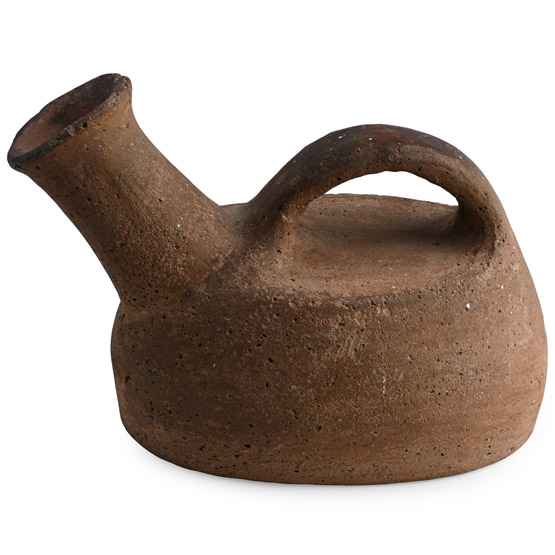
Greek Terracotta Askos
Circa 5th-3rd century B.C.Sold for (Inc. bp): £156
With an arching strap handle and a wide spout with everted rim; ellipsoid in plan with a long flat base. 400 grams, 16 cm wide
From a late Hampshire gentleman's collection, formed from the 1960s.
The askos was an ancient Greek vessel used for pouring small quantities of oily liquids, used as an ointment container or to fill oil lamps. The modern name for this vessel is conventional; it was originally used for animal-skin wine bottles, as often seen on Dionysian-themed vase paintings, and is used in modern times to designate this vessel shape based on some morphological similarity. -
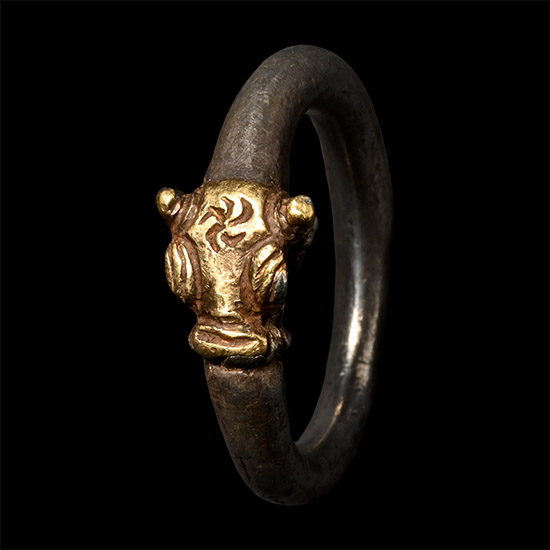
Greek Silver-Gilt Bull Ring
Circa 6th-4th century B.C.Sold for (Inc. bp): £715
Annular in form with plaque formed as a parcel-gilt bucranium with solar motif to the brow. 11.25 grams, 27.39 mm overall, 19.38 mm internal diameter (approximate size British P 1/2, USA 7 3/4, Europe 16.86, Japan 16)
From the private collection of a European gentleman (1942-2024), formed since the 1970s. -
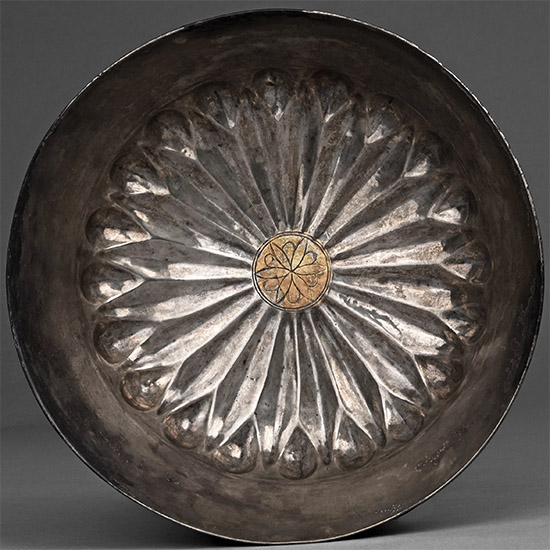
Greek Silver-Gilt Phiale with Petals and Lozenges
6th-4th century B.C.Sold for (Inc. bp): £4,680
Broad lotiform bowl with flared rim, flat mesomphalos with incised rosette and gilt finish. 412 grams, 18.5 cm
Private collection, London, UK. with Gorny and Mosch, 19 June 2013, no.34. Private collection, London, UK. This lot has been checked against the Interpol Database of stolen works of art and is accompanied by search certificate number no.13280-253528.
