
Loading, please wait...
LOT 0095
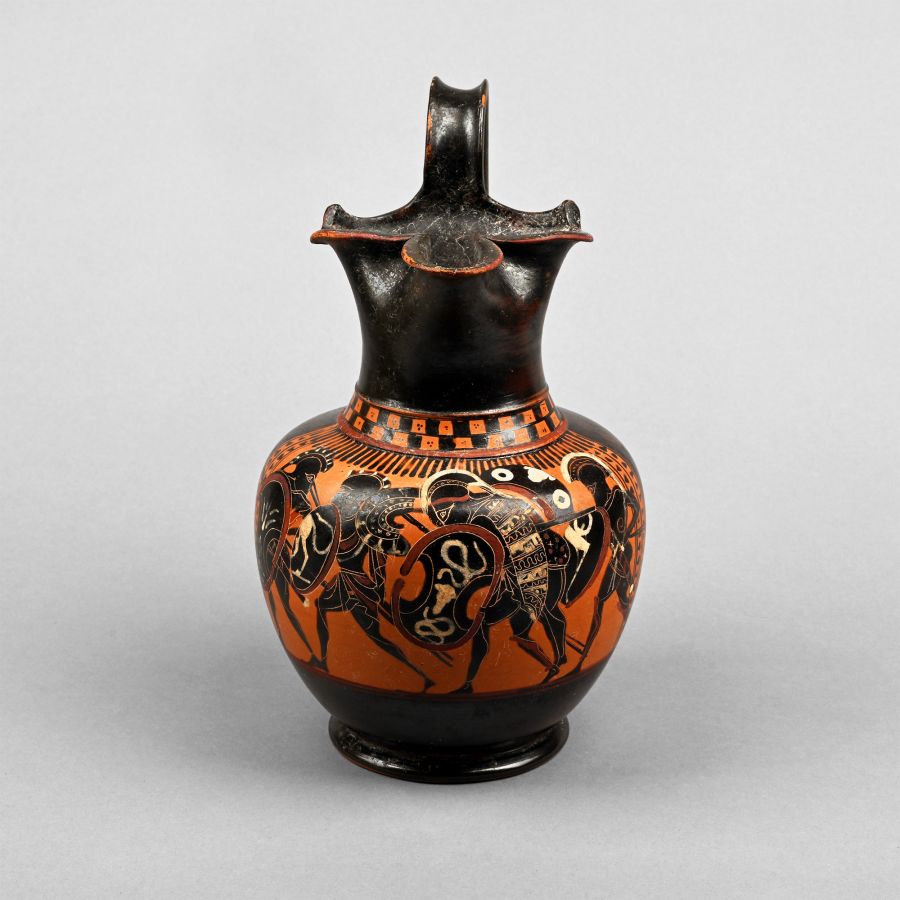
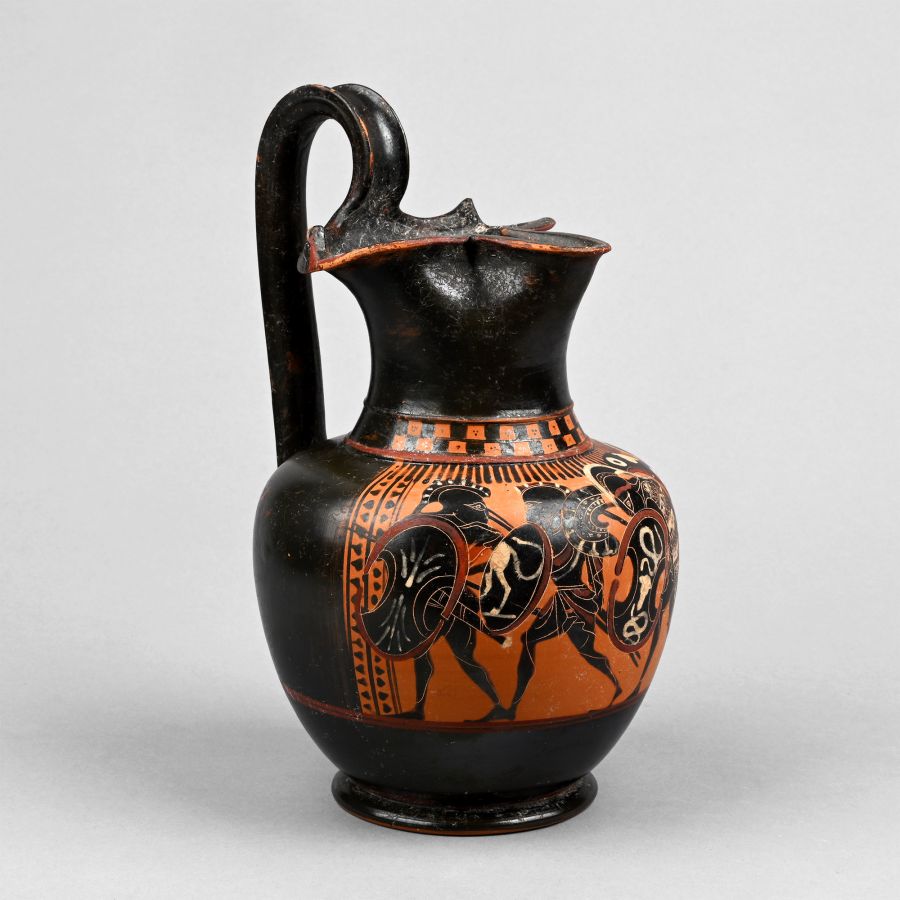
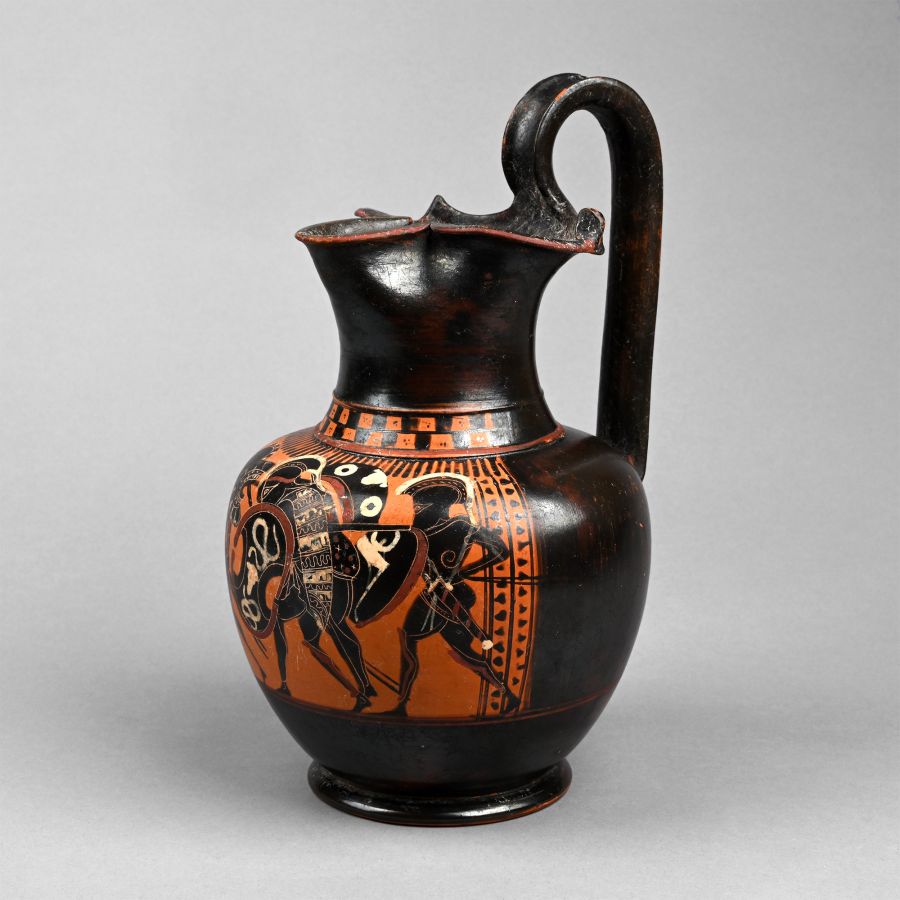
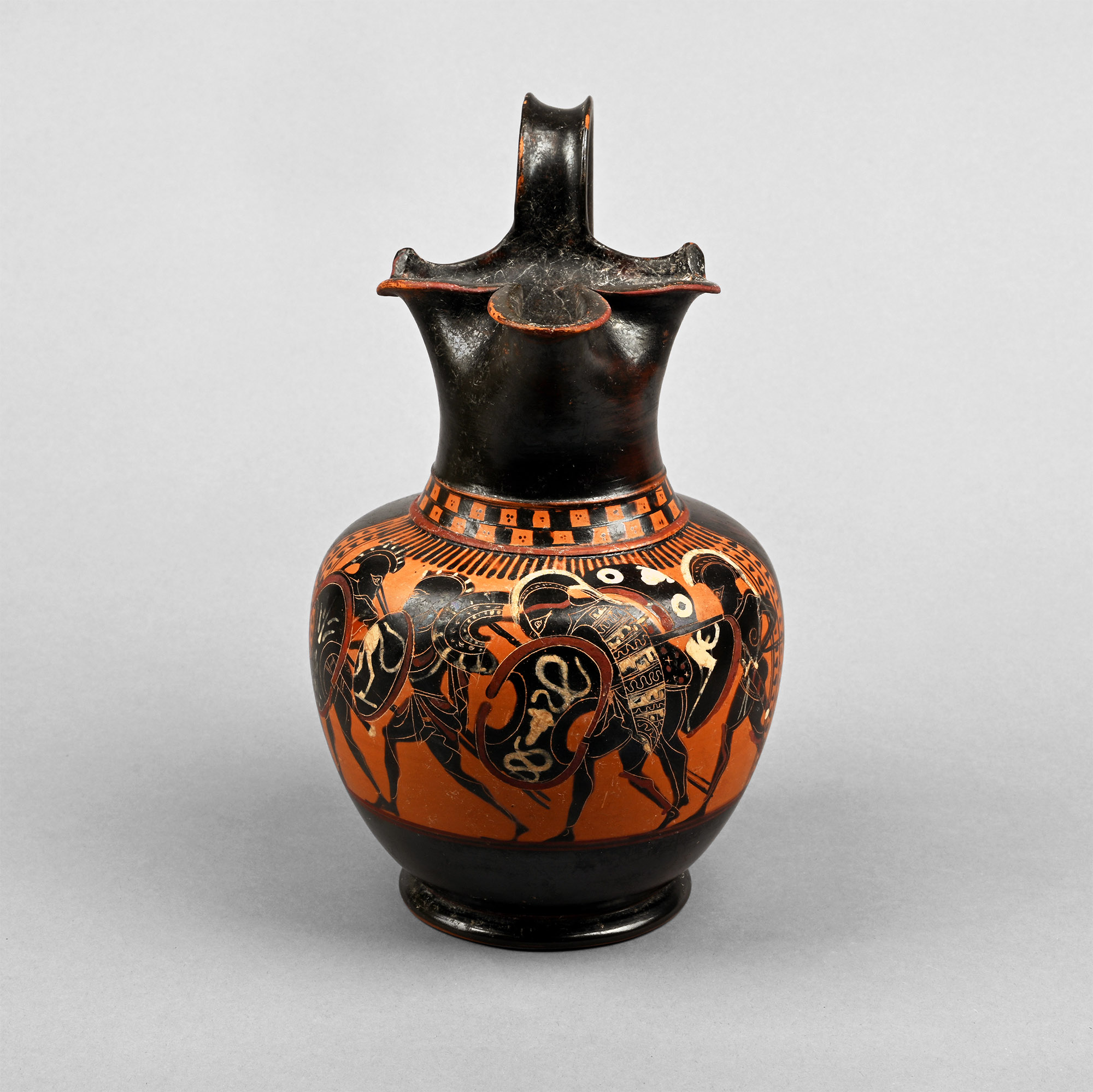
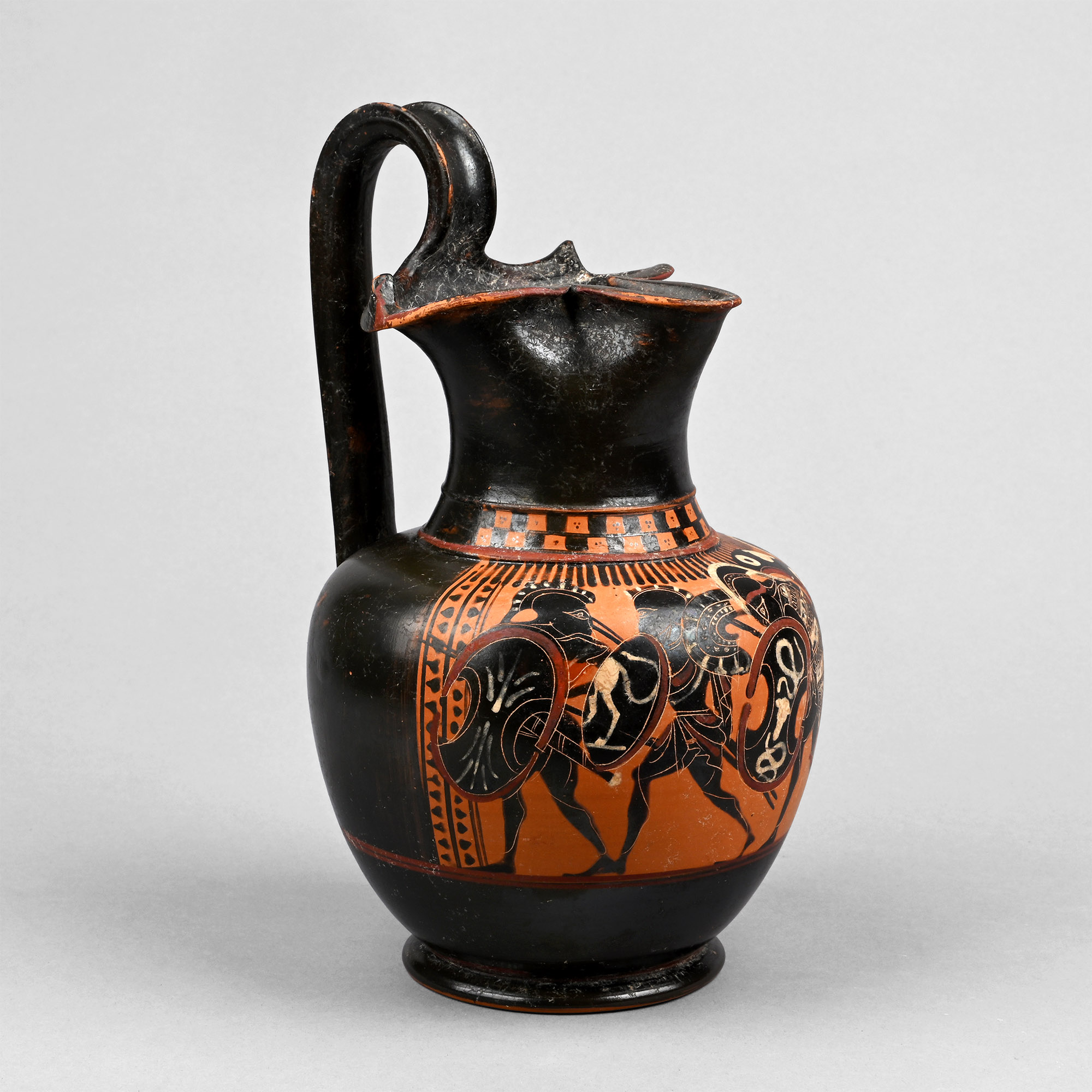
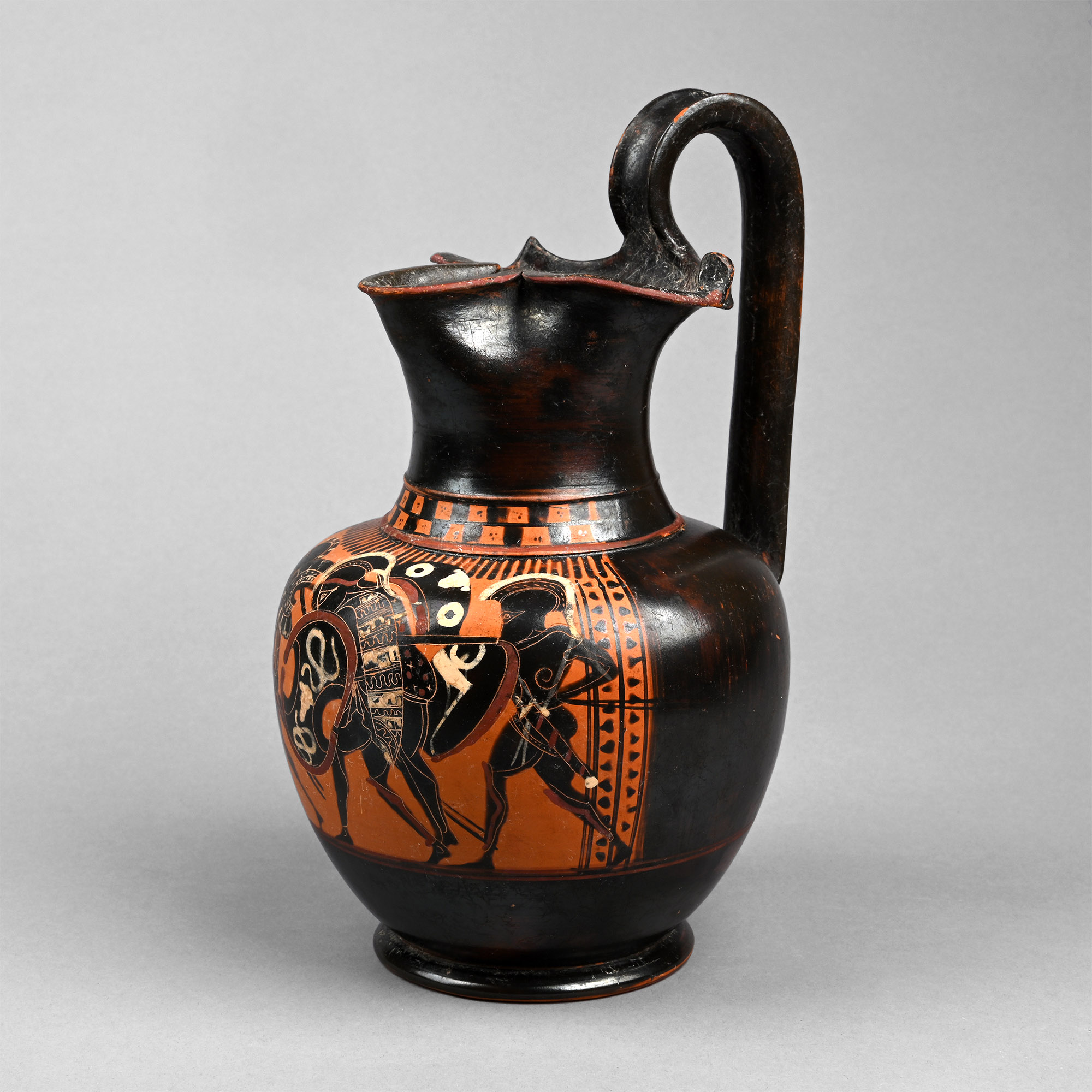
Greek Terracotta Black-Figure Oinochoe with Fighting Warriors
ATTIC, LATE 6TH CENTURY B.C.
9 1/8 in. (487 grams, 23.2 cm).
With flared foot, ovoid body, tapering neck and scooped trefoil mouth; tall gusseted strap handle to the rear; painted frieze of a phalanx of hoplites wearing crested helmets and bell-shaped armour with round aspis and eight-shaped (Boeotian) shields, knemidai greaves, long spears and scabbarded swords.
ProvenancePrivate Swiss collection, 1980s.
Acquired on the European art market, 1992; thence by descent.
Accompanied by an academic report by Dr Jacques Chamay.
Accompanied by an academic report by Dr Raffaele D'Amato.
This lot has been checked against the Interpol Database of stolen works of art and is accompanied by search certificate number no.13220-249241.
Cf. archaic black figure oinochoe with battle scene in Gerhard, E., Auserlesene Griechische Vasenbilder, Hauptsächlich Etruskischen Fundorts, Zeiter Theil, Heroenbilder, Berlin, 1843, pls.CXXII,CXXIII; archaic black-figure vase with Homeric warriors carrying a companion (Ajax carrying Achilles) in Gerhard, E., Auserlesene Griechische Vasenbilder, Hauptsächlich Etruskischen Fundorts, Zeiter Theil, Heroenbilder, meistens Homerisch, Berlin, 1847, pls.CCXII,CCXIII; an archaic black-figure oinochoe with marching hoplites, in Gerhard, E., Auserlesene Griechische Vasenbilder, Hauptsächlich Etruskischen Fundorts, Viertel Theil, Griechisches Alltagsleben, Berlin, 1858, pl.CCLVIII; for the Greek military equipment and episemata of the period see D’Amato, R., La Battaglia delle Termopili (the battle of the Termopili), Roma, 2013, pp.225ff.
FootnotesThe scene depicts a succession of warriors, marching to the left at a rapid pace. Closely packed, one behind the other, they are confined within the figurative field and extend well beyond the upper and lower edges. It is a scene taken from the Homeric poems. The style of the oinochoe is characterised by the abundant use of thick white and burgundy highlights, resulting in a striking polychrome effect. There is a tendency to extend the figures beyond the frame, due to the subject being too ambitious for the available surface. The chequerboard motif on the neck is a very rare decorative motif. The vase's importance is reinforced by its exceptional state of preservation.
CONDITIONTimeLine Auctions follows a vetting process to ensure the authenticity and legality of all items, reinforcing our commitment to integrity and responsible trading. Each antiquity, antique, and coin lot undergoes thorough examination by a vetting committee of at least ten external specialists, professional trade association members, scientists, and archaeologists: Our Vetting Process
AUCTIONS:
TimeLine is a leading auction house specialising in antiquities, ancient art, collectables, natural history, coins, medals, and books. Our auctions offer museums, collectors, historians, and enthusiasts the opportunity to acquire unique and historically significant pieces.
LOT 0095
Greek Terracotta Black-Figure Oinochoe with Fighting Warriors
Estimate £25,000 - 35,000€29,000 - 40,600 (for guidance only)$33,750 - 47,250 (for guidance only)
-
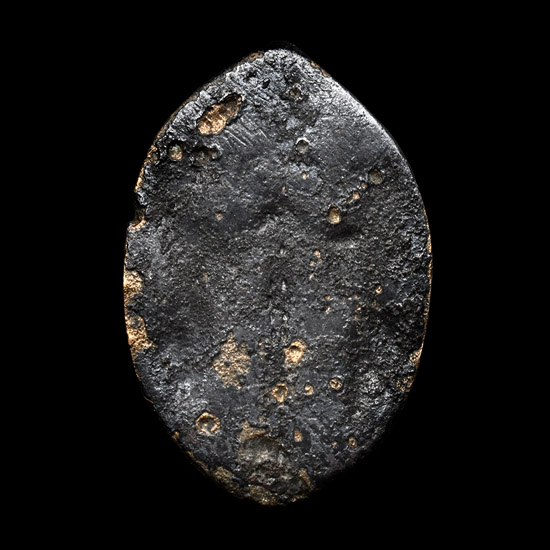
Large Greek Bronze Ring with Standing Goddess
Circa 4th-2nd century B.C.Sold for (Inc. bp): £26
Comprising a slender hoop and a large lentoid bezel with two standing figures flanking a staff(?). 4.01 grams, 22.61 mm overall, 21.02 x 19.12 mm internal diameter (approximate size British U 1/2, USA 10 1/4, Europe 23.15, Japan 22)
From the private collection of a European gentleman (1942-2024), formed since the 1970s. -
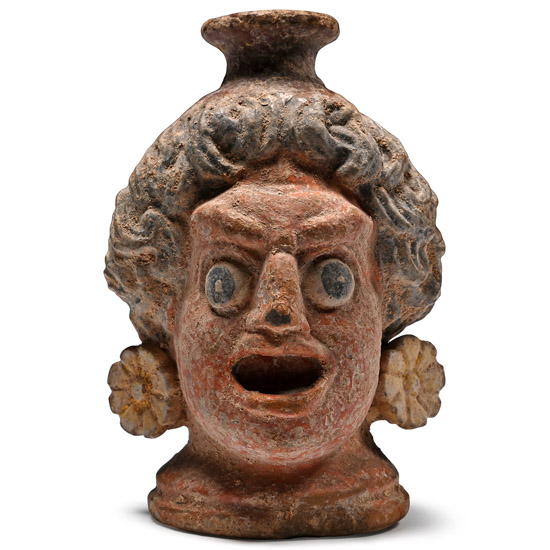
Greek Terracotta Head of an Actor Vase
Circa 4th century B.C.Sold for (Inc. bp): £2,730
An expressive polychrome vase formed as the head of an actor wearing rosette earrings, open mouth and applied pupils, short neck with everted rim above and a small strap handle to the rear. 69.3 grams, 75 mm
Ex Louis-Gabriel Bellon, France, (1819-1899). with Galerie Rhéa, Zurich, Switzerland. This lot has been checked against the Interpol Database of stolen works of art and is accompanied by a search certificate number no.12667-236389.
In Greek theatre, actors wore masks made from materials like linen and leather, which amplified expressions and helped actors take on multiple roles within a single play. Aristotle, in his Poetics, highlighted the importance of masks in conveying emotion and character, especially in large outdoor theatres. This terracotta, representing the satirical mask of a woman, with its lively and expressive features, would have brought both humour and recognisable character traits to the stage, engaging audiences with the playful spirit of Greek comedy. -
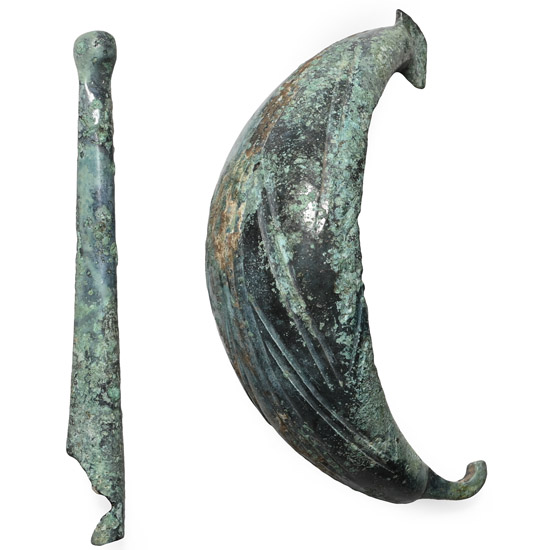
Large Villanovan Bronze Brooch Fragments
Circa 8th century B.C.Sold for (Inc. bp): £20
Comprising a large convex bow decorated with deep grooves, and a fragment of a convex footplate, likely from the same brooch. 80.2 grams total, 88.7-95.5 mm
From the private collection of a European gentleman (1942-2024), formed since the 1970s.
