
Loading, please wait...
LOT 0532
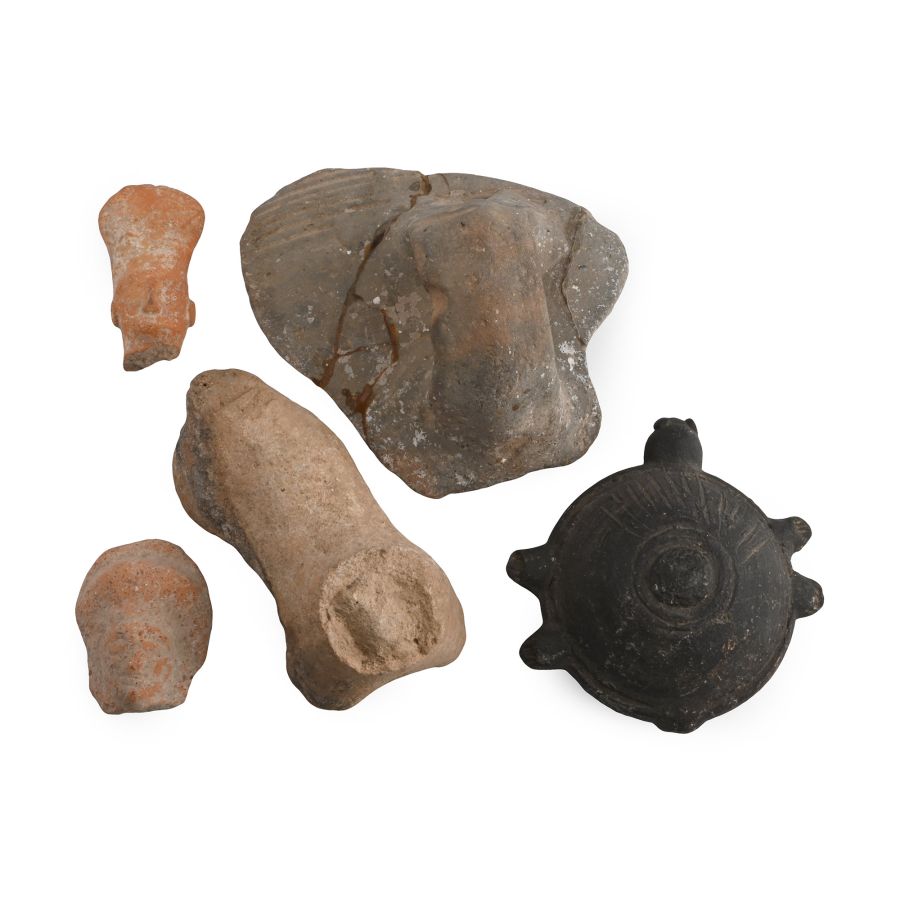
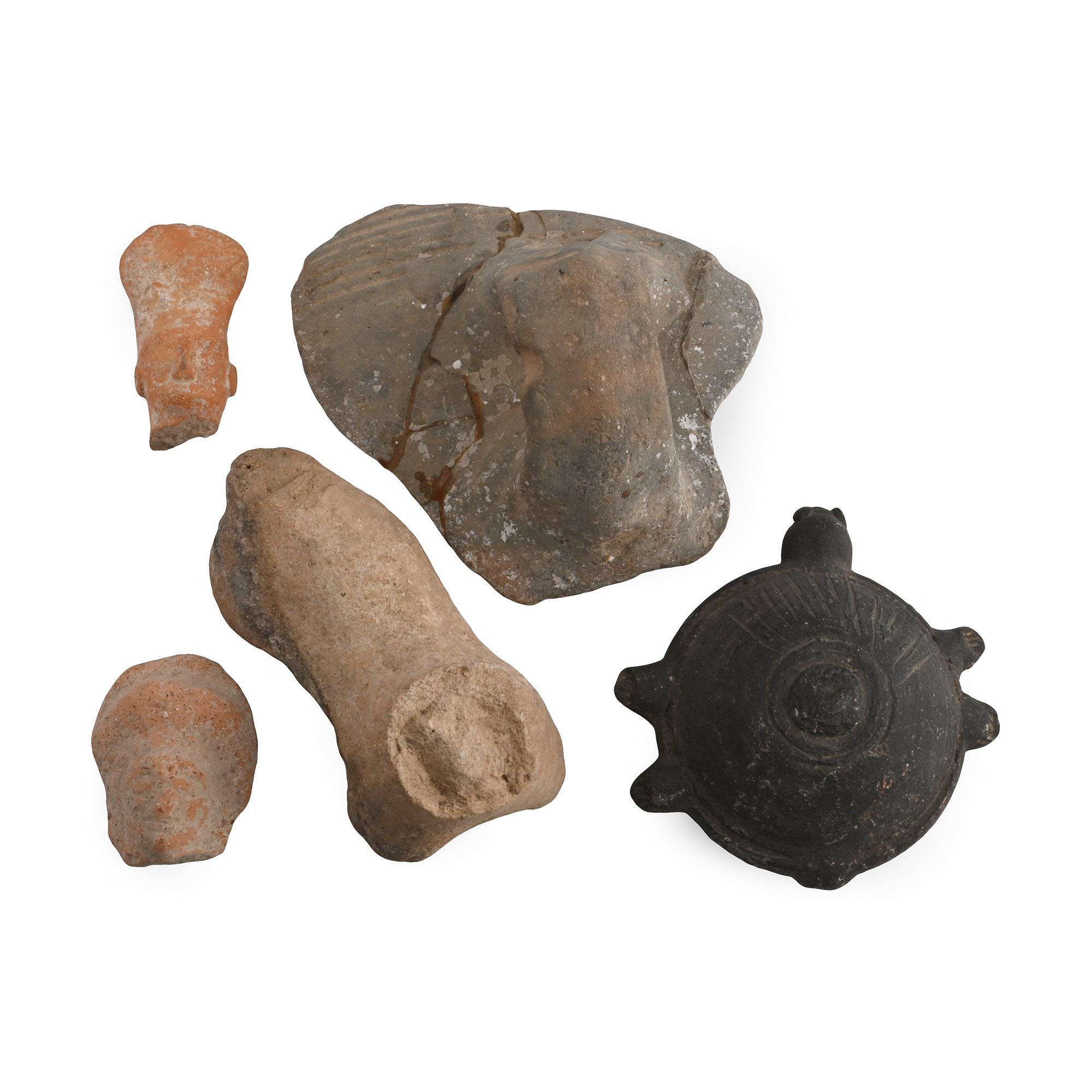
Greek Terracotta Artefact Collection
CIRCA 5TH-3RD CENTURY B.C. AND LATER
2 - 5 1/8 in. (739 grams total, 5.1-13 cm).
Including terracotta statue heads, amphora handle with old inked inscription on label to verso, which reads: 'AMPHORA HANDLE / PICKED UP ON SEA / BED OFF EAST SIDE / PARAMALI POINT, CYPRUS / 31 AUGUST 1968.' and other items. [5, No Reserve]
ProvenanceFrom a late Hampshire gentleman's collection, formed from the 1960s.
LiteratureCf. Karageorghis, V., Cipro, Crocevia del Mediterraneo Orientale, 1600-500 a.C. Milano, 2002, pp.207-208, figs.410, 413.
FootnotesOne of the terracotta heads belongs to a votive statue, which by its shape seems to belong to Demeter or to the priestess of the Mother Goddess venerated in the Sanctuary of Arsos (Cyprus). The other one, also votive, showing a high headgear, represents most probably a Phoenician divinity, or a Levantine head of a priest.
CONDITIONTimeLine Auctions follows a vetting process to ensure the authenticity and legality of all items, reinforcing our commitment to integrity and responsible trading. Each antiquity, antique, and coin lot undergoes thorough examination by a vetting committee of at least ten external specialists, professional trade association members, scientists, and archaeologists: Our Vetting Process
AUCTIONS:
TimeLine is a leading auction house specialising in antiquities, ancient art, collectables, natural history, coins, medals, and books. Our auctions offer museums, collectors, historians, and enthusiasts the opportunity to acquire unique and historically significant pieces.
-
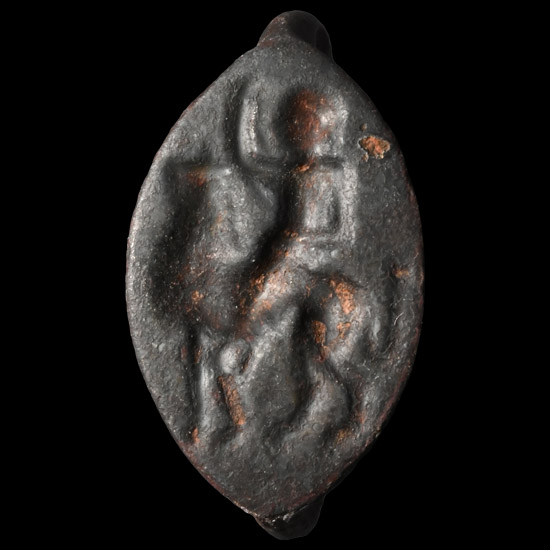
Large Greek Bronze Ring with Mounted Warrior
Circa 4th-2nd century B.C.Sold for (Inc. bp): £130
Featuring a slender round-section hoop and a large lentoid bezel with a warrior riding a lion(?). 3.69 grams, 23.07 mm overall, 18.79x18.55 mm internal diameter (approximate size British R USA 8 1/2, Europe 18 3/4, Japan 18)
From the private collection of a European gentleman (1942-2024), formed since the 1970s. -
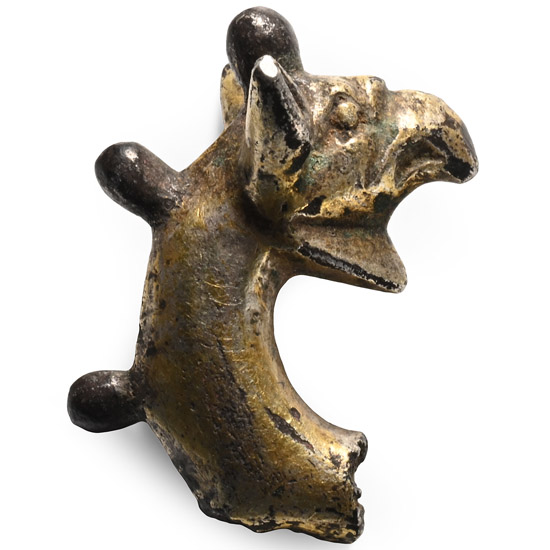
Greek Silver Gryphon's Head Attachment
Hellenistic, 5th-3rd century B.C.Estimate: £150 - 200 (+bp*)
Opening Bid: £75
Modelled in the round with radiating lugs forming the mane, hooked beak and pricked ears. 15.85 grams, 31.88 mm
Ex Abelita family collection, 1980s-2000s. -
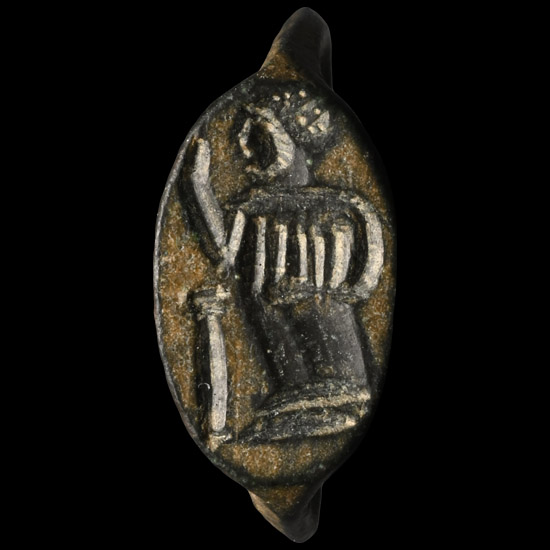
Greek Bronze Ring with Standing Goddess
Circa 4th-2nd century B.C.Sold for (Inc. bp): £130
Comprising a slender round-section hoop and a lentoid bezel with a standing goddess before a pillar. 1.92 grams, 16.72 mm overall, 13.16x15.37 mm internal diameter (approximate size British G, USA 3 1/4, Europe 4.92, Japan 4)
From the private collection of a European gentleman (1942-2024), formed since the 1970s.
