
Loading, please wait...
LOT 0034
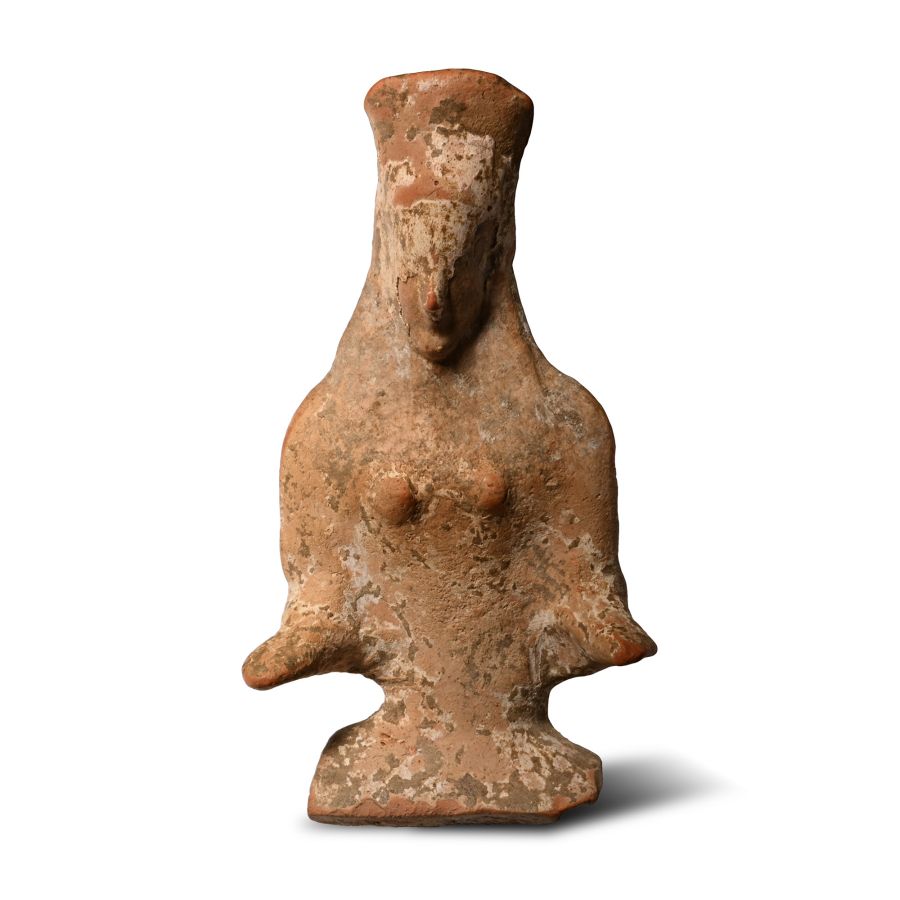
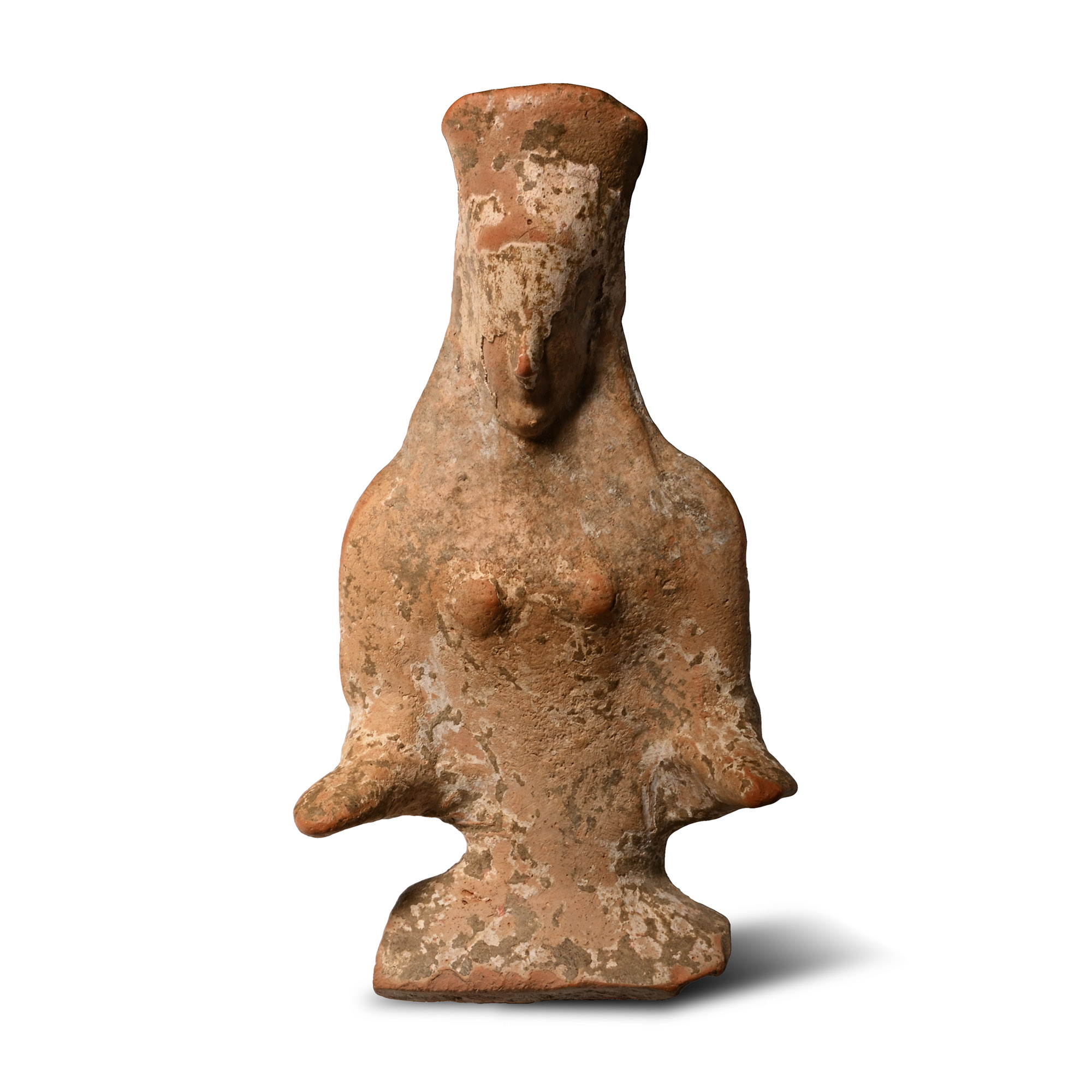
Greek Terracotta Antefix of a Goddess
ARCHAIC, 6TH-5TH CENTURY B.C.
5 3/4 in. (78 grams, 13.1 cm).
Mould-made figure of a female upper body with tall headdress and arms spread, hands palm-upwards; beneath, a C-section channel for attachment to a roof.
ProvenanceAcquired in the mid 1980s-1990s.
Private collection, Switzerland, thence by descent.
Private collection, since the late 1990s.
This lot is accompanied by an illustrated lot declaration signed by the Head of the Antiquities Department, Dr Raffaele D’Amato.
Cf. a more elaborately modelled example in the British Museum under accession no.1884,1011.2.
CONDITIONTimeLine Auctions follows a vetting process to ensure the authenticity and legality of all items, reinforcing our commitment to integrity and responsible trading. Each antiquity, antique, and coin lot undergoes thorough examination by a vetting committee of at least ten external specialists, professional trade association members, scientists, and archaeologists: Our Vetting Process
AUCTIONS:
TimeLine is a leading auction house specialising in antiquities, ancient art, collectables, natural history, coins, medals, and books. Our auctions offer museums, collectors, historians, and enthusiasts the opportunity to acquire unique and historically significant pieces.
-
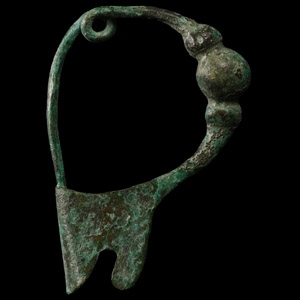
Greek Bronze Bow Brooch
6th-5th century B.C.Sold for (Inc. bp): £117
Comprising a tapering bow with median cluster of three bulbs, one arm extending to a single-loop spring and pin, the other widening to a flat catch with curved edge and lateral spur above. 22.6 grams, 65 mm
Ex important German collection, 1990s. This lot is accompanied by an illustrated lot declaration signed by the Head of the Antiquities Department, Dr Raffaele D’Amato. -
.jpg)
Hellenistic Gold Ring with Artemis Gemstone
2nd-1st century B.C.Estimate: £5,000 - 7,000 (‡+bp*)
Opening Bid: £2,500
Hollow-formed shank with broad plaque and inset garnet cabochon intaglio profile bust of Artemis in high-relief. 11.27 grams, 26.91 mm overall, 17.95 x 20.72 mm internal diameter (approximate size British R, USA 8 1/2, Europe 18 3/4, Japan 18)
European art market. This lot has been checked against the Interpol Database of stolen works of art and is accompanied by search certificate number no.12219-222340. This lot has been cleared against the Art Loss Register database, and is accompanied by an illustrated lot declaration signed by the Head of the Antiquities Department, Dr Raffaele D’Amato. -
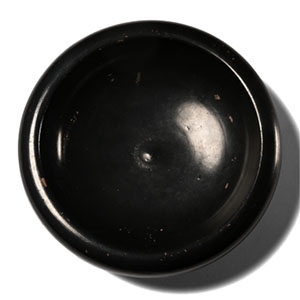
Greek Terracotta Black Glazed Bowl
4th century B.C.Sold for (Inc. bp): £260
With lustrous black glaze with metallic shimmer; shallow bowl on ring foot; fine double drill-hole in the ring for suspension; carinated inner edge, carinated lip to sidewall; base in reserve with two concentric circles in red; old collector's label 'N12960' to underside. 153 grams, 10.1 cm
Private collection Bavaria. By descent, in possession of the family since 1960s-1970s. German art market, 2013. Accompanied by a copy of an Art Loss Register certificate no.S00111200. This lot is accompanied by an illustrated lot declaration signed by the Head of the Antiquities Department, Dr Raffaele D’Amato.
