
Loading, please wait...
LOT 0091
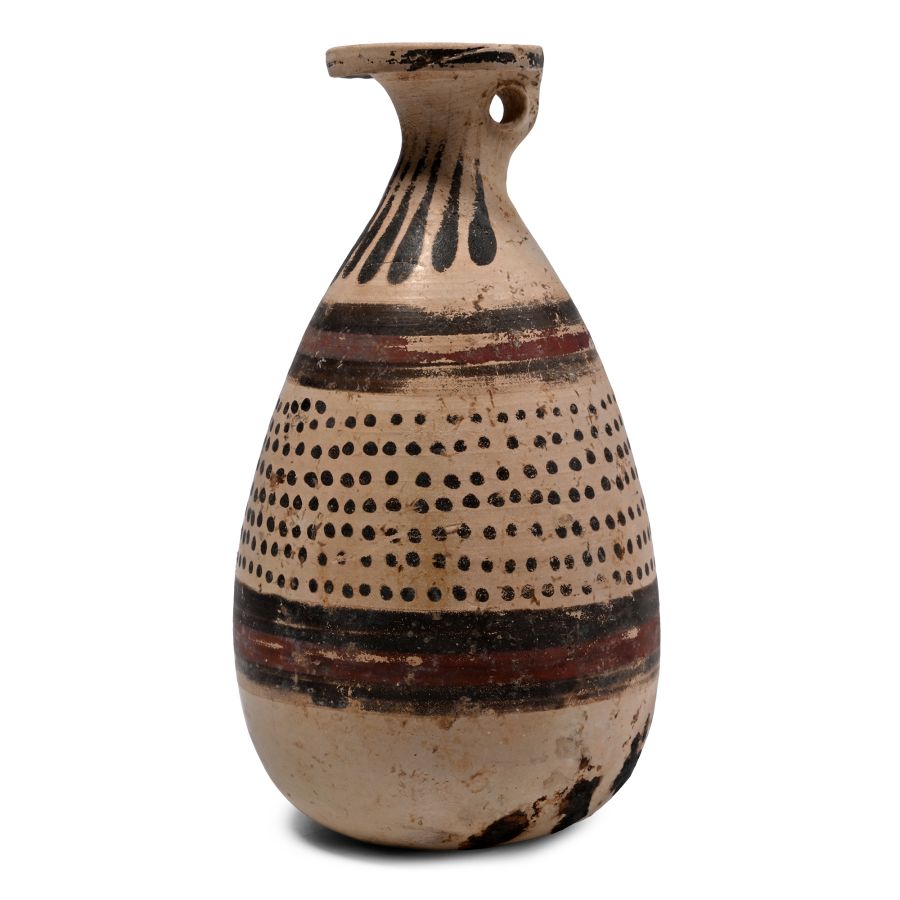
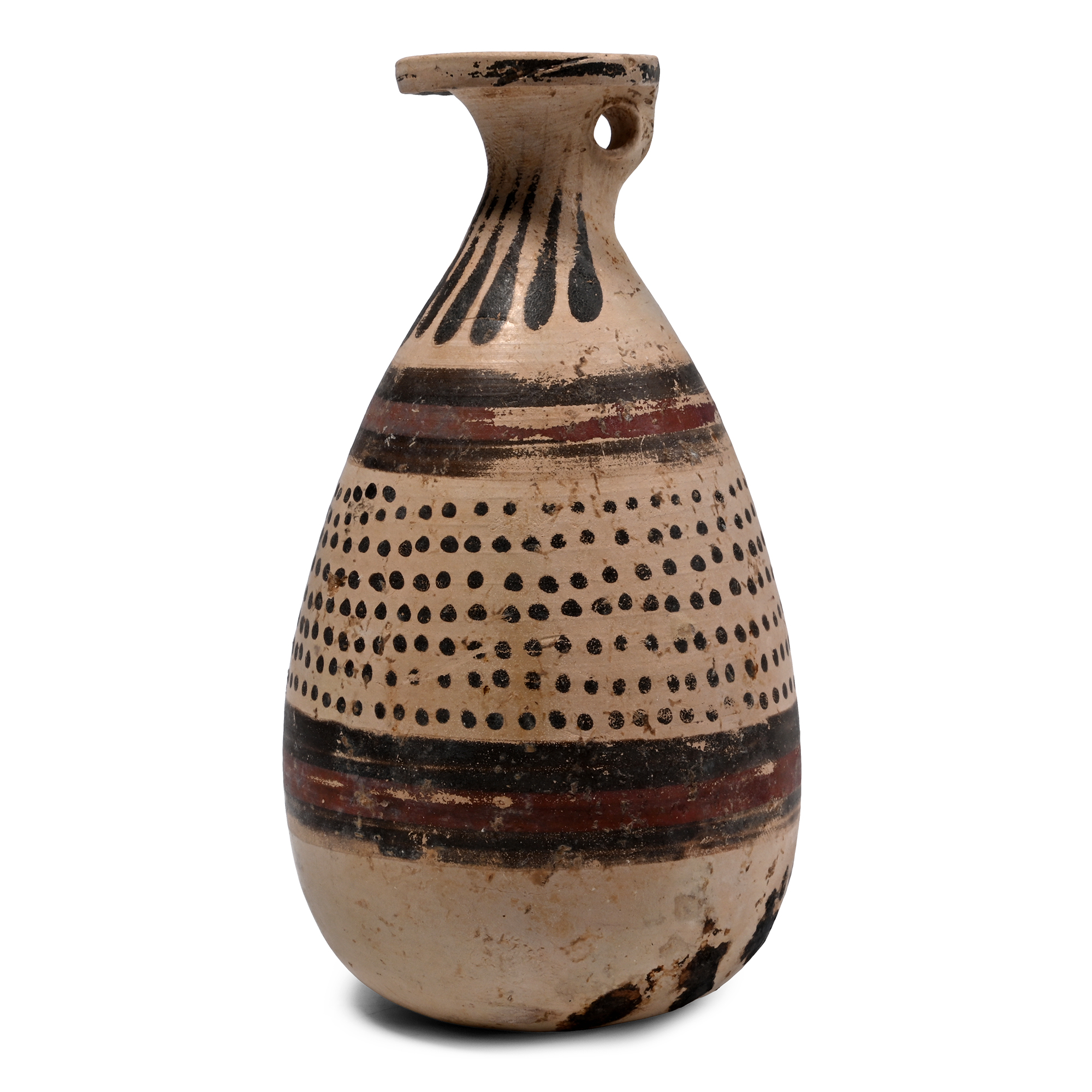
Greek Terracotta Alabastron
ETRUSCO-CORINTHIAN, CIRCA 6TH CENTURY B.C.
4 3/8 in. (88 grams, 11.1 cm).
Piriform body with narrow neck and flaring rim with a small loop handle below, decorated with radiating strokes below the neck, followed by eight rows of dot decoration flaked by red and black circumferential bands.
ProvenanceFrom the collection of the late Sir Clinton Charles Donald Cory, 5th Baronet of Coryton.
Ex Philip Auction House, 24 September 1985.
Accompanied by two previous information cards.
TimeLine Auctions follows a vetting process to ensure the authenticity and legality of all items, reinforcing our commitment to integrity and responsible trading. Each antiquity, antique, and coin lot undergoes thorough examination by a vetting committee of at least ten external specialists, professional trade association members, scientists, and archaeologists: Our Vetting Process
AUCTIONS:
TimeLine is a leading auction house specialising in antiquities, ancient art, collectables, natural history, coins, medals, and books. Our auctions offer museums, collectors, historians, and enthusiasts the opportunity to acquire unique and historically significant pieces.
-
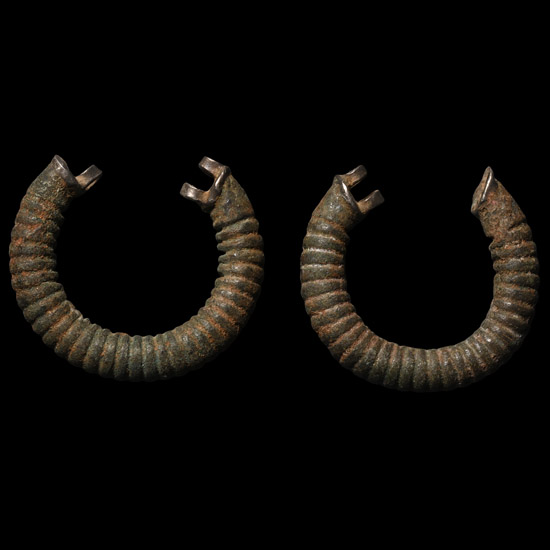
Greek Silver Earring Pair
Circa 4th-2nd century B.C.Sold for (Inc. bp): £59
Matched pair of ribbed crescents with loops. 22.5 grams total, 27-29 mm
From the private collection of a European gentleman (1942-2024), formed since the 1970s. -
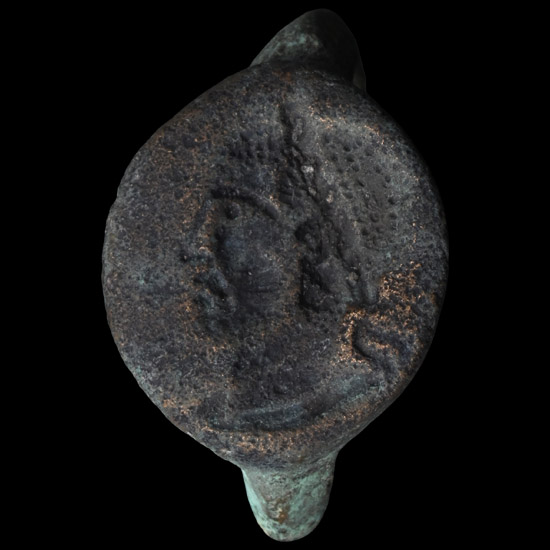
Greek Bronze Signet Ring with Portrait
4th-3rd century B.C.Estimate: £300 - 400 (+bp*)
Opening Bid: £150
Discoid bezel with slender hoop, incuse profile bust with a stephane to the hair. 6.57 grams, 25.86 mm overall, 20.08 x 15.91 mm internal diameter (approximate size British N, USA 6 1/2, Europe 13.72, Japan 13)
From the collection of a gentleman, acquired on the London art market in the 1990s. -
.jpg)
Large Phoenician Terracotta Head of a Man
Levant, circa 4th century B.C.Sold for (Inc. bp): £4,680
Hollow-formed moulded head with conical cap, band above the brow with curls beneath, high-relief eyebrows and triangular nose, scaphoid protrusive eyes, tiny pursed mouth; collar to the neck with frontal pendant; ellipsoid vent to rear, flared rim to mouth; some loss to lateral edges at ear-level. 1.73 kg, 27.5 cm
with Phillips, London, 6 July 1993, no.127 (part). Private collection, London, UK. Acquired in London, UK, 2006. Accompanied by copies of the original Phillips and 2006 invoices. This lot has been checked against the Interpol Database of stolen works of art and is accompanied by search certificate number no.13281-254405.
