
Loading, please wait...
LOT 0074
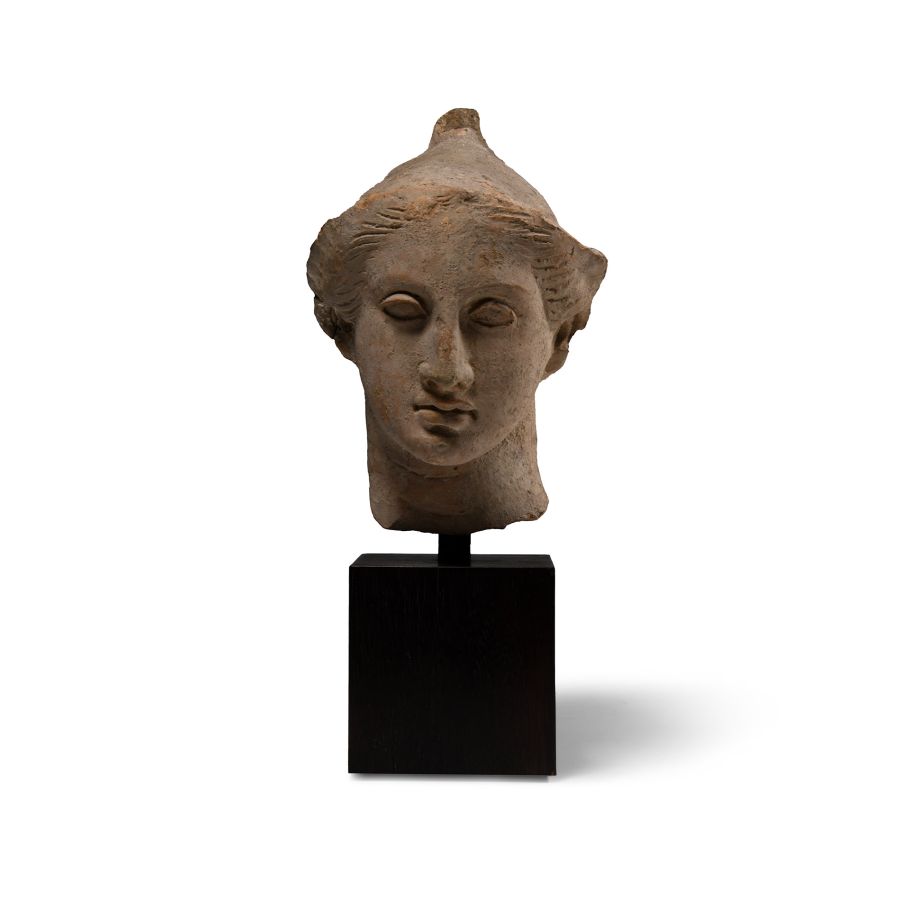
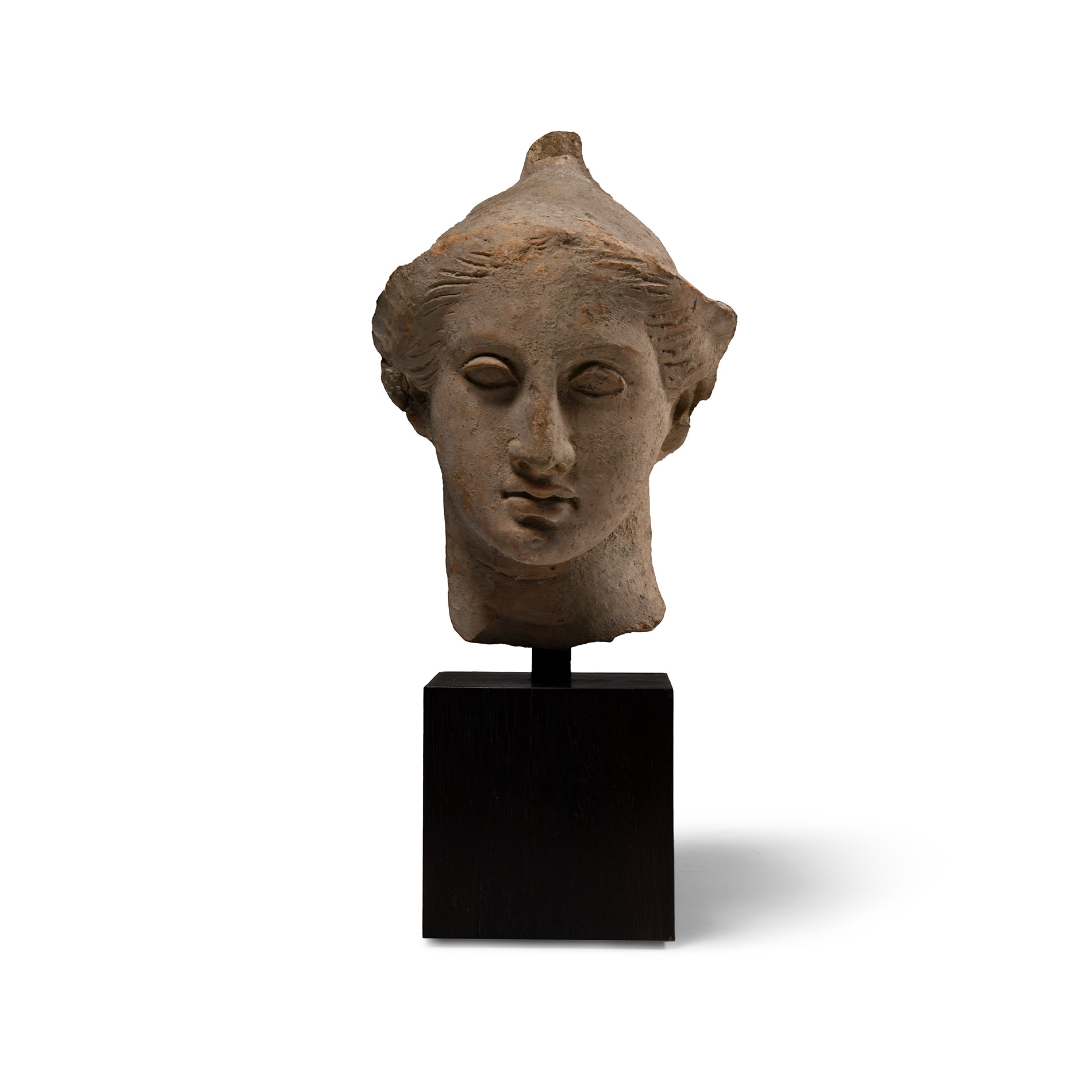
Greek Tarentine Terracotta Head of a Youth
MID 4TH CENTURY B.C.
9 1/8 in. (1.2 kg total, 25.3 cm high including stand).
Possibly depicting Ganymede or Paris, wearing a soft Phrygian cap with everted brim, the hair swept back from the face; almond-shaped eyes with pronounced eyelids, straight nose and fleshy lips; mounted on a custom-made display stand.
ProvenanceAcquired early 20th century.
From the collection of Count Henri d'Epinay (1940-2017), Longuenesse, France.
Accompanied by a copy of a French cultural passport no.196149.
Accompanied by an academic report by Dr Raffaele D'Amato.
This lot has been checked against the Interpol Database of stolen works of art and is accompanied by search certificate no.11824-207736.
Cf. Reinach, S., Repertoire de la statuarie grecque et romaine, Paris, 1930, pp.471ff., and especially no.7, p.472; Rausa, F., ‘L’immagine del vincitore: L’atleta nella statuaria greca dall’età arcaica all’ellenismo’, in Ludica 2, Treviso and Rome, 1994, pp.136–38; Belli Pasqua, R., La scultura in marmo e in pietra. Catalogo del Museo Nazionale Archeologico di Taranto IV, 1., Taranto, 1995; Hakanen, V., Ganimede in the art of the Roman Campania, Ancient Roman viewers' experience of erotic mythological art, Helsinki, 2022; for similar heads in terracotta see Ferruzza, M.L., Ancient Terracottas from South Italy and Sicily in the J. Paul Getty Museum, Los Angeles, 2016, nos.19, 20, 21.
FootnotesThe terracotta sculpture appears to have similarities with other Tarentine heads from the early Hellenistic Period. A marble head from Taranto, datable to the end of the 4th century B.C., presents similar elements. The visible character is clearly attributable to Graeco-Roman mythology. The only clue regarding the identity of the head is provided by the Phrygian cap, which narrows down the identification to few characters from Greek mythology: the Trojan prince Ganymede, abducted by Zeus for his beauty and named by him the cupbearer of the gods, or the Trojan prince Paris. There are many representations of Ganymede in a Phrygian cap (Hakanen, 2022, plates 6,12a). However, the third possibility is that the sculpture represents Attis, lover of the goddess Cybele.
CONDITIONTimeLine Auctions follows a vetting process to ensure the authenticity and legality of all items, reinforcing our commitment to integrity and responsible trading. Each antiquity, antique, and coin lot undergoes thorough examination by a vetting committee of at least ten external specialists, professional trade association members, scientists, and archaeologists: Our Vetting Process
AUCTIONS:
TimeLine is a leading auction house specialising in antiquities, ancient art, collectables, natural history, coins, medals, and books. Our auctions offer museums, collectors, historians, and enthusiasts the opportunity to acquire unique and historically significant pieces.
-
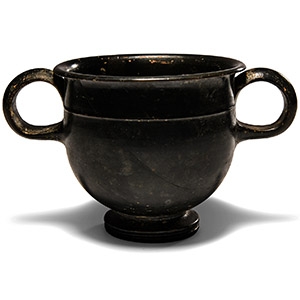
Greek High-Glazed Cup with Handles
5th-3rd century B.C.Estimate: £1,500 - 2,000 (‡+bp*)
Opening Bid: £750
The body with an inverted bell shape, foot with channeled sidewall, two loop handles with carinated upper faces; repaired. 96 grams, 12.8 cm wide
Acquired in Europe before 2001. European collection. -
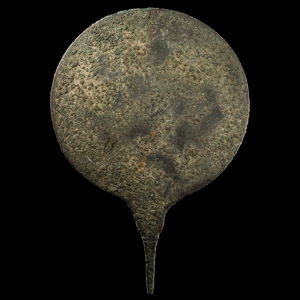
Greek Bronze Handled Mirror
5th century B.C.Estimate: £300 - 400 (‡+bp*)
Opening Bid: £150
The discoid head with waisted neck and tapering tang, slightly recessed to one face. 350 grams, 22 cm
Acquired in Europe before 1990. -
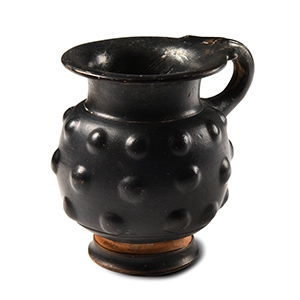
Greek Black-Glazed Pinecone Jug
5th-3rd century B.C.Sold for (Inc. bp): £1,040
With raised domes to the body, broad neck, everted rim, bifurcated handle, foot. 105 grams, 86 mm
Very fine condition.
Acquired European art market, 1980s-1990s. Private English collection.
