
Loading, please wait...
LOT 0510
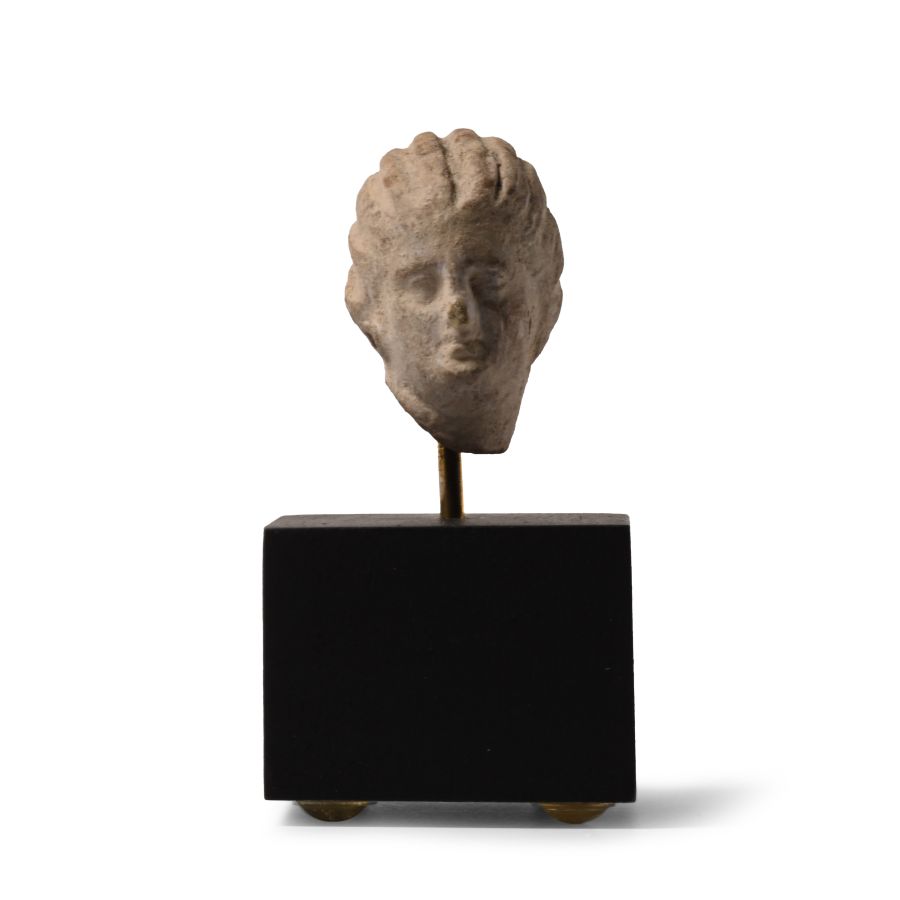
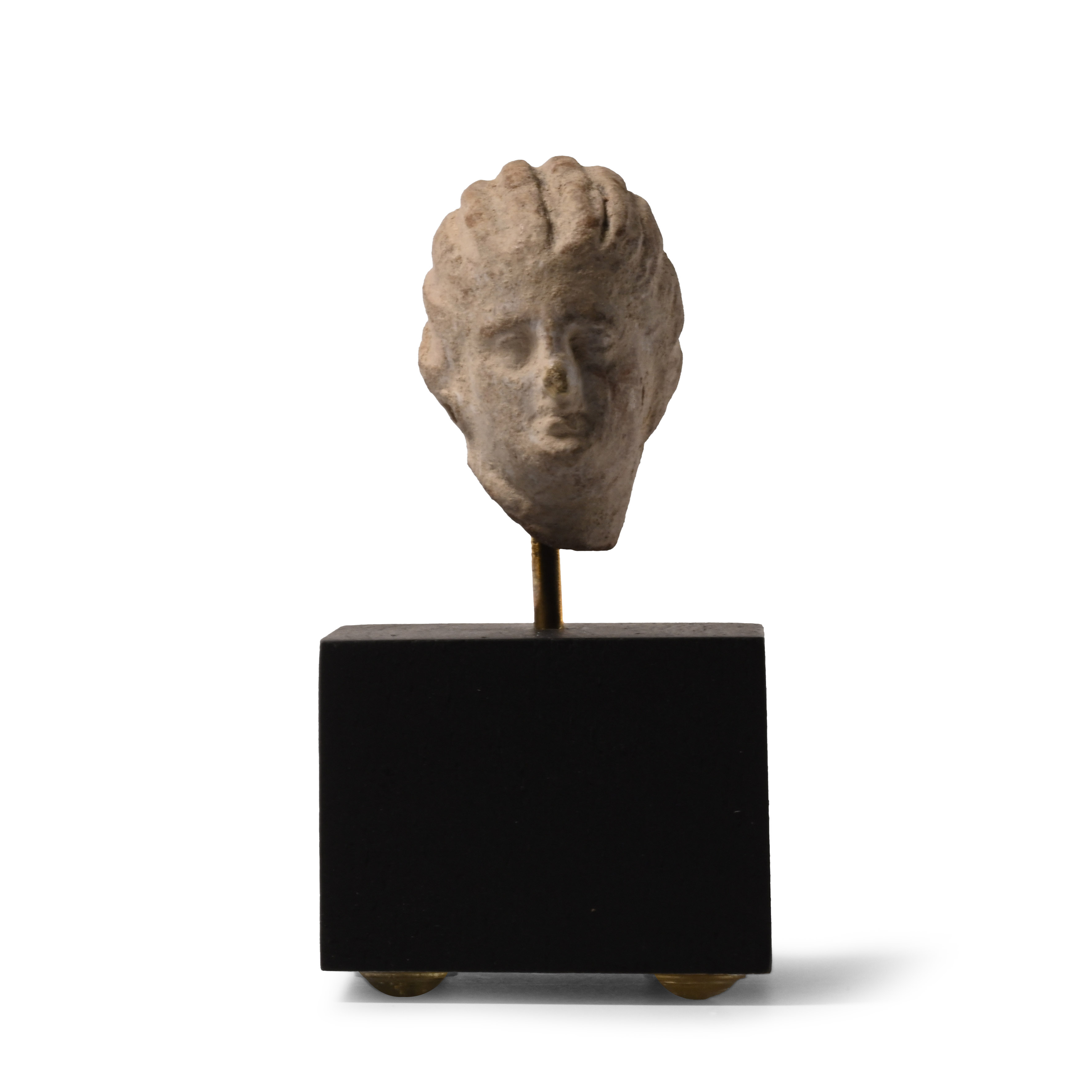
Greek Tanagra Terracotta Head of Aphrodite
CIRCA 4TH-2ND CENTURY B.C.
2 1/2 in. (38 grams total, 64 mm including stand).
With hair divided in vertical arrangements, bound on the back by a fillet, delicate rendering of mouth, nose and eyes; mounted on a custom-made display stand.
ProvenanceEx P. A., Hertfordshire, UK, specialist collection of Greek art, 1980-1990s.
LiteratureCf. Mavrogonatou, A., Terracotta figurines as grave offerings in Veoria: the funerary dimension of Aphrodite and Eros in female and child burials of the Hellenic rock-cut chamber tombs, Thessaloniki, 2018, fig.47, for a similar head on a statuette in terracotta of Aphrodite.
FootnotesIt seems that half-draped women in sculpture, whatever the pose, are quite rare before the late Hellenistic period; however, they appear as early as the 4th century B.C., on a small scale and in terracotta. North Macedonian terracotta figurines of Aphrodite or mortal girls replicate sculptural trends of the 2nd century B.C. In particular, the the classical sculptural tradition was revived during the latter half of the second century B.C., as evidenced by the figurines.
CONDITIONTimeLine Auctions follows a vetting process to ensure the authenticity and legality of all items, reinforcing our commitment to integrity and responsible trading. Each antiquity, antique, and coin lot undergoes thorough examination by a vetting committee of at least ten external specialists, professional trade association members, scientists, and archaeologists: Our Vetting Process
AUCTIONS:
TimeLine is a leading auction house specialising in antiquities, ancient art, collectables, natural history, coins, medals, and books. Our auctions offer museums, collectors, historians, and enthusiasts the opportunity to acquire unique and historically significant pieces.
-
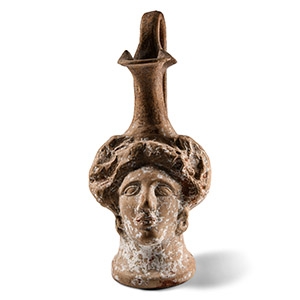
Greek Canosan Terracotta Anthropomorphic Oinochoe
Circa 4th century B.C.Estimate: £800 - 1,000 (+bp*)
Opening Bid: £400
The body formed as a female bust with elaborately styled hair; discoid foot, tall stem with pinched rim giving a broad pouring lip, strap handle to the rear; some pigment remaining. 446 grams, 22.2 cm high
Old French private collection. Swiss private collection, Basel-Landschaft. Private collection of M. Tritten, Binningen, Switzerland. Property of an East Sussex, UK, gentleman. -
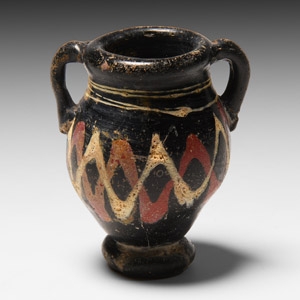
Greek Core-Formed Glass Amphora
Circa 3rd century B.C.Estimate: £500 - 700 (+bp*)
Opening Bid: £250
Miniature with piriform body, carinated rim, applied handles and discoid foot, with polychrome geometric motif to the equator. 45.2 grams, 47 mm high
Fine condition.
Paris collection, 1990s. From an important Paris gallery, France. Ex private Parisian collection. -
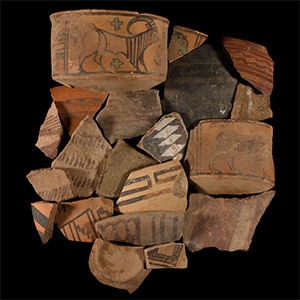
Greek and Other Painted Terracotta Fragment Group
4th-2nd century B.C. and earlierSold for (Inc. bp): £124
Comprising fragments from various types of vessels, most with painted decoration; including a large fragment of an Indus Valley vessel with a polychrome frieze with an ibex. 427 grams total, 37-95 mm
UK gallery, early 2000s.
