
Loading, please wait...
LOT 2026
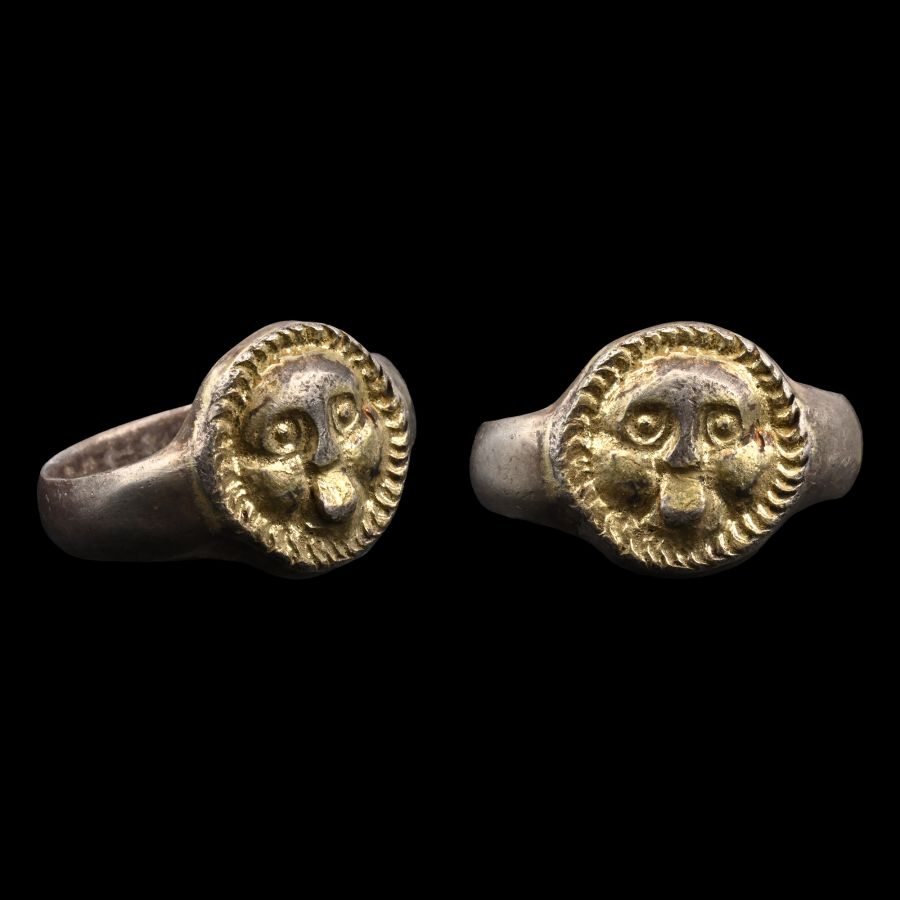
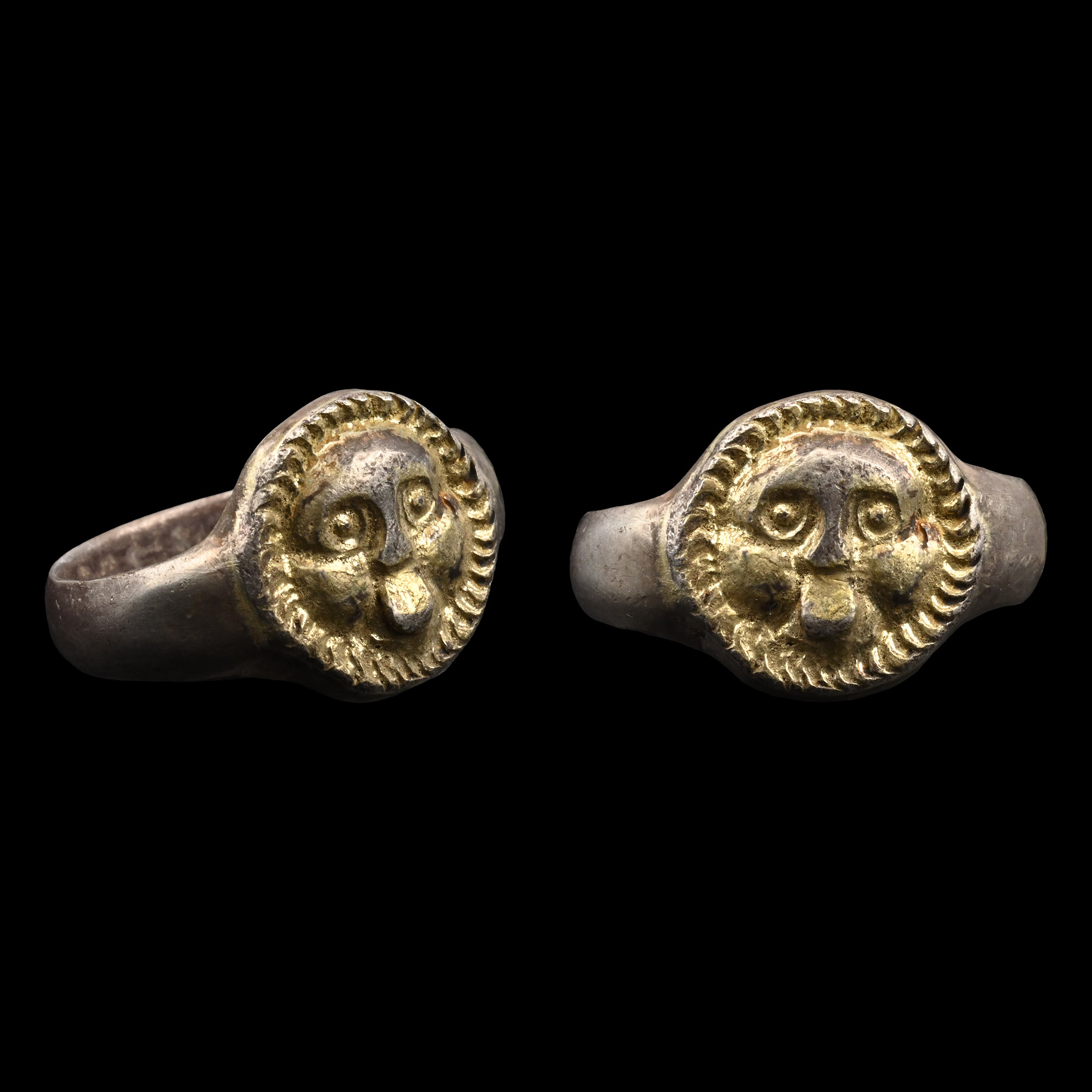
Greek Style Silver-Gilt Ring with Gorgoneion
20TH CENTURY A.D.
1 in. (7.49 grams, 23.58 mm overall, 20.55 mm internal diameter (approximate size British O 1/2, USA 7 1/4, Europe 15.61, Japan 15)).
Discoid bezel with high-relief gorgoneion motif modelled in the half-round. [No Reserve]
ProvenanceEx German art market, 2000s.
Acquired from an EU collector living in London.
From the collection of a Surrey, UK, gentleman.
TimeLine Auctions follows a vetting process to ensure the authenticity and legality of all items, reinforcing our commitment to integrity and responsible trading. Each antiquity, antique, and coin lot undergoes thorough examination by a vetting committee of at least ten external specialists, professional trade association members, scientists, and archaeologists: Our Vetting Process
AUCTIONS:
TimeLine is a leading auction house specialising in antiquities, ancient art, collectables, natural history, coins, medals, and books. Our auctions offer museums, collectors, historians, and enthusiasts the opportunity to acquire unique and historically significant pieces.
-
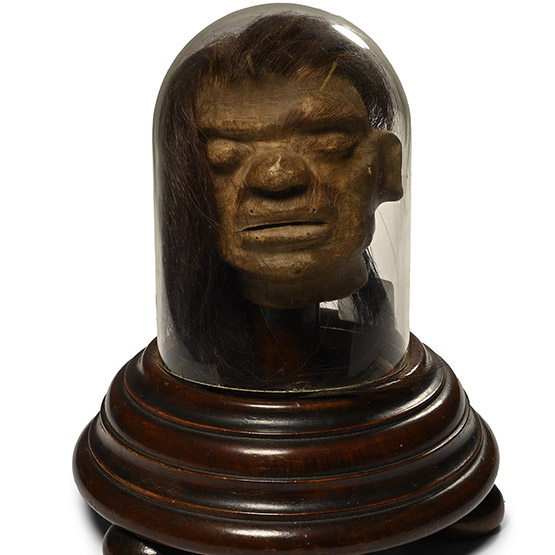
Victorian 'Freaks Fair' Model of a Shrunken Head
19th century A.D.Sold for (Inc. bp): £416
An imitation shrunken head modelled from leather with applied hair, moustache, eyebrows and eyelashes; pierced through the lips and ears; set in a later glass dome with base. 810 grams total, 20.5 cm including stand
Acquired Mellors & Kirk, circa 2019. Ian Wilkinson collection, Nottinghamshire, UK, formed since 1985.
The Victorian ‘freak show’ played a significant role in mid- and late-nineteenth century popular culture, enjoyed by everyone regardless of their class. Such shows, which often travelled the country, were presented to the public as entertaining and educational, offering the opportunity to learn about anatomy and the ‘realities’ of people from foreign lands. The real 'shrunken heads', known as tsantsas, were carefully preserved, severed human heads that were used by the Jivaroan people of the Amazon as war trophies, for ceremonial purposes, or to intimidate enemies. -
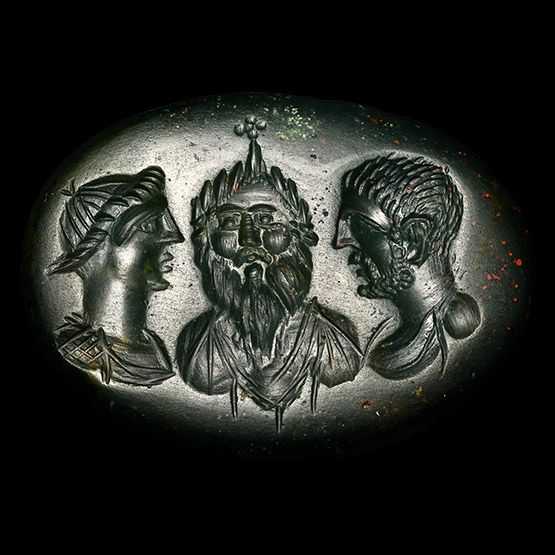
Large Post-Classical Eastern Bloodstone Gemstone with Three Busts
19th century A.D. or earlierEstimate: £400 - 600 (+bp*)
Opening Bid: £200
Three intaglio busts facing, comprising: left, youthful female with long neck and neatly bound hair, mantle to the shoulders; centre, facing bearded male with diadem topped by a quatrefoil; right, youthful male with short hair and neat beard; cut in the Roman style of the 3rd century A.D; supplied with a museum-quality impression. 9.27 grams, 35 mm
Private collection, England.
The three figures may represent Venus, Jupiter and Mars. -
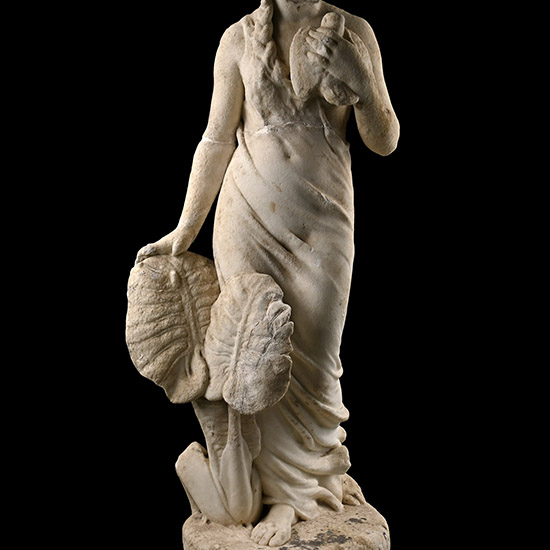
Large Carved Marble Statue of a Headless Maiden Holding a Dove
19th century A.D.Estimate: £1,000 - 1,400 (+bp*)
Opening Bid: £500
Her body depicted in a contrapposto pose with the weight on her right leg, resting her right hand on large plant leaves that surround her; a sheer garment wrapped around her body and plaited over her right shoulder; holding a dove against her chest with her left hand. 51.5 kg, 80 cm high
Private collection, London.
