
Loading, please wait...
LOT 0506
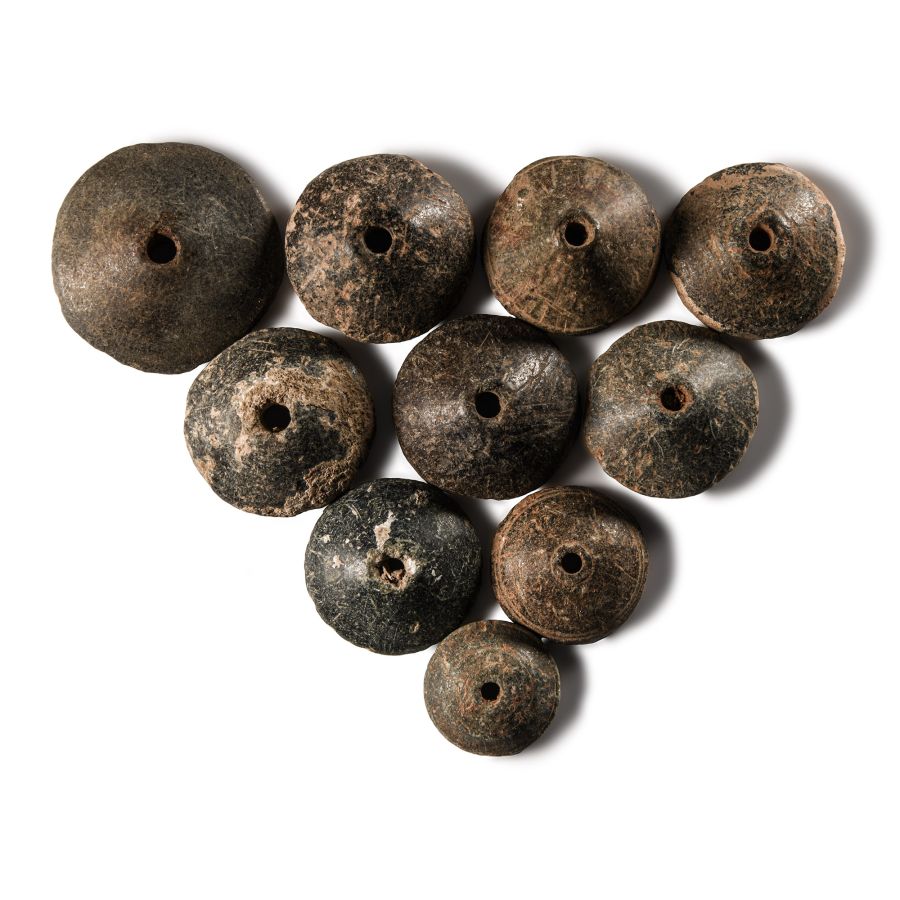
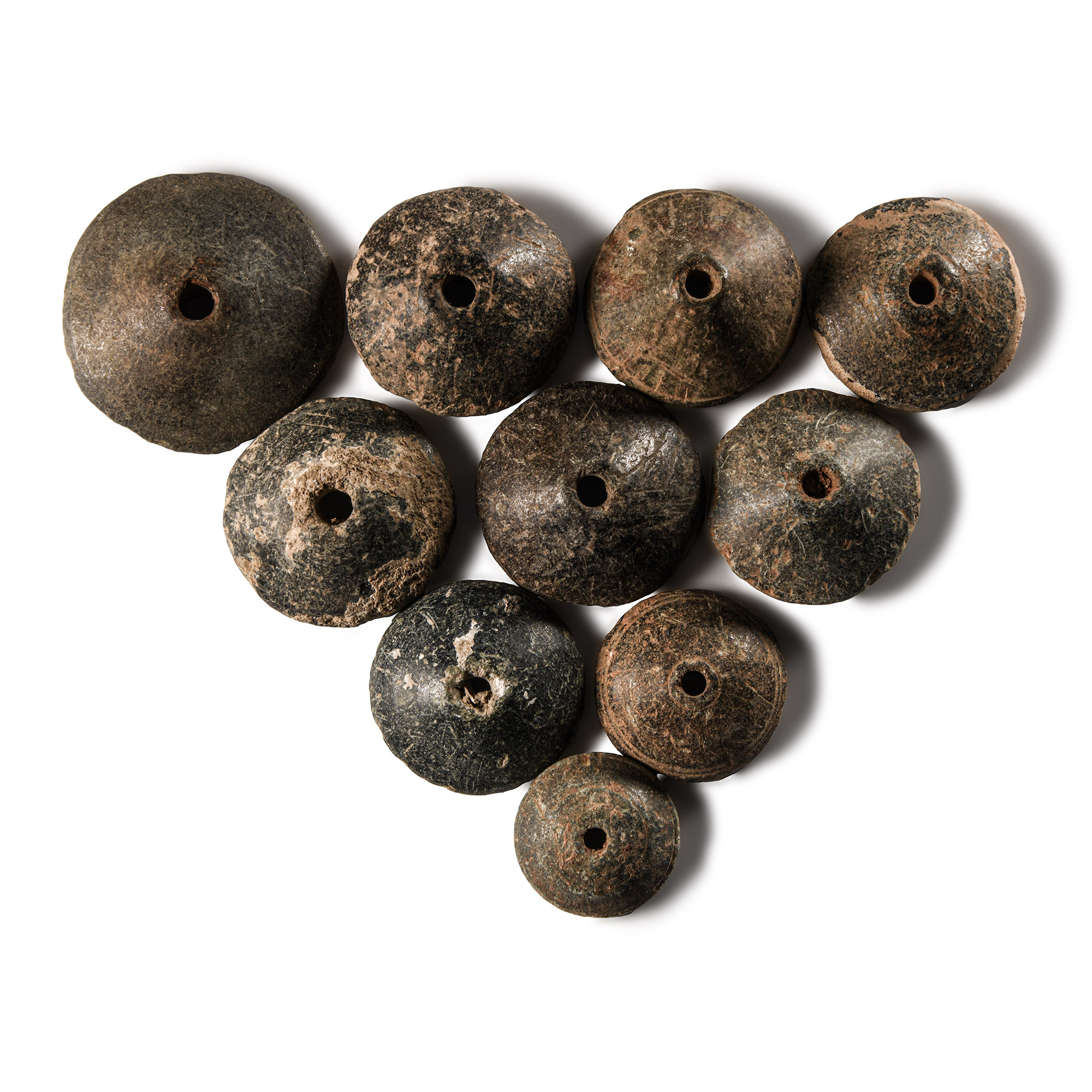
Greek Stone Spindle Whorl Collection
3RD-2ND CENTURY B.C.
3/4 - 1 3/8 in. (106 grams total, 21-36 mm).
Group of plano-convex schist spindle whorls, each with a central vertical hole. [10, No Reserve]
ProvenancePrivate collection formed in the 1990s.
Acquired from a central London gallery.
Property of an Essex gentleman.
Accompanied by an old Coincraft certificate of authenticity.
TimeLine Auctions follows a vetting process to ensure the authenticity and legality of all items, reinforcing our commitment to integrity and responsible trading. Each antiquity, antique, and coin lot undergoes thorough examination by a vetting committee of at least ten external specialists, professional trade association members, scientists, and archaeologists: Our Vetting Process
AUCTIONS:
TimeLine is a leading auction house specialising in antiquities, ancient art, collectables, natural history, coins, medals, and books. Our auctions offer museums, collectors, historians, and enthusiasts the opportunity to acquire unique and historically significant pieces.
-
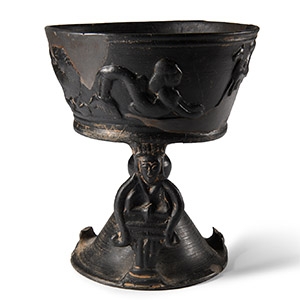
Etruscan Bucchero Chalice with Mythical Beasts, Animals, and Caryatid
Circa 7th-6th century B.C.Sold for (Inc. bp): £650
Blackware vessel comprising a broad bowl with frieze of animals (boar, lion, sphinx, horse); trumpet-shaped base with supporting caryatid; some restoration. 502 grams, 17 cm high
From the Steel family collection, 1950s-late 1990s. -
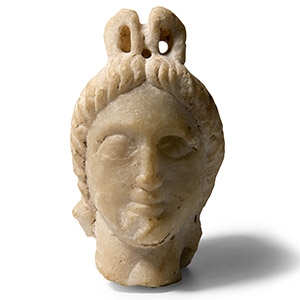
Graeco-Parthian Marble Head of a Divinity
2nd century B.C.-1st century A.D.Estimate: £1,200 - 1,700 (‡+bp*)
Opening Bid: £600
With elongated face and large almond-shaped eyes; braided hair with openwork topknot and socket to accept an inset stud, gathered at the rear in a chignon. 639 grams, 11.6 cm
Acquired early 1990s. Ex private American collection; thence by descent. Private Swiss collection since 1998. This lot has been checked against the Interpol Database of stolen works of art and is accompanied by search certificate no.11611-199026.
Several female figures, found in the Parthian graves of Babylonia, are represented in loose attire exhibiting unusual headdresses, which give us some notion of the costume of the period. Some of them show a headgear rising into two tall conical peaks, from which a veil is suspended. Nude female figures, probably representing Assyrian Mylitta or Venus, were extremely common during the Parthian period, having been handed down from antiquity. Similar figures are universal throughout the east before the Christian era. -

Nuragic Bronze Head of a Tribal Chief
Circa 8th century B.C.Sold for (Inc. bp): £520
The head covered by a small low-top cap; sharp and pronounced nose, prominent eyebrows, small swollen mouth; the hair divided into two braids; mounted on a custom-made display stand. 53 grams total, 91 mm including stand
Ex Frank Sternberg collection, Zürich, Switzerland, circa 1980-1985. Property of an East Sussex, UK, private collector.
Despite being stylised representations, these bronzes detail the material culture of warriors, tribal leaders, priests, athletes, men and women of the late Bronze Age and Iron Age Sardinian society.
