
Loading, please wait...
_900x900.jpg "Greek Solid Gold Ring Idol")
_200x200.jpg "Greek Solid Gold Ring Idol")
.jpg "Greek Solid Gold Ring Idol")
LOT 0107
Greek Solid Gold Ring Idol
5TH-4TH MILLENNIUM B.C.
3/4 in. (0.66 grams, 18 mm).
Annular in form with pierced tab.
ProvenancePrivate collection, acquired in the late 1980s-early 1990s; thence by descent.
LiteratureCf. Mărgărit M., and Boroneanț, A., Beauty and the eye of Beholder, personal adornment across the millennia, Targoviște, 2020, fig.2p, for a similar gold ‘Ring Idol’ Pendant from Megalo Nisi Galanis.
FootnotesDuring the Greek Neolithic, certain types of ornaments share common morphological characteristics; one such example is the so-called ‘ring-idols’. The prototype of these ring-shaped pendants seems to have been made out of gold, which began to be used during these late phases of the Neolithic in Greece and the Balkans, in general.
CONDITIONTimeLine Auctions follows a vetting process to ensure the authenticity and legality of all items, reinforcing our commitment to integrity and responsible trading. Each antiquity, antique, and coin lot undergoes thorough examination by a vetting committee of at least ten external specialists, professional trade association members, scientists, and archaeologists: Our Vetting Process
AUCTIONS:
TimeLine is a leading auction house specialising in antiquities, ancient art, collectables, natural history, coins, medals, and books. Our auctions offer museums, collectors, historians, and enthusiasts the opportunity to acquire unique and historically significant pieces.
-
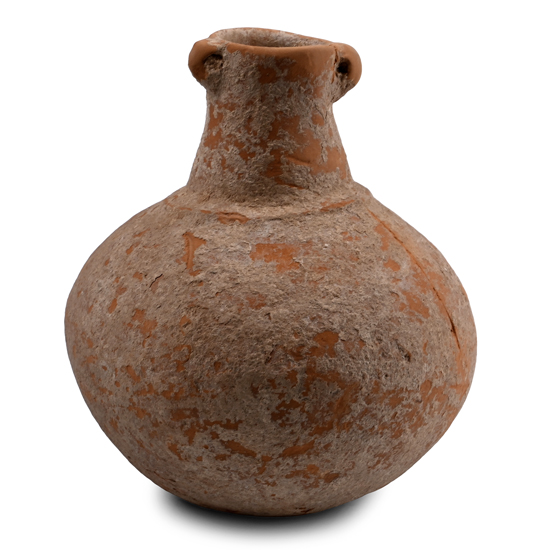
Eastern Mediterranean Terracotta Vessel
Bronze Age, 2nd-1st millennium B.C.Sold for (Inc. bp): £78
Globular in profile with flat base and tapering neck, lateral pierced lugs at the mouth. 265 grams, 13.5 cm
Acquired on the UK art market before 2000. Property of an Essex, UK, gentleman. -
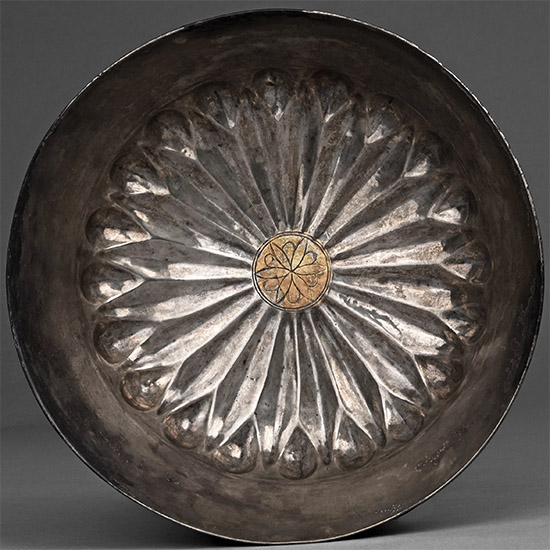
Greek Silver-Gilt Phiale with Petals and Lozenges
6th-4th century B.C.Sold for (Inc. bp): £4,680
Broad lotiform bowl with flared rim, flat mesomphalos with incised rosette and gilt finish. 412 grams, 18.5 cm
Private collection, London, UK. with Gorny and Mosch, 19 June 2013, no.34. Private collection, London, UK. This lot has been checked against the Interpol Database of stolen works of art and is accompanied by search certificate number no.13280-253528. -
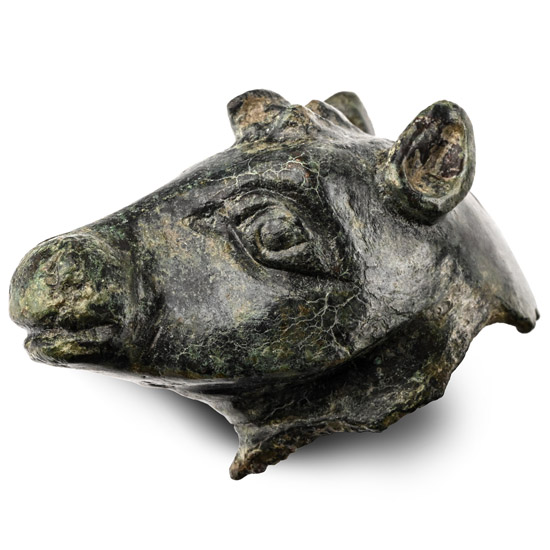
Greek Bronze Horse Head Mount
Circa 4th-3rd century B.C.Estimate: £200 - 300 (+bp*)
Opening Bid: £100
Modelled in the round with large almond-shaped eyes and pricked ears. 34.8 grams, 38 mm
Ex German art market, 2000s. Acquired from an EU collector living in London. From the collection of a Surrey, UK, gentleman.
