
Loading, please wait...
LOT 0490
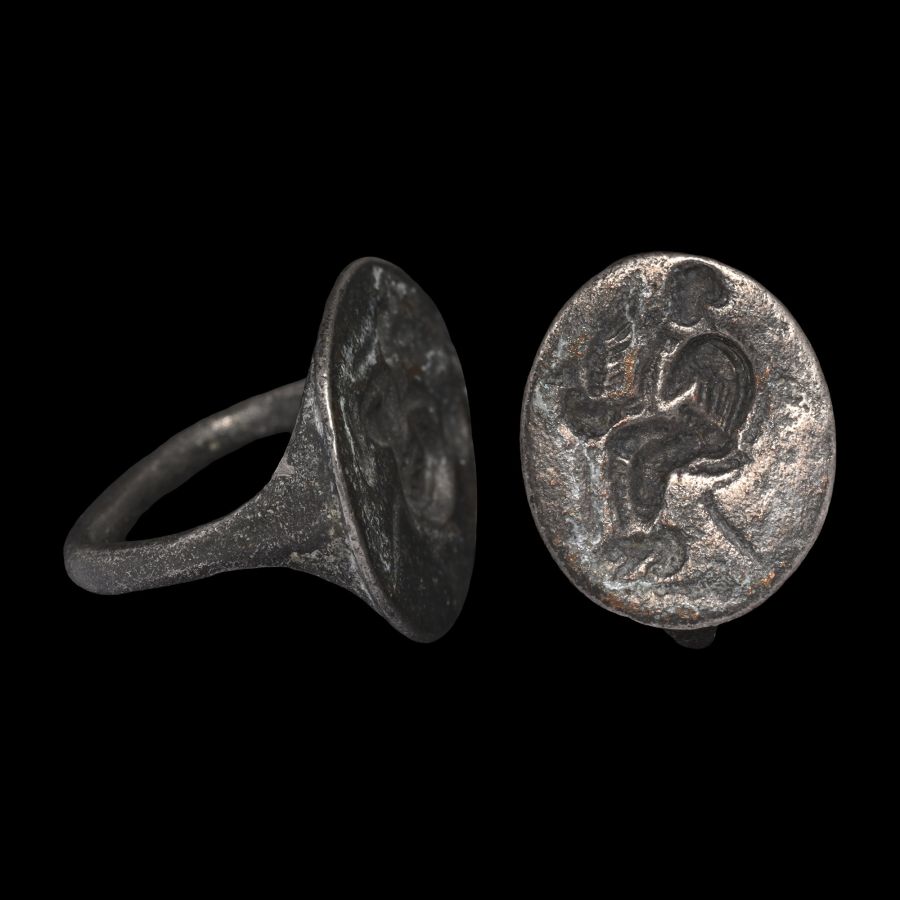
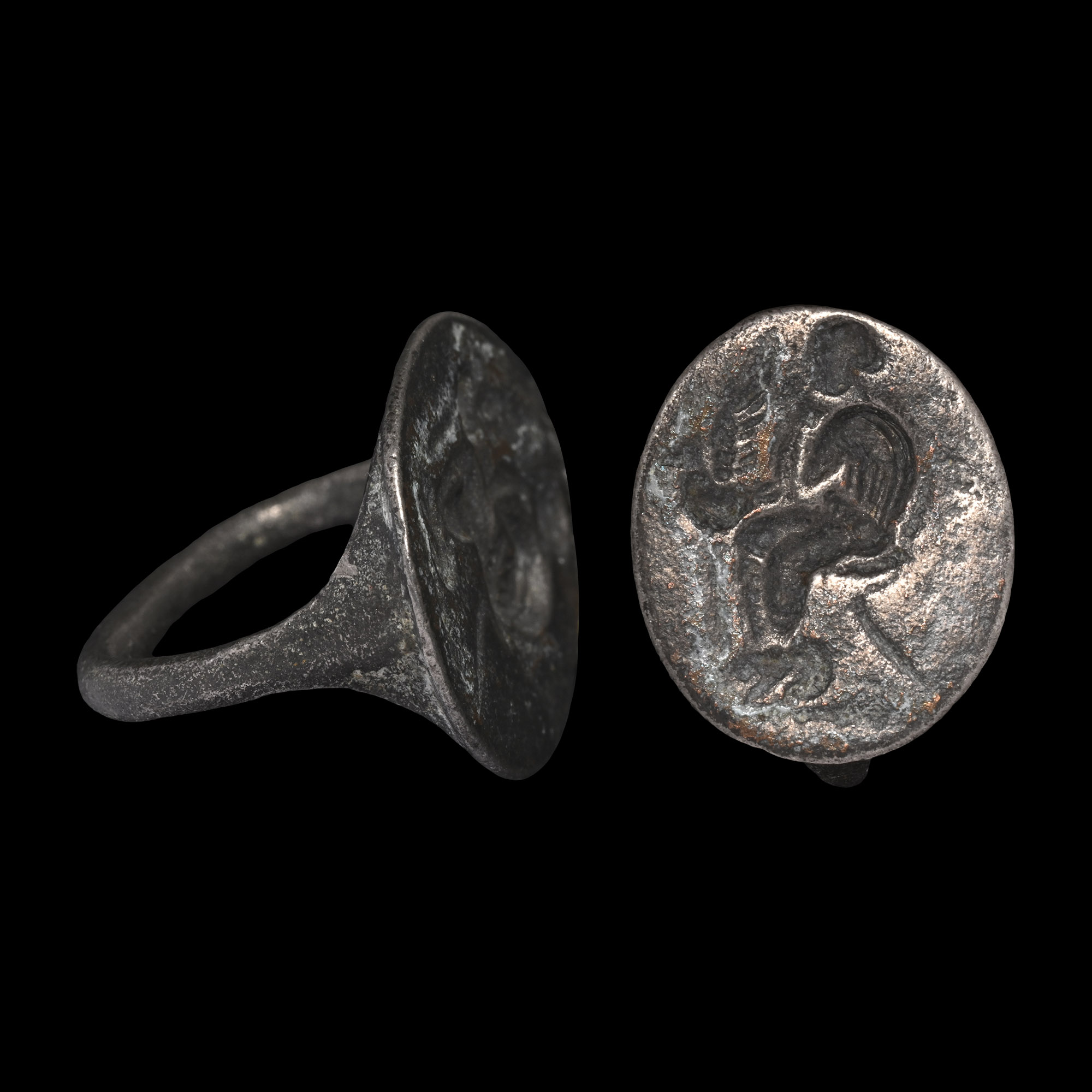
Greek Silver Ring with Seated Goddess Holding a Dove
HELLENISTIC, 4TH-2ND CENTURY B.C.
1 in. (6.35 grams, 23.20 mm overall, 19.55 x 12.60 mm internal diameter (approximate size British I, USA 4 1/4, Europe 7.44, Japan 7)).
Featuring a round-section hoop and a large oval bezel with a seated goddess holding a dove with open wings. [No Reserve]
ProvenanceFrom the private collection of a European gentleman (1942-2024), formed since the 1970s.
CONDITIONTimeLine Auctions follows a vetting process to ensure the authenticity and legality of all items, reinforcing our commitment to integrity and responsible trading. Each antiquity, antique, and coin lot undergoes thorough examination by a vetting committee of at least ten external specialists, professional trade association members, scientists, and archaeologists: Our Vetting Process
AUCTIONS:
TimeLine is a leading auction house specialising in antiquities, ancient art, collectables, natural history, coins, medals, and books. Our auctions offer museums, collectors, historians, and enthusiasts the opportunity to acquire unique and historically significant pieces.
-
.jpg)
Etruscan Amber Head Pendant
Etruria, 5th century B.C.Sold for (Inc. bp): £2,210
Carved from translucent red-brown amber as a profile head with stylised Archaic features, large almond eye beneath a defined brow ridge, a softly smiling mouth, and carefully delineated hair arranged in striated bands sweeping back from the face; a drilled perforation at the crown indicates its original function as a suspended ornament; accompanied by a display stand. 23 grams, 50 mm (242 grams total, 81 mm including stand)
Sotheby's, London, 14-15 December 1981, no.206. American private collection; acquired at the above sale. This lot has been checked against the Interpol Database of stolen works of art and is accompanied by search certificate number no.13329-257968.
Amber was a prestigious imported material in Etruria, highly prized for its rarity, colour, and perceived apotropaic power. From the late 6th century B.C. onwards, figured amber pendants appear in elite tombs, particularly those of women, reflecting both personal identity and a protective role within funerary belief systems. The prominent, wide-open eye here may have served as a talismanic motif, thought to ward off malign forces and ensure the wearer’s vigilance and well-being in life and beyond the grave. This piece reflects the distinctive aesthetic of Etruscan amber carving, in which Mediterranean influences are reinterpreted with a locally expressive sculptural style. -
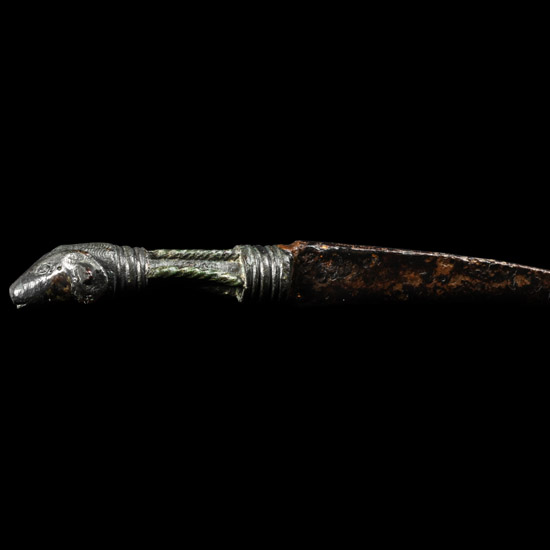
Graeco-Roman Bronze Ram-Headed Iron Knife
1st century B.C.-1st century A.D.Sold for (Inc. bp): £2,080
Comprising a single-edged knife set with a balustered bronze handle with rope decoration, and the pommel formed as a ram with curving horns. 26.5 grams, 11 cm
Ex German art market, 2000s. Acquired from an EU collector living in London. From the collection of a Surrey, UK, gentleman. -
.jpg)
Etruscan Bronze Statue of a Satyr
Circa 6th century B.C.Sold for (Inc. bp): £6,500
Modelled in the round in energetic pose with left hand resting on the hip and right arm raised, head tilted slightly upwards, tail curled gracefully over the rump; on a square base with papyrus stalk detailing; on a later gilt-metal stand mounted on a polished stone cube. 679 grams total, 20.4 cm including stand
Iris Cornelia Love (1933–2020), New York, collection primarily formed in the 1950s-1970s. This lot has been checked against the Interpol Database of stolen works of art and is accompanied by search certificate number no.13335-258241.
Many of the scenes show satyrs in Etruscan art transgressing the limits of accepted behaviour. As symbol of inversion of order, the satyr reflects the rules of the life and culture of the Etruscans and their values. Satyrs in comic, surprising situations indicate the Etruscans' sense of humour. They got their inspiration from Greek art when illustrating myths and narratives, often with a light-hearted approach of their own. The Etruscans were known to be devoted to religious rites and satyrs appear in such scenes too. Satyrs, connected with the Dionysian cortege, appear also on vases in sacrifice scenes and it is suggested here that satyrs dancing and gambolling around a wine vessel are performing a cultic dance in honour of Dionysos.
