
Loading, please wait...
LOT 0080
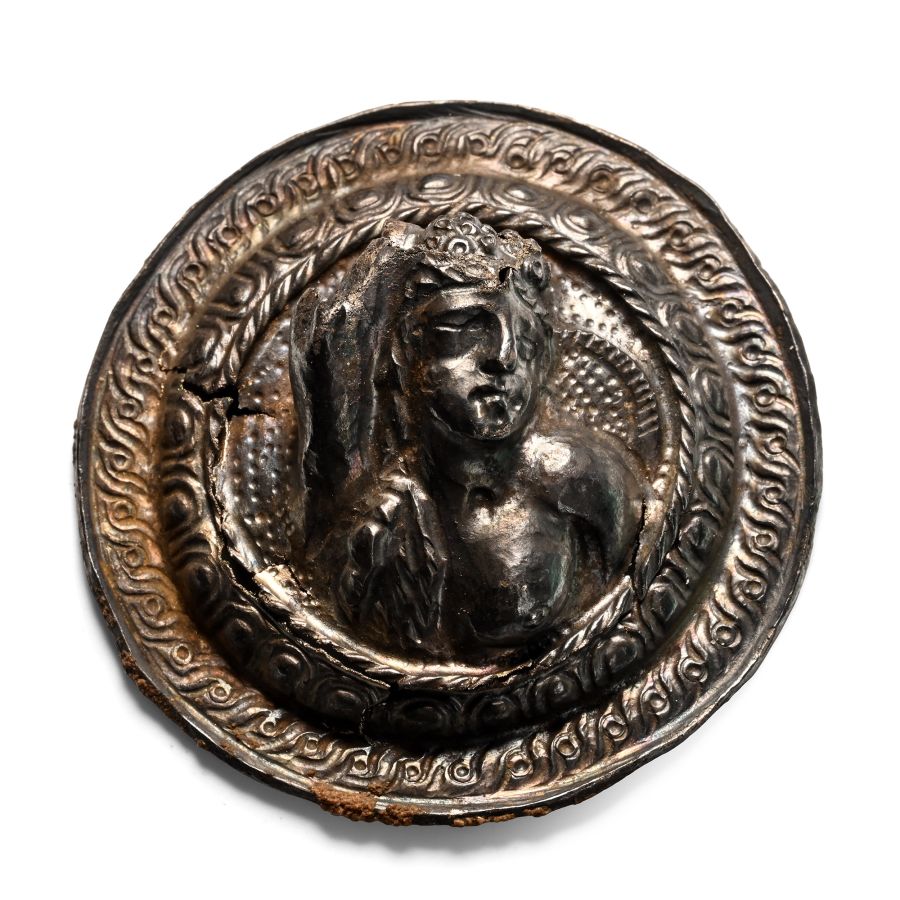
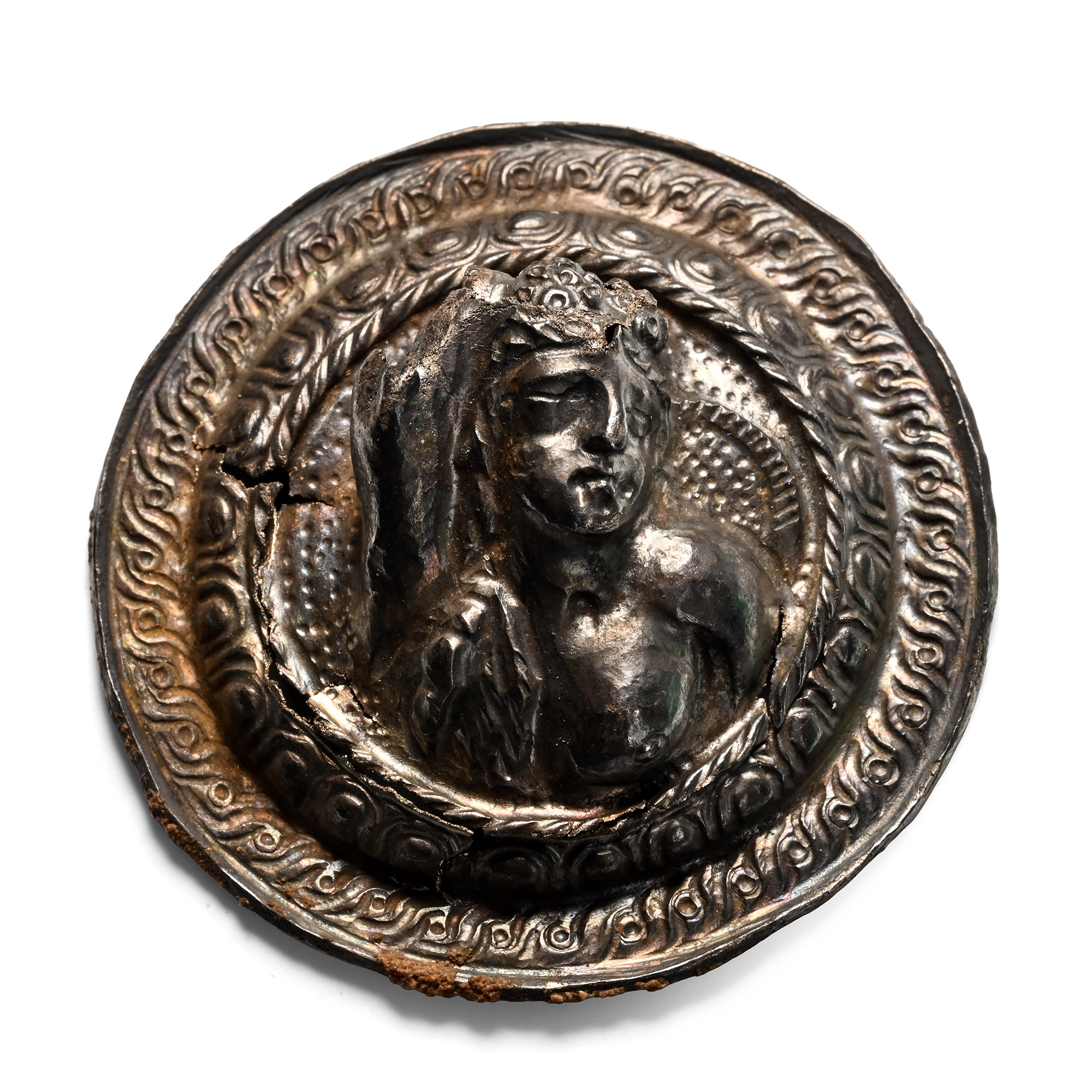
Greek Silver Phalera with Dionysus
3RD-2ND CENTURY B.C.
1 1/2 in. (5.28 grams, 41 mm).
Discoid in plan with returned rim, guilloche to the outer field and egg-and-dart to the dome; central bust of Dionysus modelled in high-relief with garland in his hair.
ProvenancePrivate collection, assembled in the 1950s-1970s, thence by descent.
LiteratureCf. similar phalera with gorgoneion in the British Museum under accession no.1854,0717.23.
CONDITIONTimeLine Auctions follows a vetting process to ensure the authenticity and legality of all items, reinforcing our commitment to integrity and responsible trading. Each antiquity, antique, and coin lot undergoes thorough examination by a vetting committee of at least ten external specialists, professional trade association members, scientists, and archaeologists: Our Vetting Process
AUCTIONS:
TimeLine is a leading auction house specialising in antiquities, ancient art, collectables, natural history, coins, medals, and books. Our auctions offer museums, collectors, historians, and enthusiasts the opportunity to acquire unique and historically significant pieces.
-
.jpg)
Greek Red-Figure Kantharos with Lady of Fashion
Apulian, 3rd-2nd century B.C.Sold for (Inc. bp): £1,040
High-handled cup with flared body and a tall offset foot with a collar, coiled lateral handles; profile 'ladies of fashion' busts with white and cream detailing to the hair, diadem and earrings. 415 grams, 18.6 cm
Acquired on the art market between the late 1990s and mid-2000s. Estate of the late Barry Paul Buxton (1944–2024), Oakham, Rutland. Acquired on the UK art market, 2025. -
.jpg)
Phoenician Terracotta Bulla with a Dolphin
5th century B.C.Estimate: £150 - 200 (‡+bp*)
Opening Bid: £80
Plano-convex in profile with impressed dolphin and legend. 1.05 grams, 17.71 mm
Acquired in 1994. Private collection, Switzerland, thence by descent. Private collection, since the late 1990s. -
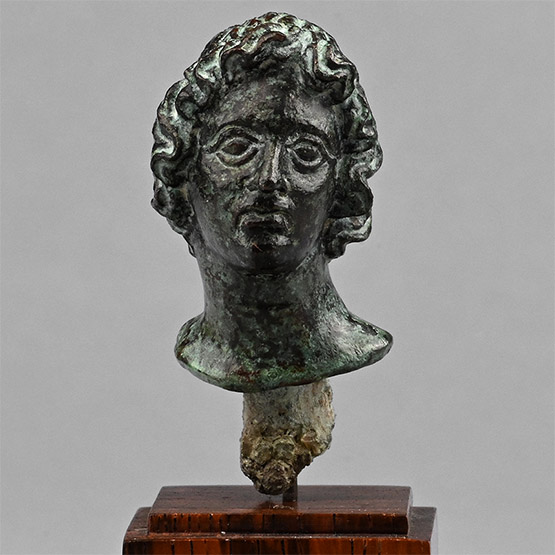
Greek Head of Alexander The Great
3rd-2nd century B.C.Sold for (Inc. bp): £5,720
Modelled in the round with wavy hair brushed forward, large lentoid eyes in low-relief, angular nose and small mouth; attachment lug to underside, rich lead/copper alloy; mounted on a custom-made stand. 142 grams total, 10.2 cm including stand
Collection of Mr C., Geneva, Switzerland (1936-2016), assembled between 1985 and 2010. This lot has been checked against the Interpol Database of stolen works of art and is accompanied by a search certificate number no.12857-241703.
