
Loading, please wait...
LOT 0093
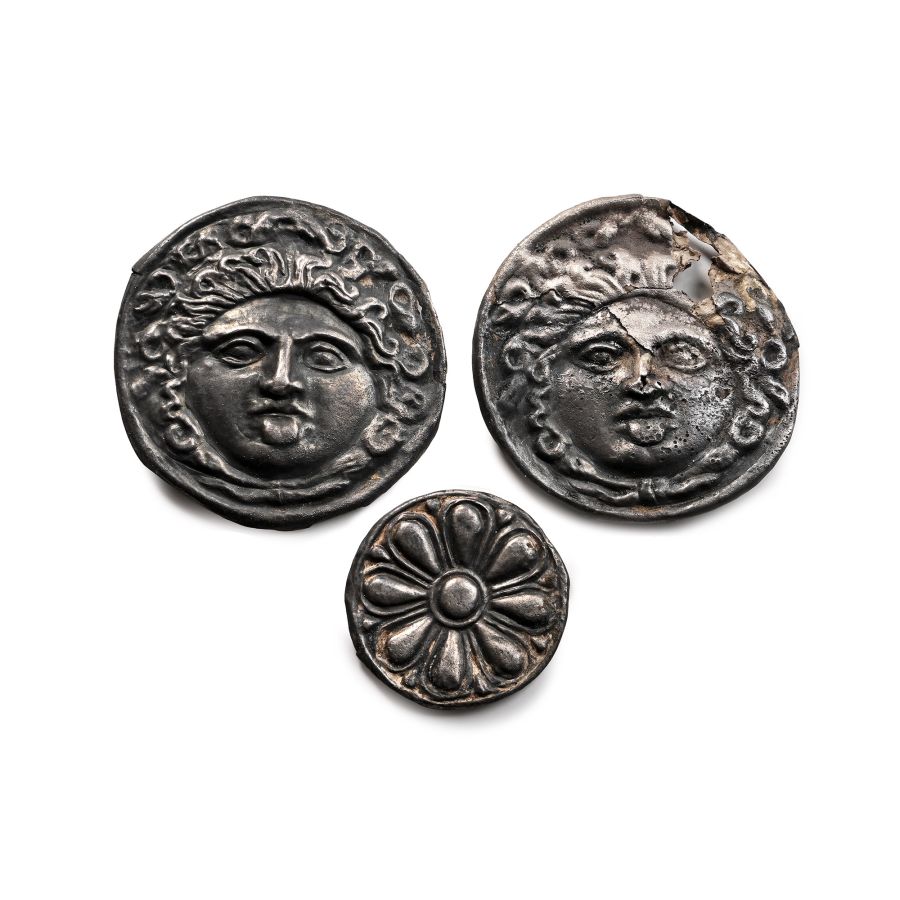
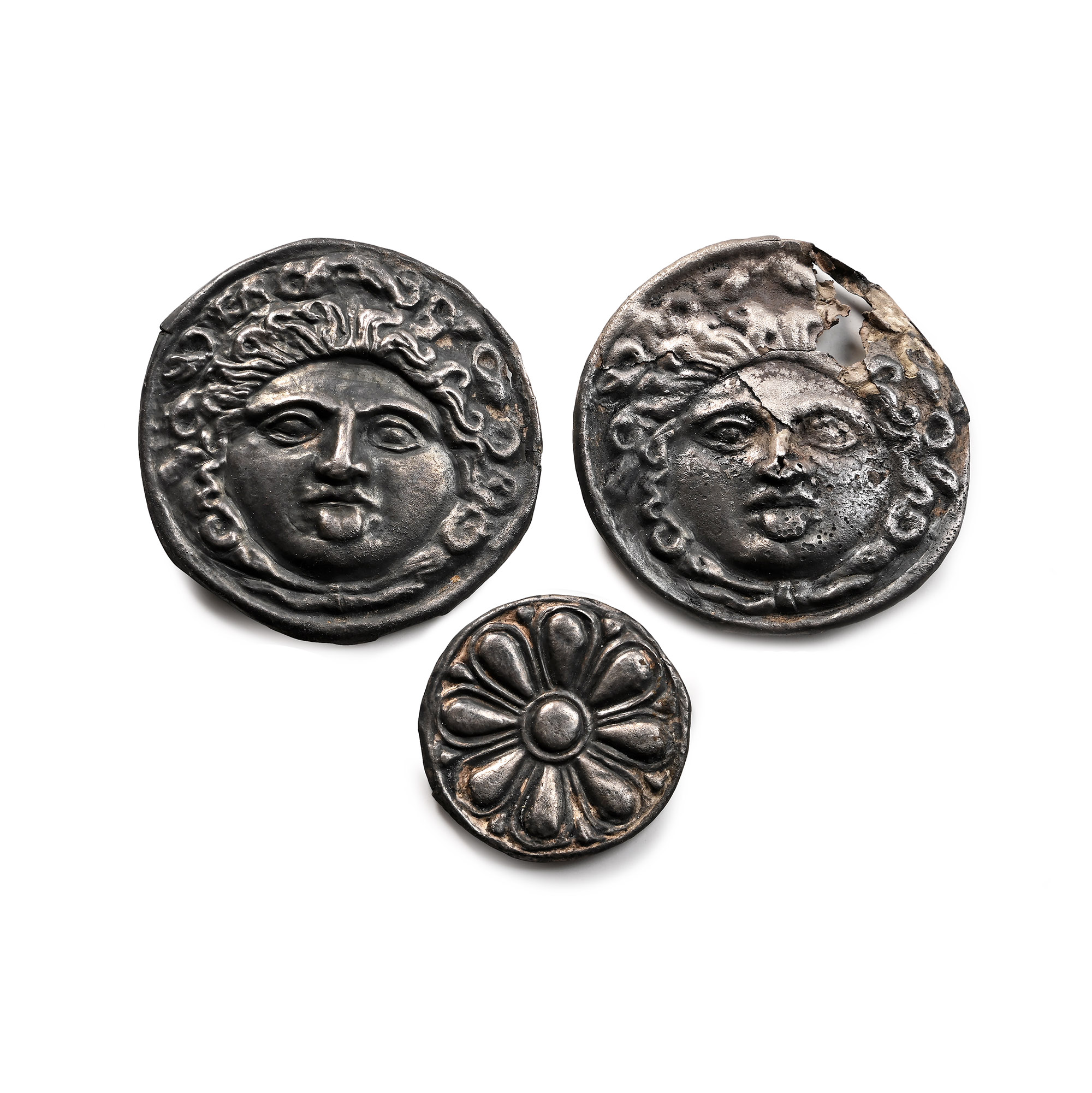
Greek Silver Medusa Repoussé Horse Harness Phalera Group
CIRCA 2ND-1ST CENTURY B.C.
1 1/4 - 2 in. (14.2 grams total, 31-50 mm).
Comprising: two sheet silver phalerae, each with a facing gorgoneion motif and fragments of a third; sheet-silver roundel with a lotiform rosette motif. [5, No Reserve]
ProvenancePrivate collection formed in Europe in the 1980s.
Westminster collection, central London, UK
Cf. Treister, M., ‘A treasure of the Late Hellenistic Phalerae from the Vicinities of Taganrog (1897): New Data’ in Art and Memory, Papers in Honor of 80th Anniversary of Ivan Marazov, Sofia, 2023, pp.231-256, figs.1ff., especially the rosette, fig.3; for Hellenistic phalerae with the image of Gorgon see Sîrbu, V., Bârca, V., ‘9 Figurative Representations on the Phalerae Found between the Ural, the Caucasus and the Balkan Mountains (2nd -1st century BC)’ in 2016, pp.272-321, figs.9.3 (nos.1,3) and 9.8 (no.1).
FootnotesSimilar phalerae were manufactured in the Greek workshops of Olbia or the northwestern Black Sea Region, including the Bosphorus and Asia Minor. These pieces were the top decorations of domed phalerae, used by Hellenistic horsemen, Thracians and Sarmatians. They were characterised by a variety of border designs, while, although rare, some of them have the upper part decorated with a frieze of horizontally arranged floral patterns. The image of Gorgon-Medusa is very common.
CONDITIONTimeLine Auctions follows a vetting process to ensure the authenticity and legality of all items, reinforcing our commitment to integrity and responsible trading. Each antiquity, antique, and coin lot undergoes thorough examination by a vetting committee of at least ten external specialists, professional trade association members, scientists, and archaeologists: Our Vetting Process
AUCTIONS:
TimeLine is a leading auction house specialising in antiquities, ancient art, collectables, natural history, coins, medals, and books. Our auctions offer museums, collectors, historians, and enthusiasts the opportunity to acquire unique and historically significant pieces.
LOT 0093
Greek Silver Medusa Repoussé Horse Harness Phalera Group
Estimate £600 - 800€700 - 930 (for guidance only)$810 - 1,080 (for guidance only)
-
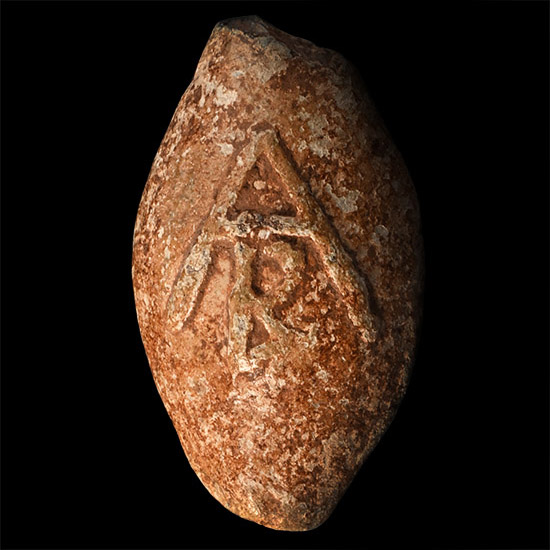
Greek Lead Slingshot of Alexander the Great, The Invincible
336-323 B.C.Estimate: £200 - 300 (+bp*)
Opening Bid: £100
Biconical in profile with reserved monogram 'AB' for ΑΛΕΞΑΝΔΡΟΥ ΒΑΣΙΛΕΩΣ' (Αlexandrou Basileos) to the obverse and a laurel wreath to the reverse. 26.4 grams, 29 mm
Previously property of an Austrian collector, Vienna, Austria. From a German private collection, formed since the 1980s.
In the case of Alexander III, who never lost a battle, the laurel wreath began to be an important attribute already during his lifetime. This is best illustrated on coins, cf. a gold stater struck c. 330/325-320 (NAC auction 169, lot 74): Nike stands in the centre on the reverse holding a laurel wreath, with the name of Alexander behind the goddess on the right. -
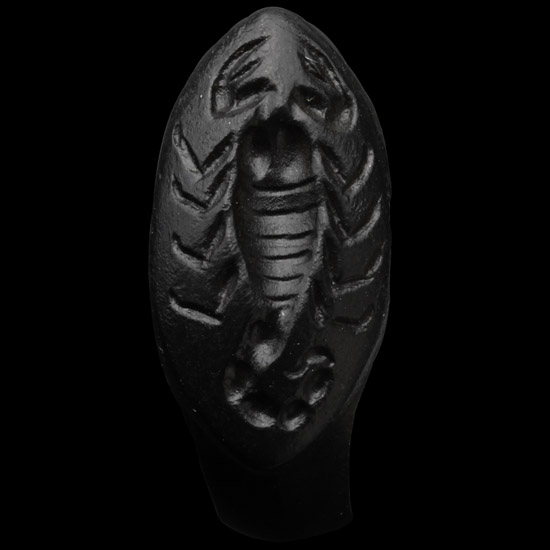
Greek Bronze Ring with Scorpion
Circa 4th-3rd century B.C.Estimate: £150 - 200 (+bp*)
Opening Bid: £70
D-section hoop with vesica-shaped bezel depicting a scorpion. 7.12grams, 25.64 mm overall, 19.49 x 20.80 mm internal diameter (approximate size British T 1/2, USA 9 3/4, Europe 21.89, Japan 21)
Ex German art market, 2000s. Acquired from an EU collector living in London. From the collection of a Surrey, UK, gentleman. -
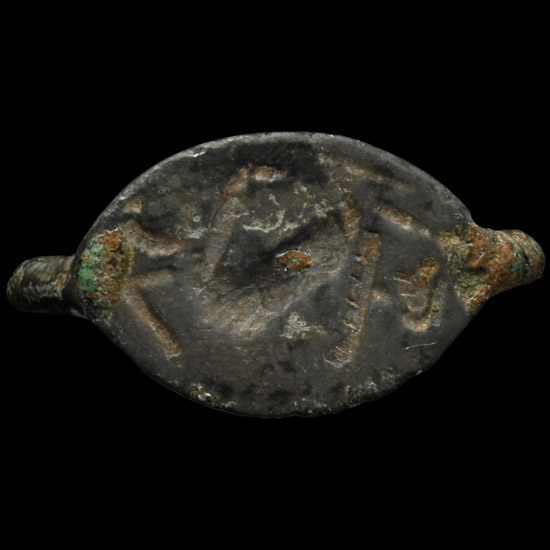
Greek Bronze Ring with Animal or Centaur
3rd-2nd century B.C.Estimate: £40 - 60 (+bp*)
Opening Bid: £5
Scaphoid bezel wth incuse winged gryphon in profile. 1.63 grams, 19.86 mm overall, 16.50 x 15.17 mm internal diameter (approximate size British K, USA 5 1/4, Europe 9.95, Japan 9)
From the private collection of a European gentleman (1942-2024), formed since the 1970s.
