
Loading, please wait...
LOT 0079
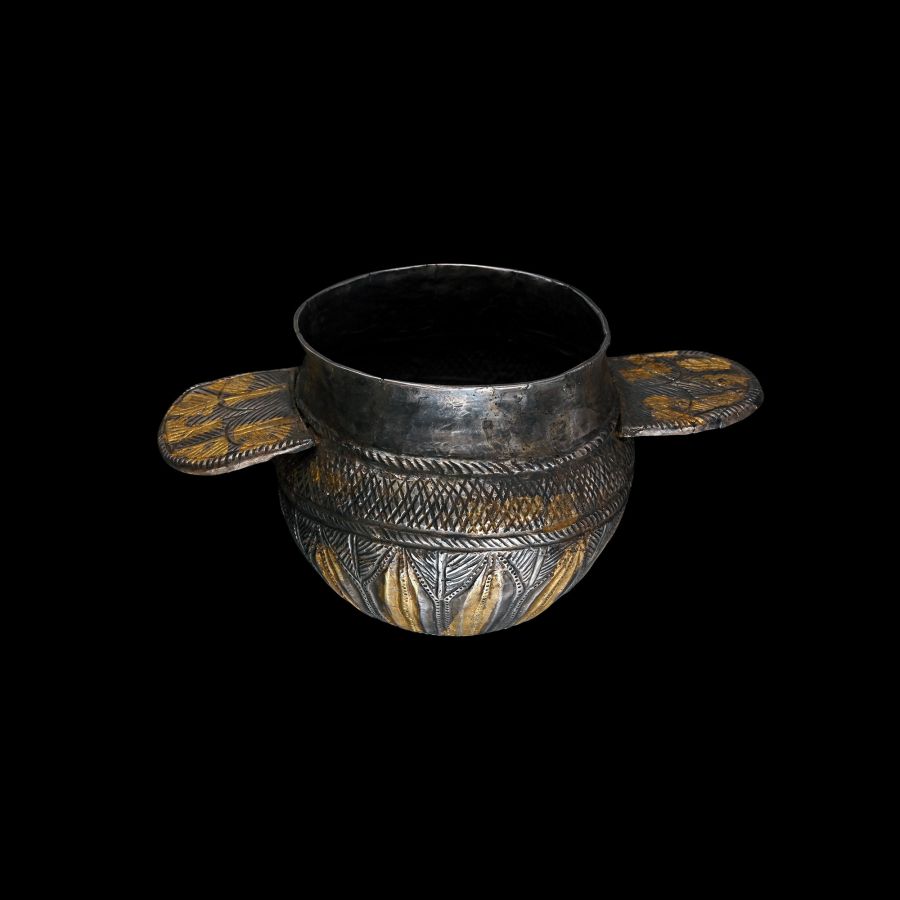
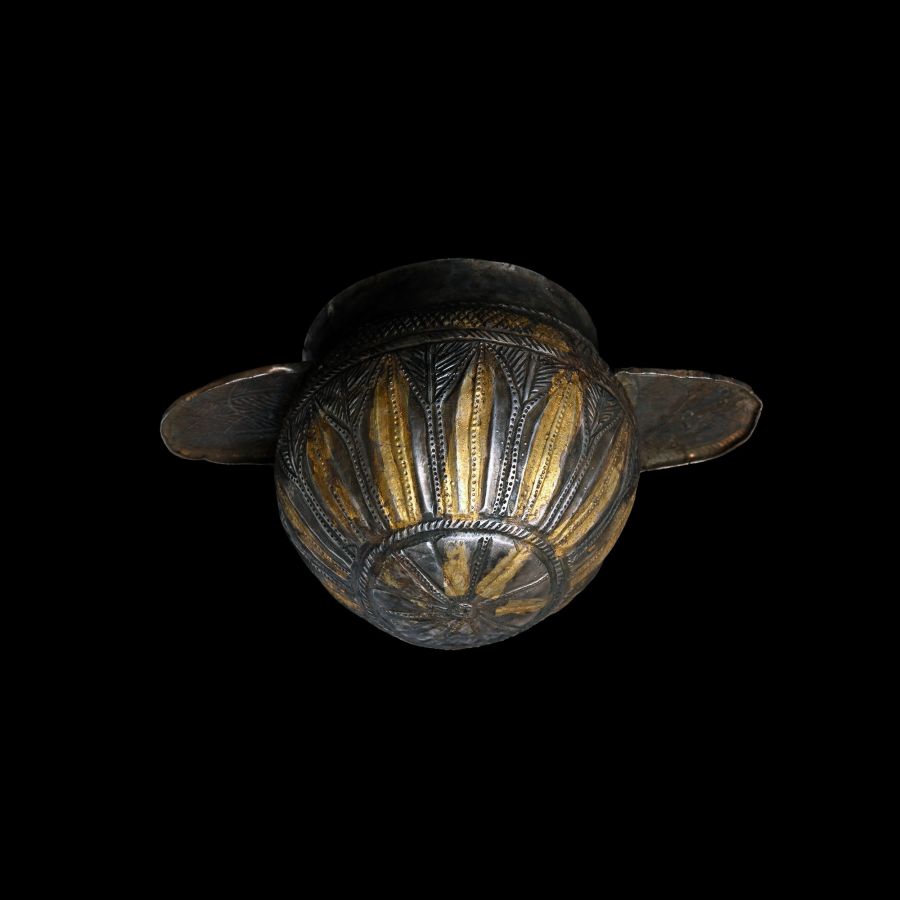
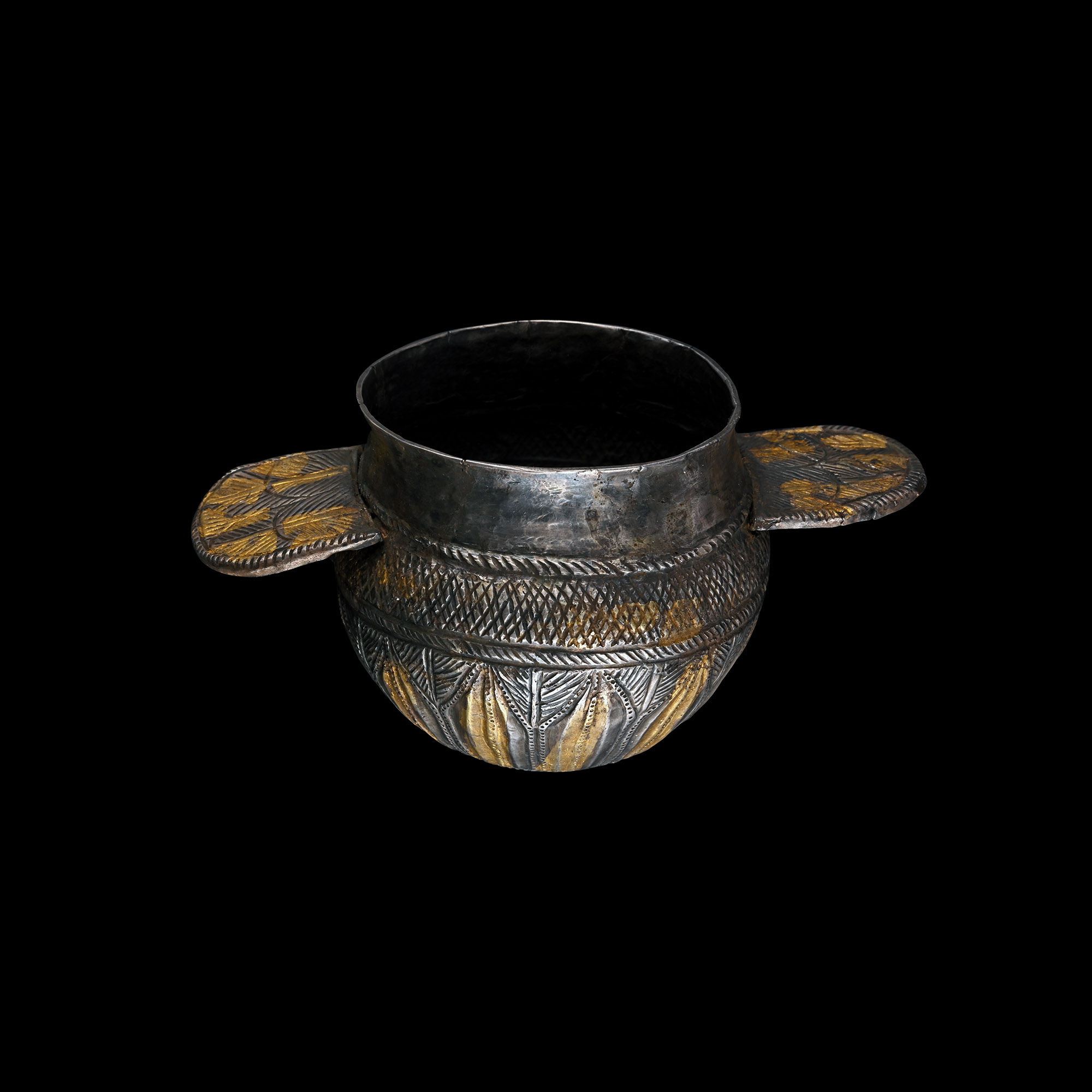
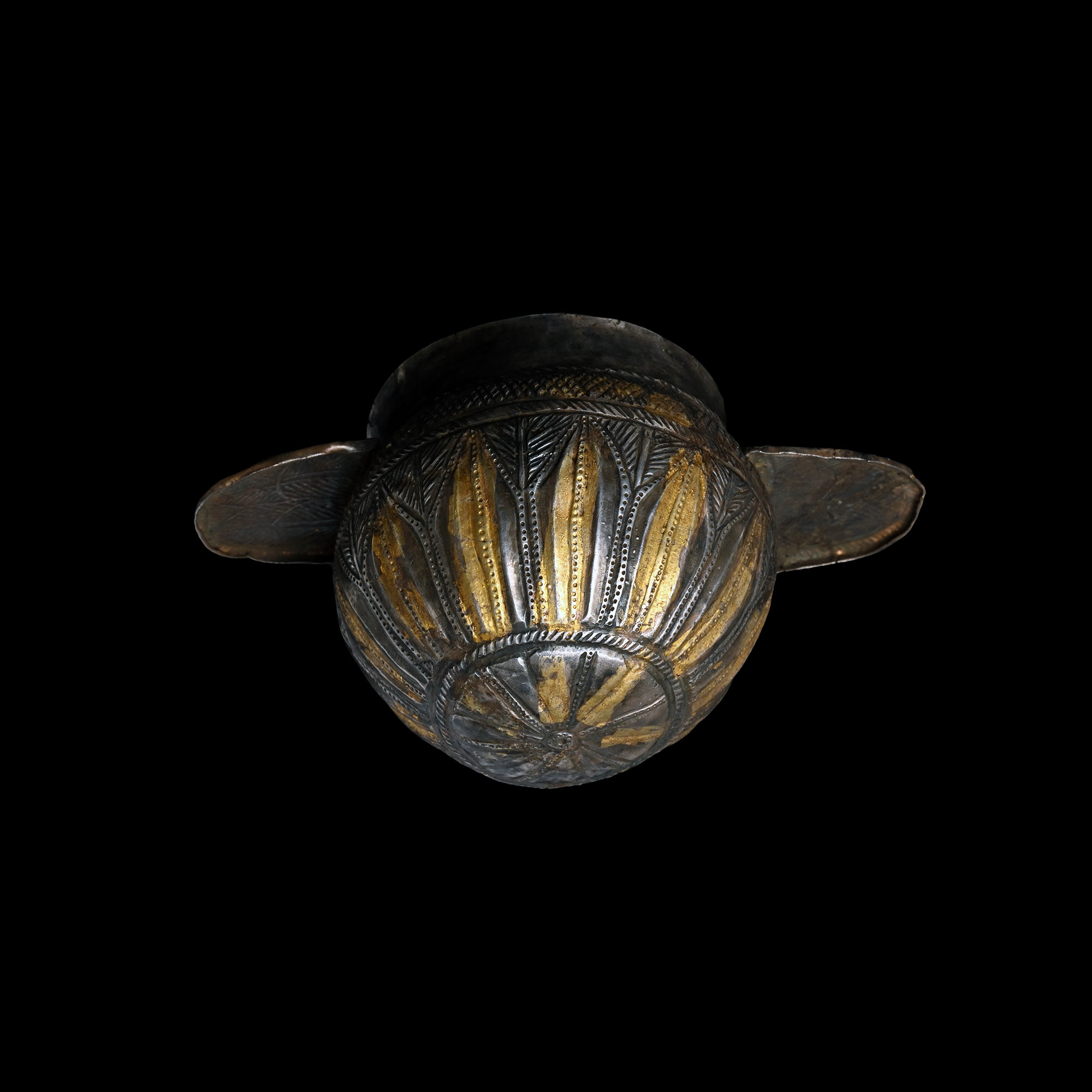
Greek Silver-Gilt Wine Cup with Handles
HELLENISTIC, 2ND-1ST CENTURY B.C.
6 1/8 in. (179 grams, 15.5 cm wide).
Comprising a globular body with a rounded underside, a repoussé rosette with ropework border, segmented band with leaf detailing, hatched shoulder framed by ropework bands, scooped neck with chamfered rim; two D-shaped ledge handles with recessed rim, ropework border, hatched panels; accompanied by a custom-made display case.
ProvenanceAcquired on the US art market, early 1990s.
Private collection, North America.
Ex private collection, USA.
TimeLine Auctions, 23 February 2023, no.48.
Private collection, London.
Accompanied by an academic report by Dr Raffaele D'Amato.
This lot has been checked against the Interpol Database of stolen works of art and is accompanied by a search certificate number no.13037-247507.
For similar floral and detailed vegetal decoration see the Hellenistic silver cup with high-relief acanthus leaves in the Toledo Museum of Art, inv.no.1975.11, in Oliver, A., Silver for the Gods 800 Years of Greek and Roman Silver, Toledo Museum of Art, 1977, pp. 78-79, no.43.; the bottom of a silver bowl from Magna Graecia, in the MET, inv. no 1981.11.19; Ebbinghaus, S., Feasting with gods, heroes, and kings, Cambridge, 2019; for a glass parallel see the gold-glass cup, from Iran, of 2nd-1st century B.C. in St. Helens, Lancashire, Pilkington Glass Museum (inv.17204) in Pfrommer, M., Metalwork from the Hellenized East, catalogue of the Collections in the Paul Getty Museum, Malibu, 1993, fig.37 p.39; see also idem, fig.5 p.118, Treasure I, p.119.
CONDITIONTimeLine Auctions follows a vetting process to ensure the authenticity and legality of all items, reinforcing our commitment to integrity and responsible trading. Each antiquity, antique, and coin lot undergoes thorough examination by a vetting committee of at least ten external specialists, professional trade association members, scientists, and archaeologists: Our Vetting Process
AUCTIONS:
TimeLine is a leading auction house specialising in antiquities, ancient art, collectables, natural history, coins, medals, and books. Our auctions offer museums, collectors, historians, and enthusiasts the opportunity to acquire unique and historically significant pieces.
-
.jpg)
Greek Attic Red-Figure Fragment Collection
Early 5th century B.C.Sold for (Inc. bp): £1,950
Comprising four irregular, finely painted fragments depicting: an outstretched hand below a letter, a young male face in profile, and a pair of horseheads. 6.31 grams total, 18-26 mm
From the stock of a former UK antiquarian, acquired at trade fairs and from private collection formed in the 1980s-1990s. Private collection, Europe. -
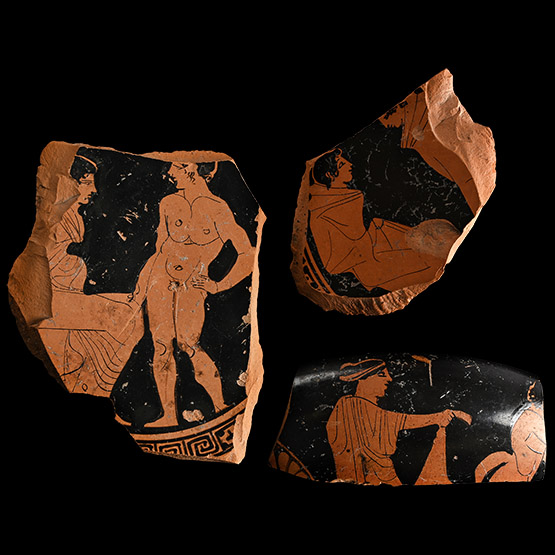
Greek Attic Red-Figure Fragment Collection
5th-4th century B.C.Sold for (Inc. bp): £1,950
Comprising irregular fragments depicting draped females, a standing nude male, a satyr body and a draped young man. 143 grams total, 87-116 mm
From the stock of a former UK antiquarian, acquired at trade fairs and from private collection formed in the 1980s-1990s. Private collection, Europe. -
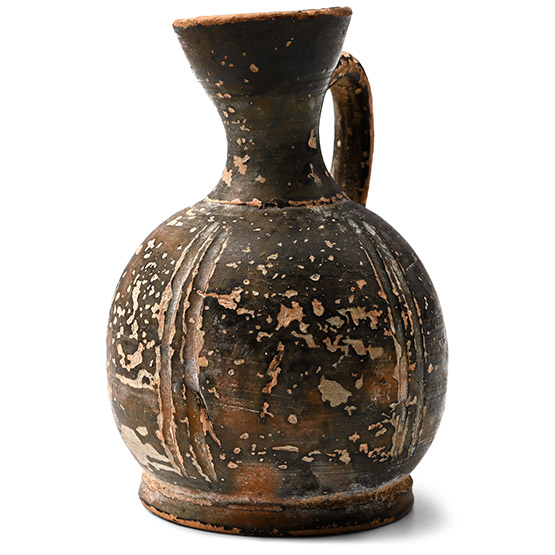
Greek Terracotta Handled Lekythos
4th-3rd century B.C.Sold for (Inc. bp): £124
Ovoid in profile with trumpet-shaped spout and strap handle, incised vertical bands to the bulbous body. 44.3 grams, 64 mm
From a Scottish gentleman’s collection, Glasgow, formed from the early 2000s.
