
Loading, please wait...
LOT 0059
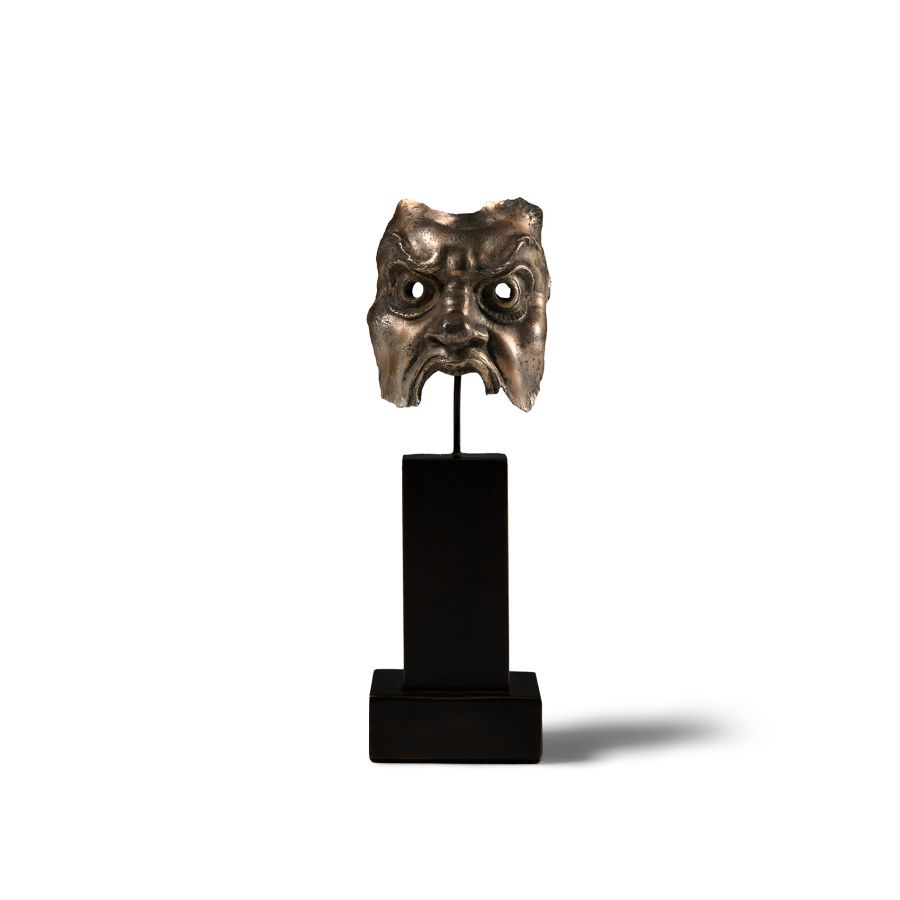
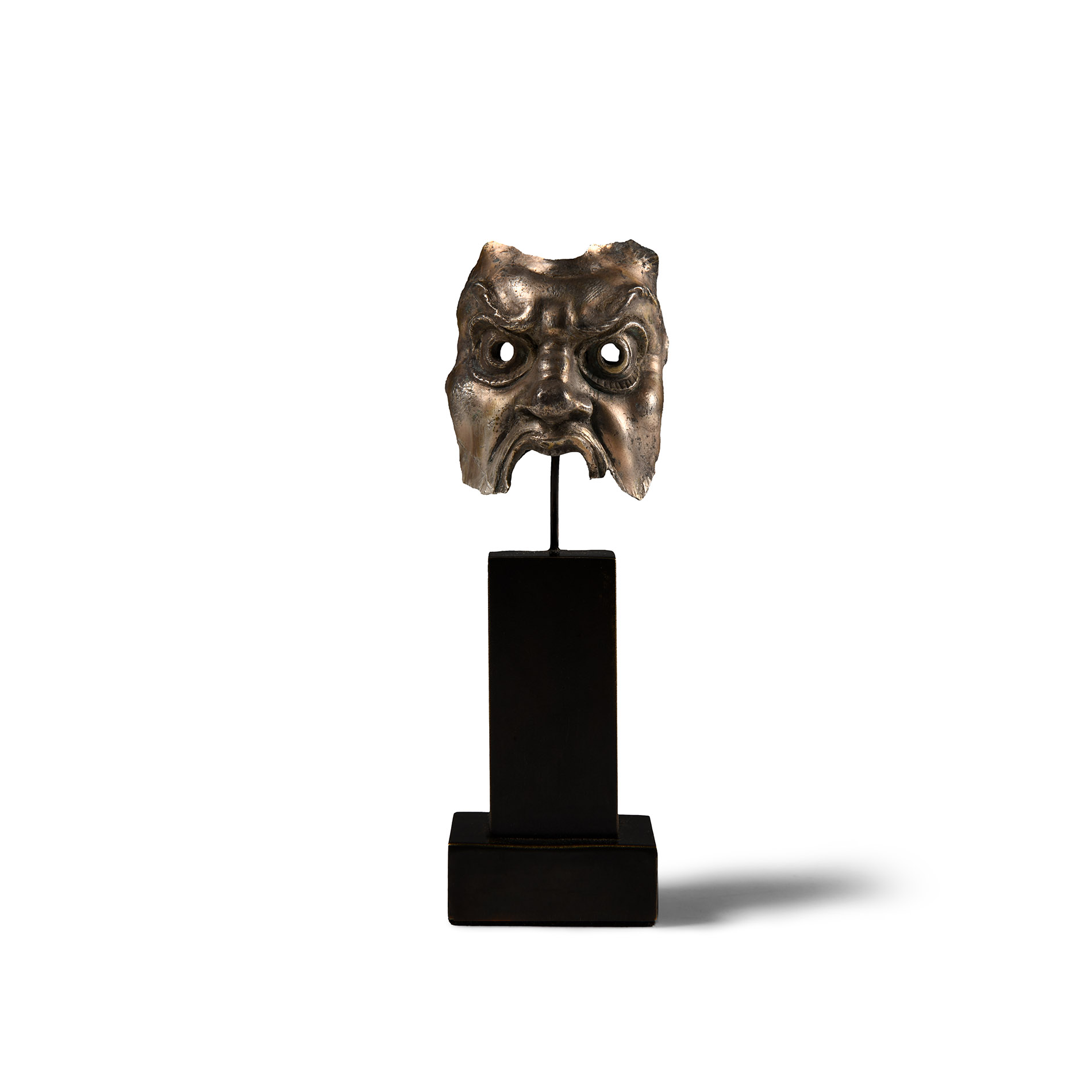
Greek Silver-Gilt Mask of Silenus
3RD-2ND CENTURY B.C.
1 1/2 in. (3 7/8 in.) (9.4 grams, 37 mm (160 grams total, 98 mm high including stand)).
Naturalistically modelled in repoussé as the mature and frowning face of the god Silenus; accompanied by a custom-made display stand.
ProvenanceEx old English collection.
London art market, 1980s.
This lot has been checked against the Interpol Database of stolen works of art and is accompanied by search certificate number no.11849-207741.
Cf. The Dallas Museum of Art, object number 1991.75.74.3, for a broadly comparable mask in gold.
FootnotesIn Greek mythology, Silenus was a god of the forest, associated with musical creativity, ecstatic dance and drunkenness. He was also a prophet and a bearer of dire wisdom. When the god Dionysus was born from the thigh of Zeus, Hermes took the infant to live with Silenus, where he was raised together with local nymphs in a cave on mount Nysa. Silenus was frequently present in the train of Dionysus, fought with the latter against the giants, and accompanied him on his adventures.
CONDITIONTimeLine Auctions follows a vetting process to ensure the authenticity and legality of all items, reinforcing our commitment to integrity and responsible trading. Each antiquity, antique, and coin lot undergoes thorough examination by a vetting committee of at least ten external specialists, professional trade association members, scientists, and archaeologists: Our Vetting Process
AUCTIONS:
TimeLine is a leading auction house specialising in antiquities, ancient art, collectables, natural history, coins, medals, and books. Our auctions offer museums, collectors, historians, and enthusiasts the opportunity to acquire unique and historically significant pieces.
-
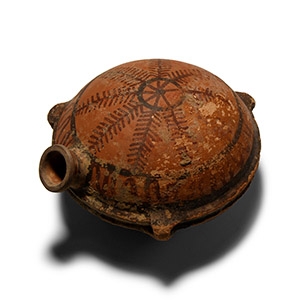
Eastern Mediterranean Flattened Terracotta Vessel with Bichrome Decoration
6th-4th century B.C.Estimate: £300 - 400 (+bp*)
Opening Bid: £150
Composed of a flask-shaped body with three loop handles to the equator for a carry cord, short spout, the upper or outer body displaying a bichrome painted geometric motif. 483 grams, 17 cm wide
Ex Rabi gallery, 1990s. Private collection of Iranian art. -
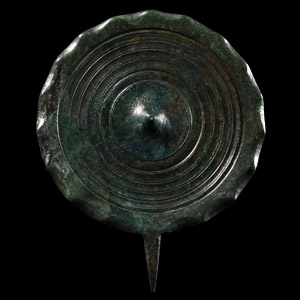
Hellenistic Bronze Decorated Mirror
2nd-1st century B.C.Sold for (Inc. bp): £260
With decorated reverse comprising raised central nipple surrounded by concentric circles, scalloped edge and spike for attachment to the handle. 164 grams, 15.2 cm
Ex old English collection. London art market, 1980s. -
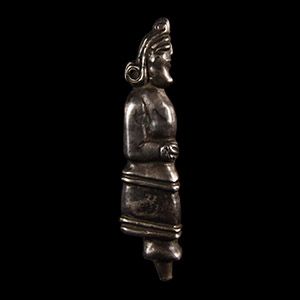
Parthian Figural Silver Dagger Hilt
3rd-1st century B.C.Estimate: £500 - 700 (+bp*)
Opening Bid: £212
Formed as a standing male figure with swept back, shoulder-length hair, hands held at the waist; mounting lug below. 66 grams, 86 mm
with a London, UK gallery 1971-early 2000s.
This hilt was probably for an acinaces blade, usually 14-18 inches long and used throughout a vast swath of territory encompassing the eastern Mediterranean, the Near East and central Asia, by such diverse cultures as the Parthians, the Medes, the Greeks, and the Scythians.
