
Loading, please wait...
LOT 0572
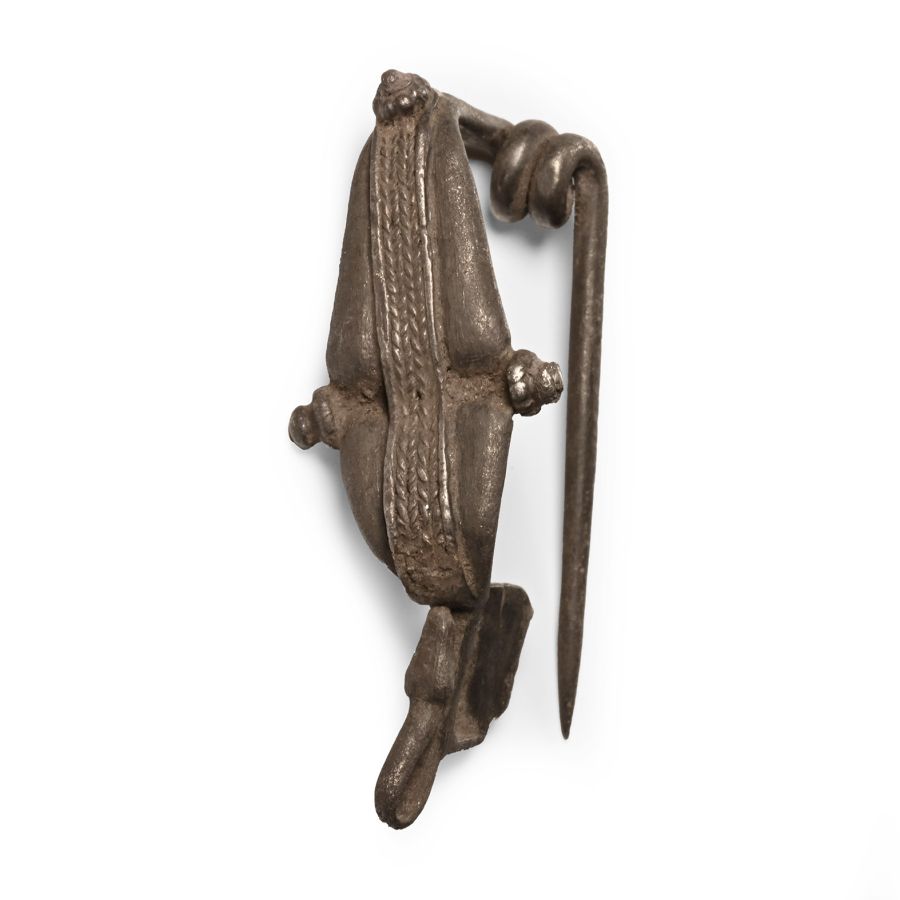
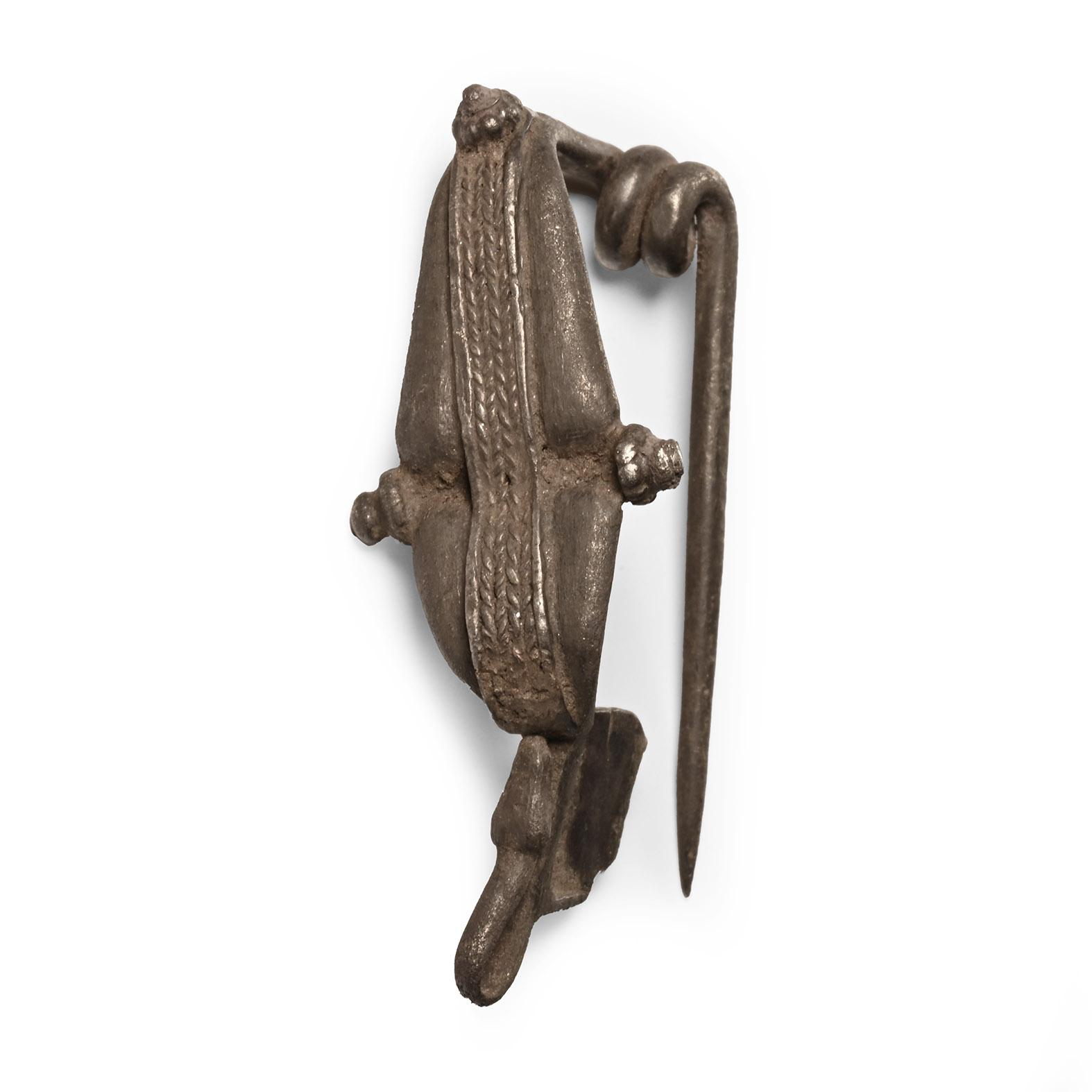
Greek Silver Fibula
5TH-4TH CENTURY B.C.
1 5/8 in. (6.86 grams, 42 mm).
Comprising an ellipsoid bow with lateral knops (one absent) and applied collars, longitudinal band of applied filigree braid, knop finial with collar, perpendicular two-coil spring and long pin; footplate with incised saltire with reversed-loop finial, square catchplate with pointillé gammadion and frame.
ProvenancePrivate European collection, 1994, thence by descent.
CONDITIONTimeLine Auctions follows a vetting process to ensure the authenticity and legality of all items, reinforcing our commitment to integrity and responsible trading. Each antiquity, antique, and coin lot undergoes thorough examination by a vetting committee of at least ten external specialists, professional trade association members, scientists, and archaeologists: Our Vetting Process
AUCTIONS:
TimeLine is a leading auction house specialising in antiquities, ancient art, collectables, natural history, coins, medals, and books. Our auctions offer museums, collectors, historians, and enthusiasts the opportunity to acquire unique and historically significant pieces.
LOT 0572
Greek Silver Fibula
Estimate £200 - 300€230 - 350 (for guidance only)$270 - 410 (for guidance only)
-
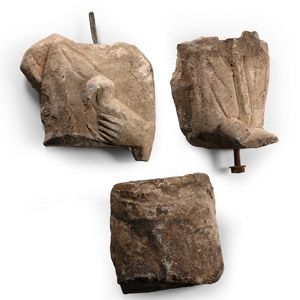
Cypriot Large Limestone Figure Fragment Group
2nd-1st millennium B.C.Sold for (Inc. bp): £104
Including the torso of a soldier with baldric, left hand clutching the hilt of the sword. 1.15 kg total, 10.3-13 cm
From a collection acquired on the UK art market from various auction houses and collections mostly before 2000. From an important Cambridgeshire estate; thence by descent. -
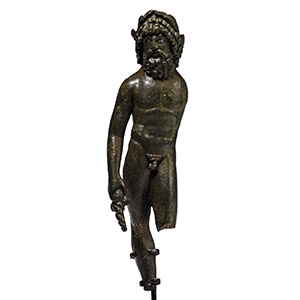
Hellenistic Bronze Statuette of Zeus
2nd-1st century B.C.Sold for (Inc. bp): £2,080
Standing nude with a wreath to his hair, segmented beard, right hand holding a thunderbolt; mounted on a custom-made stand. 142 grams, 10.3 cm (200 grams total, 11.6 cm including stand)
From the collection of Mr. F.U., Bavaria, acquired prior to 2000. with Gorny & Mosch, 17 June 2015, no.303. Accompanied by an academic report by Dr Raffaele D'Amato. This lot has been checked against the Interpol Database of stolen works of art and is accompanied by a search certificate number no.12380-226601. -
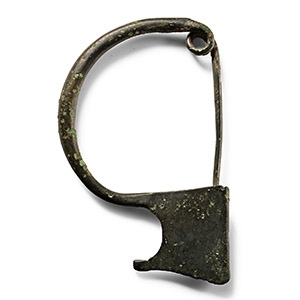
Greek Bronze Bow Brooch
7th-5th century B.C.Sold for (Inc. bp): £65
Comprising a deep bow with integral coil and pin, trapezoidal catchplate with folded lower edge, scooped upper edge and spur to forward end. 9.6 grams, 61 mm
Acquired on the London art market in the late 1980s-1990s. From the family collection of an East London, UK, gentleman.
