
Loading, please wait...
LOT 0117
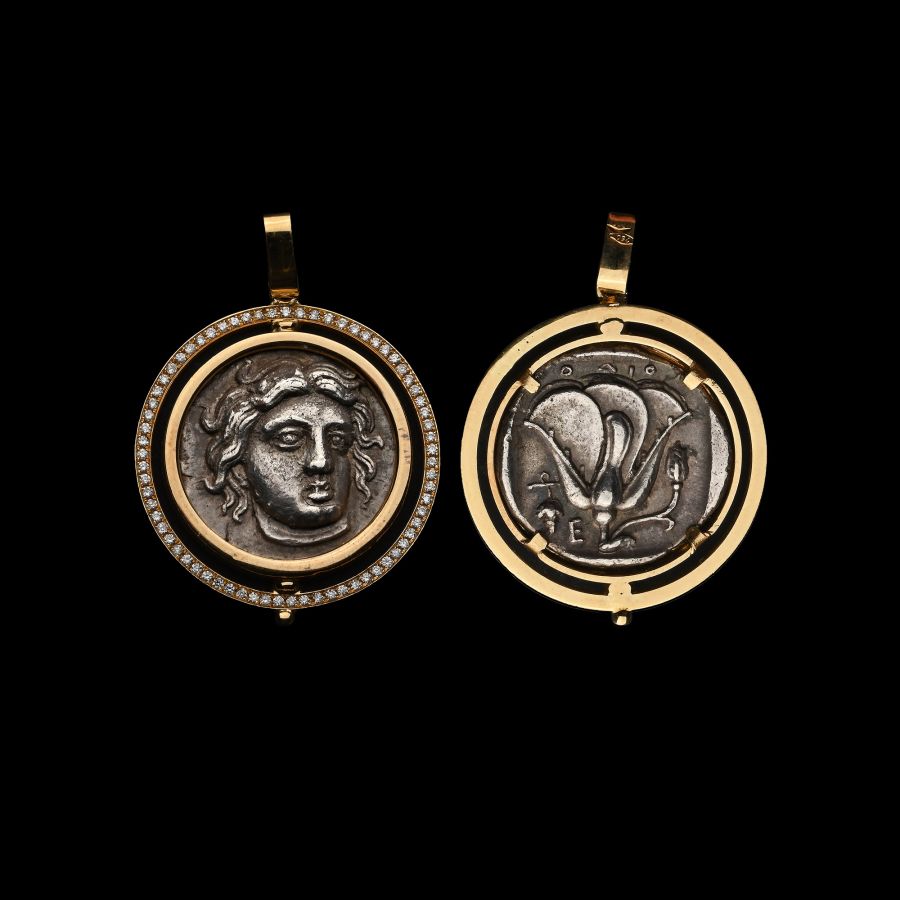
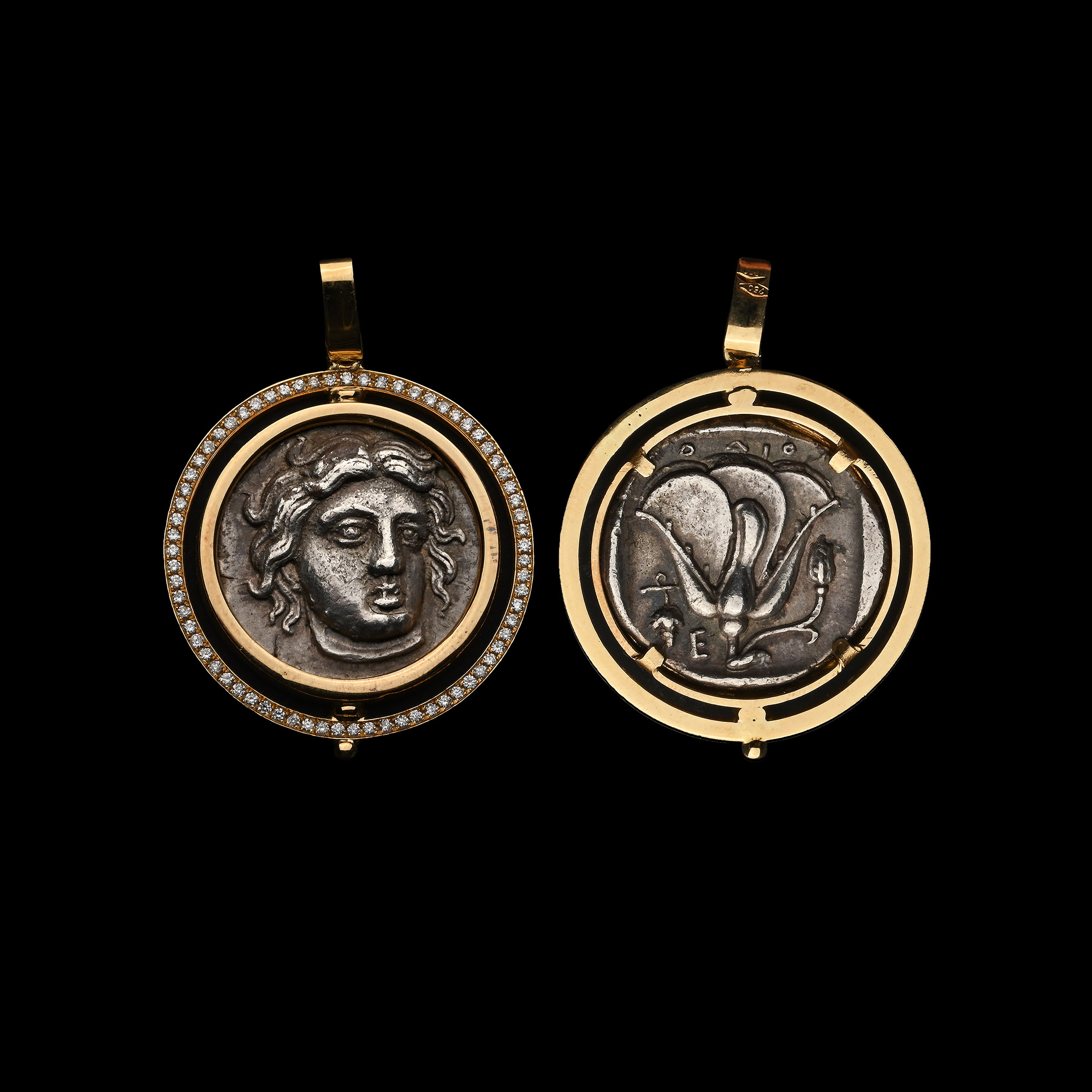
Greek Silver Didrachm of Rhodes in Gold Pendant
CIRCA 454-404 B.C.
1 3/8 in. (11.86 grams, 35 mm).
Obv: head of Helios facing slightly right. Rev: RODION legend above rose with bud on the right; bunch of grapes over E in left field; the coin enclosed in a modern double circular gold frame stamped '750' set with colourless stones.
ProvenanceRoma Numismatics, E-LIVE Auction 4, 29 November 2018, no.155.
Private collection of Mr K.A., France.
with Kallos Gallery, London.
This lot has been checked against the Interpol Database of stolen works of art and is accompanied by search certificate number no.13025-246752.
BMC 399; Hunter 92; Imhoof Nomisma VIII, 30.
FootnotesThe coinage of Rhodes city began around 408/7 B.C. with the introduction of a silver coinage bearing a deeply cut image of Helios, seen full-face with luxuriant hair, blown back by the wind. Helios’ imposing image was paired with that of a rose (a pun on the name of the city) and also the city’s ethnic, POΔION, meaning ‘of Rhodes’.
CONDITIONTimeLine Auctions follows a vetting process to ensure the authenticity and legality of all items, reinforcing our commitment to integrity and responsible trading. Each antiquity, antique, and coin lot undergoes thorough examination by a vetting committee of at least ten external specialists, professional trade association members, scientists, and archaeologists: Our Vetting Process
AUCTIONS:
TimeLine is a leading auction house specialising in antiquities, ancient art, collectables, natural history, coins, medals, and books. Our auctions offer museums, collectors, historians, and enthusiasts the opportunity to acquire unique and historically significant pieces.
LOT 0117
Greek Silver Didrachm of Rhodes in Gold Pendant
Estimate £2,000 - 3,000€2,320 - 3,480 (for guidance only)$2,700 - 4,050 (for guidance only)
-
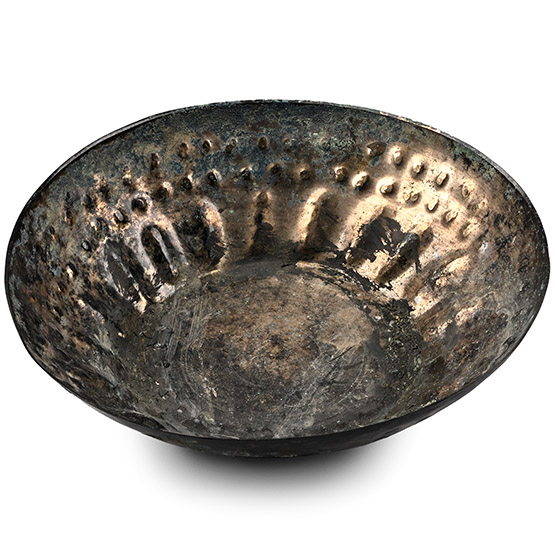
Parthian Punch-Decorated Bronze Bowl
2nd century B.C.-1st century A.D.Sold for (Inc. bp): £130
Broad and shallow with flared sidewall, two parallel circumferential rows of repoussé pellets. 135 grams, 17.1 cm wide
From the collection of North West London, UK, gentleman, 1990-2000s. -
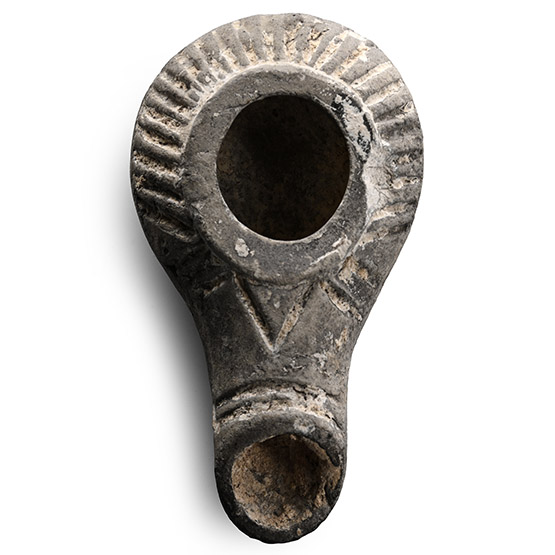
Greek Delphiniform Greyware Oil Lamp
Hellenistic, late 2nd-1st century B.C.Sold for (Inc. bp): £52
Slipper-shaped in plan and biconvex in section with radiating hatching to the shoulder, long nozzle with scooped end; impressed motif (maker's mark) to centre of the underside. 36 grams, 82 mm
From the Lloyd and Jeanne Raport collection, Washington, D.C. and Florida, USA, formed between 1972-2000. Acquired through Bonhams, London, UK. -
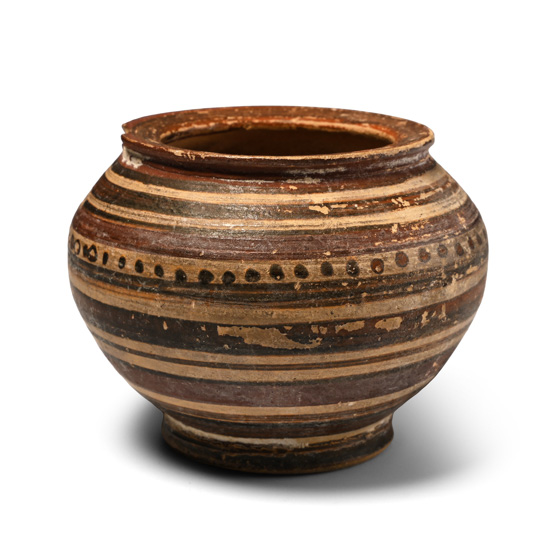
Greek Bowl with Crimson and Black Decorations
4th century B.C.Estimate: £1,000 - 1,400 (‡+bp*)
Opening Bid: £500
With a narrow basal ring, a flared rim, and painted circumferential bands. 49.2 grams, 63 mm
Private collection, Los Angeles, USA. Acquired on the American art market. European private collection.
