
Loading, please wait...
LOT 0571
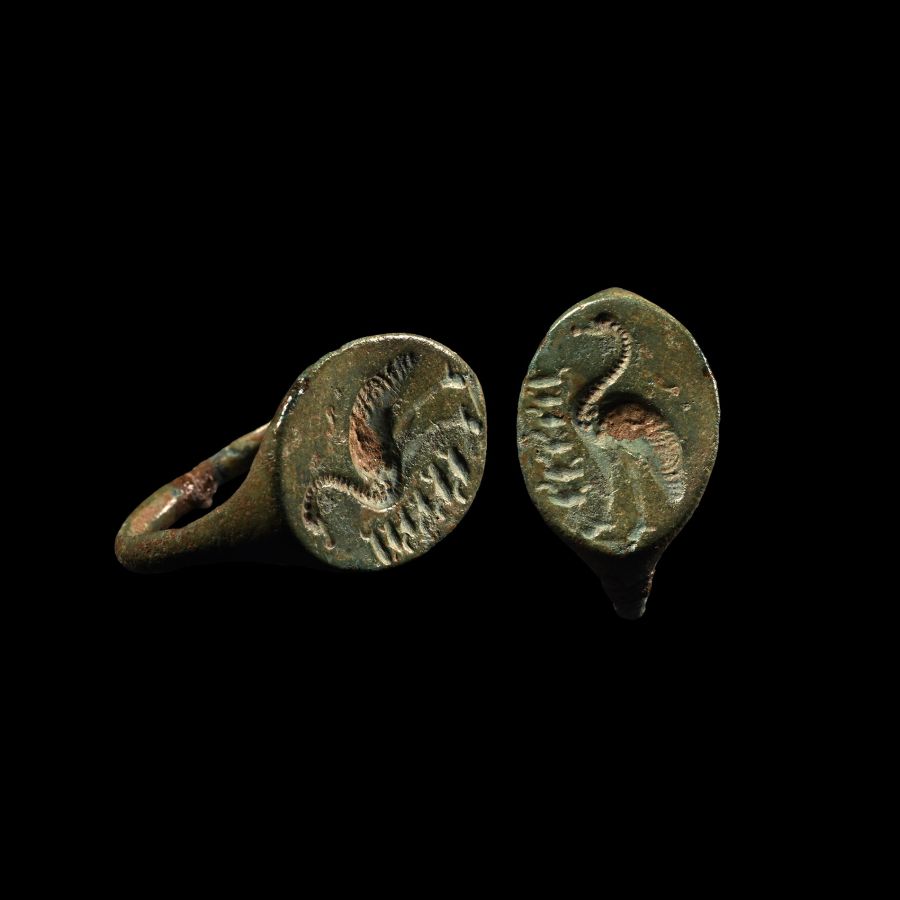
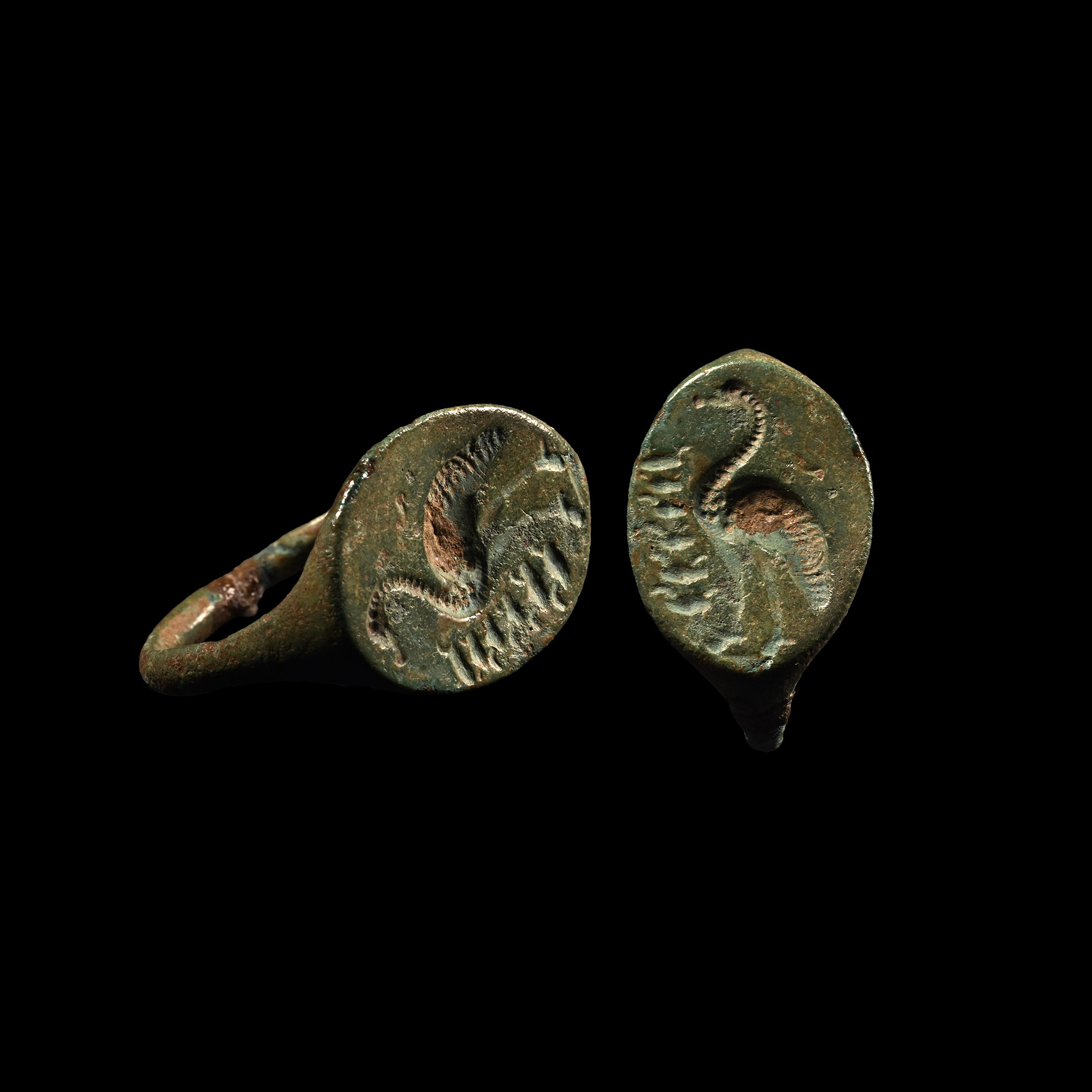
Greek Seal Ring with Large Bird
4TH-3RD CENTURY B.C.
3/4 in. (3.57 grams, 21.24 mm overall, 19.57 x 17.46 mm internal diameter (approximate size British Q, USA 8, Europe 17.49, Japan 16)).
A copper-alloy ring composed of a slender hoop and elliptical bezel, engraved with a swan or other large standing bird.
ProvenanceAcquired before 2000.
From the collection of a European gentleman living in the UK.
TimeLine Auctions follows a vetting process to ensure the authenticity and legality of all items, reinforcing our commitment to integrity and responsible trading. Each antiquity, antique, and coin lot undergoes thorough examination by a vetting committee of at least ten external specialists, professional trade association members, scientists, and archaeologists: Our Vetting Process
AUCTIONS:
TimeLine is a leading auction house specialising in antiquities, ancient art, collectables, natural history, coins, medals, and books. Our auctions offer museums, collectors, historians, and enthusiasts the opportunity to acquire unique and historically significant pieces.
-
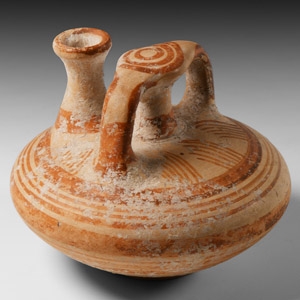
Mycenaean Pottery Stirrup Jar
1400-1200 B.C.Sold for (Inc. bp): £1,430
A pottery vessel formed with a squat carinated body, slender waisted neck and similar central stem with two flanking handles; painted geometric ornament composed of concentric bands and clusters of lines. 154 grams, 91 mm wide
with Christie's, London, South Kensington, 12 December 1989, lot 220. -
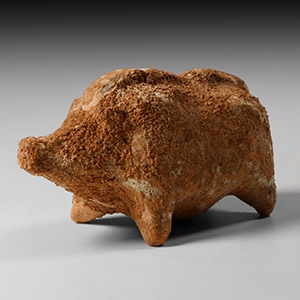
Greek Terracotta Boar Statuette
5th-3rd century B.C.Sold for (Inc. bp): £234
A terracotta figure or statuette modelled as a standing boar with stylised anatomical detailing including a portly stomach, stub legs, tail held along the ridge of the animal's back, cropped mane and elongated snout. 98 grams, 87 mm wide
Acquired before 2000. From the property of a Suffolk, UK, lady. -
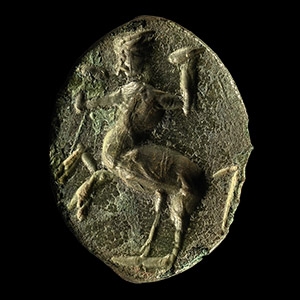
Greek Seal Ring with Centaur
4th-3rd century B.C.Sold for (Inc. bp): £221
A copper-alloy ring composed with a slender hoop with large elliptical bezel, engraved with a centaur rearing left. 5.80 grams, 24.33 mm overall, 20.62 mm internal diameter (approximate size British P, USA 7 1/2, Europe 16.23, Japan 15)
Acquired before 2000. From the collection of a European gentleman living in the UK.
