
Loading, please wait...
LOT 0558
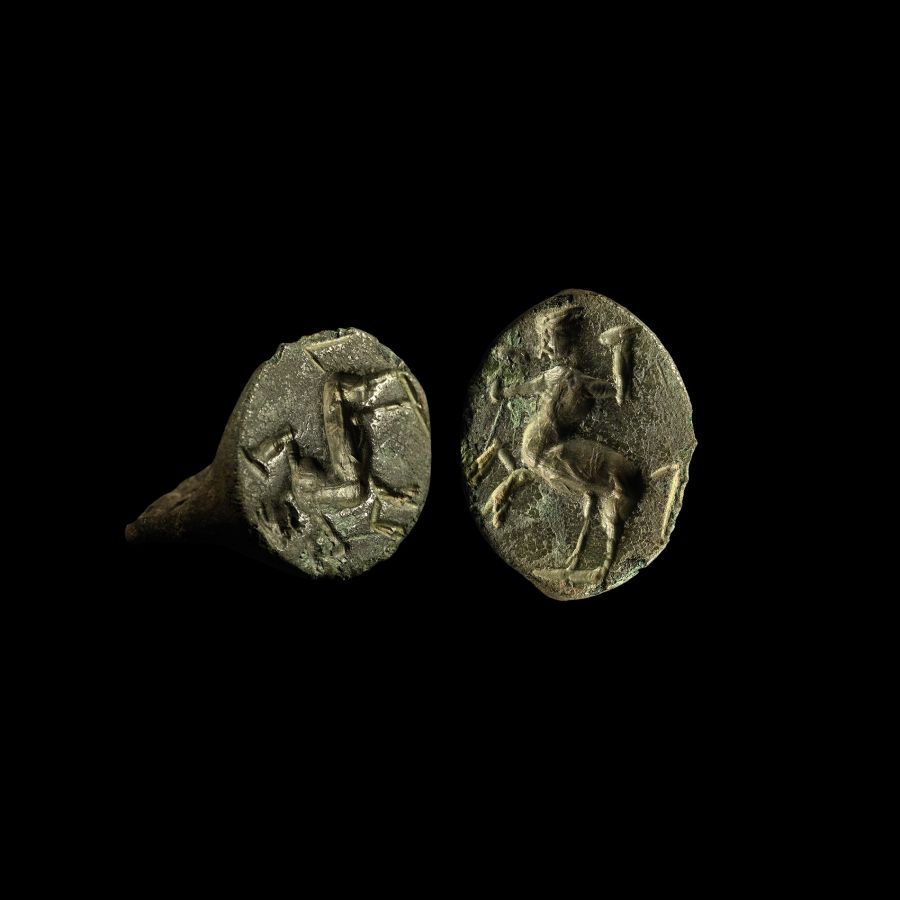
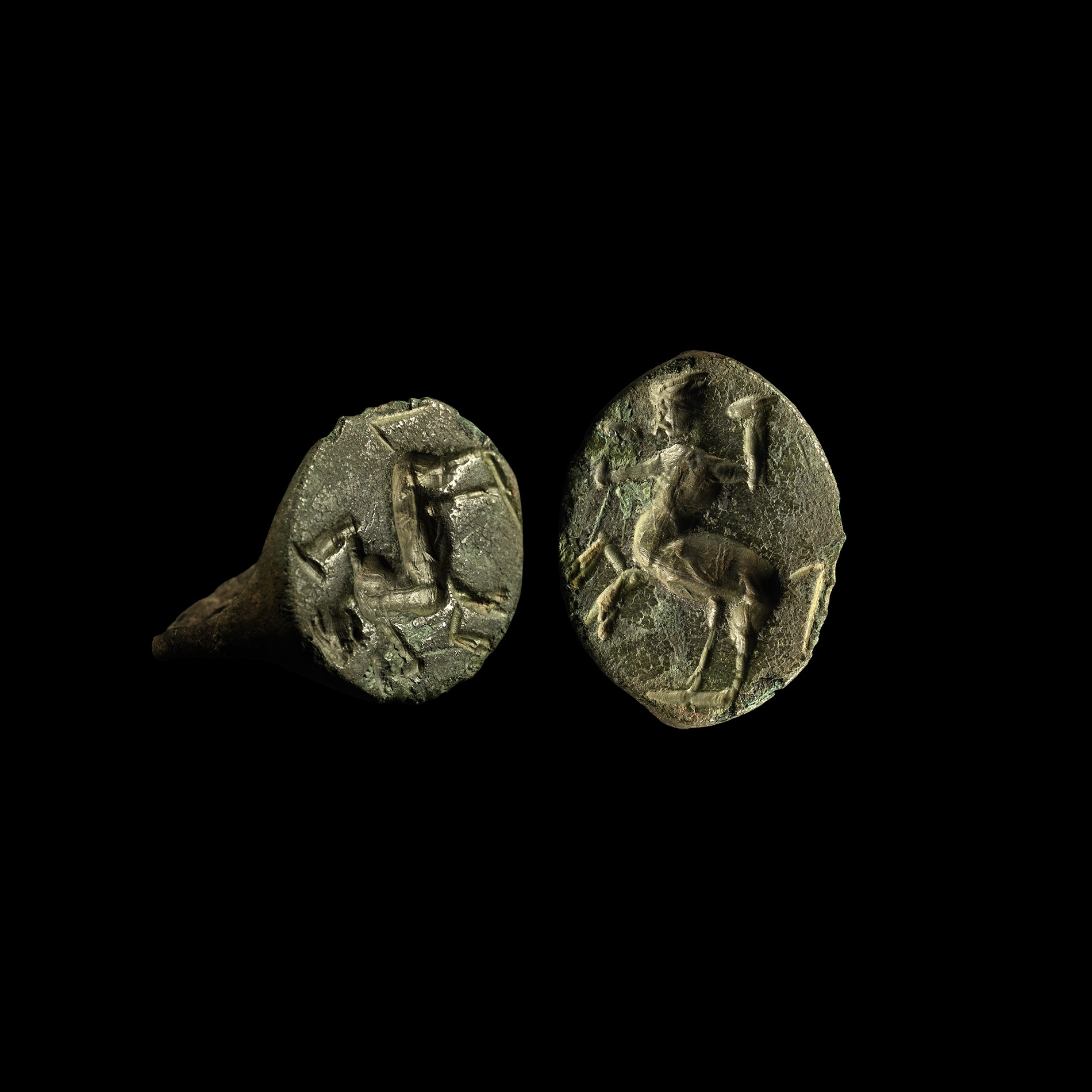
Greek Seal Ring with Centaur
4TH-3RD CENTURY B.C.
1 in. (5.80 grams, 24.33 mm overall, 20.62 mm internal diameter (approximate size British P, USA 7 1/2, Europe 16.23, Japan 15)).
A copper-alloy ring composed with a slender hoop with large elliptical bezel, engraved with a centaur rearing left.
ProvenanceAcquired before 2000.
From the collection of a European gentleman living in the UK.
TimeLine Auctions follows a vetting process to ensure the authenticity and legality of all items, reinforcing our commitment to integrity and responsible trading. Each antiquity, antique, and coin lot undergoes thorough examination by a vetting committee of at least ten external specialists, professional trade association members, scientists, and archaeologists: Our Vetting Process
AUCTIONS:
TimeLine is a leading auction house specialising in antiquities, ancient art, collectables, natural history, coins, medals, and books. Our auctions offer museums, collectors, historians, and enthusiasts the opportunity to acquire unique and historically significant pieces.
-
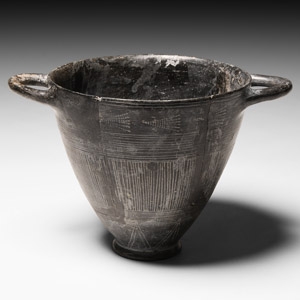
Etruscan Bucchero Sottile Kotyle
Late 7th century B.C.Sold for (Inc. bp): £208
A bucchero sottile kotyle, a deep drinking vessel of early type, decorated with a rouletted fan pattern above, incised triangles radiating from the base, with panels of geometric line decoration to the centre; skyphos-like handles to either side; some restoration. 213 grams, 10.5 cm high
American collector before 2000. Property of a Spanish gentleman. Property of a Sussex, UK, teacher. Accompanied by a copy of a Spanish cultural export licence.
This vessel was likely to have been made in a workshop in Cerveteri, belonging to the category of the so-called bucchero sottile, (thin bucchero, 675-625 B.C.) although some were produced at Tarquinia, and many distributed as far as Carthage and beyond. Decoration of this kind of kotyles (Rasmussen type c) are composed of simple groups of horizontal and vertical lines. Closed fans, whether horizontal or vertical, may be included at handle-level, below the usual pair of lines below the rim. -
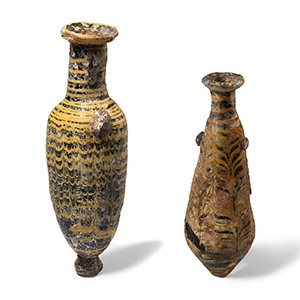
Greek Trailed Glass Vessel Group
2nd-1st century B.C.Estimate: £500 - 700 (‡+bp*)
Opening Bid: £250
A pair of glass vessels with polychrome decoration and iridescent surfaces: an alabastron with fusiform body, conical foot and ledge handles, decorated with yellow feathering and trails; a blue amphoriskos with yellow festooning and trails, knop foot and everted rim; fragmentary. 197 grams total, 11.3-15 cm high
Acquired early 1990s. Ex private American collection; thence by descent. Private collection since 1998. -
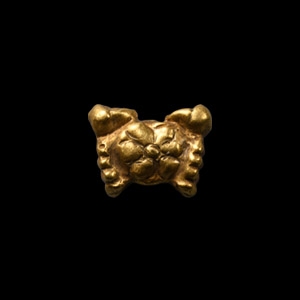
Graeco-Roman Gold Crab Amulet
2nd century B.C-1st century A.D.Sold for (Inc. bp): £191
A hollow-formed gold amulet of a crab with socketted claws above, pierced for attachment. 0.85 grams, 11.5 mm
Fine condition.
Acquired 1970s-1980s. Ex UK collection. Property of a Portsmouth, UK gentleman.
