
Loading, please wait...
LOT 0553
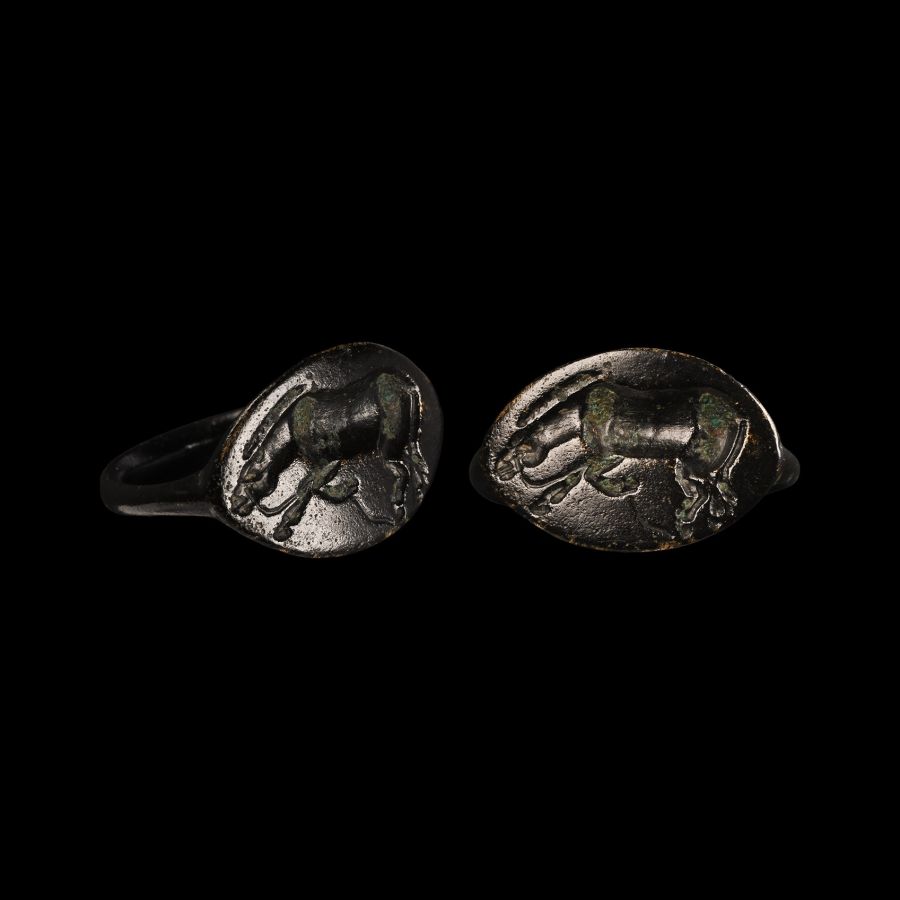
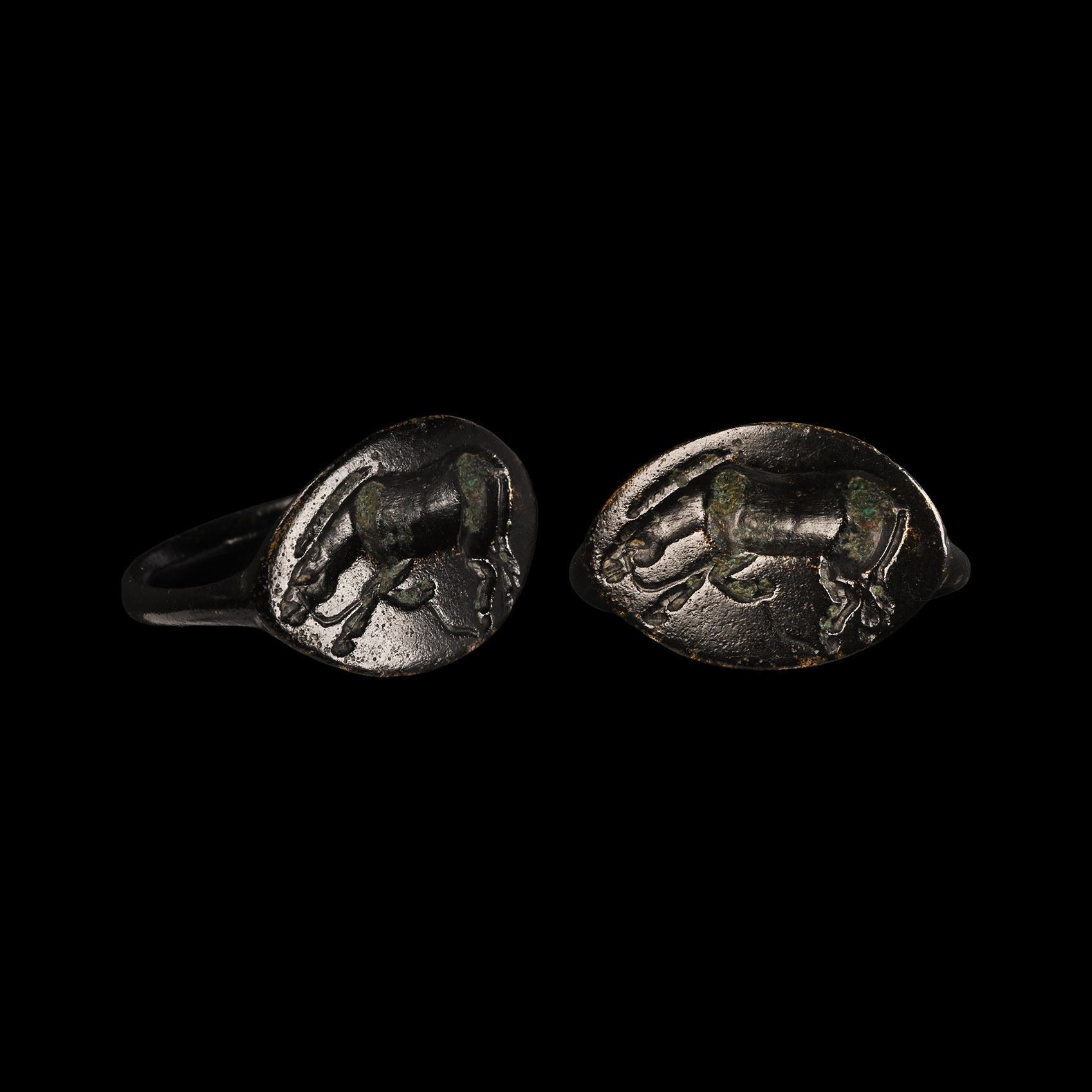
Greek Seal Ring with Antelope
CIRCA 5TH CENTURY B.C.
7/8 in. (4.02 grams, 22.50 mm overall, 18.90 mm internal diameter (approximate size British P, USA 7 1/2, Europe 16.23, Japan 15)).
A bronze ring with slender hoop and elliptical bezel engraved with an antelope.
ProvenanceAcquired before 2000.
From the collection of a European gentleman living in the UK.
TimeLine Auctions follows a vetting process to ensure the authenticity and legality of all items, reinforcing our commitment to integrity and responsible trading. Each antiquity, antique, and coin lot undergoes thorough examination by a vetting committee of at least ten external specialists, professional trade association members, scientists, and archaeologists: Our Vetting Process
AUCTIONS:
TimeLine is a leading auction house specialising in antiquities, ancient art, collectables, natural history, coins, medals, and books. Our auctions offer museums, collectors, historians, and enthusiasts the opportunity to acquire unique and historically significant pieces.
LOT 0553
Greek Seal Ring with Antelope
Estimate £150 - 200€170 - 230 (for guidance only)$200 - 270 (for guidance only)
-
.jpg)
Hellenistic Gold Ring with Figural Gemstone of Ares
Late 1st century B.C.Estimate: £1,500 - 2,000 (+bp*)
Opening Bid: £750
A hollow-formed gold finger ring with inset carnelian intaglio of a nude Ares wearing a plumed helmet, stooping to fill an amphora. 1.83 grams, 21.79 mm overall, 16.25 mm internal diameter (approximate size British K, USA 5 1/4, Europe 9.95, Japan 9)
Ex private European collection, Mr. W., 1950s-1990s. Acquired in 1998. with Antiquarium Ltd, New York, USA. English private collection. Accompanied by a copy of certificate of authenticity from Antiquarium Ltd, Fine Ancient Arts Gallery, dated 15 December 2016. -
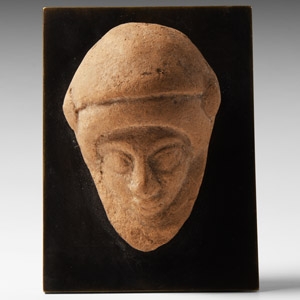
Greek Terracotta Mask with Helmet
6th-5th century B.C.Sold for (Inc. bp): £293
A terracotta model male head with helmet and beard, exaggerated almond-shaped eyes, small pursed lips; mounted on a custom-made display stand. 93 grams, 66 mm
with Hotel Drouot, Succession of Former collection Colonel W. Mutiaux, Paris, 5 September 1952, lot 66. Ex collection of Eugène Muriaux (1846-1925?). From the collection M.W., Paris, France, 1950-1970. Ex collection of Françoise and Claude Bourelier. -
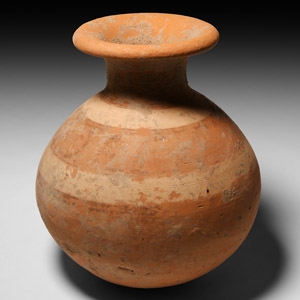
Greek Geometric Storage Vessel
Late 1st millennium B.C.Sold for (Inc. bp): £143
A bulbous ceramic vessel with waisted neck and rolled rim, polychrome painted circumferential bands to the shoulder and neck. 703 grams, 17 cm high
Acquired 1990s. English private collection. Property of an Essex gentleman.
