
Loading, please wait...
LOT 0575
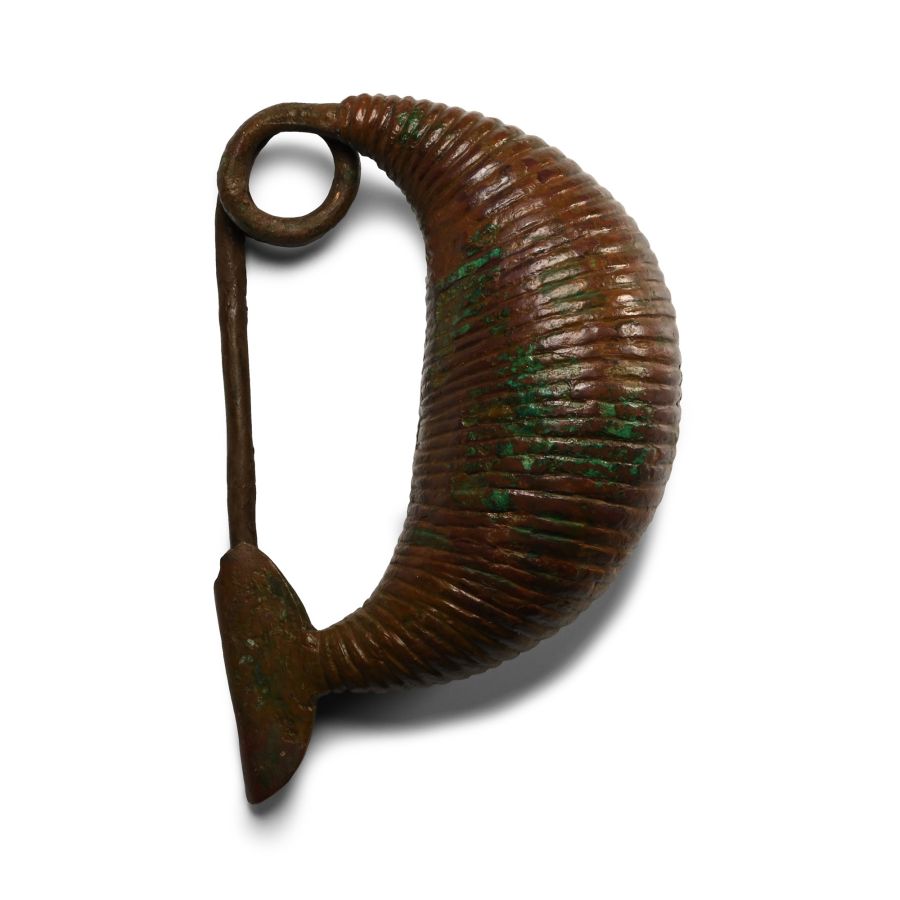
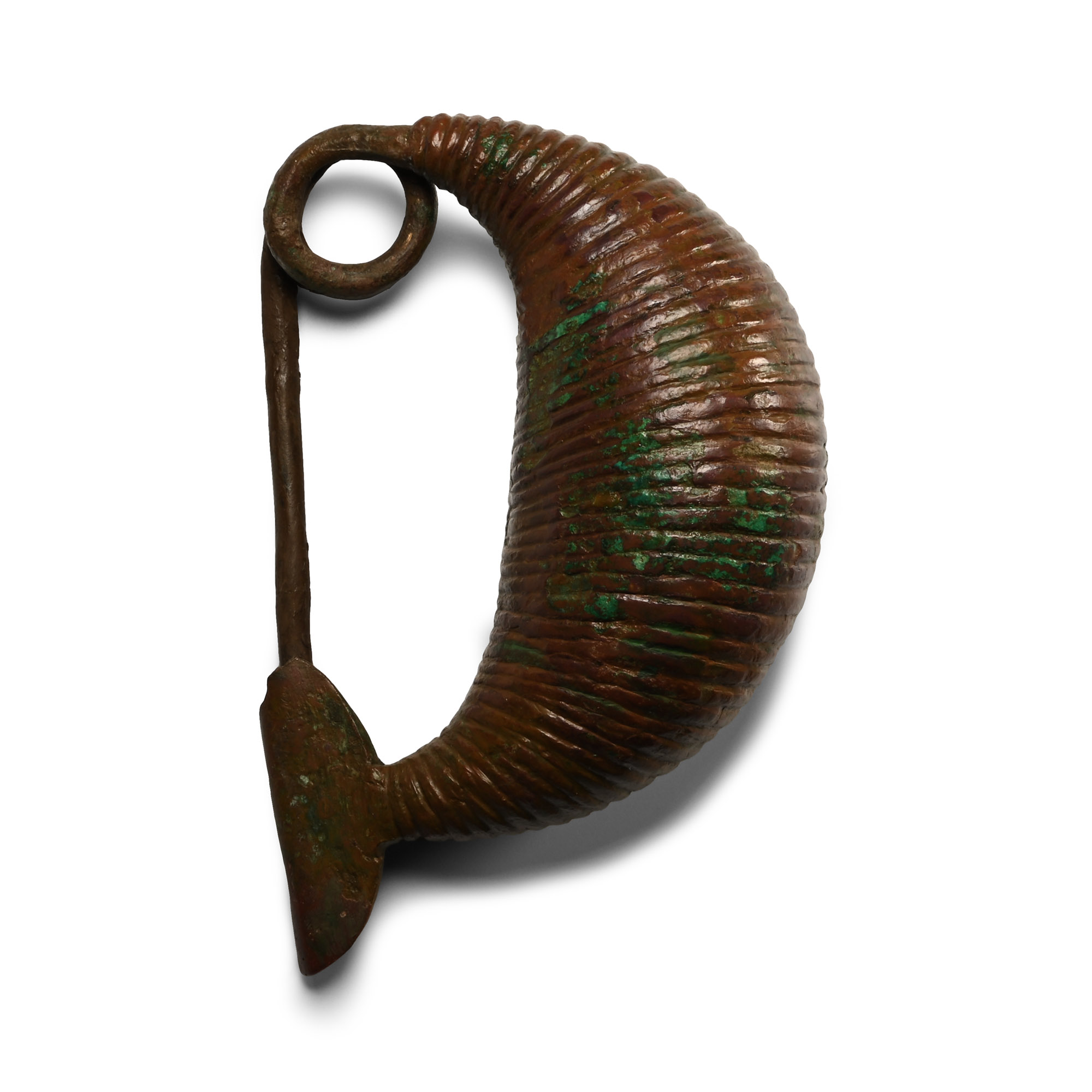
Greek Sanguisuga Bronze Fibula
ITALIC, 7TH CENTURY B.C.
3 1/2 in. (166 grams, 89 mm).
A 'sanguisuga' (leech) fibula with hollow, vertically ribbed bow; integral coiled spring and ellipsoid catchplate; loose contents suggests an additional function as a rattle, perhaps in a cultic context; pin restored.
ProvenanceW. Rosenbaum, Ascona, before 1984.
Accompanied by a copy of an Art Loss Register certificate no.S00091285.
This lot is accompanied by an illustrated lot declaration signed by the Head of the Antiquities Department, Dr Raffaele D’Amato.
See Hattatt, R., Brooches of Antiquity, Oxford, 1987, item 1355, for type.
CONDITIONTimeLine Auctions follows a vetting process to ensure the authenticity and legality of all items, reinforcing our commitment to integrity and responsible trading. Each antiquity, antique, and coin lot undergoes thorough examination by a vetting committee of at least ten external specialists, professional trade association members, scientists, and archaeologists: Our Vetting Process
AUCTIONS:
TimeLine is a leading auction house specialising in antiquities, ancient art, collectables, natural history, coins, medals, and books. Our auctions offer museums, collectors, historians, and enthusiasts the opportunity to acquire unique and historically significant pieces.
-
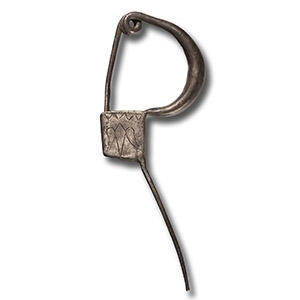
Greek Silver Fibula
5th-4th century B.C.Sold for (Inc. bp): £85
Comprising a thick round-section bow tapering to each end; the forward end developing to a two-coiled spring and pin, the rear to a rectangular catchplate with flanges to the upper and lower edges, a long spike finial; the catch with incised geometric ornament. 10.7 grams, 83 mm
with H.A.C., Basel, prior 1999. This lot is accompanied by an illustrated lot declaration signed by the Head of the Antiquities Department, Dr Raffaele D’Amato. -
.jpg)
Graeco-Parthian Bronze Mirror with Animals
2nd-1st century B.C.Estimate: £500 - 700 (+bp*)
Opening Bid: £250
Discoid flat mirror with piriform attachment bracket developing to an addorsed pair of animal heads, equine but with a single curved plume or horn between the ears; mounted on a custom-made stand. 516 grams total, 16.6 cm
UK private collection before 2000. UK art market. Ex property of a London gentleman. This lot is accompanied by an illustrated lot declaration signed by the Head of the Antiquities Department, Dr Raffaele D’Amato. -
.jpg)
Hellenistic Garnet Gemstone with Hercules Club and Lionskin
2nd century B.C.Estimate: £1,800 - 2,400 (+bp*)
Opening Bid: £1,000
Plano-convex with incuse image of spiked club and lionskin mantle, repaired. 1.8 grams, 17 mm
Acquired in the 1970s. Ex London, UK, collection. This lot has been checked against the Interpol Database of stolen works of art and is accompanied by a search certificate number no.12386-226380. This lot has been cleared against the Art Loss Register database, and is accompanied by an illustrated lot declaration signed by the Head of the Antiquities Department, Dr Raffaele D’Amato.
