
Loading, please wait...
LOT 0564
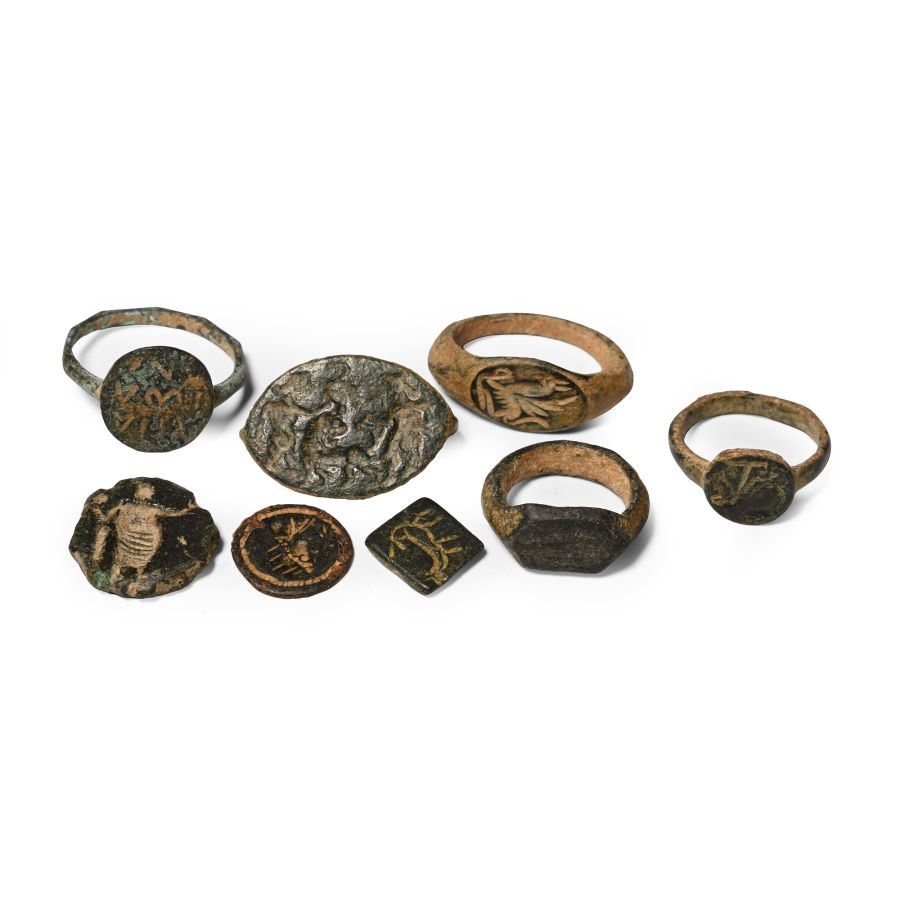
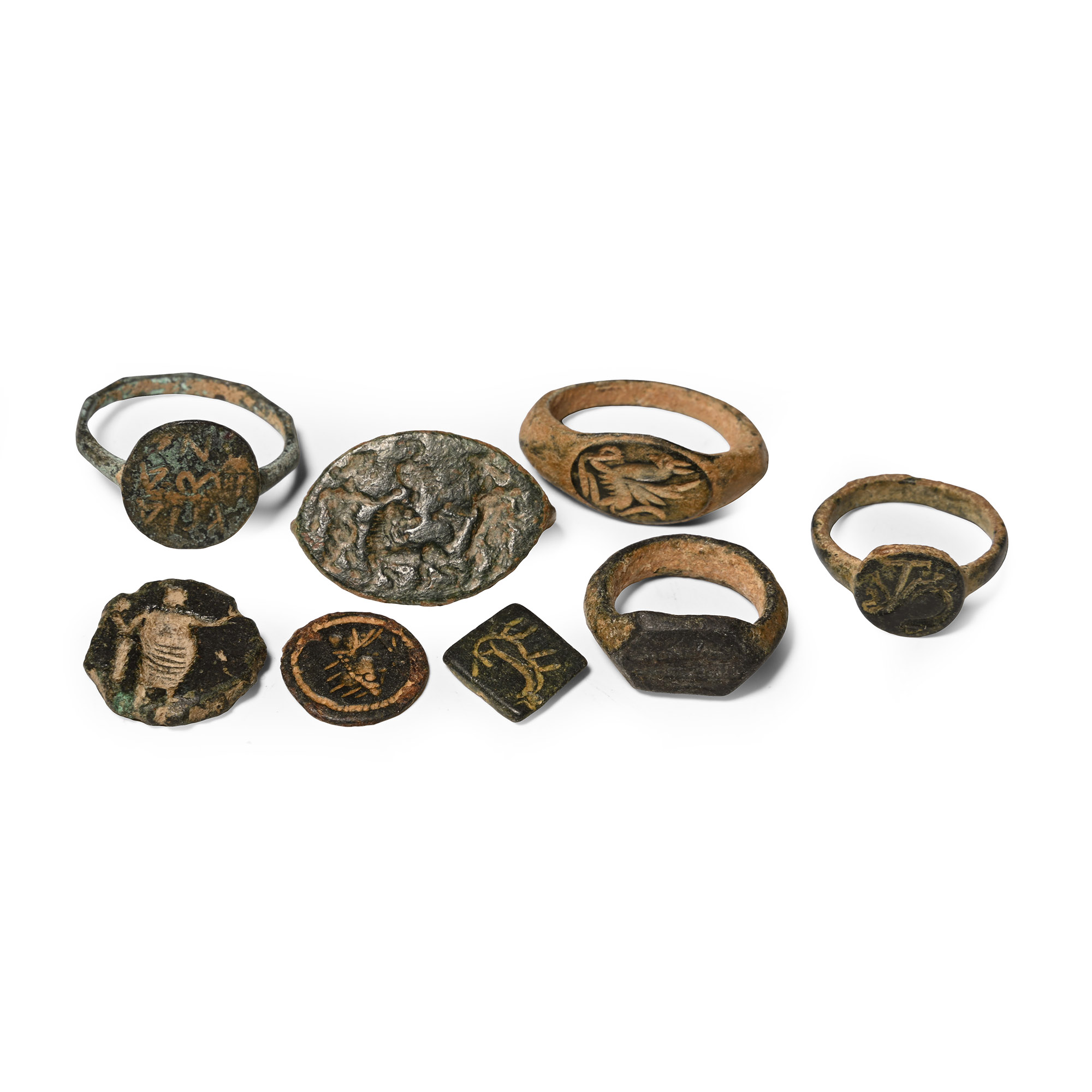
Greek, Roman and Western Asiatic Bronze Ring and Bezel Collection
2ND CENTURY B.C.-12TH CENTURY A.D.
3/8 - 1 in. (24.8 grams total, 10-25 mm).
Including ellipsoid, discoid and vesica types with various motifs. [8, No Reserve]
ProvenanceFrom the collection of a gentleman, acquired on the London art market in the 1990s.
CONDITIONTimeLine Auctions follows a vetting process to ensure the authenticity and legality of all items, reinforcing our commitment to integrity and responsible trading. Each antiquity, antique, and coin lot undergoes thorough examination by a vetting committee of at least ten external specialists, professional trade association members, scientists, and archaeologists: Our Vetting Process
AUCTIONS:
TimeLine is a leading auction house specialising in antiquities, ancient art, collectables, natural history, coins, medals, and books. Our auctions offer museums, collectors, historians, and enthusiasts the opportunity to acquire unique and historically significant pieces.
LOT 0564
Greek, Roman and Western Asiatic Bronze Ring and Bezel Collection
Sold for (Inc. bp): £111
-
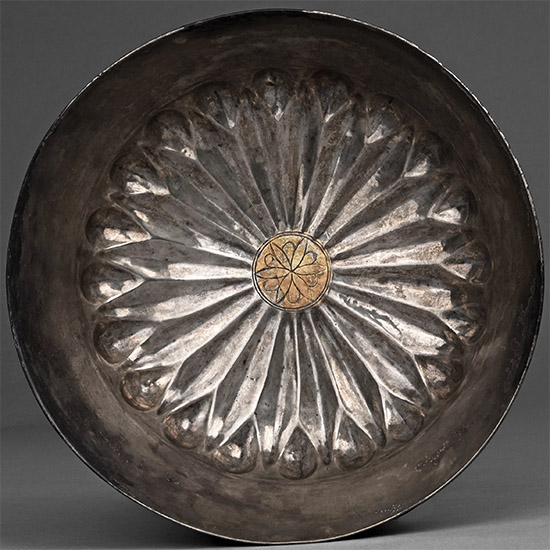
Greek Silver-Gilt Phiale with Petals and Lozenges
6th-4th century B.C.Sold for (Inc. bp): £4,680
Broad lotiform bowl with flared rim, flat mesomphalos with incised rosette and gilt finish. 412 grams, 18.5 cm
Private collection, London, UK. with Gorny and Mosch, 19 June 2013, no.34. Private collection, London, UK. This lot has been checked against the Interpol Database of stolen works of art and is accompanied by search certificate number no.13280-253528. -
.jpg)
Greek Agate Gemstone with Running Hound
Circa 300-200 B.C.Sold for (Inc. bp): £59
With intaglio running hound; chipped; supplied with a museum-quality impression. 0.53 grams, 11.01 mm
From the private collection of a European gentleman (1942-2024), formed since the 1970s. -
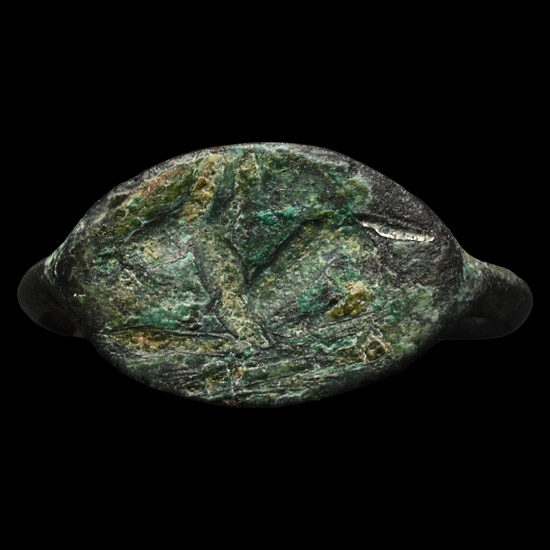
Greek Bronze Zoomorphic Ring
Circa 4th-2nd century B.C.Sold for (Inc. bp): £39
Comprising a slender hoop and a lentoid bezel with a leaping quadruped. 1.89 grams, 18.18 mm overal, 16.29 mm internal diameter (approximate size British K 1/2, USA 5 1/2, Europe 10.58, Japan 10)
From the private collection of a European gentleman (1942-2024), formed since the 1970s.
