
Loading, please wait...
LOT 0054
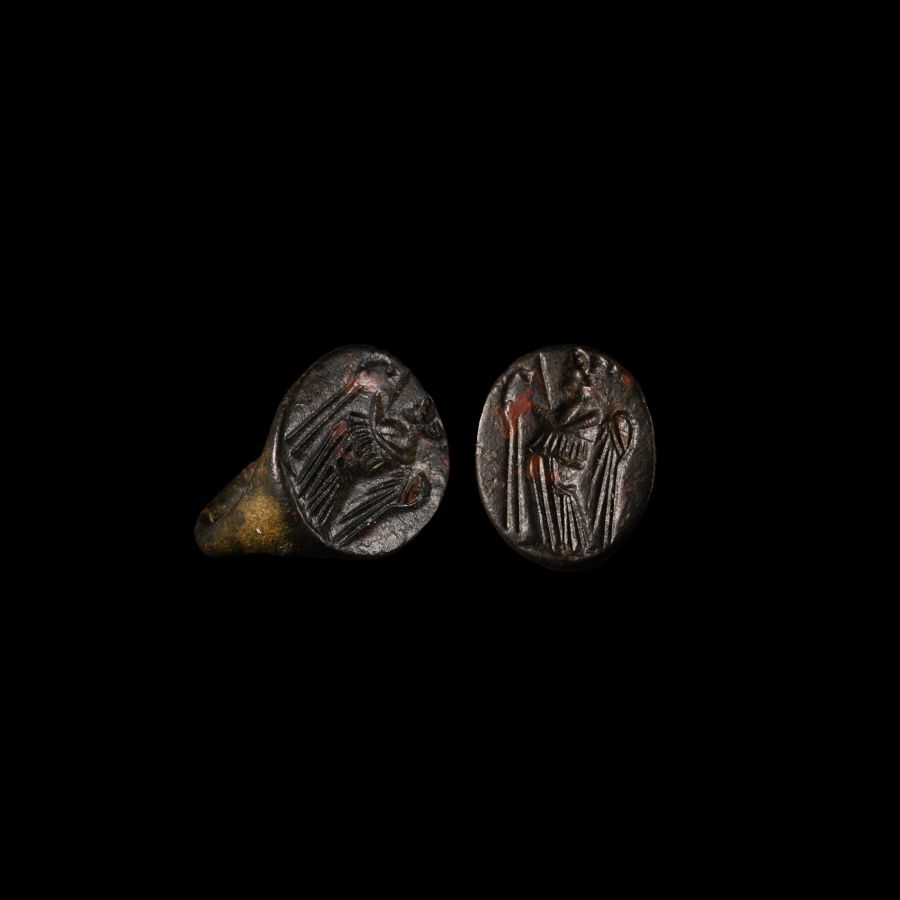
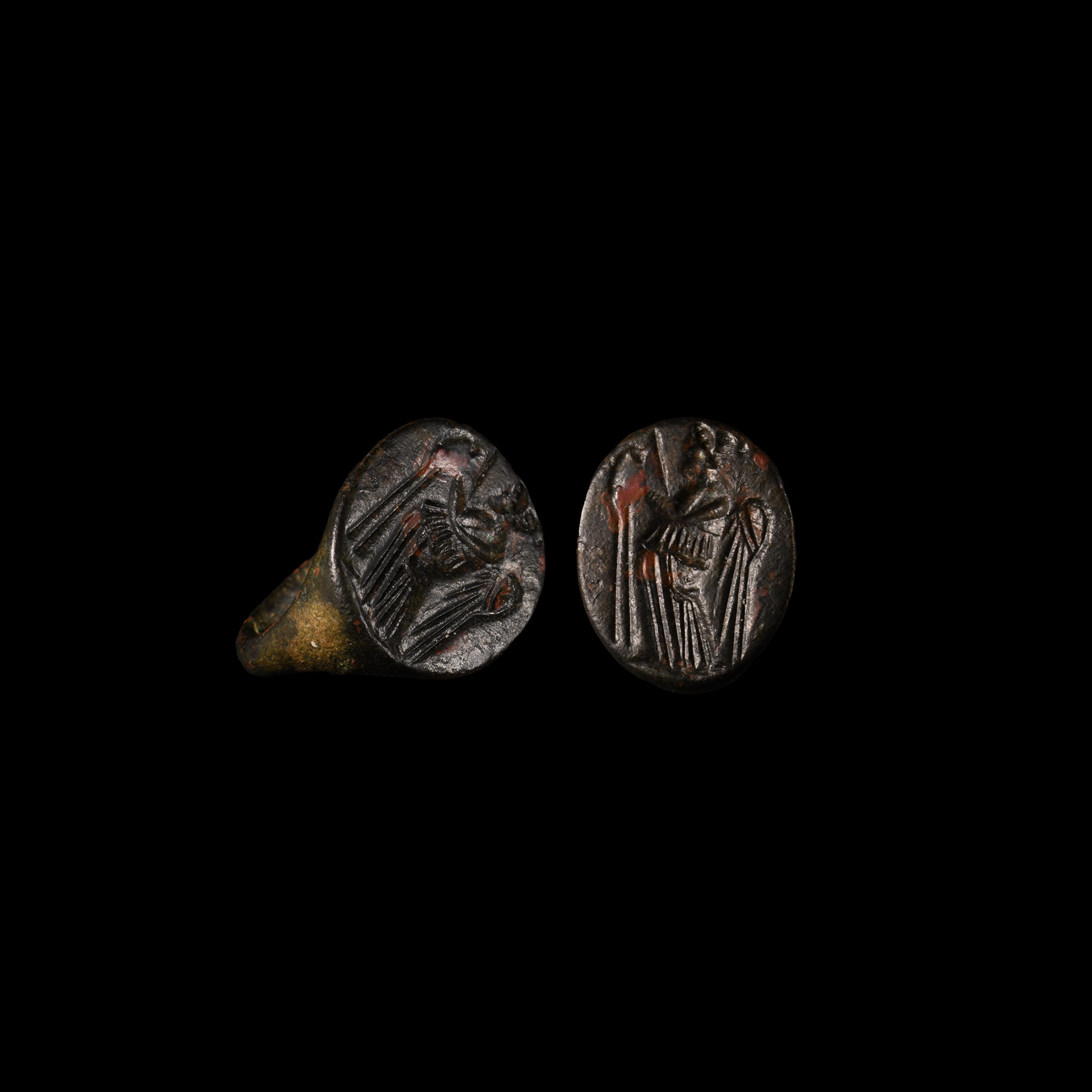
Greek Ring with Tyche
3RD-2ND CENTURY B.C.
3/4 in. (6.09 grams, 20.50 mm overall, 16.92 mm internal diameter (approximate size British K, USA 5 1/4, Europe 9.95, Japan 9)).
An Eastern Greek bronze finger ring with intaglio winged Tyche in profile.
ProvenanceAcquired in the late 1980s-early 1990s.
Important North West London collection.
Cf. Chadour, A.B., Rings. The Alice and Louis Koch Collection, volume I, Leeds, 1994, item 69, for type.
CONDITIONTimeLine Auctions follows a vetting process to ensure the authenticity and legality of all items, reinforcing our commitment to integrity and responsible trading. Each antiquity, antique, and coin lot undergoes thorough examination by a vetting committee of at least ten external specialists, professional trade association members, scientists, and archaeologists: Our Vetting Process
AUCTIONS:
TimeLine is a leading auction house specialising in antiquities, ancient art, collectables, natural history, coins, medals, and books. Our auctions offer museums, collectors, historians, and enthusiasts the opportunity to acquire unique and historically significant pieces.
LOT 0054
Greek Ring with Tyche
Estimate £600 - 800€700 - 930 (for guidance only)$810 - 1,080 (for guidance only)
-
Large Greek Attic Black Figure Kylix with Chariot Scene
5th century B.C.Sold for (Inc. bp): £1,950
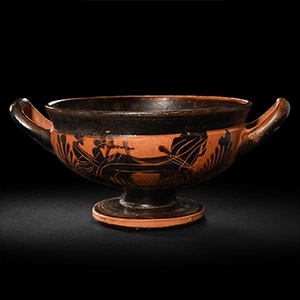
A terracotta kylix with broad flat foot, short stem, broad bowl with carination at the shoulder, glared mouth and two square strap handles; frieze of black-painted decoration including two scenes of a chariot yoked to two centaurs, one with sgraffito markings, between palmettes; restored. 566 grams, 25.5 cm wide
Restored.; fine condition, repaired.
Cambridgeshire collection, 1990s-2000s. Ex property of a Sussex gentleman. Accompanied by an academic report by Raffaele D’Amato. This lot has been checked against the Interpol Database of stolen works of art and is accompanied by search certificate number no.11579-198944.
These Attic kylikes were usually presented with a stemmed base, a deep bowl and twin, upturned loop handles, all upon a concave base. The exterior walls were decorated with black-figure technique on red background, here in a style remarkably similar to that of the Haimon Painter, especially in the rendering of facial features, and feet. The imagery on the exterior of these kylikes, used in the symposia, varied a lot. Just as the cup could be a mask (in the so-called typology of the Attic black-figure eye cups) to transform the drinker, to give a “complex painted character”. Daily life scenes, or fantasies like the chariot here pulled by centaurs, were among the various subjects. -
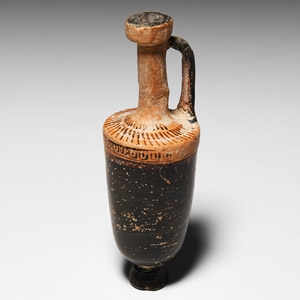
Greek Attic Lekythos
Circa 5th century B.C.Sold for (Inc. bp): £381
A ceramic lekythos oil flask composed of a piriform body, broad shoulder, narrow cylindrical neck, D-section handle and splayed foot, black glaze to body with band of polychrome radiating lines around the shoulder, geometric motifs below. 65 grams, 12.7 cm high
Fine condition, neck repaired.
Acquired 1970-1980s. From the property of a German collector. -
.jpg)
Greek Attic Black-Glazed Kylix
Circa 5th century B.C.Estimate: £500 - 700 (‡+bp*)
Opening Bid: £250
A black-glazed kylix or stemmed cup created without handles, composed of a D-section bowl with attractive whorl pattern to the centre, everted rim, spool-shaped stem and discoid foot; old label with '37' to the outside of the bowl. 230 grams, 15.6 cm wide
Very fine condition.
Ex Louis-Gabriel Bellon (1819?-1899), France. Private collection, acquired on the French art market in 2009.
This Attic pottery type, developed towards the late 6th century B.C., made from a fine light tan clay with a semi-lustrous black gloss, except for the edge and underside of discoid foot. Usually this kind of handleless kylix evidences a shallow, segmental form body with the lip curving inward and being slightly offset on the exterior. A wide circle in black is usually visible on the underside of the foot.
