
Loading, please wait...


LOT 0505
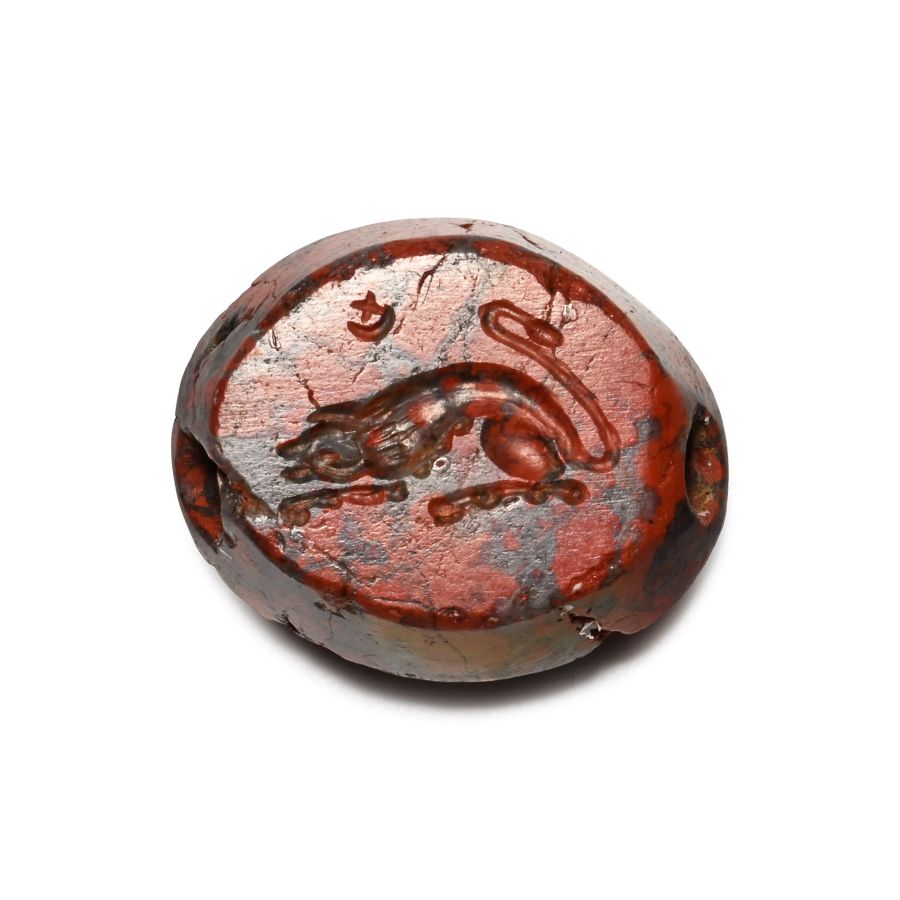
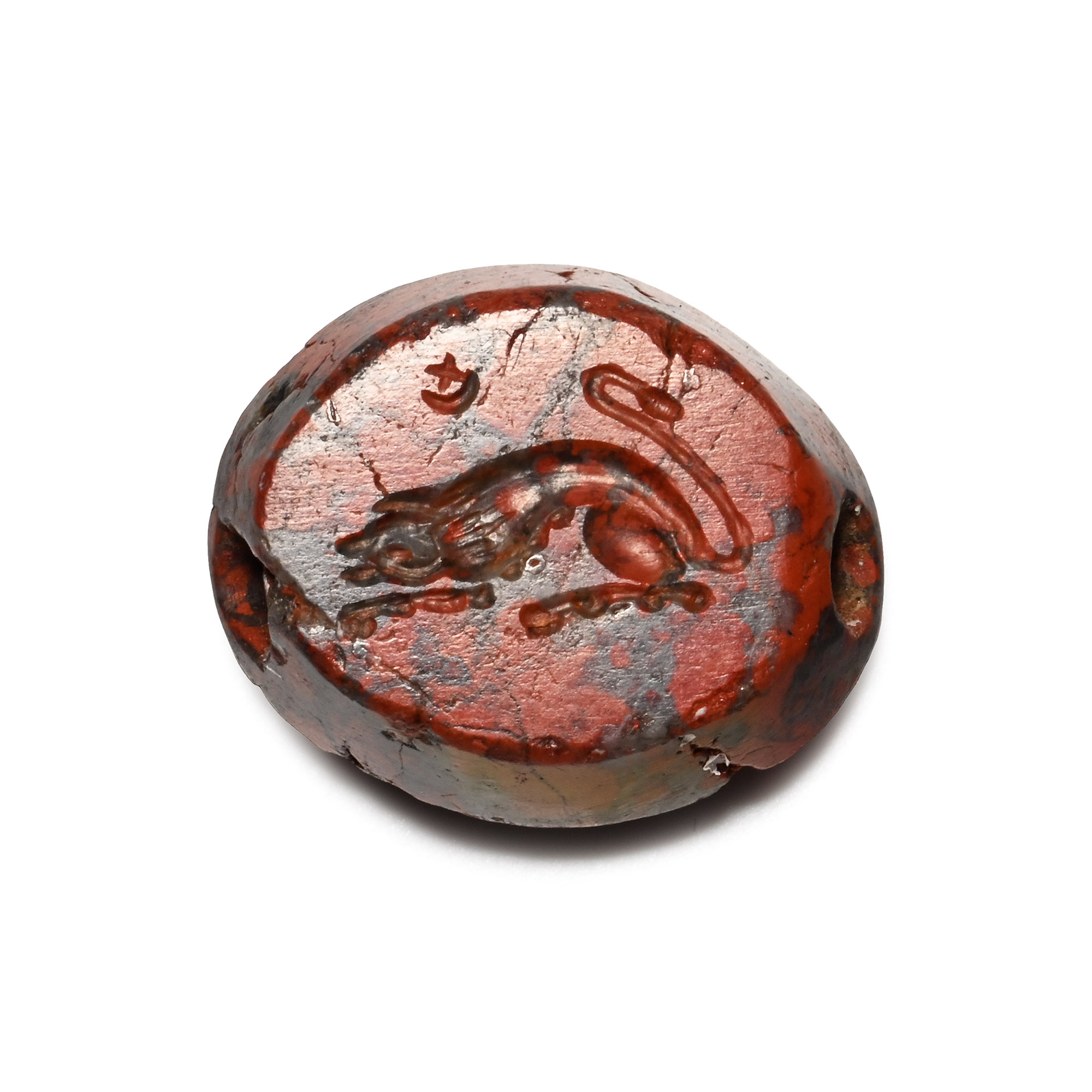
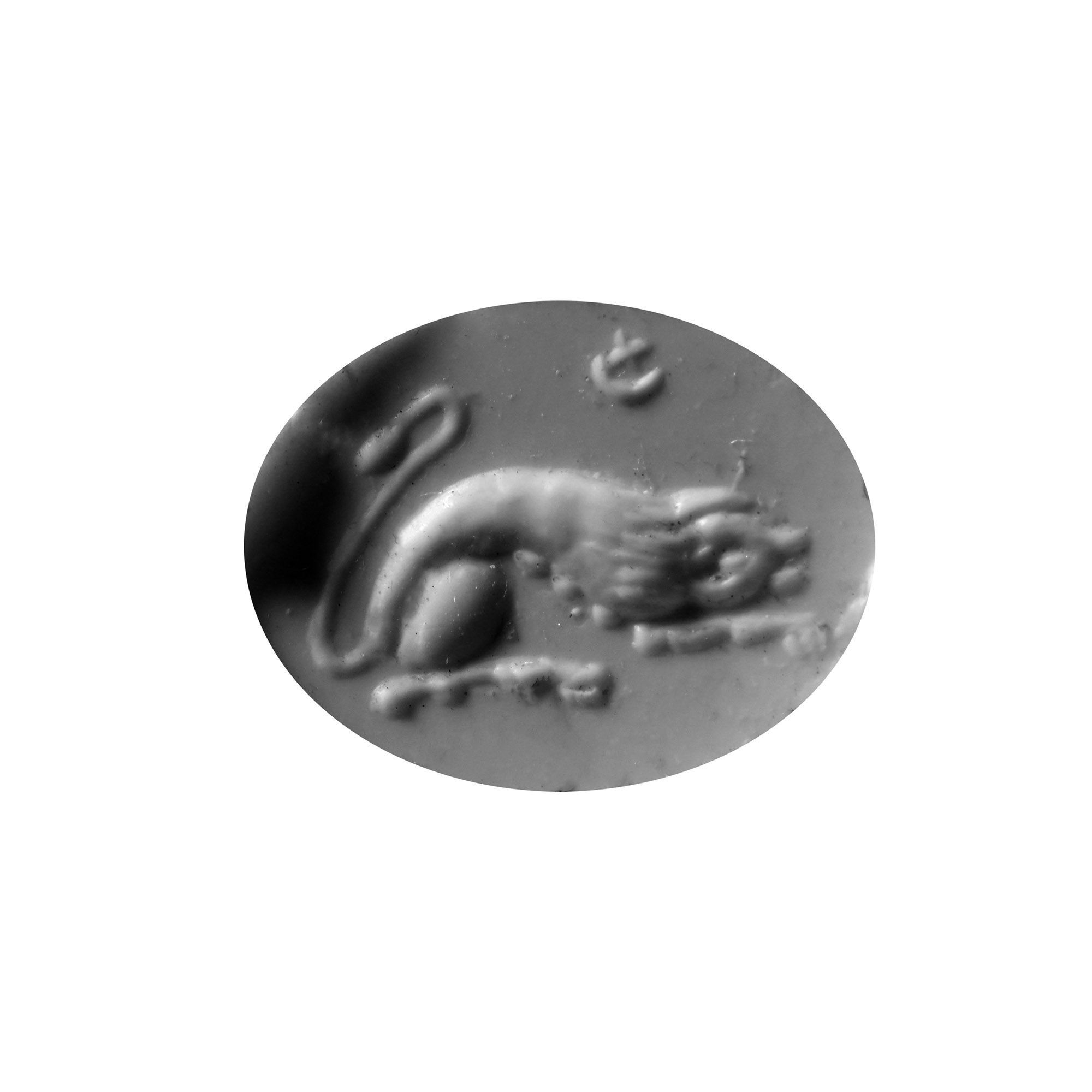
Greek Red Variegated Gemstone with Lioness
6TH-4TH CENTURY B.C.
5/8 in. (1.94 grams, 15 mm).
Scaraboid type with incuse design to the underside of a lioness crouching in profile with star and crescent moon above; supplied with a museum-quality impression. [No Reserve]
ProvenanceFrom the private collection of a European gentleman (1942-2024), formed since the 1970s.
CONDITIONTimeLine Auctions follows a vetting process to ensure the authenticity and legality of all items, reinforcing our commitment to integrity and responsible trading. Each antiquity, antique, and coin lot undergoes thorough examination by a vetting committee of at least ten external specialists, professional trade association members, scientists, and archaeologists: Our Vetting Process
AUCTIONS:
TimeLine is a leading auction house specialising in antiquities, ancient art, collectables, natural history, coins, medals, and books. Our auctions offer museums, collectors, historians, and enthusiasts the opportunity to acquire unique and historically significant pieces.
-
.jpg)
Etruscan Amber Head Pendant
Etruria, 5th century B.C.Sold for (Inc. bp): £2,210
Carved from translucent red-brown amber as a profile head with stylised Archaic features, large almond eye beneath a defined brow ridge, a softly smiling mouth, and carefully delineated hair arranged in striated bands sweeping back from the face; a drilled perforation at the crown indicates its original function as a suspended ornament; accompanied by a display stand. 23 grams, 50 mm (242 grams total, 81 mm including stand)
Sotheby's, London, 14-15 December 1981, no.206. American private collection; acquired at the above sale. This lot has been checked against the Interpol Database of stolen works of art and is accompanied by search certificate number no.13329-257968.
Amber was a prestigious imported material in Etruria, highly prized for its rarity, colour, and perceived apotropaic power. From the late 6th century B.C. onwards, figured amber pendants appear in elite tombs, particularly those of women, reflecting both personal identity and a protective role within funerary belief systems. The prominent, wide-open eye here may have served as a talismanic motif, thought to ward off malign forces and ensure the wearer’s vigilance and well-being in life and beyond the grave. This piece reflects the distinctive aesthetic of Etruscan amber carving, in which Mediterranean influences are reinterpreted with a locally expressive sculptural style. -
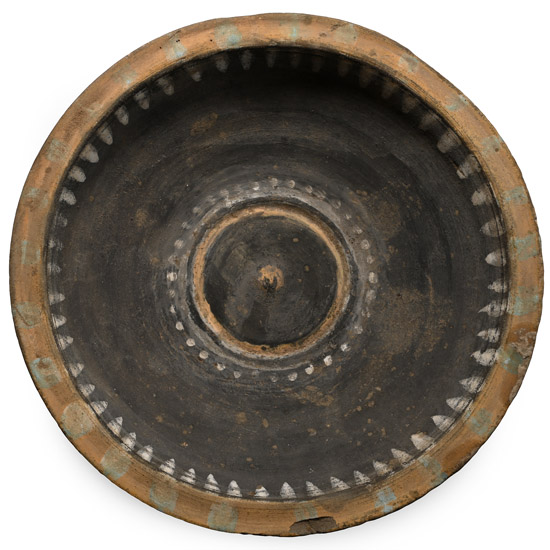
Etruscan Painted Terracotta Dish
Circa 7th-4th century B.C.Sold for (Inc. bp): £124
Low dish with everted rim and painted decoration on the inner face. 156 grams, 13.8 cm
From the collection of a Cambridge, UK, gentleman, by direct descent from his father, who acquired the items in London in circa 1960. -
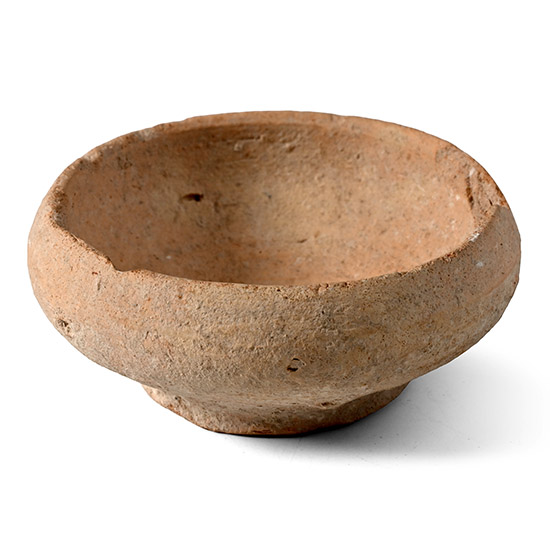
Greek Terracotta Toy Bowl
Circa 2nd century B.C.Sold for (Inc. bp): £169
Broad and squat with low foot, inturned rim; chipped; old collector's record card with label to reverse '0892'. 29.4 grams, 53 mm wide
From the collection of the late Bernard C. Pickard, Hampshire, UK, the owner of Bernard C. Pickard Antiquities, which closed in 1987, he had been collecting since the mid 1950s. Accompanied by a typed information display card.
Bernard Pickard was a close friend of Richard Hattatt, the renowned author of several books on ancient brooches. Hattatt acknowledges in his first book, Ancient & Romano-British Brooches, published in 1982, that Mr Pickard first aroused his interest in brooches and inspired him in writing his books during his retirement. Mr Pickard also wrote the foreword to the section on Roman animal brooches, op. cit. p.158-160.
