
Loading, please wait...
LOT 0116
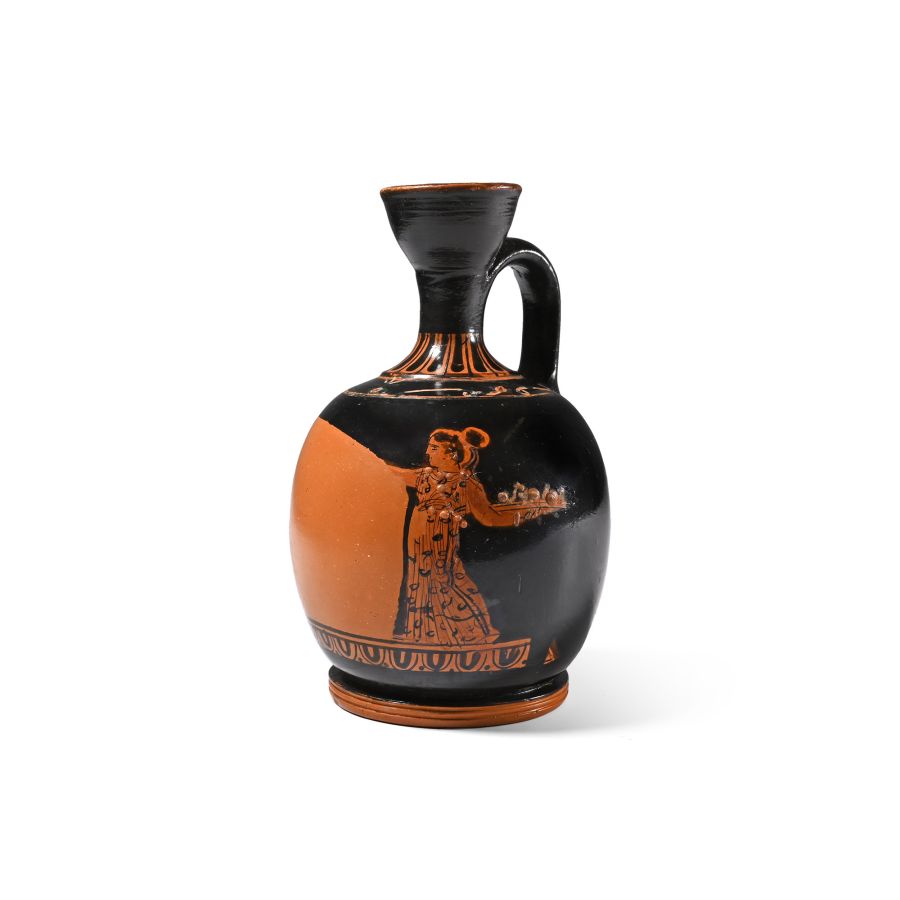
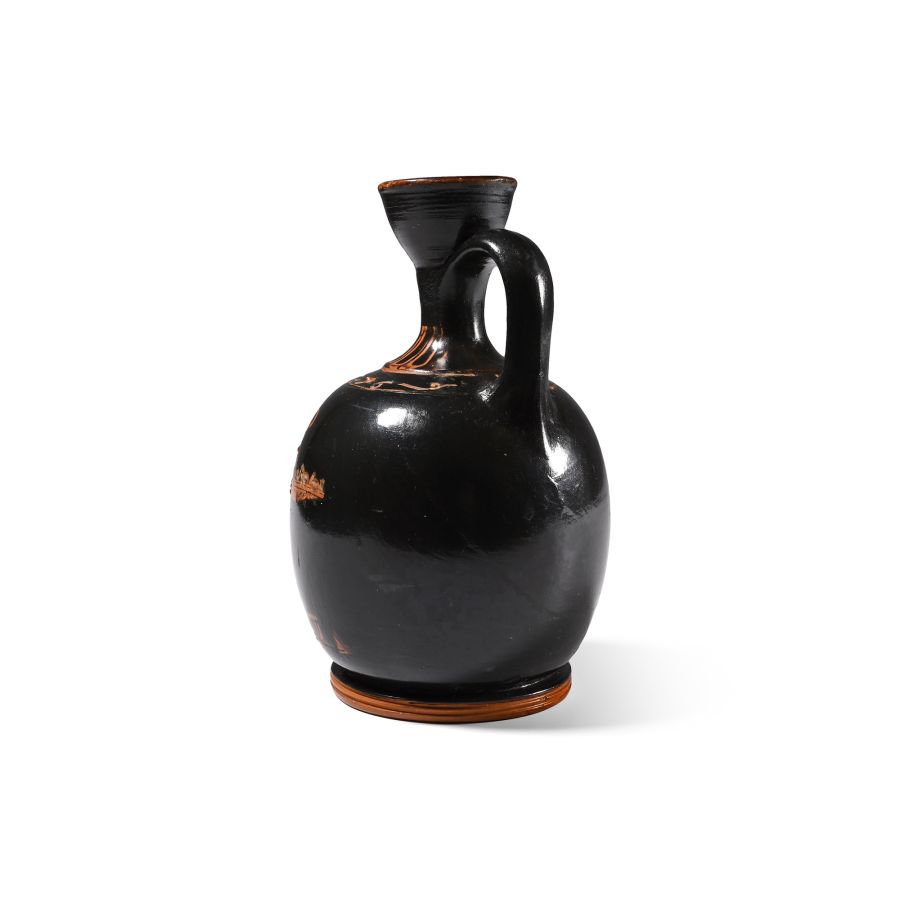
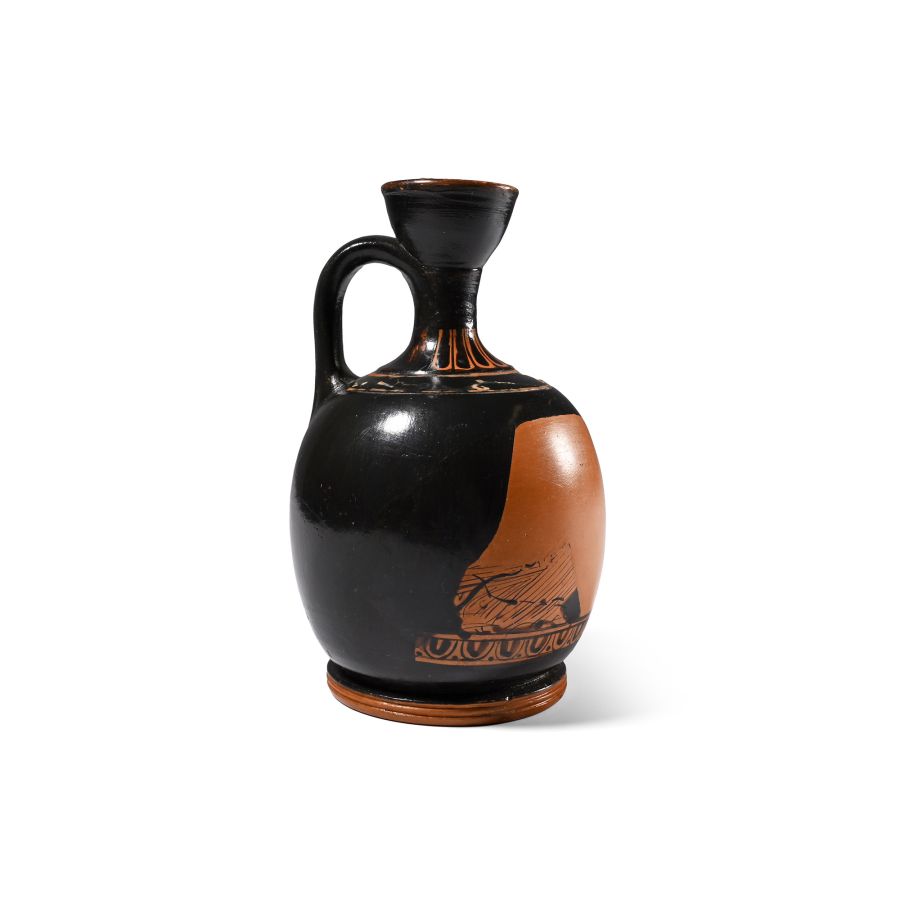
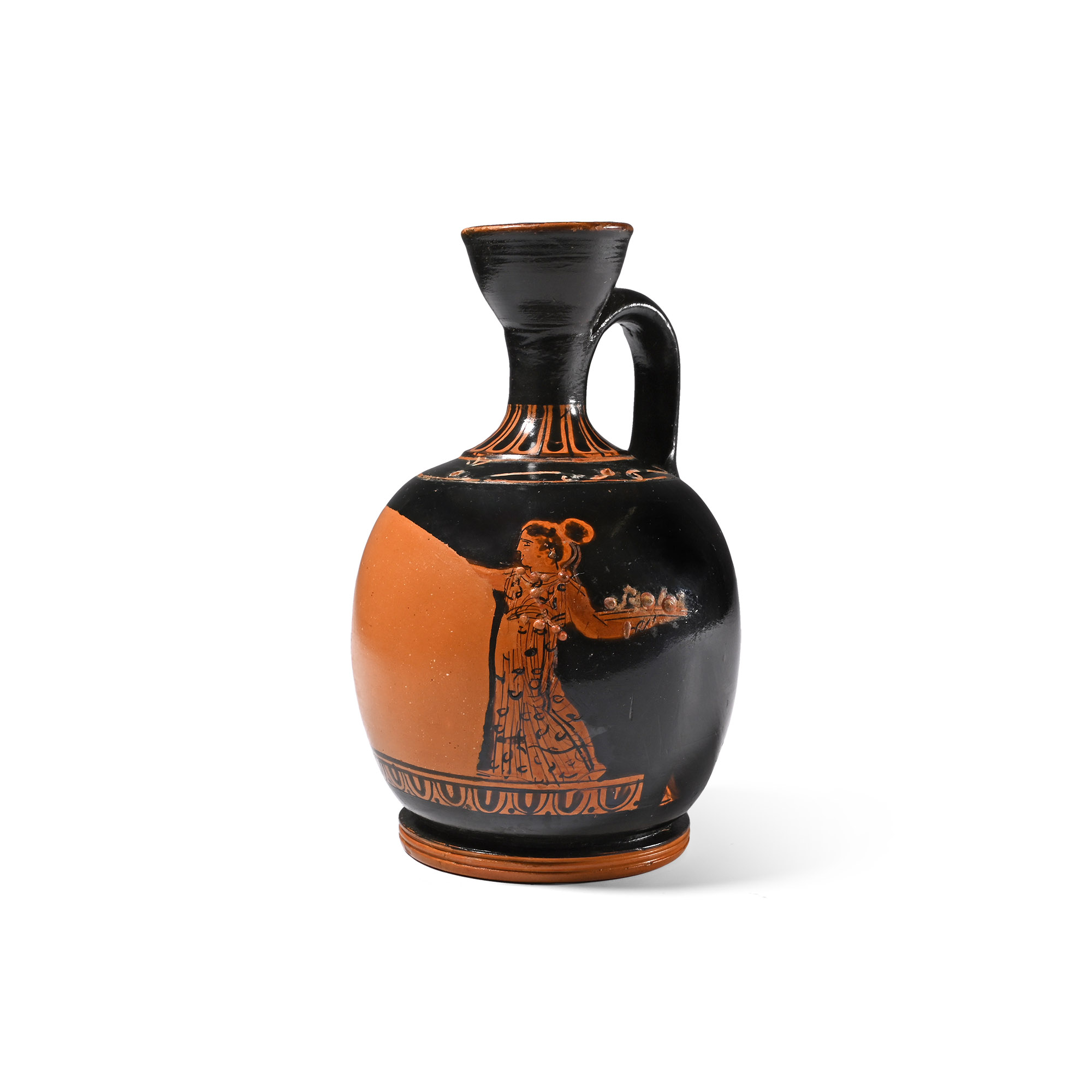
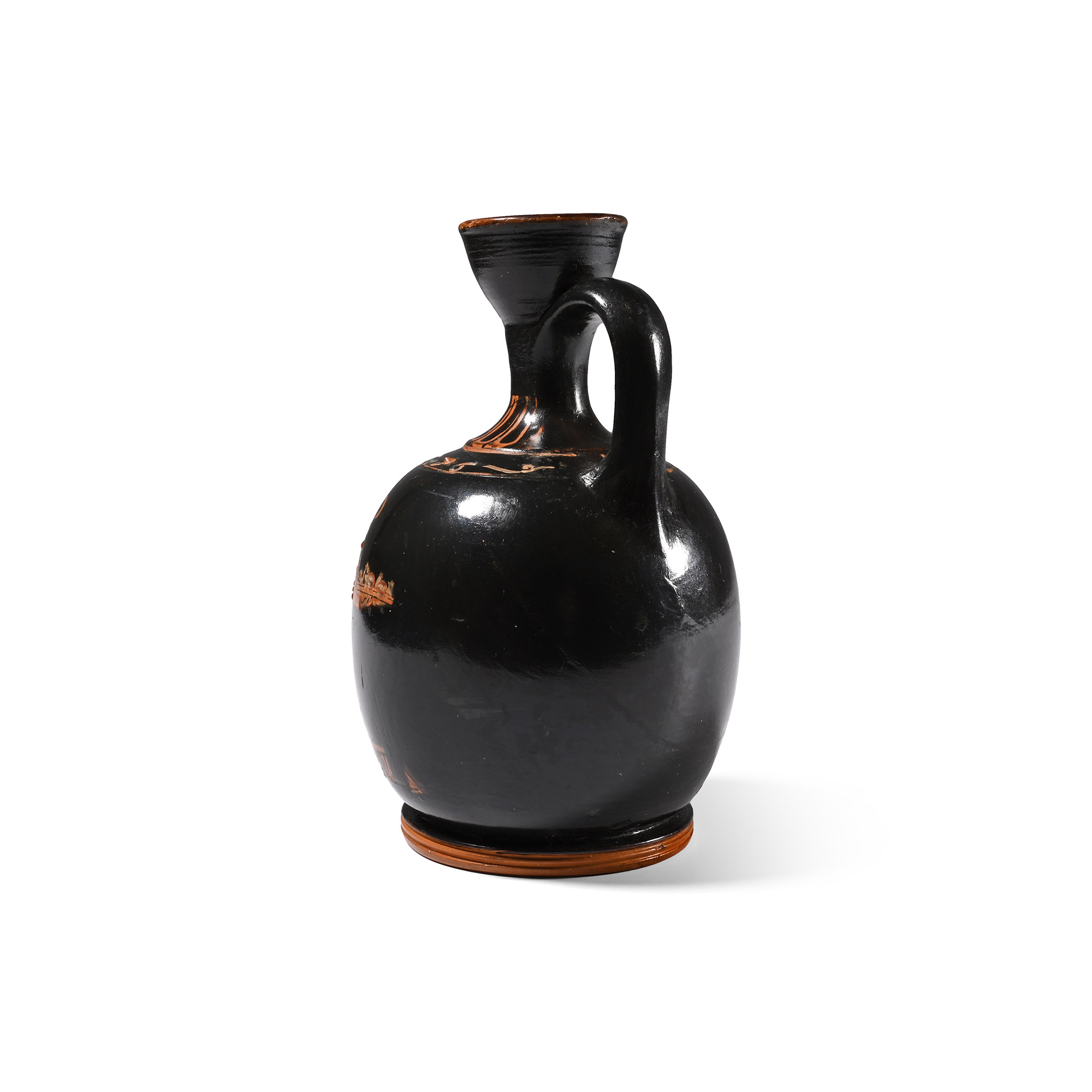
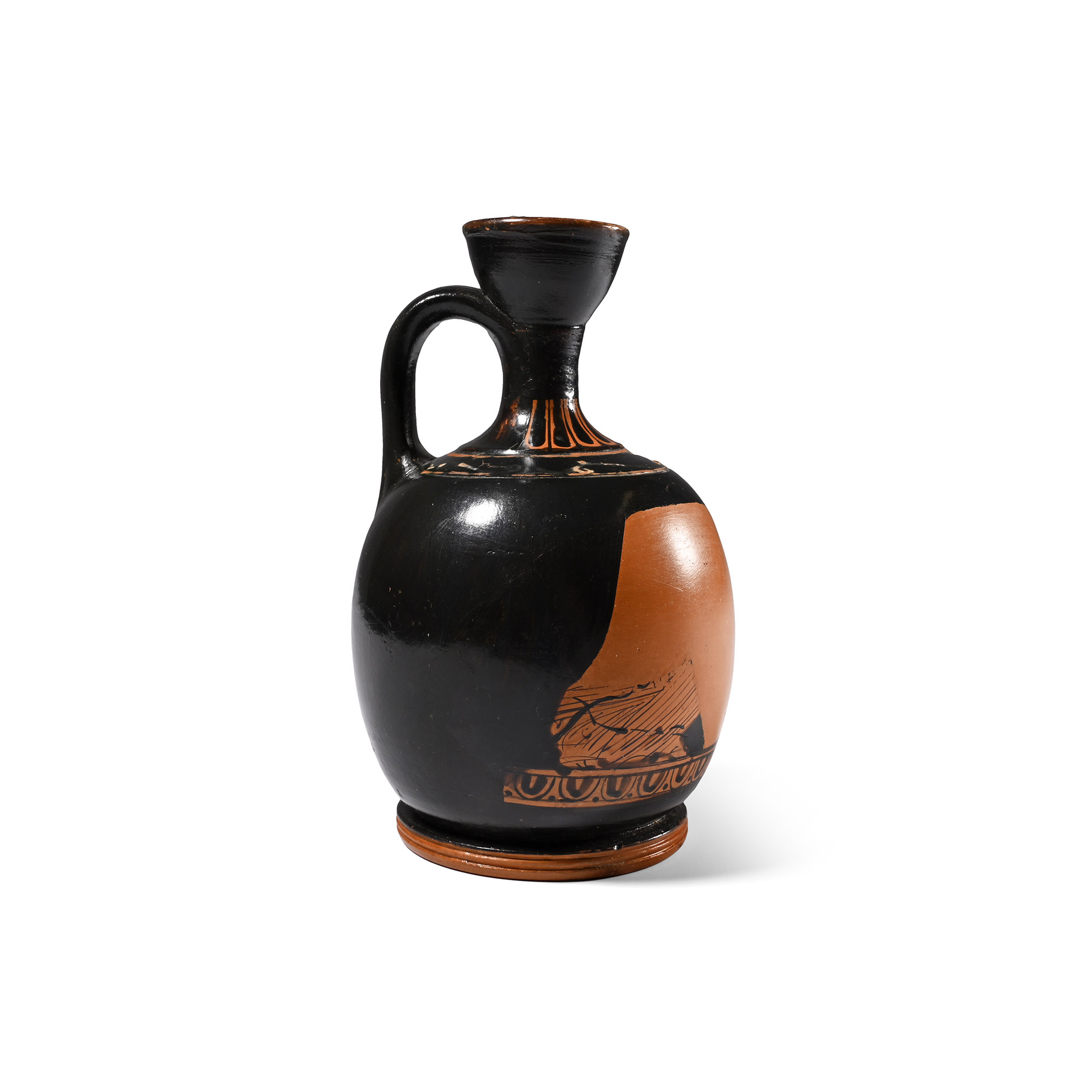
Greek Red-Figure Squat Lekythos Attributed to the Meidian Painter
ATTIC, CIRCA 420-400 B.C.
4 1/4 in. (95 grams, 10.9 cm).
Comprising a bulbous body with narrow neck and handle to the rear; radiating petals on the neck with a band of volute scrolls below, the body showing a female in a dynamic pose, dressed in an elaborate long dress and holding a plate of fruit with her left hand, a seated female before her; attributed to the Meidian Painter; some restoration. [No Reserve]
ProvenanceEx Prof. Dr Hans (1918-1984) and Dr Ines (1922-2013) Jucker, classical archaeologists, Bern, Switzerland.
with Galerie Rhéa, Zurich, Switzerland.
This lot has been checked against the Interpol Database of stolen works of art and is accompanied by a search certificate number no.12645-236462.
Cf. CVA Geneva, 4.12,2; for a similar lekythos in Bruxelles Museum Nicole, H., Meidias et le style fleuri dans la ceramique attique, Genève, 1908, pl.VII,3.
FootnotesDancing women are a characteristic of the Meidian Painter. They are depicted as young women, wearing Doric costumes, earrings, pearls surmounting diadems, and golden bracelets, holding a patera and (probably originally here too) a thimiaterion.
CONDITIONTimeLine Auctions follows a vetting process to ensure the authenticity and legality of all items, reinforcing our commitment to integrity and responsible trading. Each antiquity, antique, and coin lot undergoes thorough examination by a vetting committee of at least ten external specialists, professional trade association members, scientists, and archaeologists: Our Vetting Process
AUCTIONS:
TimeLine is a leading auction house specialising in antiquities, ancient art, collectables, natural history, coins, medals, and books. Our auctions offer museums, collectors, historians, and enthusiasts the opportunity to acquire unique and historically significant pieces.
LOT 0116
Greek Red-Figure Squat Lekythos Attributed to the Meidian Painter
Sold for (Inc. bp): £715
-
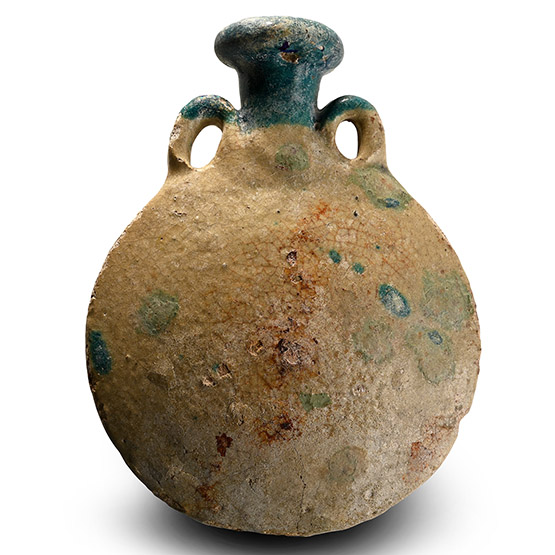
Parthian Blue Glazed Water Vessel
1st century B.C.-1st century A.D.Estimate: £300 - 400 (+bp*)
Opening Bid: £135
Discoid body and short tubular neck with everted rim, two loop handles. 561 grams, 19.2 cm
Ex London, UK gallery, 1971-early 2000s. Private collection, London. -
.jpg)
Etruscan Votive Bronze Hand
Circa 7th-6th century B.C.Sold for (Inc. bp): £2,340
Modelled in the half-round with D-section fingers, portion of cuff behind the thumb; mounted on a custom-made display stand. 187 grams total, 11.8 cm high including stand
Acquired on the German art market, before 1992; thence by descent. This lot has been checked against the Interpol Database of stolen works of art and is accompanied by search certificate number no.13191-249245.
Votive offerings gained increasing popularity throughout Etruria, southern Latium and later northern Campania from the 7th century B.C. onwards. Most gods were thought to possess the power to heal, and the sick flocked to their sanctuaries for a cure or to pray for future health. Usually, these dedications depicted the parts of the human anatomy that needed healing. The area of Vulci offered many graves in which pairs of hands cut from a sheet of bronze, rolled up at the base to form the wrist, have been found. -
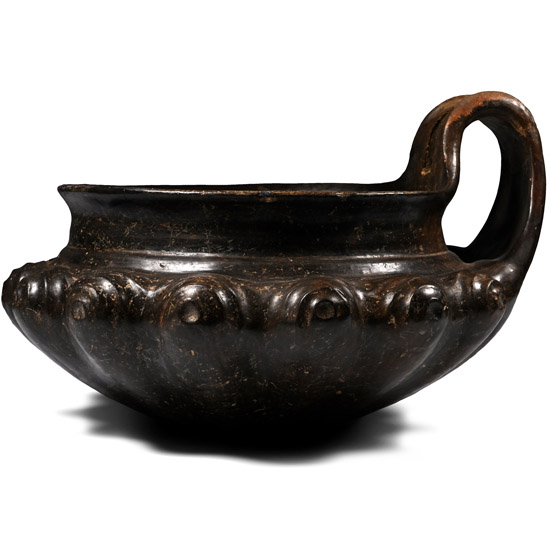
Monumental Early Etruscan Impasto Kyathos
7th century B.C.Sold for (Inc. bp): £975
Fluted body tapering to a narrow foot, the shoulders decorated with tiered bosses, short neck with flared mouth; wide handle perforated with a triangle. 1.18 kg, 25 cm wide
Estate of Mr Bruno Fellinger (1926-2016), Küsnacht, Switzerland. with Galerie Rhéa, Zurich, Switzerland. This lot has been checked against the Interpol Database of stolen works of art and is accompanied by a search certificate number no.12648-236390.
Buccheroid impasto is the name attributed by modern archaeologists to wheel thrown pottery. The clay in these specimens is less refined, and the firing techniques less precise than in the later bucchero ware.
