
Loading, please wait...
LOT 0082
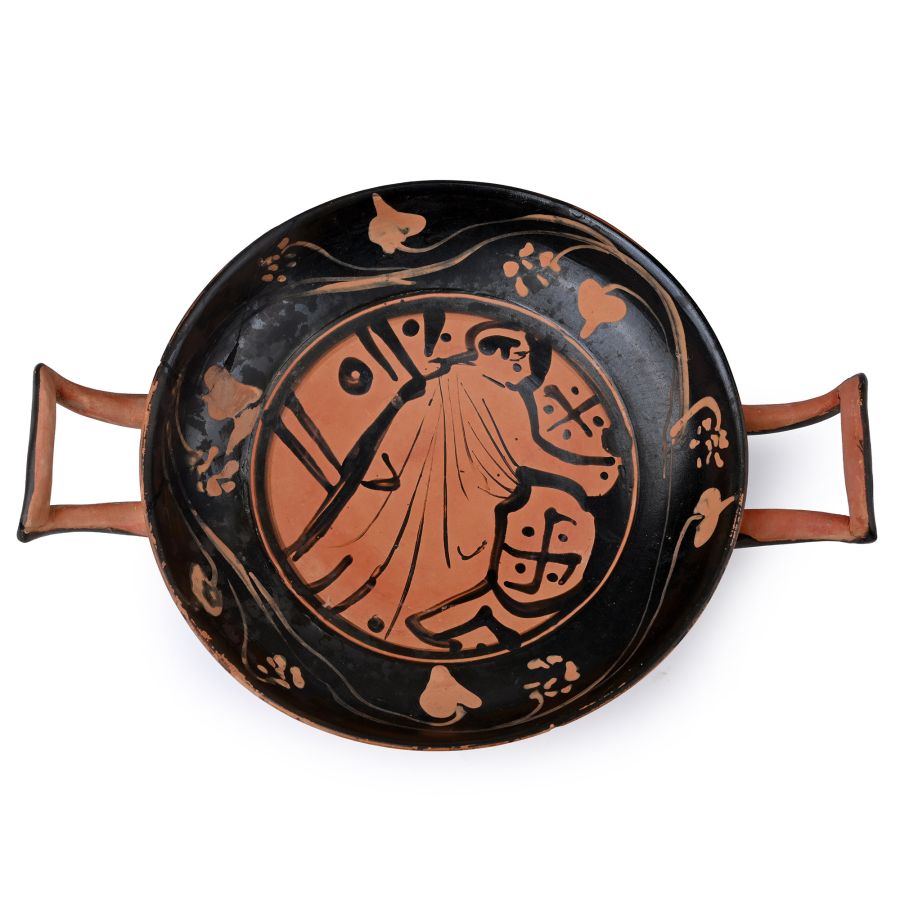
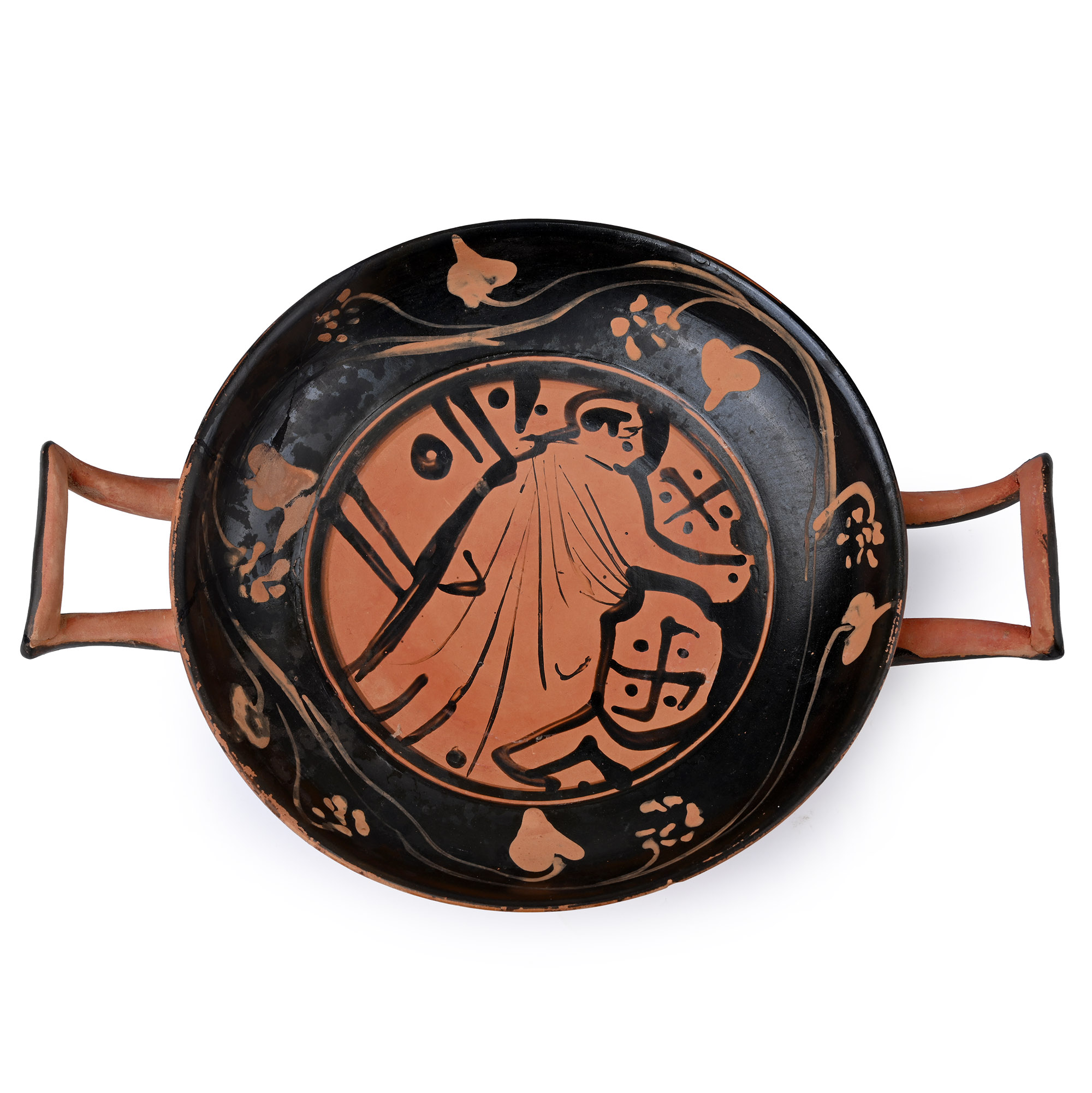
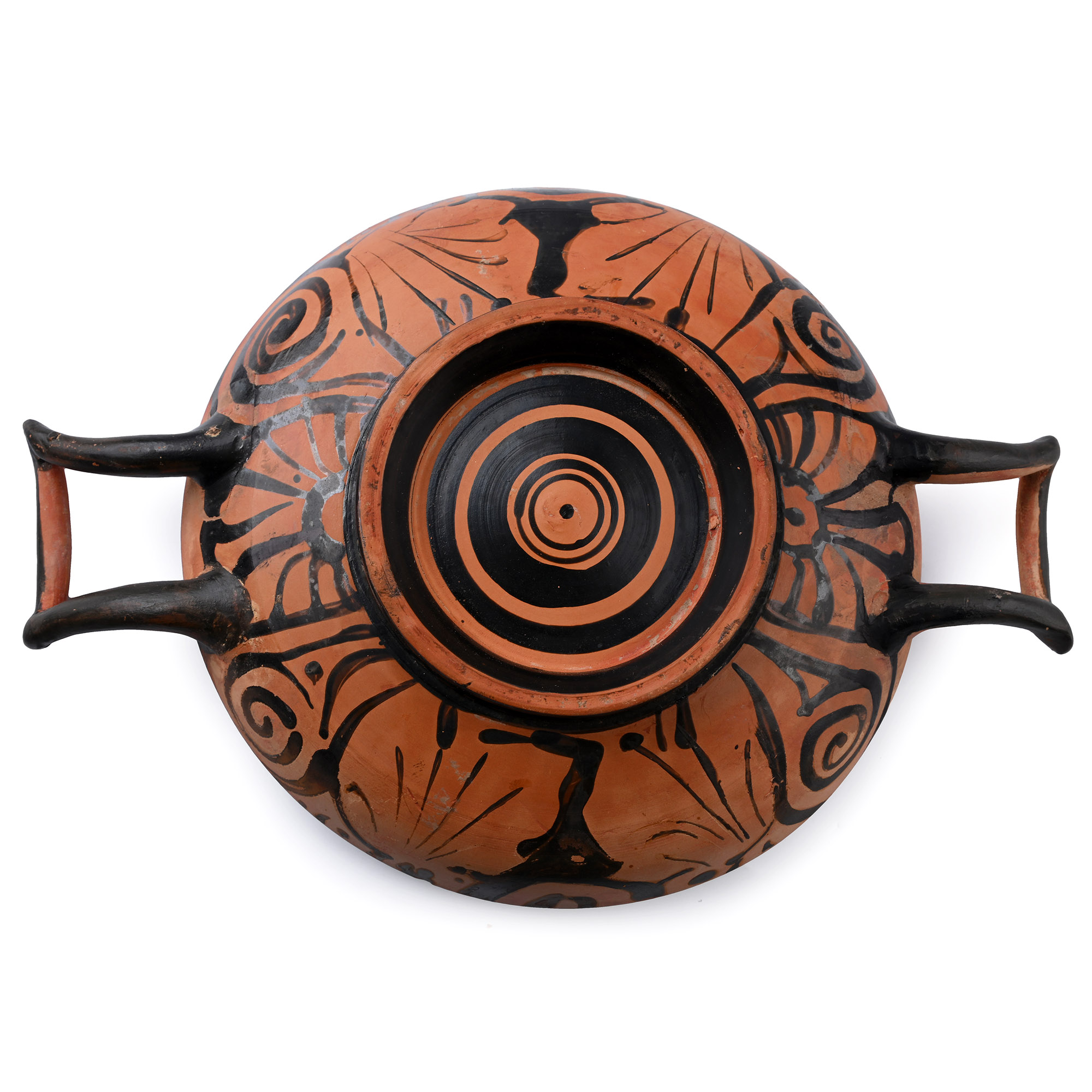
Greek Red-Figure Kylix with Youth in the Tondo from the Group of Vienna 116
ATTIC, CIRCA 375-350 B.C.
8 5/8 in. (220 grams, 22 cm wide).
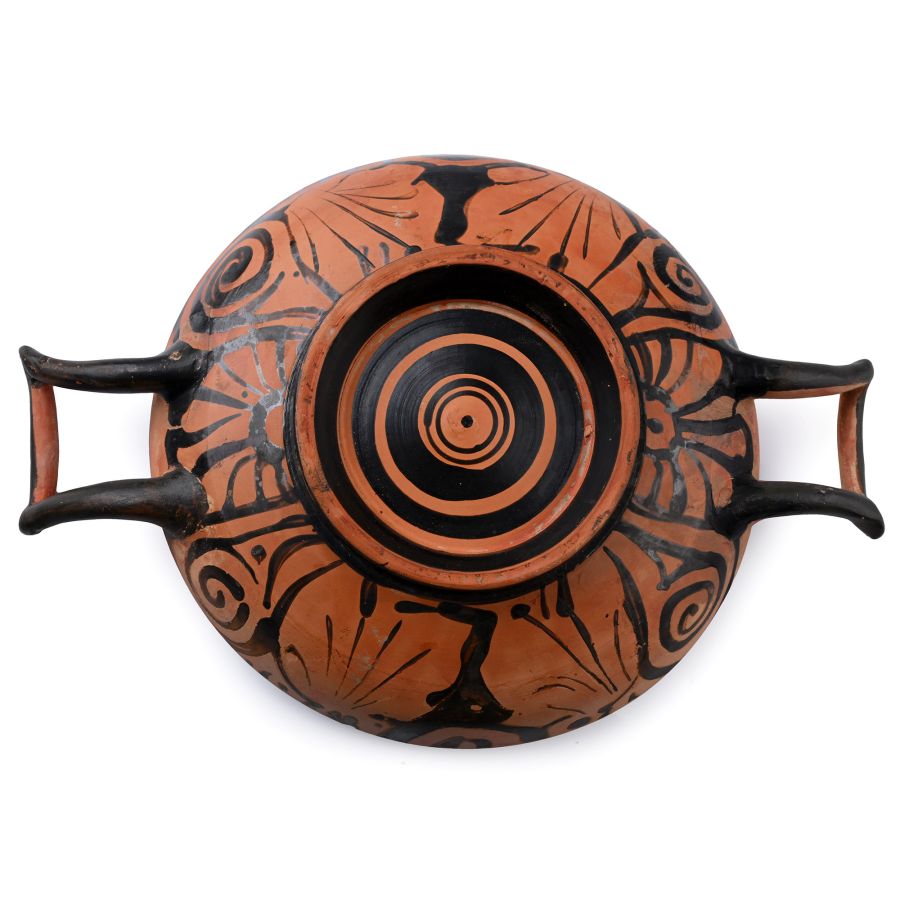
Broad and shallow with two strap handles; ivy leaves and berries on the inside rim, tondo with cloaked figure surrounded by geometric motifs; outside with palmettes, scrolls and other motifs; repaired.
ProvenanceAcquired on the art market between the late 1990s and mid-2000s.
Estate of the late Barry Paul Buxton (1944-2024), Oakham, Rutland.
Acquired on the UK art market, 2025.
TimeLine Auctions follows a vetting process to ensure the authenticity and legality of all items, reinforcing our commitment to integrity and responsible trading. Each antiquity, antique, and coin lot undergoes thorough examination by a vetting committee of at least ten external specialists, professional trade association members, scientists, and archaeologists: Our Vetting Process
AUCTIONS:
TimeLine is a leading auction house specialising in antiquities, ancient art, collectables, natural history, coins, medals, and books. Our auctions offer museums, collectors, historians, and enthusiasts the opportunity to acquire unique and historically significant pieces.
LOT 0082
Greek Red-Figure Kylix with Youth in the Tondo from the Group of Vienna 116
Sold for (Inc. bp): £1,300
-
.jpg)
Greek Solid Gold Ring Idol
5th-4th millennium B.C.Sold for (Inc. bp): £2,730
Annular in form with pierced tab. 0.66 grams, 18 mm
Private collection, acquired in the late 1980s-early 1990s; thence by descent.
During the Greek Neolithic, certain types of ornaments share common morphological characteristics; one such example is the so-called ‘ring-idols’. The prototype of these ring-shaped pendants seems to have been made out of gold, which began to be used during these late phases of the Neolithic in Greece and the Balkans, in general. -
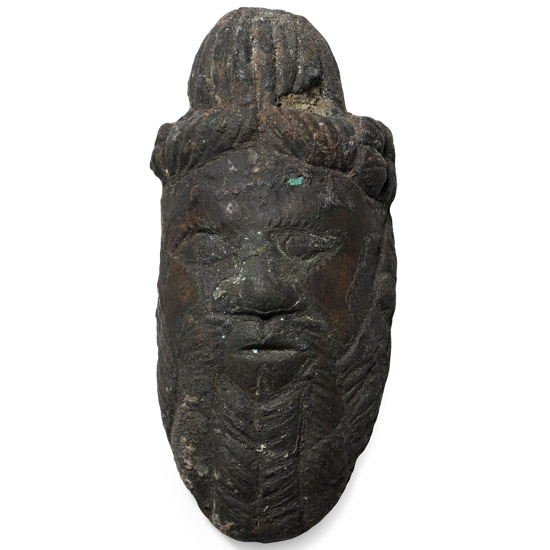
Graeco-Phoenician Bronze Mask
Circa 6th century B.C.Sold for (Inc. bp): £98
An oval convex mount depicting a mature man with a carefully arranged full beard, bushy eyebrows and a wide nose, with two rosettes on the brow. 58 grams, 66 mm
From the private collection of a European gentleman (1942-2024), formed since the 1970s. -
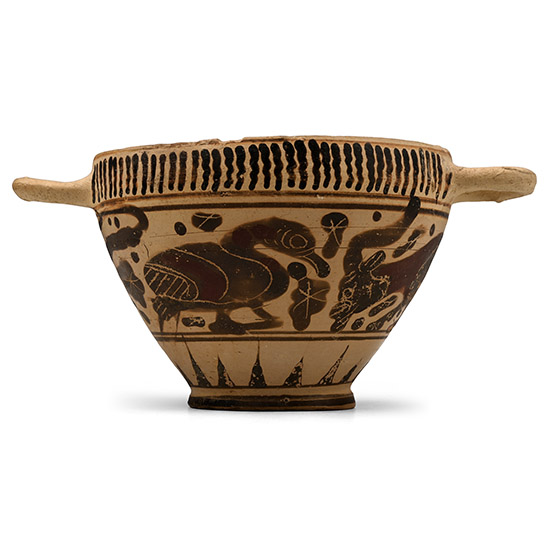
Greek White-Ground Kotyle with Panther, Goat and Swan
Corinthian, 6th century B.C.Estimate: £3,000 - 4,000 (‡+bp*)
Opening Bid: £1,500
Squat in profile with lateral loop handles, vertical stripes to the rim, frieze with a grazing goat, a panther to its rear and a perching swan. 102 grams, 15.1 cm
Ex private collection, Tokyo, Japan, since the 1980s. Private European collection, acquired in 2010. This lot has been checked against the Interpol Database of stolen works of art and is accompanied by a search certificate number no.13227-249320.
In agreement with most scholars of the Corinthian pottery, Amyx and Payne used the term kotyle, rather than skyphos, to designate the distinctive group of deep cups with no offset lip, horizontal handles set near the rim, a convex tapering body and a narrow, echinoid foot.
