
Loading, please wait...


LOT 0845
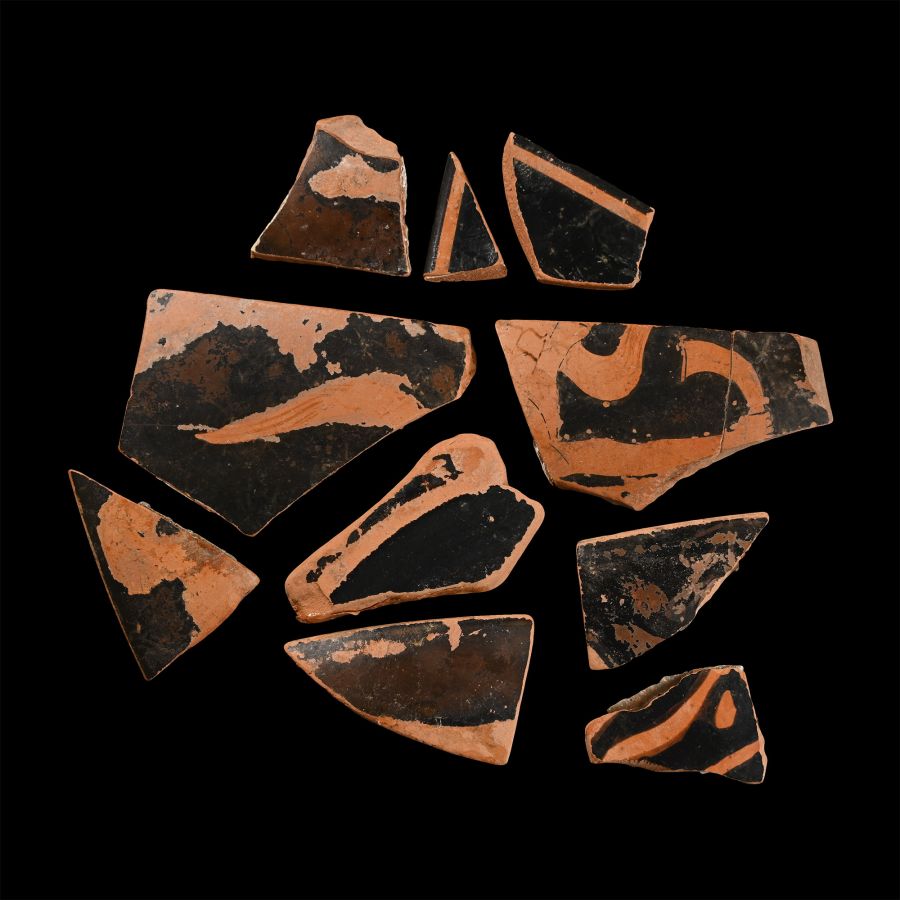
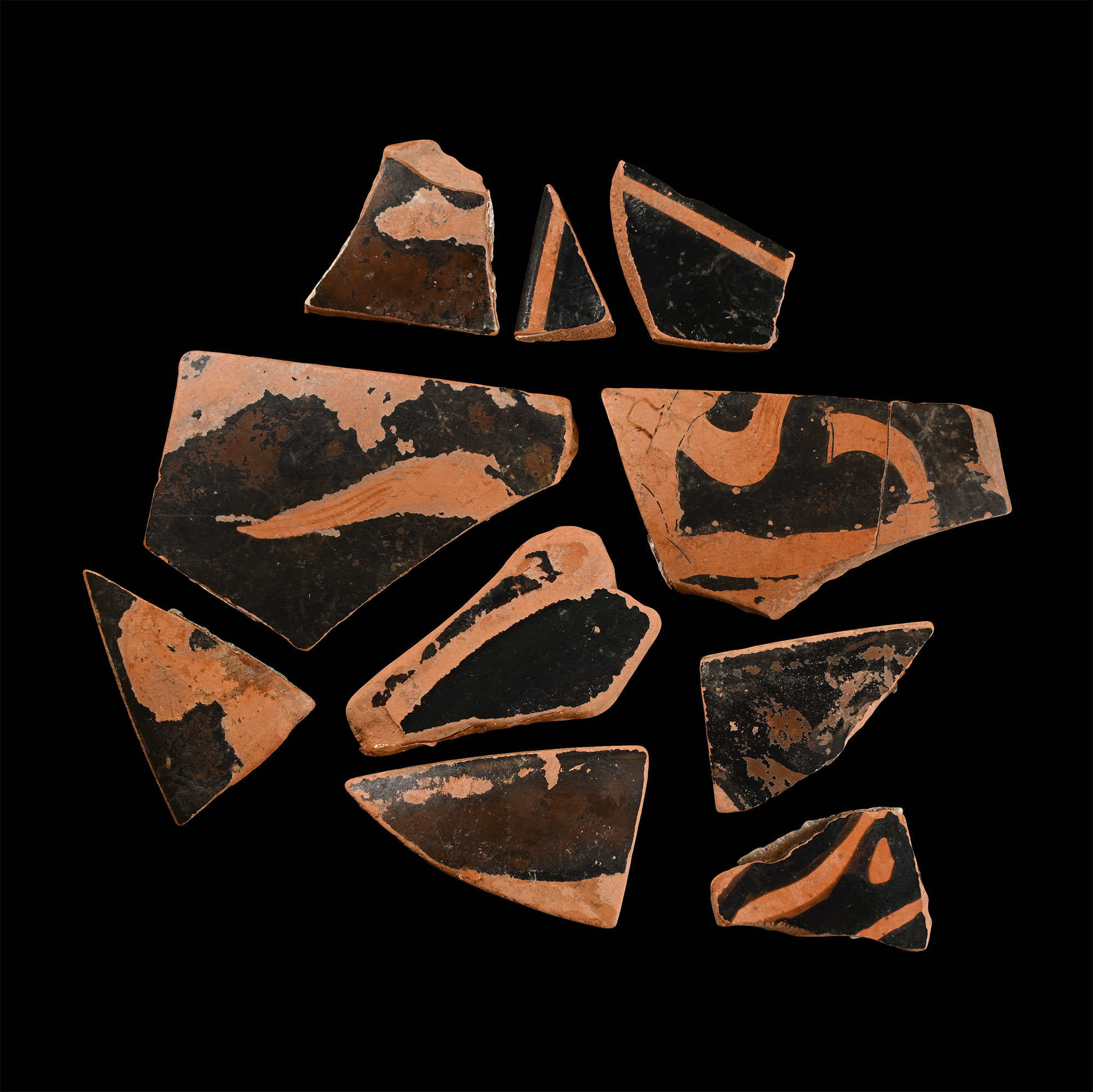
Greek Red-Figure Fragment Collection
5TH CENTURY B.C.
7/8 - 2 1/8 in. (37 grams total, 21-55 mm).
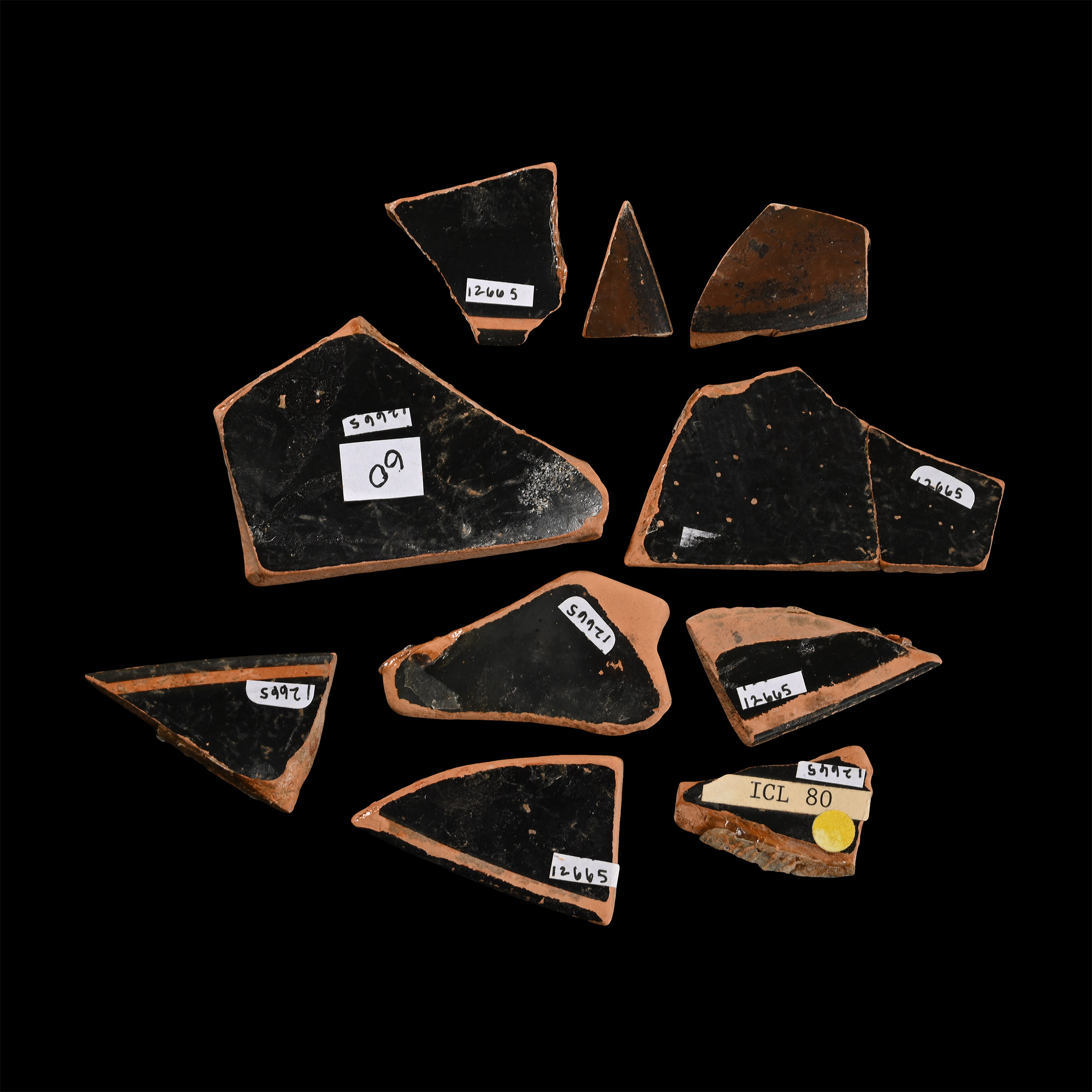
Comprising irregular, mainly curved fragments with reserved and applied ornament on a black field; each with an old collector's label. [10, No Reserve]
ProvenanceIris Cornelia Love (1933-2020) collection, New York, formed primarily in the 1950s-1970s; on long-term loan to Dietrich von Bothmer, New York, late 1960s/early 1970s to late 1990s.
CONDITIONTimeLine Auctions follows a vetting process to ensure the authenticity and legality of all items, reinforcing our commitment to integrity and responsible trading. Each antiquity, antique, and coin lot undergoes thorough examination by a vetting committee of at least ten external specialists, professional trade association members, scientists, and archaeologists: Our Vetting Process
AUCTIONS:
TimeLine is a leading auction house specialising in antiquities, ancient art, collectables, natural history, coins, medals, and books. Our auctions offer museums, collectors, historians, and enthusiasts the opportunity to acquire unique and historically significant pieces.
LOT 0845
Greek Red-Figure Fragment Collection
Estimate £50 - 70€58 - 81 (for guidance only)$68 - 95 (for guidance only)
Opening Bid
£5 (EUR 6; USD 7) +BP*
-
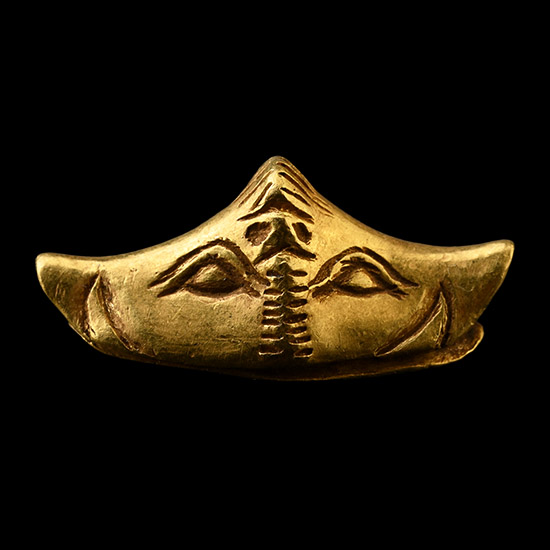
Greek Gold Double Boar Seal with Inscription
Circa 5th-3rd century B.C.Estimate: £1,200 - 1,700 (+bp*)
Opening Bid: £600
Hollow pendant formed as two triangular-section boar heads with finely carved tusks and eyes, ribbed bristles to the top of their heads; inscription to the bottom 'AHO?'. 2.37 grams, 18 mm
From the collection of a UK gentleman, London, UK, by descent from his family collection, 1970s. -
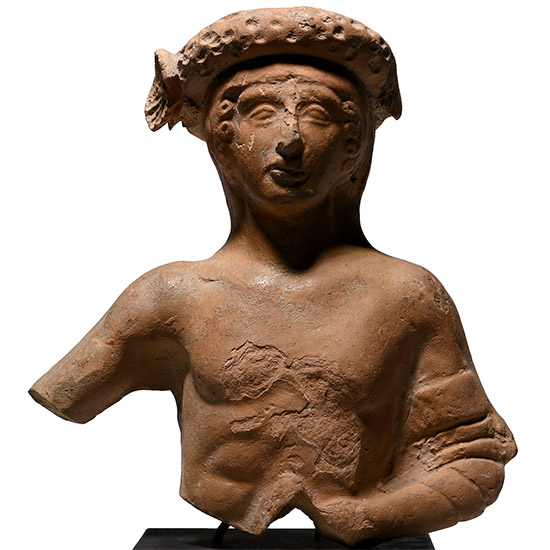
Greek Terracotta Figure of Young Dionysos
5th century B.C.Estimate: £1,200 - 1,700 (‡+bp*)
Opening Bid: £675
Modelled as a hollow torso nude of a youthful male, with a beardless face, full lips, tall nose and almond-shaped eyes; short curly hair with a thick wreath including a rosette, folded fabric draped over the right hand; mounted on a custom-made stand. 327 grams total, 15 cm including stand
Ex Prof. Hans Dahn (1919-2019), Lausanne; acquired 12 March 1954 from Donati in Basel (Dahn's list no.105).
It remains a matter of debate who these clay symposiasts- characterised by their specific, sometimes very imaginative headdresses- represent. They have been variously interpreted as Dionysos, heroised deceased persons or representative images of the urban elite. The type was particularly popular in Taranto. The recumbent man probably held a kantharos in his left hand and wore a coat that was tightly wrapped around his left arm. -
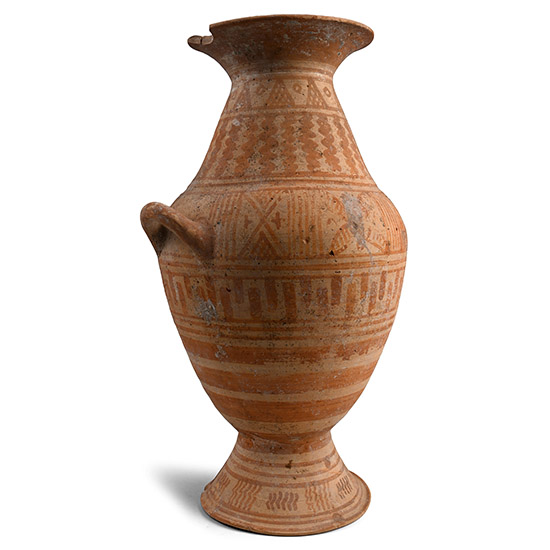
Very Large Italo-Geometric Amphora with Two Handles
7th century B.C.Estimate: £2,500 - 3,500 (‡+bp*)
Opening Bid: £1,275
With ovoid body on a tall conical foot, ovoid body sloping steeply towards the neck with wide everted rim; applied geometric decoration in clusters of lines, broad stripes, dentil patterns, vertical zig-zags and hatched lozenges; at the shoulder, alternating metopes of saltires, quatrefoils and swastikas; one handle largely absent. 2.58 kg, 43.5 cm
Ex Prof. Kurt Alder, Riehen, acquired in October 1978; thence by descent. This lot has been checked against the Interpol Database of stolen works of art and is accompanied by search certificate no.13512-263122.
By the last quarter of the 8th century B.C., the Oinotrian-Euboean production was diffused in the Greek Italic Colonies, characterised by larger vessels with elaborate figurative decoration similar to decoration known from Eretria. A detailed stylistic correspondence can be observed between the Cesnola-inspired fragments from the area north of the Daphnéphoros sanctuary of Apollo in Eretria and a decorated stand from the Timpone della Motta. With this elaborate series, the Oinotrian-Euboean production is consistent with the high craft specialisation observed in the local Euboeanizing production on Ischia.
