
Loading, please wait...
LOT 0052
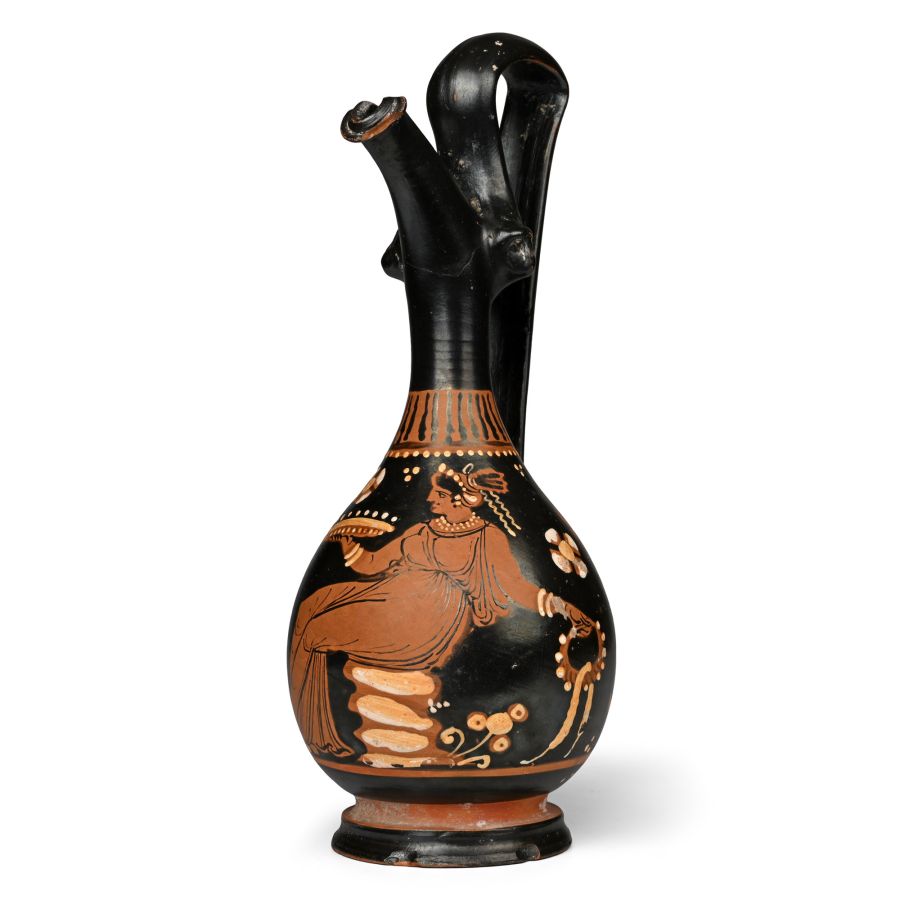
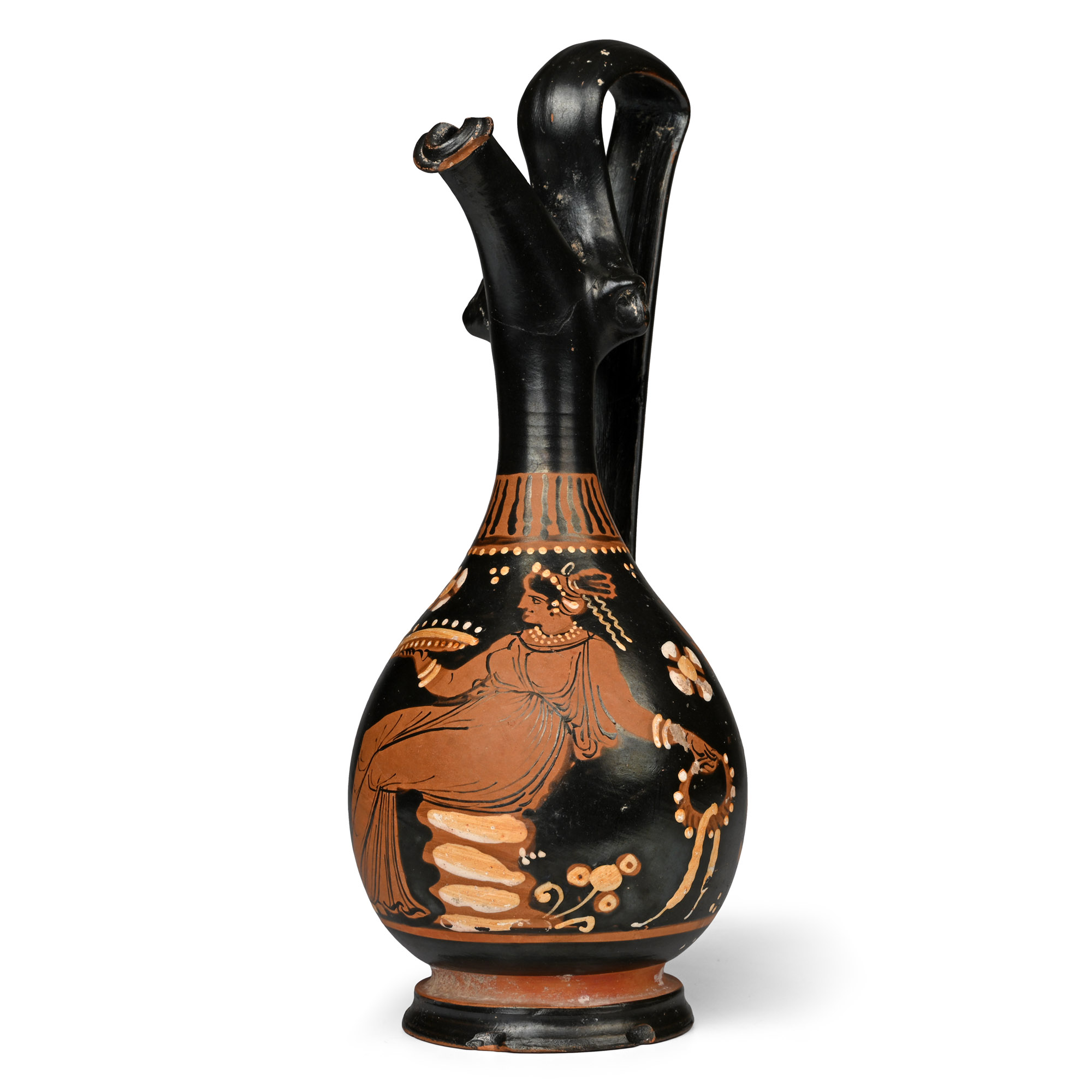
Greek Red-Figure Epichysis
4TH-2ND CENTURY B.C.
7 1/2 in. (175 grams, 19.1 cm).
With pedestal foot, bulbous body, flared neck, pinched rim with lateral lugs and extended pouring lip, ribbed strap handle to the reverse; radiating white pellets and vertical red strokes to the neck, palmette to the reverse and profile seated figure of a lady of fashion with stephane and necklace, holding a wreath in one hand and a platter in the other; objects in the field; old collector's references to underside.
ProvenanceFrom the estate of a deceased American, acquired between 1970-1989.
with Bonham's, London, Knightsbridge, 28 October 2009, no.23 [part].
This lot has been cleared against the Art Loss Register database, and is accompanied by an illustrated lot declaration signed by the Head of the Antiquities Department, Dr Raffaele D'Amato.
TimeLine Auctions follows a vetting process to ensure the authenticity and legality of all items, reinforcing our commitment to integrity and responsible trading. Each antiquity, antique, and coin lot undergoes thorough examination by a vetting committee of at least ten external specialists, professional trade association members, scientists, and archaeologists: Our Vetting Process
AUCTIONS:
TimeLine is a leading auction house specialising in antiquities, ancient art, collectables, natural history, coins, medals, and books. Our auctions offer museums, collectors, historians, and enthusiasts the opportunity to acquire unique and historically significant pieces.
-
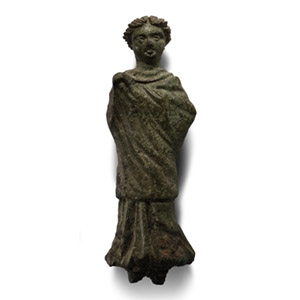
Etruscan Bronze Ceres Statuette
3rd-2nd century B.C.Estimate: £700 - 900 (‡+bp*)
Opening Bid: £389
Female with hair drawn up in a chignon, palla wrapped tightly around the upper body hiding the right arm bent with the hand at the shoulder, lower hem of robe flared; fixing lug to underside. 86 grams, 71 mm
Acquired in the mid 1980s-1990s. Private collection, Switzerland, thence by descent. Private collection, since the late 1990s. This lot is accompanied by an illustrated lot declaration signed by the Head of the Antiquities Department, Dr Raffaele D’Amato. This lot is accompanied by an illustrated lot declaration signed by the Head of the Antiquities Department, Dr Raffaele D'Amato.
This is a figurine of a deity of difficult interpretation representing an ex-voto. This typology is widespread in the votive offerings of Etrusco-Roman sanctuaries, and by analogy with various statuettes could represent Ceres. -
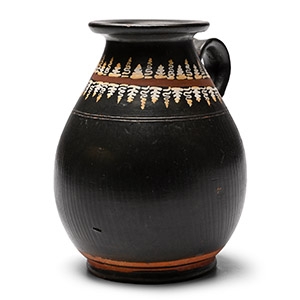
Greek Gnathian Black-Glazed Jug with Grape Vines
South Italic, 5th-3rd century B.C.Sold for (Inc. bp): £442
Blackware juglet with pedestal base, bulbous body, waisted neck and everted rim; the applied handle to the rear; band of red flanked by cream and white fronds to the shoulder. 155 grams, 11 cm
From the private collection of a Canadian gentleman living in Essex, UK, formed since the 1920s-circa 1990. Property of an Essex lady until the late 1990s; thence by descent. From the private collection of an Essex gentleman since the late 1990s. This lot is accompanied by an illustrated lot declaration signed by the Head of the Antiquities Department, Dr Raffaele D'Amato. -
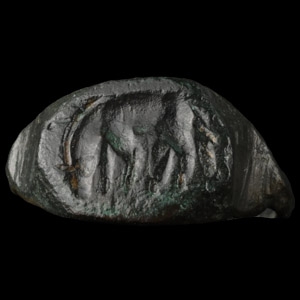
Greek Bronze Ring with Grazing Horse
4th-3rd century B.C.Sold for (Inc. bp): £182
Ellipsoid bezel with incuse image of a horse with head lowered. 4.23 grams, 21.71 mm overall, 18.78mm internal diameter (approximate size British O, USA 7, Europe 14.98, Japan 14)
Ex German art market, 2000s. Acquired from an EU collector living in London. From the collection of a Surrey, UK, gentleman. This lot is accompanied by an illustrated lot declaration signed by the Head of the Antiquities Department, Dr Raffaele D'Amato.
