
Loading, please wait...
LOT 0087
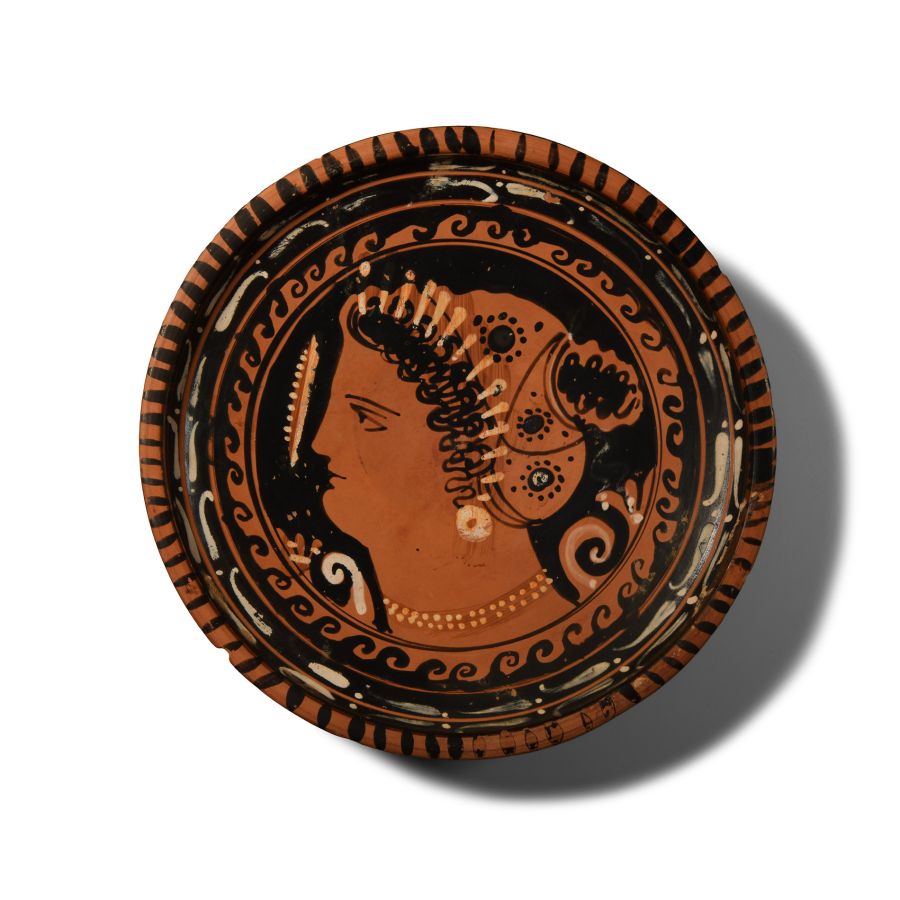
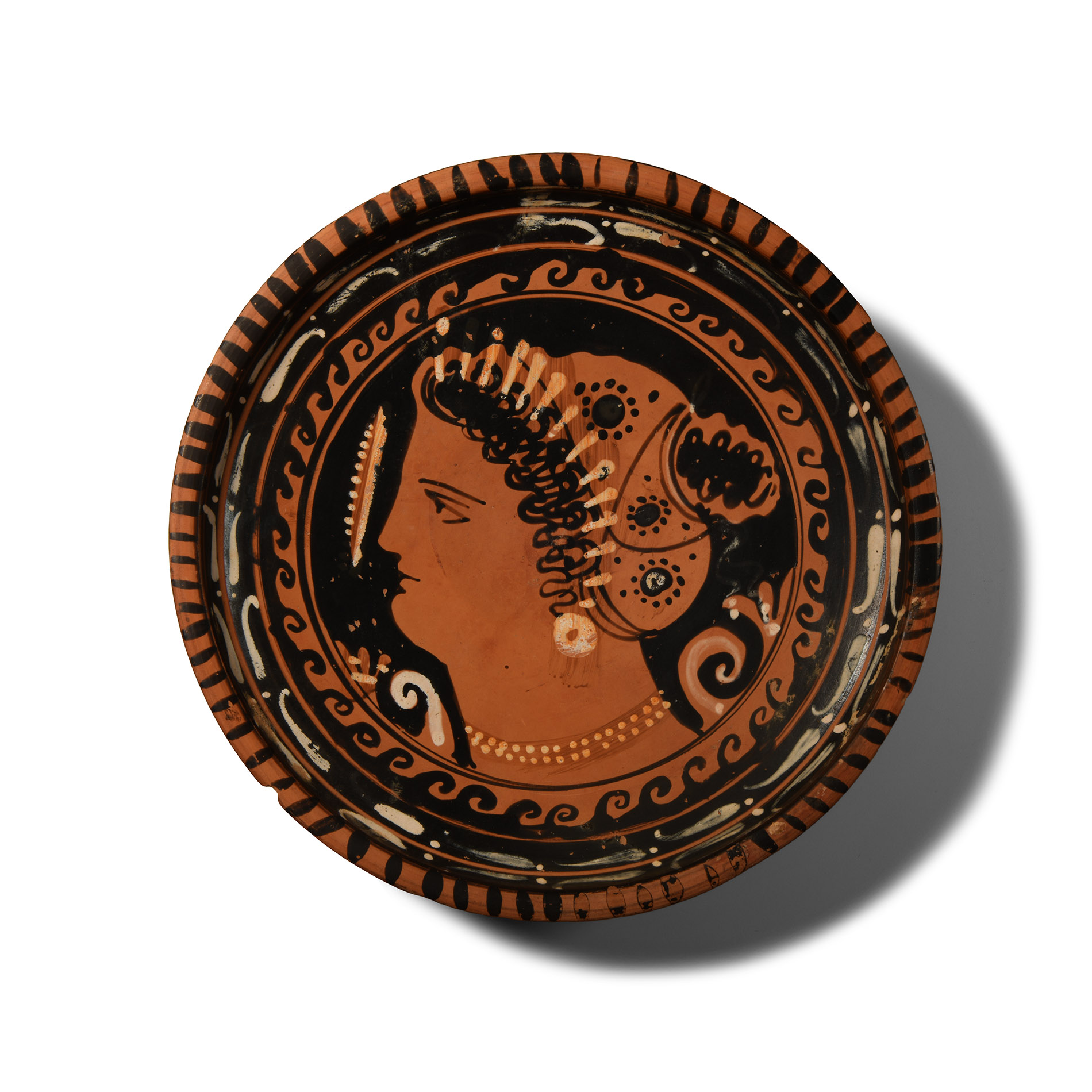
Greek Red Figure Dish with Lady of Fashion
SOUTH ITALIAN, CIRCA 380-350 B.C.
6 1/2 in. (187 grams, 16.5 cm wide).
With pedestal foot, decorated with radiating strokes to the rim, band of leaf ornament surrounding the central profile of a lady of fashion facing left, her hair dressed in a ribboned sakkos with stephane; earrings and necklace in white and ochre.
ProvenanceAcquired by the vendor's father in the 1950s or before; thence by descent 2003.
CONDITIONTimeLine Auctions follows a vetting process to ensure the authenticity and legality of all items, reinforcing our commitment to integrity and responsible trading. Each antiquity, antique, and coin lot undergoes thorough examination by a vetting committee of at least ten external specialists, professional trade association members, scientists, and archaeologists: Our Vetting Process
AUCTIONS:
TimeLine is a leading auction house specialising in antiquities, ancient art, collectables, natural history, coins, medals, and books. Our auctions offer museums, collectors, historians, and enthusiasts the opportunity to acquire unique and historically significant pieces.
-
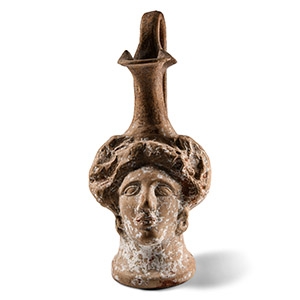
Greek Canosan Terracotta Anthropomorphic Oinochoe
Circa 4th century B.C.Estimate: £800 - 1,000 (+bp*)
Opening Bid: £400
The body formed as a female bust with elaborately styled hair; discoid foot, tall stem with pinched rim giving a broad pouring lip, strap handle to the rear; some pigment remaining. 446 grams, 22.2 cm high
Old French private collection. Swiss private collection, Basel-Landschaft. Private collection of M. Tritten, Binningen, Switzerland. Property of an East Sussex, UK, gentleman. -
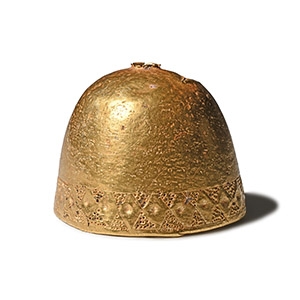
Scythian Decorated Gold Bell
1st millennium B.C.Sold for (Inc. bp): £780
Domed with a rolled rim and vent at the apex; decorative band above the rim with reserved lozenges on a pounced field each with an impressed dimple to the centre; cracked to one side. 19.47 grams, 48 mm
Cracked
Acquired early 1990s. Ex private American collection; thence by descent. Private Swiss collection since 1998. -
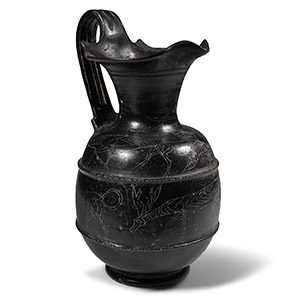
Etruscan Terracotta Bucchero Oinochoe with Incised Animals
Circa 6th century B.C.Sold for (Inc. bp): £1,755
With shoulder and belly encircled by two notched ribs, by two friezes with later carefully-incised, elongated animals (stag, snake, winged panther, horse, lion), restored. 740 grams, 25.5 cm
Late W.H. collection. With Kunst der Antike, Munich, Germany, 1977. Ex Gorny & Mosch, 16 December 2008, lot 261. with Artemission, London, UK. Property of a South Australian private collector, with collection reference 21.09. Accompanied by detailed collector's catalogue pages including description and photograph.
