
Loading, please wait...
LOT 0062
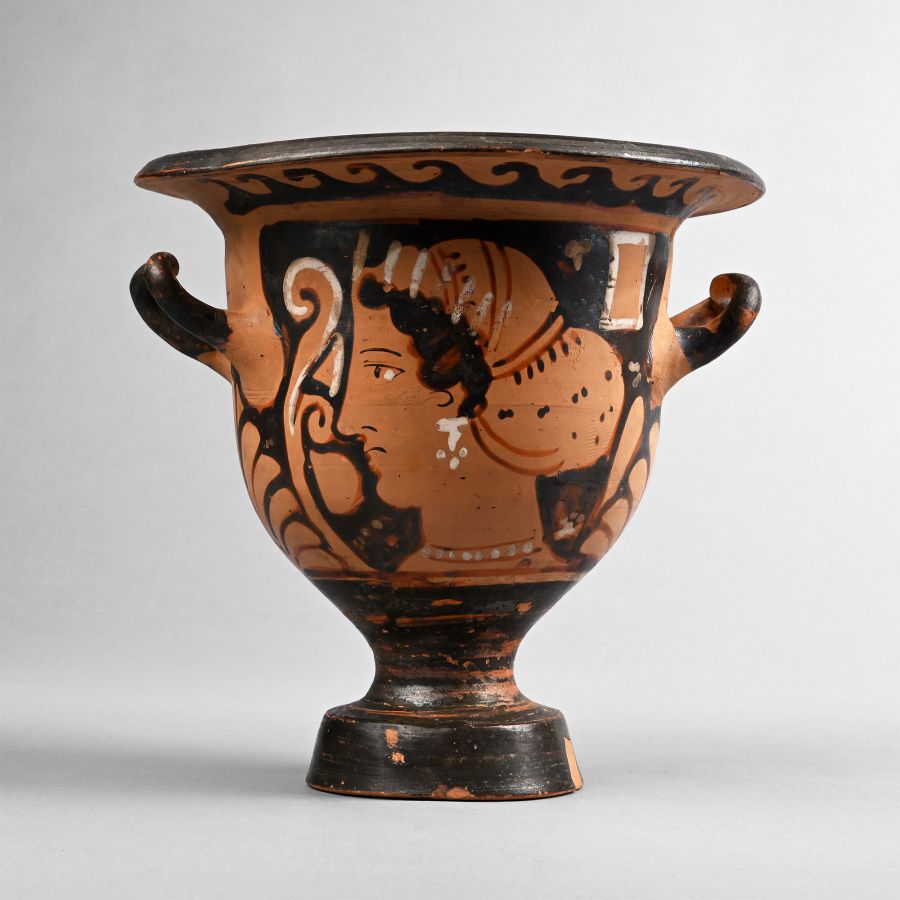
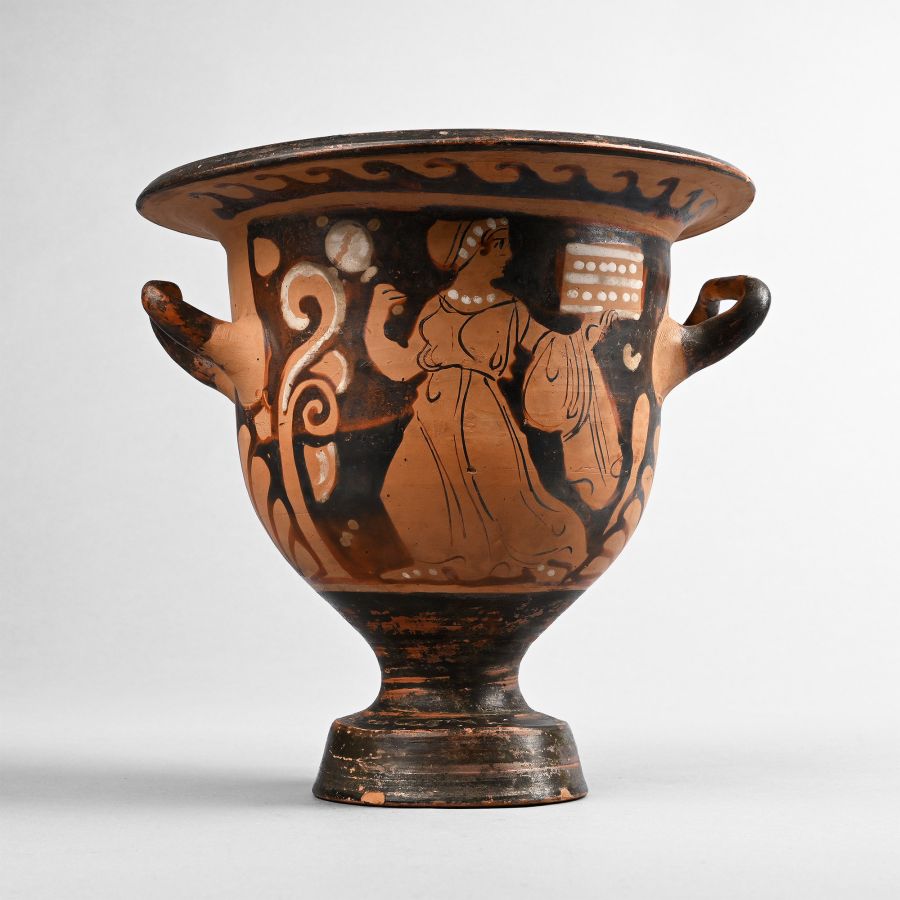
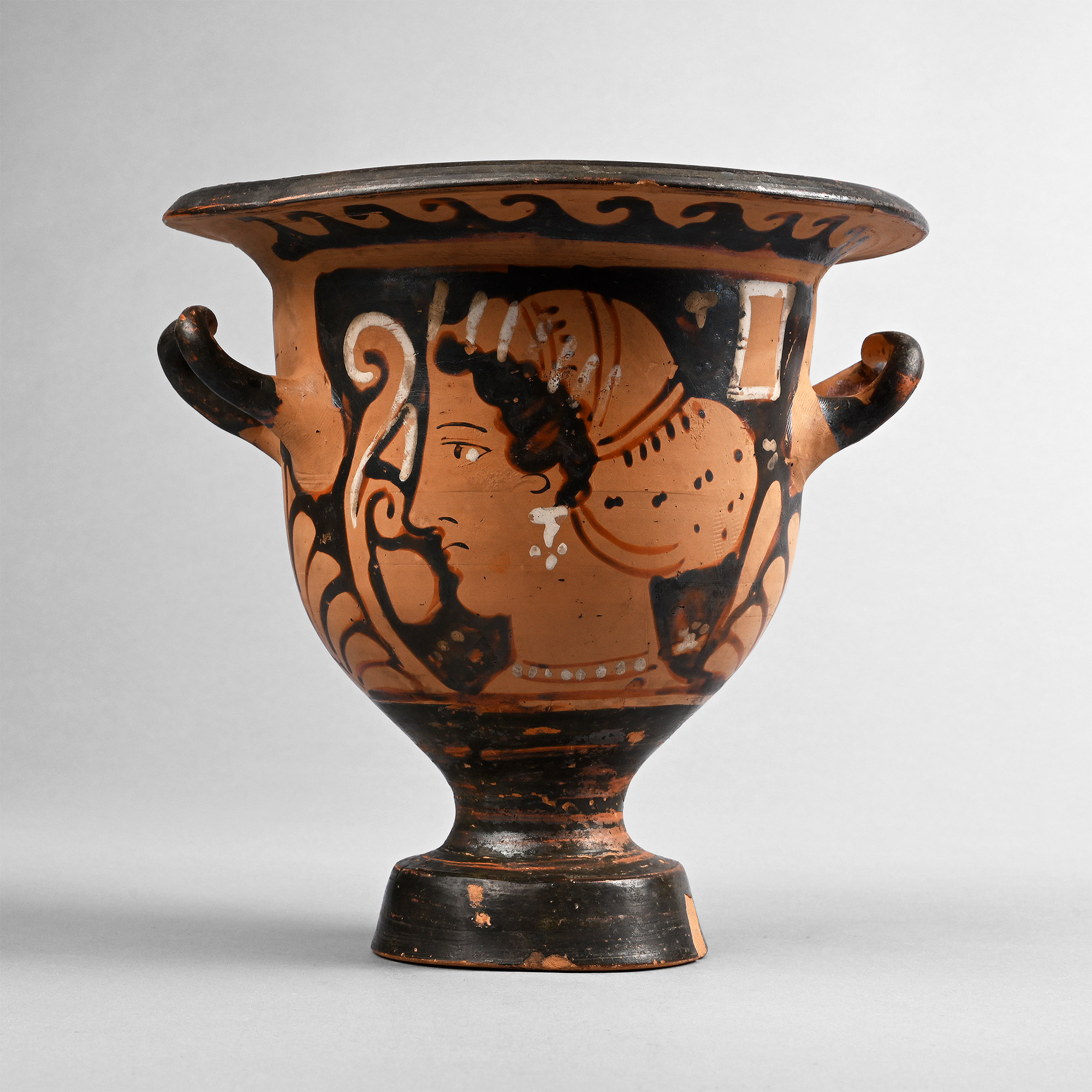
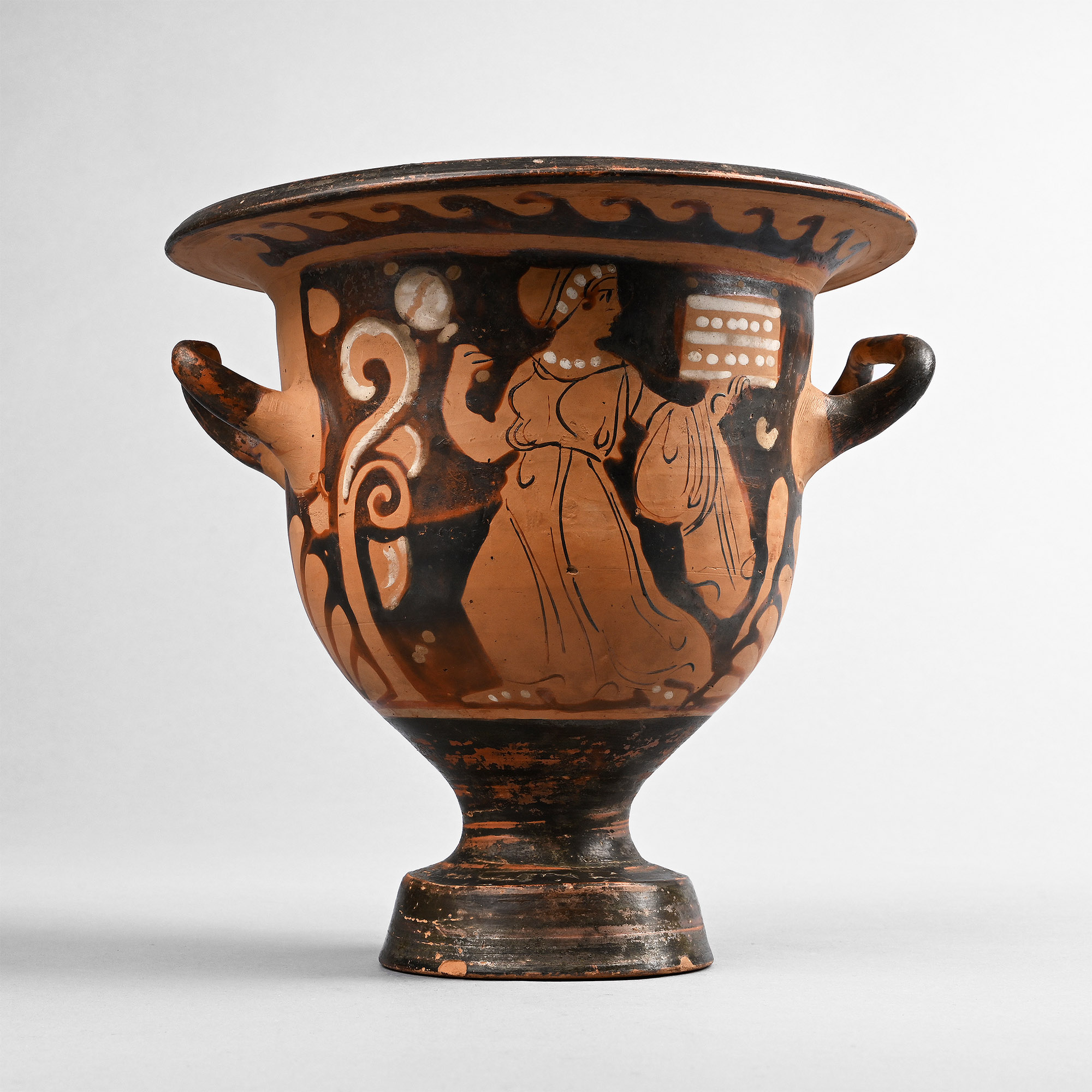
Greek Red-Figure Bell Krater
CAMPANIAN, 340-325 B.C.
7 1/8 in. (585 grams, 18 cm high).
With notable added white details; Side A: woman moving to her right while holding a cista, dressed in a chiton clinched at the waist, with a himation draped over her left arm, her hair adorned with a sakkos; Side B: profile head of a woman wearing a patterned sakkos and radiated stephane, intricate earrings and necklace of beads, objects in the field; beneath the handles, palmettes with floral elements.
ProvenanceEx Rev. & Mrs T.S. Hichens, Cornwall with Charles Ede, 1981 (Stock No.8370).
Ex Mrs B. Shankes, November 1986.
This lot has been checked against the Interpol Database of stolen works of art and is accompanied by search certificate no.13068-248976.
Charles Ede Ltd, 120 Antiquities, 1981, no.5.
LiteratureCf. similar pottery in Paul Getty Museum, inv.no.71.AE.301.
FootnotesBell kraters were commonly used in regions of ancient Italy for mixing and serving wine during communal gatherings, thanks to their wide shape and flared mouth. These vessels also served as artistic expressions, reflecting the cultural tastes of the time. The Chevron Group is the conventional name for a group of ancient Apulian red-figure vase painters who were active in Southern Italy between approximately 335-310 BC. They are named for their distinctive use of a band of chevron patterns to encircle the rims of the small kraters (mixing vessels) they decorated.
CONDITIONTimeLine Auctions follows a vetting process to ensure the authenticity and legality of all items, reinforcing our commitment to integrity and responsible trading. Each antiquity, antique, and coin lot undergoes thorough examination by a vetting committee of at least ten external specialists, professional trade association members, scientists, and archaeologists: Our Vetting Process
AUCTIONS:
TimeLine is a leading auction house specialising in antiquities, ancient art, collectables, natural history, coins, medals, and books. Our auctions offer museums, collectors, historians, and enthusiasts the opportunity to acquire unique and historically significant pieces.
LOT 0062
Greek Red-Figure Bell Krater
Estimate £3,000 - 4,000€3,480 - 4,640 (for guidance only)$4,050 - 5,400 (for guidance only)
-
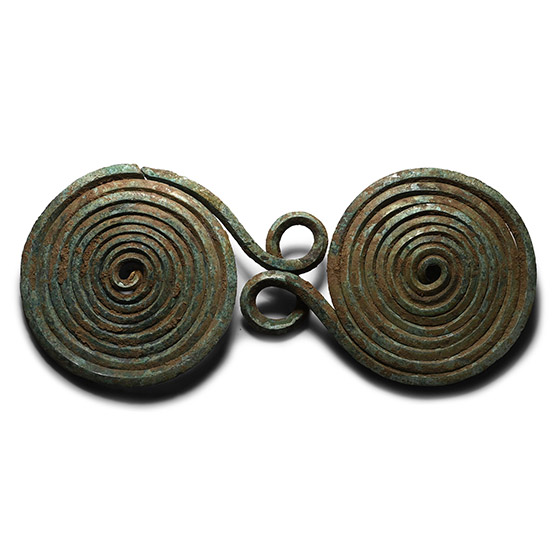
Large Greek Bronze Spiral Fibula
Geometric, 7th-6th century B.C.Estimate: £400 - 600 (‡+bp*)
Opening Bid: £200
Formed from a single square-section filament rolled into two 'spectacle' discs; one of the spirals terminating in a long pin, the other in a hook serving as the catchplate; openwork figure-of-eight at the centre; pin broken, coils separated. 159 grams, 17 cm
Acquired in the mid 1980s-1990s. Private collection, Switzerland, thence by descent. Private collection, since the late 1990s. -
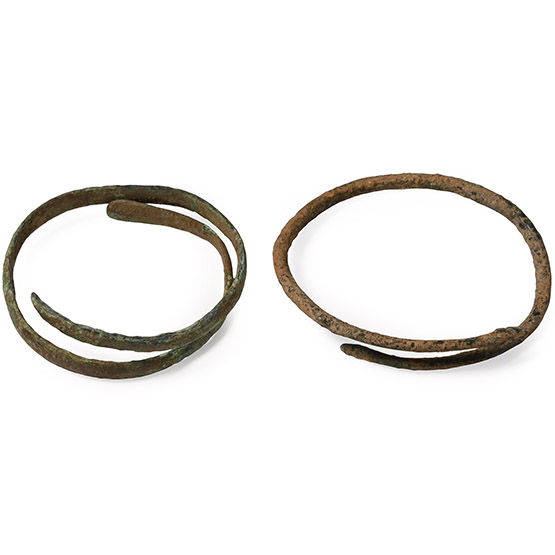
Greek Bronze Child's Bracelet Group
8th-2nd century B.C.Sold for (Inc. bp): £39
Comprising one with serpent-head finials, and another D-shaped in section. 17.88 grams total, 48-53 mm
Ex collection Mr K.H., Germany. Private collection, acquired in 2012. -
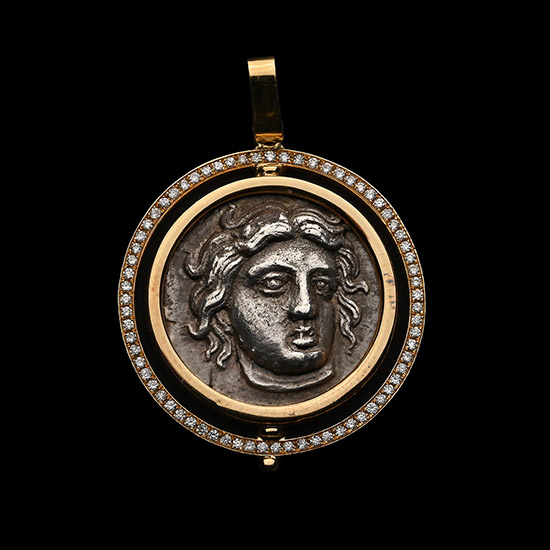
Greek Silver Didrachm of Rhodes in Gold Pendant
Circa 454-404 B.C.Estimate: £2,000 - 3,000 (+bp*)
Opening Bid: £1,111
Obv: head of Helios facing slightly right. Rev: RODION legend above rose with bud on the right; bunch of grapes over E in left field; the coin enclosed in a modern double circular gold frame stamped '750' set with colourless stones. 11.86 grams, 35 mm
Roma Numismatics, E-LIVE Auction 4, 29 November 2018, no.155. Private collection of Mr K.A., France. with Kallos Gallery, London. This lot has been checked against the Interpol Database of stolen works of art and is accompanied by search certificate number no.13025-246752.
The coinage of Rhodes city began around 408/7 B.C. with the introduction of a silver coinage bearing a deeply cut image of Helios, seen full-face with luxuriant hair, blown back by the wind. Helios’ imposing image was paired with that of a rose (a pun on the name of the city) and also the city’s ethnic, POΔION, meaning ‘of Rhodes’.
