
Loading, please wait...
LOT 0038
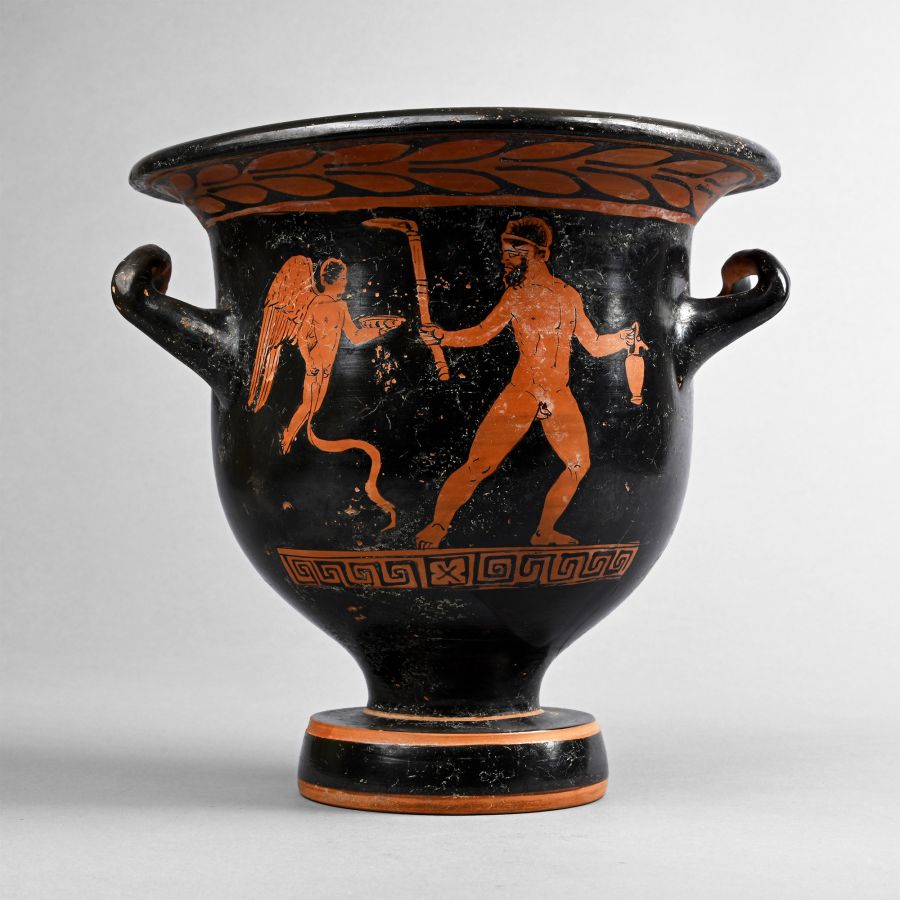
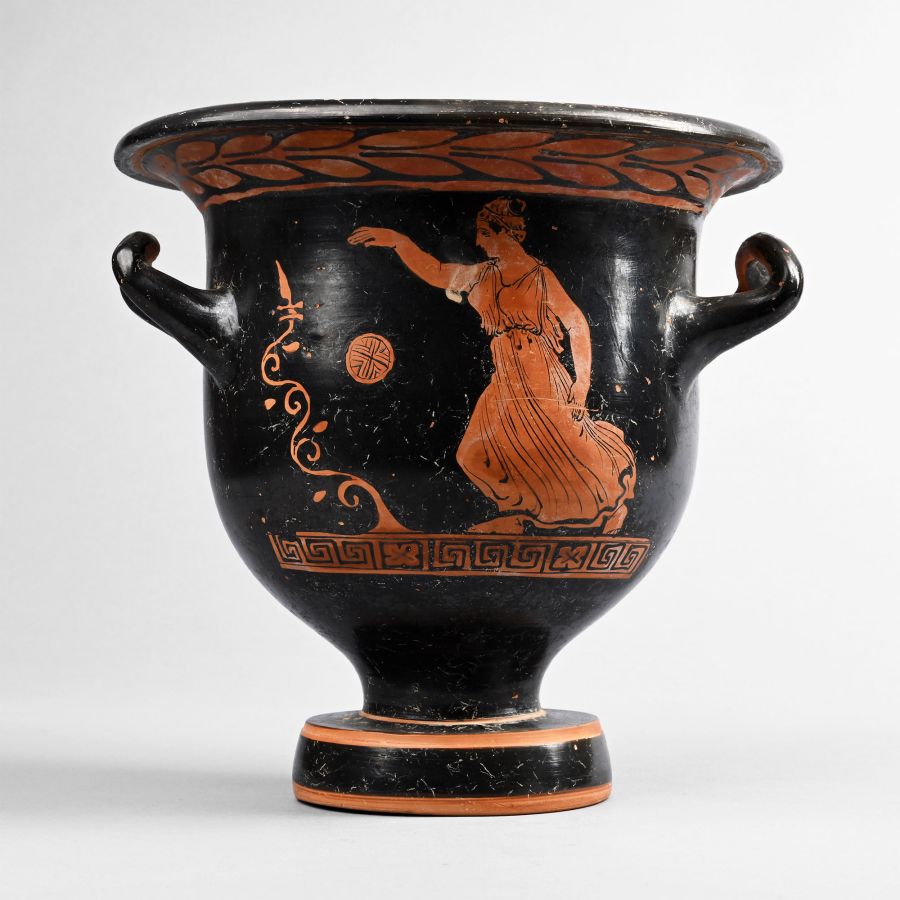
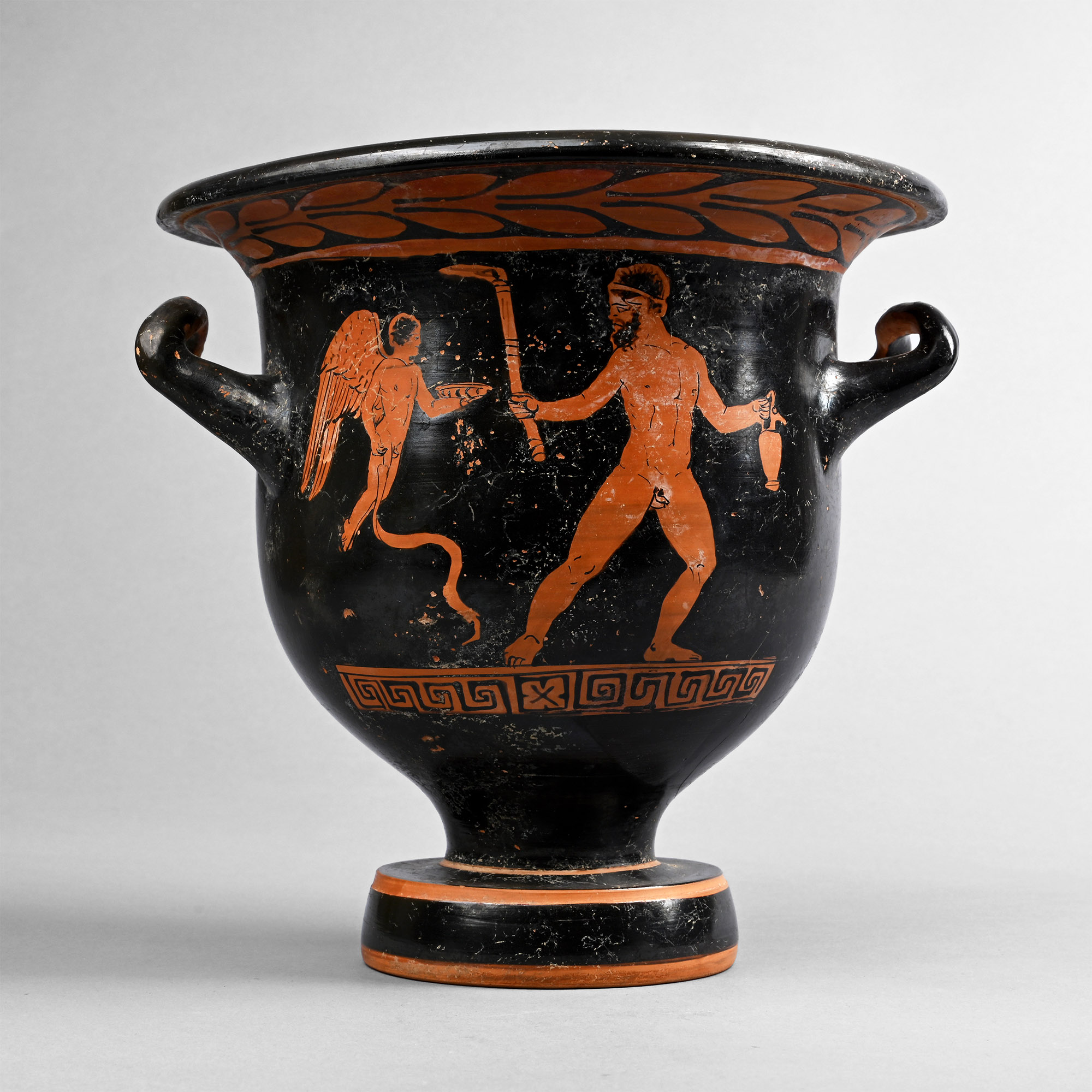
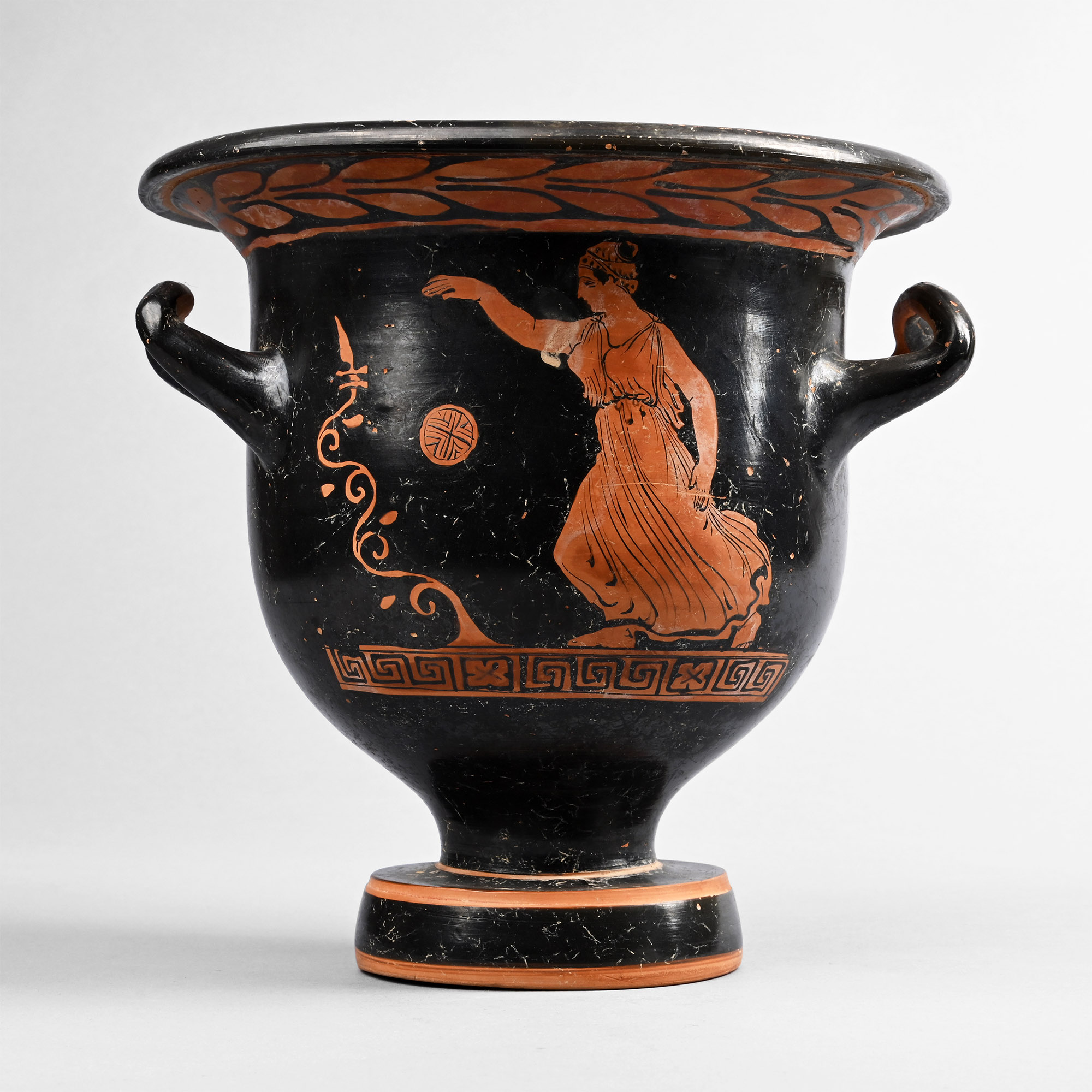
Greek Red-Figure Bell Krater with Satyr and Eros
APULIA, CIRCA 450-400 B.C.
8 in. (814 grams, 20 cm).
With laurel-leaf wreath beneath the flared rim, band of meander ornament as a baseline; Side A: striding satyr with torch and oinochoe followed by Eros holding a scroll behind; Side B: woman wearing a himation in active pose with sphere advancing towards a tendril.
ProvenanceAcquired on the art market between the late 1990s and mid-2000s.
Estate of the late Barry Paul Buxton (1944-2024), Oakham, Rutland.
Acquired on the UK art market, 2025.
Accompanied by an academic report by Dr Raffaele D'Amato.
This lot has been checked against the Interpol Database of stolen works of art and is accompanied by search certificate no.13070-249284.
Cf. The Metropolitan Museum, New York, accession numbers 1984.323.2 and 16.140, for similar.
FootnotesOften, the iconography of an 'elevated' mythological subject was applied to members of Dionysos' retinue. Here we have three typical examples of them: a satyr, an Eros, and a woman, all three behaving according to Bacchic ecstasies.
CONDITIONTimeLine Auctions follows a vetting process to ensure the authenticity and legality of all items, reinforcing our commitment to integrity and responsible trading. Each antiquity, antique, and coin lot undergoes thorough examination by a vetting committee of at least ten external specialists, professional trade association members, scientists, and archaeologists: Our Vetting Process
AUCTIONS:
TimeLine is a leading auction house specialising in antiquities, ancient art, collectables, natural history, coins, medals, and books. Our auctions offer museums, collectors, historians, and enthusiasts the opportunity to acquire unique and historically significant pieces.
-
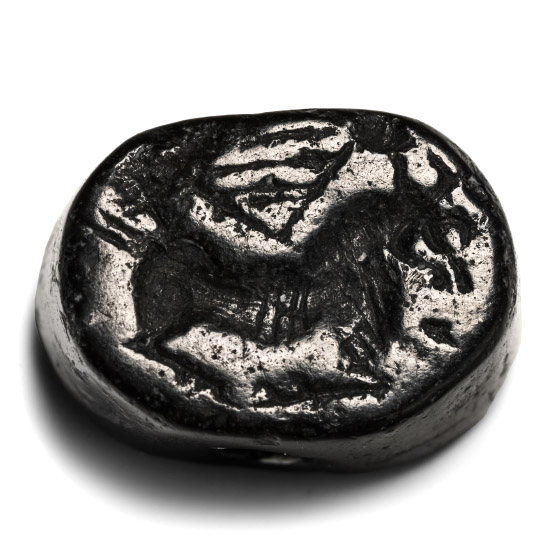
Greek Black Gemstone with Lion
4th-2nd century B.C.Sold for (Inc. bp): £85
Scaraboid type with incuse design to the underside of a bull with its legs folded beneath the body, decorative panel above; supplied with a museum-quality impression. 1.68 grams, 13 mm
From the private collection of a European gentleman (1942-2024), formed since the 1970s. -
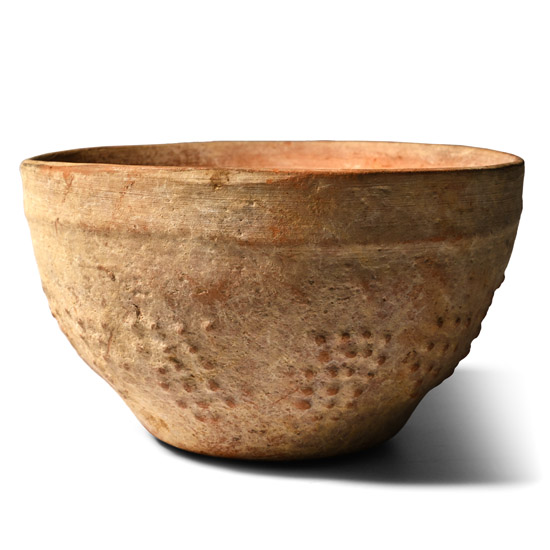
Greek Terracotta Wine Cup with Pellets Representing Bunches of Grapes
Hellenistic, circa 2nd century B.C.Sold for (Inc. bp): £221
Squat in profile with low foot, sidewall with triangular pellet clusters in swags; carination to inner rim; old collector's label to underside 'Q/15'. 197 grams, 10.9 cm wide
From the collection of the late Bernard C. Pickard, Hampshire, UK, the owner of Bernard C. Pickard Antiquities, which closed in 1987, he had been collecting since the mid 1950s.
Bernard Pickard was a close friend of Richard Hattatt, the renowned author of several books on ancient brooches. Hattatt acknowledges in his first book, Ancient & Romano-British Brooches, published in 1982, that Mr Pickard first aroused his interest in brooches and inspired him in writing his books during his retirement. Mr Pickard also wrote the foreword to the section on Roman animal brooches, op. cit. p.158-160. -
.jpg)
Greek Gold Ring and Carnelian Gemstone with Asclepius and Hygeia
Hellenistic, 1st century B.C.-1st century A.D.Sold for (Inc. bp): £2,340
Comprising a gold wire hoop with panels of baluster detailing, scrolled and securing a gold cell with an inset cabochon gemstone; to the domed face, the god Asclepius with caduceus symbol; to the flat face, goddess Hygeia standing holding a serpent; some usage wear. 2.12 grams, 22.48 mm overall, 14.21 x 16.13 mm internal diameter (approximate size British F 1/2, USA 3, Europe 4.3, Japan 4)
Private collection, UK. This lot has been checked against the Interpol Database of stolen works of art and is accompanied by search certificate number no.13357- 259200.
Asclepius, son of Apollo and Coronis, was the Graeco-Roman god of medicine, healing and prophecy. He had two daughters with Epione, the goddess of soothing - Hygeia (goddess of health) and Panacea (goddess of healing).
