
Loading, please wait...
LOT 0037
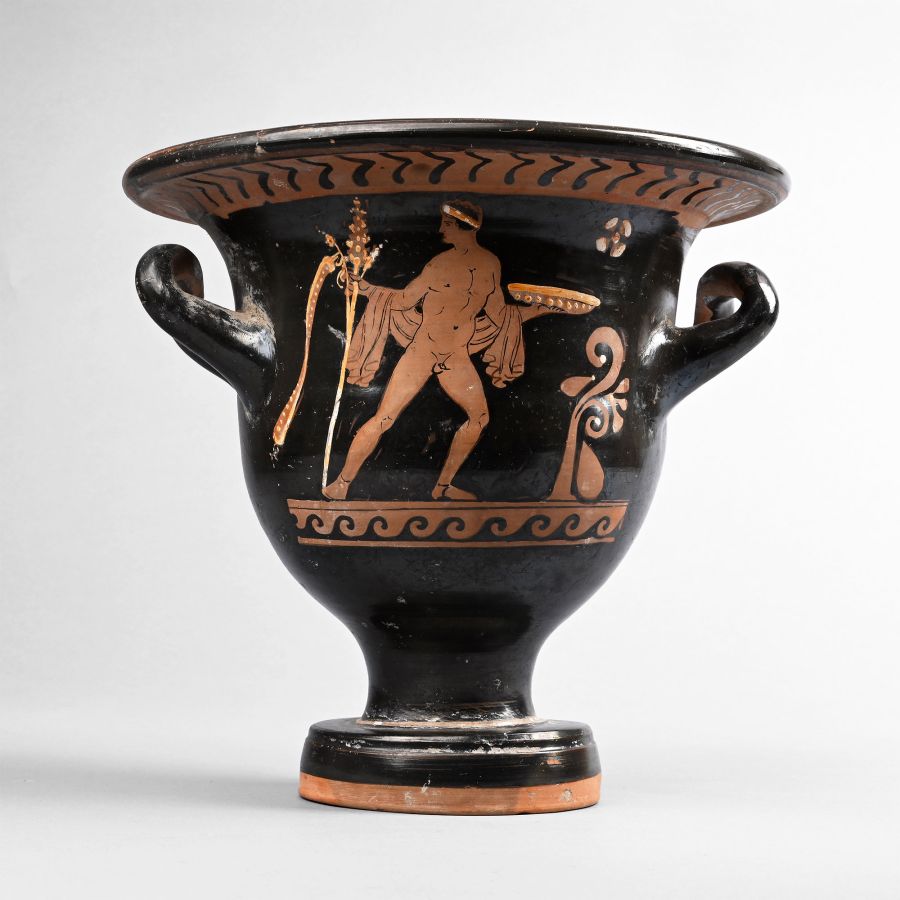
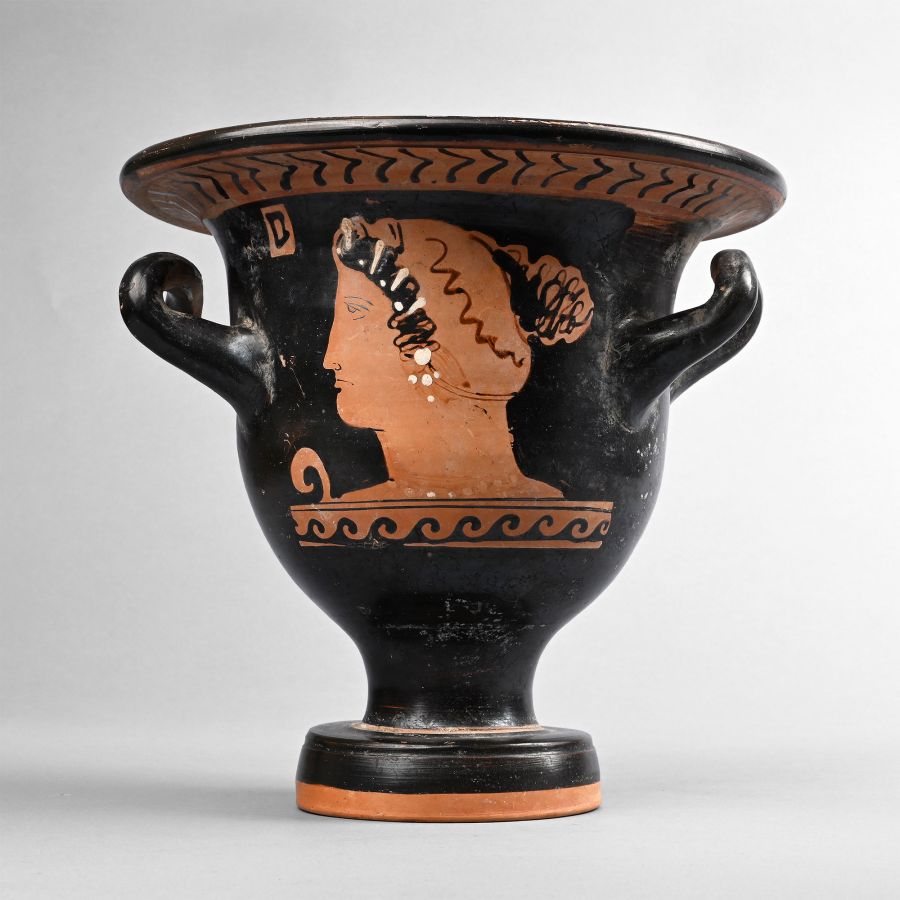
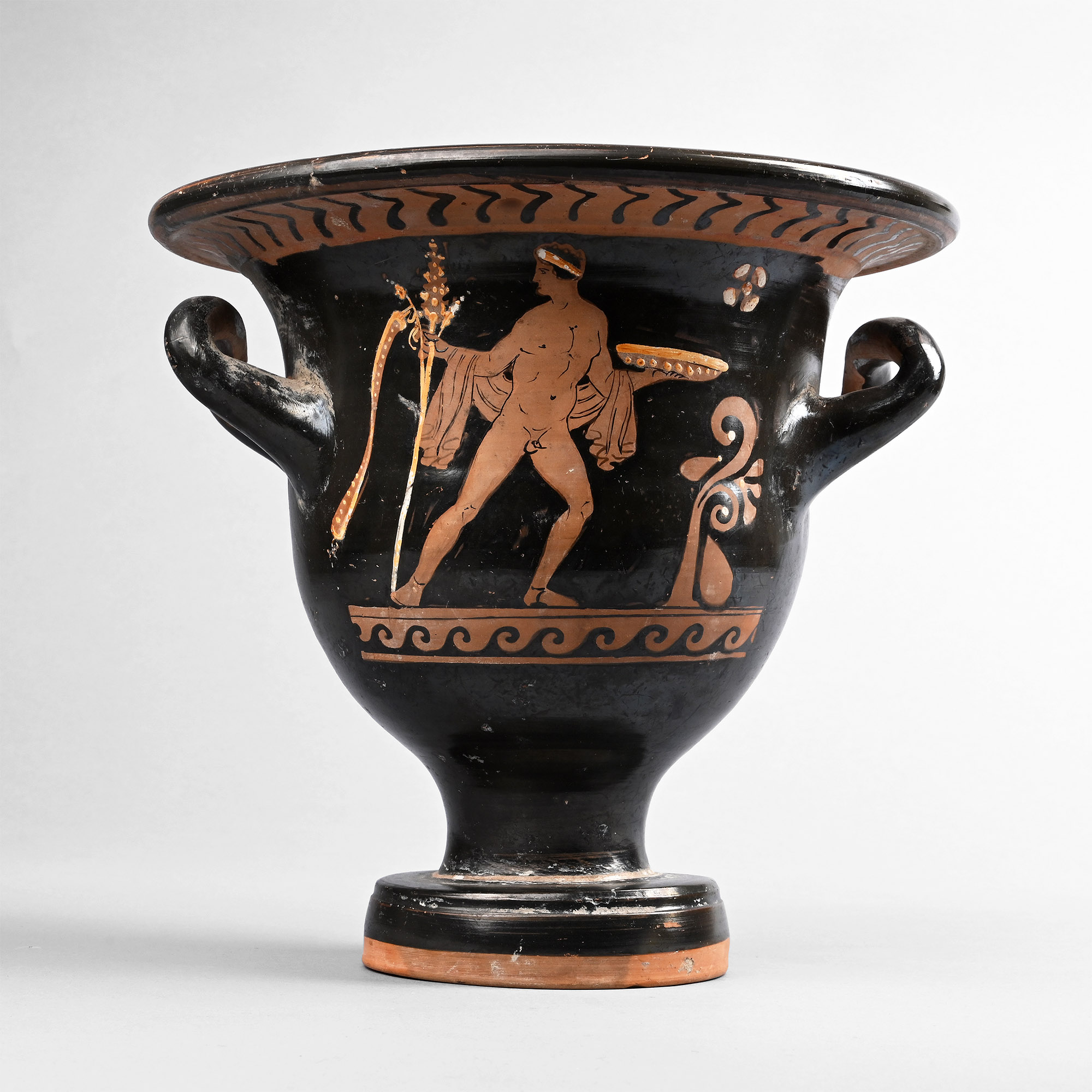
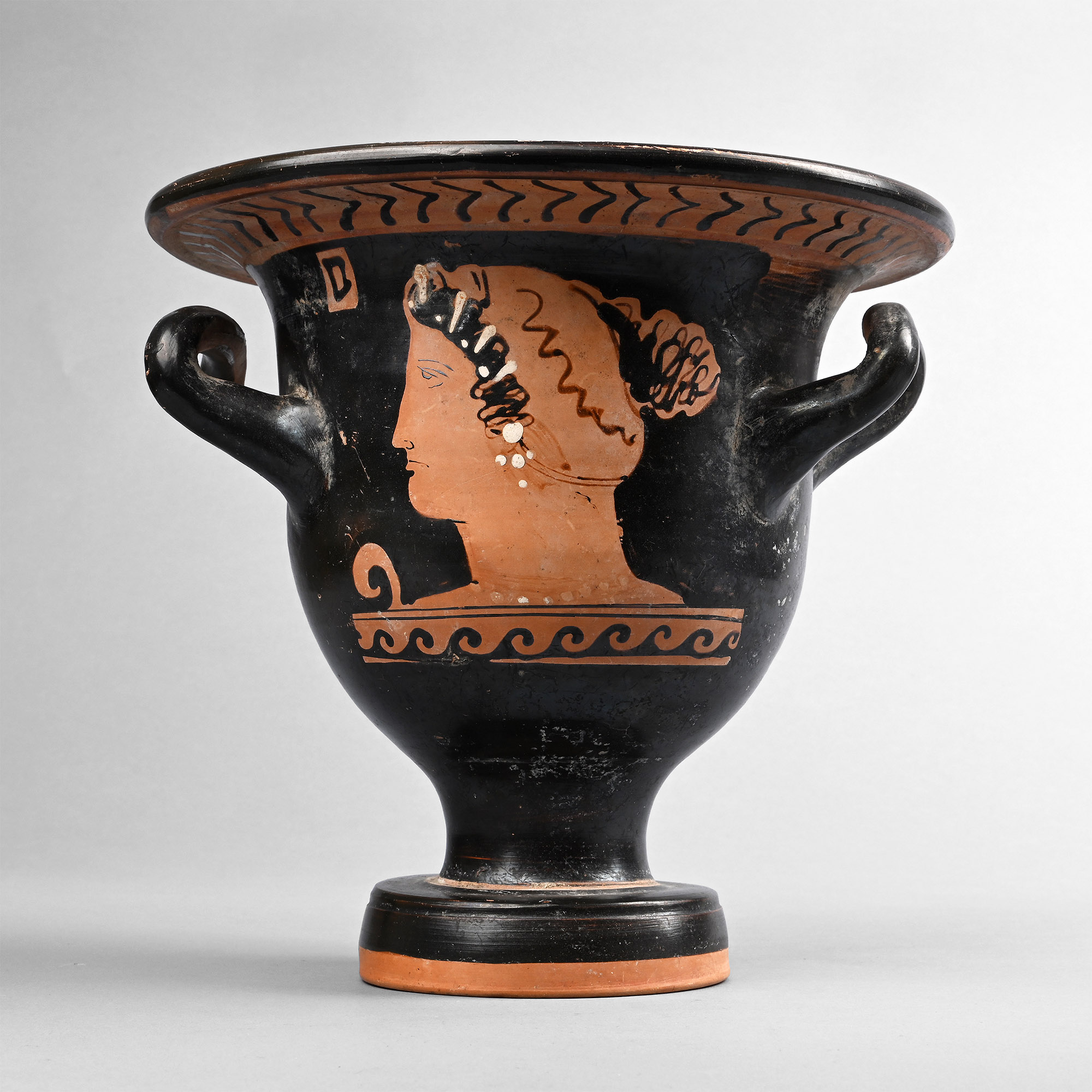
Greek Red-Figure Bell Krater Belonging to the Chevron Group
APULIA, 4TH CENTURY B.C.
9 1/8 in. (1.11 kg, 23.2 cm wide).
With reserved herringbone band beneath the rim, wave pattern to be the baseline; Side A: young man with thyrsus and pendant streamer holding a phiale, a loose mantle draped from the elbows; Side B: head of a lady of fashion with white accents to her stephane and hair drawn up in a chignon, a volute and window before her.
ProvenanceAcquired on the art market between the late 1990s and mid-2000s.
Estate of the late Barry Paul Buxton (1944-2024), Oakham, Rutland.
Acquired on the UK art market, 2025.
Accompanied by an academic report by Dr Raffaele D'Amato.
This lot has been checked against the Interpol Database of stolen works of art and is accompanied by search certificate no.13071-249285.
Cf. similar pottery in Paul Getty Museum, inv.no.71.AE.301.
FootnotesBell kraters were commonly used in regions of ancient Italy for mixing and serving wine during communal gatherings, thanks to their wide shape and flared mouth. These vessels also served as artistic expressions, reflecting the cultural tastes of the time. The Chevron Group is the conventional name for a group of ancient Apulian red-figure vase painters who were active in Southern Italy between approximately 335-310 B.C. They are named for their distinctive use of a band of chevron patterns to encircle the rims of the small kraters (mixing vessels) they decorated.
CONDITIONTimeLine Auctions follows a vetting process to ensure the authenticity and legality of all items, reinforcing our commitment to integrity and responsible trading. Each antiquity, antique, and coin lot undergoes thorough examination by a vetting committee of at least ten external specialists, professional trade association members, scientists, and archaeologists: Our Vetting Process
AUCTIONS:
TimeLine is a leading auction house specialising in antiquities, ancient art, collectables, natural history, coins, medals, and books. Our auctions offer museums, collectors, historians, and enthusiasts the opportunity to acquire unique and historically significant pieces.
LOT 0037
Greek Red-Figure Bell Krater Belonging to the Chevron Group
Sold for (Inc. bp): £3,120
-
.jpg)
Etruscan Variegated Agate Scaraboid Gemstone with Dancing Satyrs
4th century B.C.Sold for (Inc. bp): £182
Scaraboid type with incuse design to the underside of two opposed dancing satyrs, heads and arms missing, possibly unfinished or cut down from a depiction of a lion and hero; supplied with a museum-quality impression. 2.75 grams, 17 mm
From the private collection of a European gentleman (1942-2024), formed since the 1970s. -
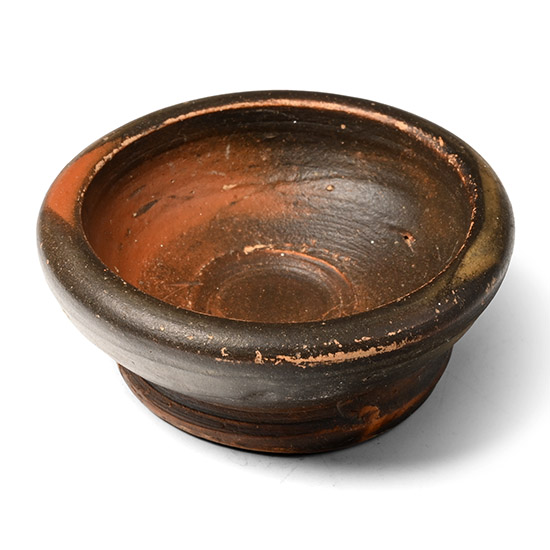
Greek Campanian Bowl
South Italian, circa 4th-3rd century B.C.Sold for (Inc. bp): £104
Broad and squat with thick rim and carinated foot. 17.4 grams, 44 mm
From the collection of David Donlan (1947-2025), a dedicated and lifelong collector with a passion for the ancient world and the natural sciences, forming his collection from 1960s onwards, using many reputable dealers across the United Kingdom, including the well-regarded Coincraft and The Parthenon Gallery. -
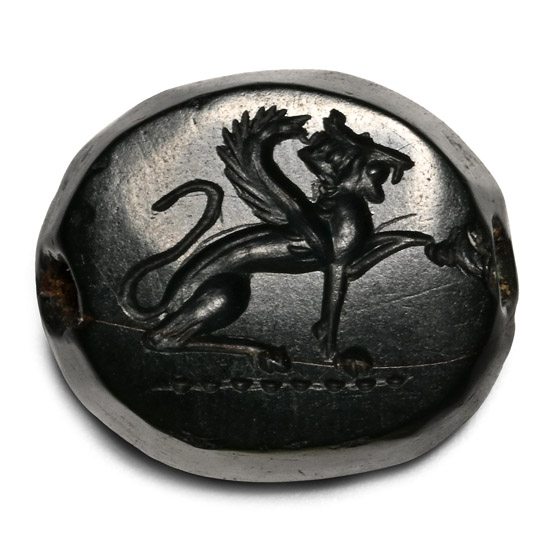
Eastern Greek Scaraboid Gemstone with Gryphon
4th-2nd century B.C. or laterSold for (Inc. bp): £650
Scaraboid type with incuse design to the underside of a winged gryphon with one foreleg raised; supplied with a museum-quality impression. 1.24 grams, 13 mm
From the private collection of a European gentleman (1942-2024), formed since the 1970s.
