
Loading, please wait...
LOT 0060
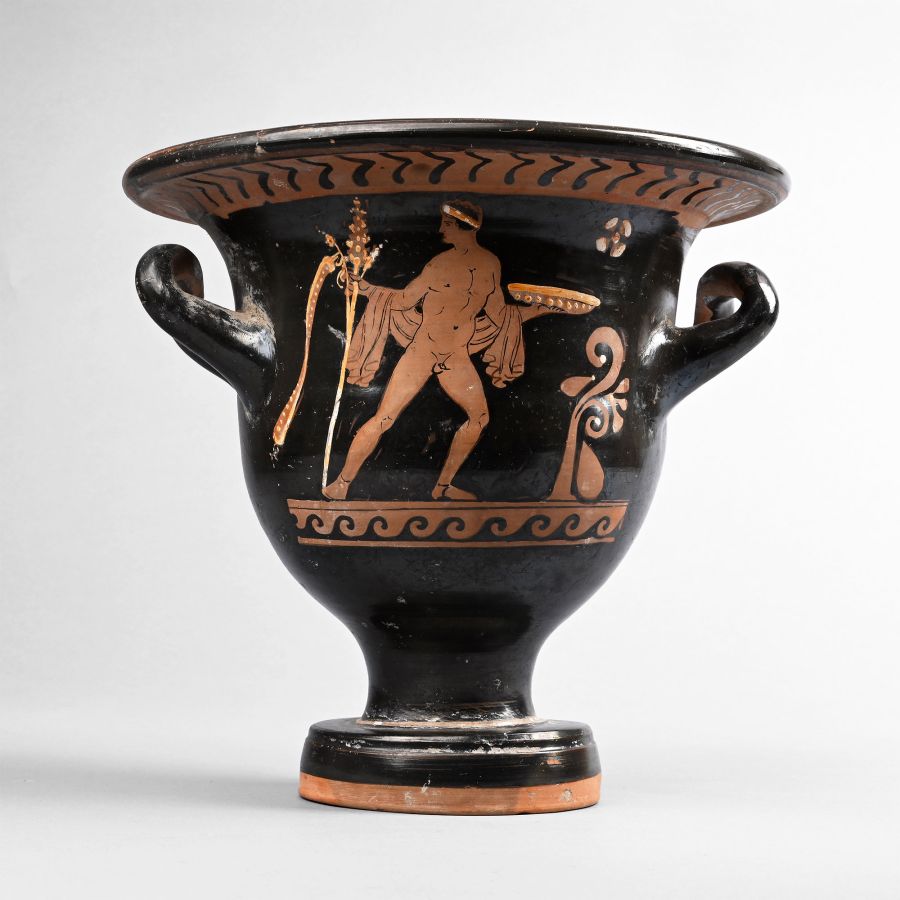
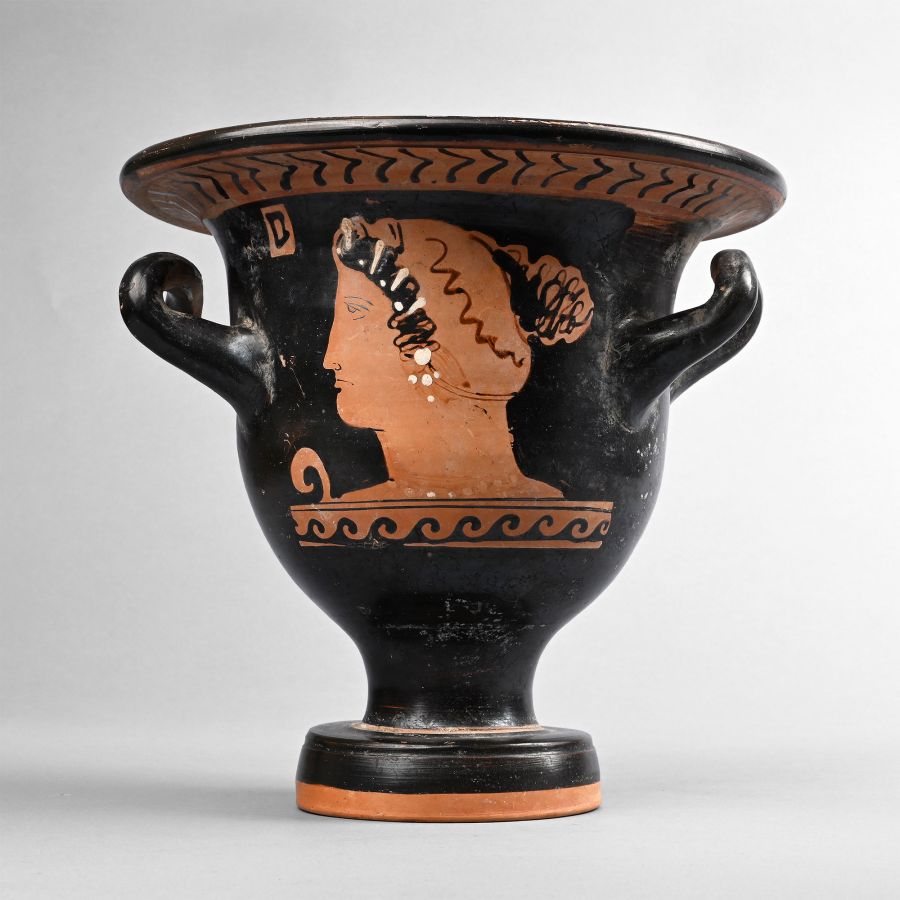
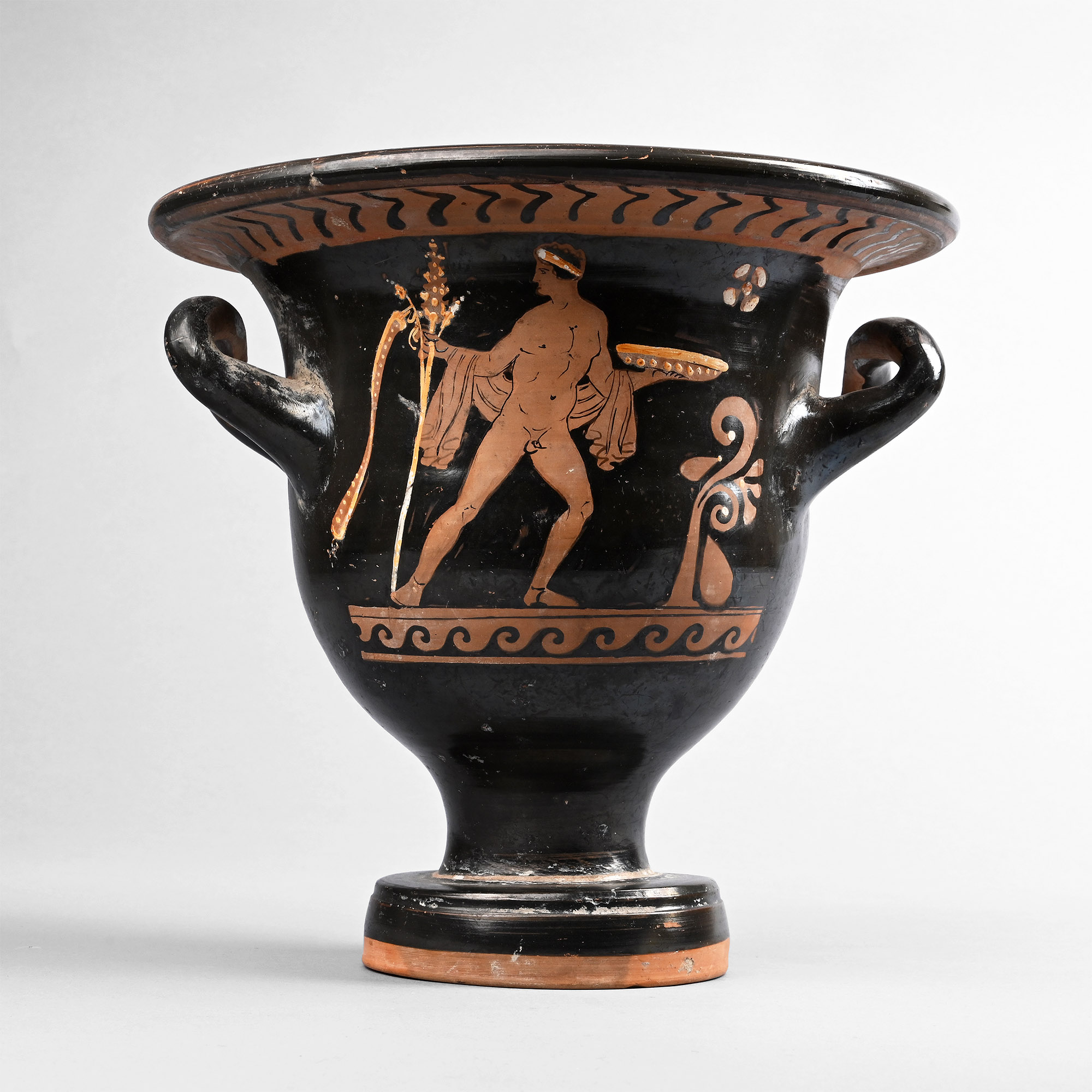
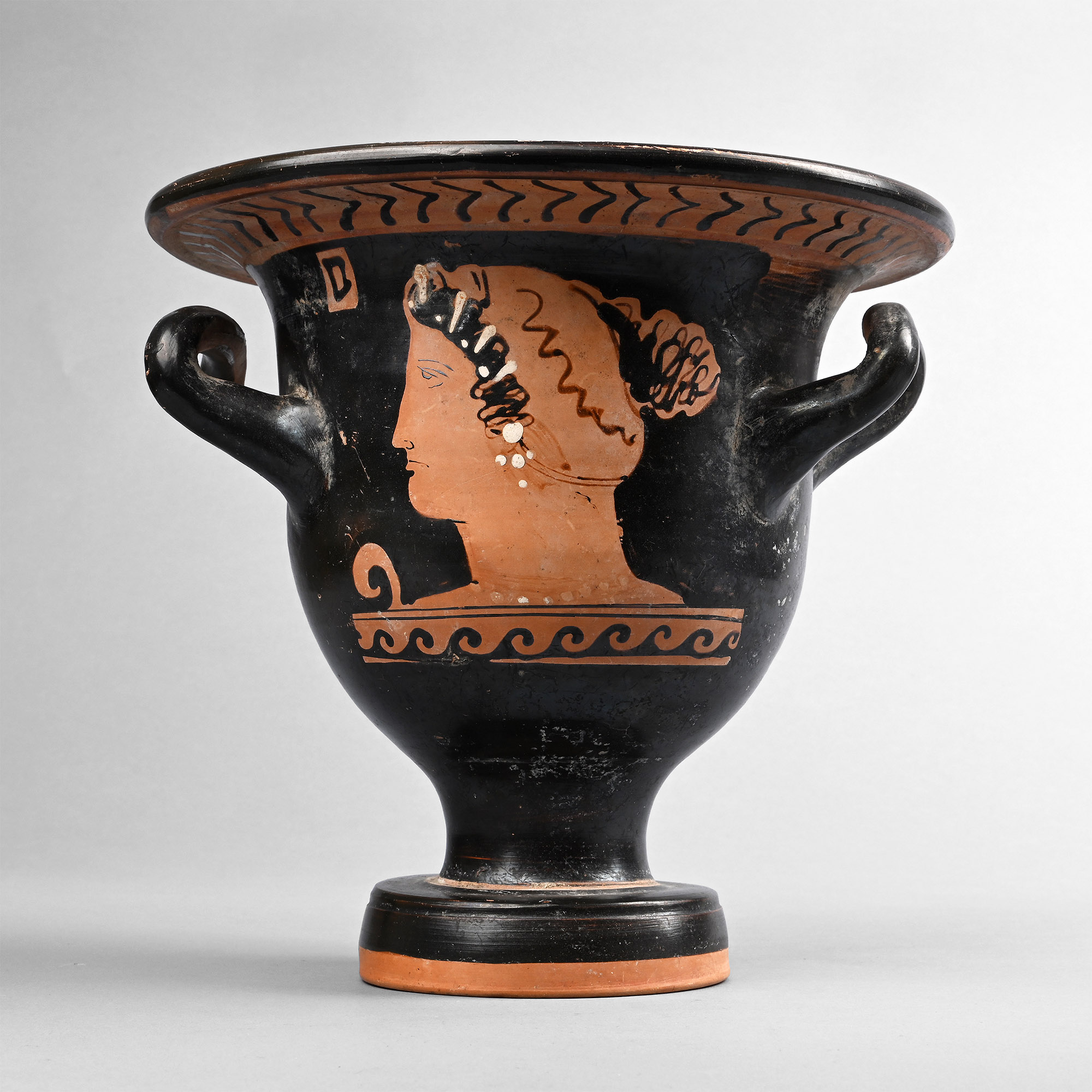
Greek Red-Figure Bell Krater Belonging to the Chevron Group
APULIAN, 4TH CENTURY B.C.
9 1/8 in. (1.11 kg, 23.2 cm wide).
With reserved herringbone band beneath the rim, wave pattern to be the baseline; Side A: young man with thyrsus and pendant streamer holding a phiale, a loose mantle draped from the elbows; Side B: head of a lady of fashion with white accents to her stephane and hair drawn up in a chignon, a volute and window before her.
ProvenanceAcquired on the art market between the late 1990s and mid-2000s.
Estate of the late Barry Paul Buxton (1944-2024), Oakham, Rutland.
Acquired on the UK art market, 2025.
Accompanied by an academic report by Dr Raffaele D'Amato.
This lot has been checked against the Interpol Database of stolen works of art and is accompanied by search certificate no.13071-249285.
Cf. similar pottery in Paul Getty Museum, inv.no.71.AE.301.
FootnotesBell kraters were commonly used in regions of ancient Italy for mixing and serving wine during communal gatherings, thanks to their wide shape and flared mouth. These vessels also served as artistic expressions, reflecting the cultural tastes of the time. The Chevron Group is the conventional name for a group of ancient Apulian red-figure vase painters who were active in Southern Italy between approximately 335-310 B.C. They are named for their distinctive use of a band of chevron patterns to encircle the rims of the small kraters (mixing vessels) they decorated.
CONDITIONTimeLine Auctions follows a vetting process to ensure the authenticity and legality of all items, reinforcing our commitment to integrity and responsible trading. Each antiquity, antique, and coin lot undergoes thorough examination by a vetting committee of at least ten external specialists, professional trade association members, scientists, and archaeologists: Our Vetting Process
AUCTIONS:
TimeLine is a leading auction house specialising in antiquities, ancient art, collectables, natural history, coins, medals, and books. Our auctions offer museums, collectors, historians, and enthusiasts the opportunity to acquire unique and historically significant pieces.
LOT 0060
Greek Red-Figure Bell Krater Belonging to the Chevron Group
Estimate £2,500 - 3,500€2,900 - 4,060 (for guidance only)$3,380 - 4,730 (for guidance only)
-
.jpg)
Etruscan Carnelian Scarab of a Fletcher in Gold Ring
4th-3rd century B.C.Estimate: £1,200 - 1,700 (+bp*)
Opening Bid: £600
With carapace detailing and intaglio of a crouching male carving an arrow; set into a later gold swivel ring. 4.24 grams, 27.12 mm overall, 18.38 x 18.49 mm internal diameter (approximate size British P 1/2, USA 7 3/4, Europe 16.86, Japan 16)
Private collection, Europe. Acquired on the English art market. -
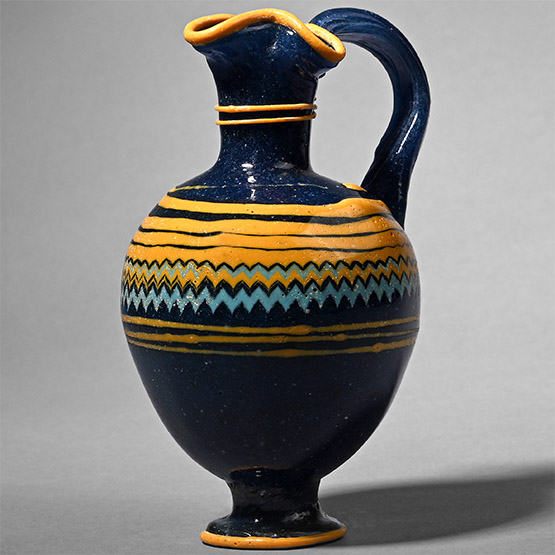
'The Cyrus Collection' Greek Core-Formed Glass Oinochoe
5th century B.C.Estimate: £15,000 - 20,000 (+bp*)
Opening Bid: £7,500
Ovoid blue body with narrow flared foot, pinched mouth and applied strap handle; marvered trail decoration in yellow to the shoulder, applied trails to the neck, marvered and dragged trails to the equator; cleaned and repolished; supplied with a custom-made stand. 197 grams total, 13.5 cm high including stand
Ex Antike Kunst Palladion, Basel. The Cyrus collection, 1970s. with Sotheby’s, New York, 9 December 2003, no.88. Accompanied by a copy of the relevant Sotheby's catalogue pages. This lot has been checked against the Interpol Database of stolen works of art and is accompanied by search certificate number no.13097-248080.
During the 5th century B.C., the colours of Mediterranean Group I vessels expanded from blue or opaque white to include dark green, golden brown, and opaque brick red. -
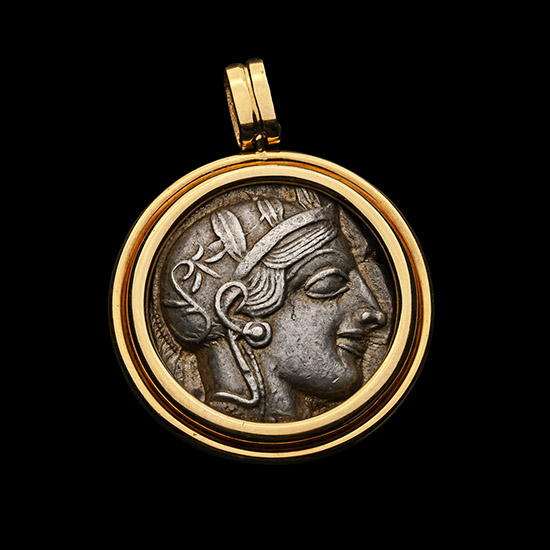
Greek Silver Tetradrachm of Athens in Gold Pendant
Circa 454-404 B.C.Sold for (Inc. bp): £2,340
Obv: head of Athena with profile eye to right, wearing disc earring, pearl necklace and a crested Attic helmet adorned with three olive leaves and a pi-style palmette. Rev: ΑΘΕ, owl standing to right, head facing the viewer, olive sprig with berry and crescent moon in upper left field, all within incuse square. Kroll 8; Dewing 1591-8; SNG Copenhagen 31; HGC 4, 1597; the coin enclosed inside a modern gold medallion pendant stamped '750' with double border. 24.36 grams, 37 mm
Roma Numismatics, E-LIVE Auction 4, 29 November 2018, no.155. Private collection of Mr K.A., France. with Kallos Gallery, London. This lot has been checked against the Interpol Database of stolen works of art and is accompanied by search certificate number no. 13024-246751.
The Athenian components of several of the hoards in which these tetradrachms were found, together with other published and unpublished tetradrachms, make it clear that this coinage of c.400/390 to 353 was not only substantial, but was one of the most prolific Greek coinages of the period.
