
Loading, please wait...
LOT 0083
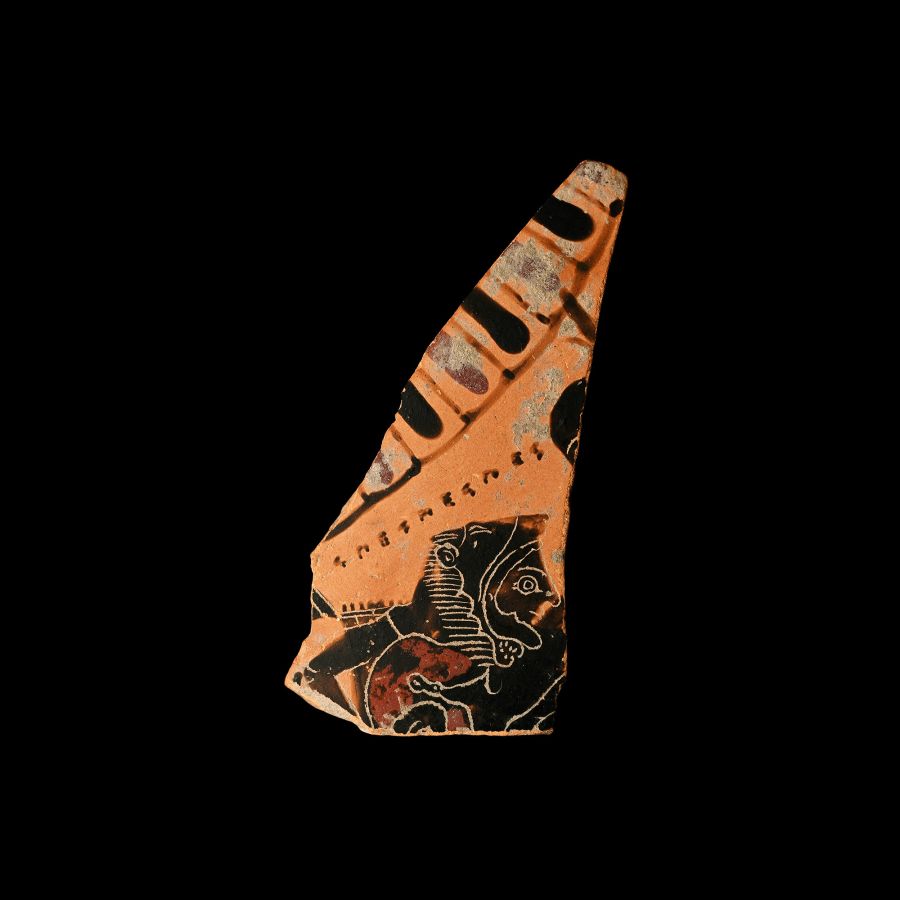
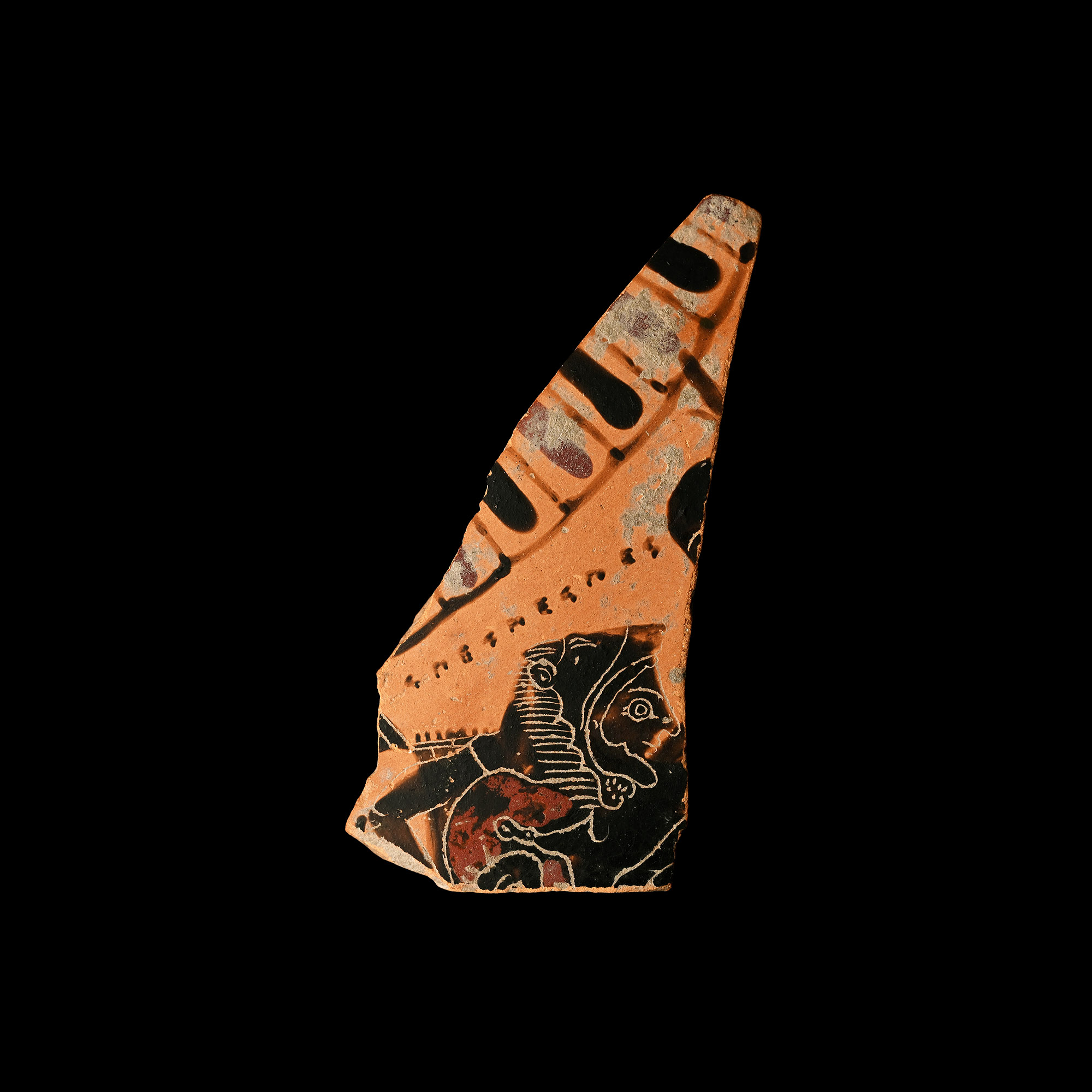
Greek Pottery Sherd with Inscription Above Hercules Wrestling a Warrior
ATTIC, CIRCA 5TH CENTURY B.C.
2 1/2 in. (8.37 grams, 64 mm).
Fragment from a large vessel showing Hercules wearing the Nemean lion skin in close combat with a bearded warrior, Greek inscription above.
ProvenanceFrom an old Belgian collection, circa 2000.
CONDITIONTimeLine Auctions follows a vetting process to ensure the authenticity and legality of all items, reinforcing our commitment to integrity and responsible trading. Each antiquity, antique, and coin lot undergoes thorough examination by a vetting committee of at least ten external specialists, professional trade association members, scientists, and archaeologists: Our Vetting Process
AUCTIONS:
TimeLine is a leading auction house specialising in antiquities, ancient art, collectables, natural history, coins, medals, and books. Our auctions offer museums, collectors, historians, and enthusiasts the opportunity to acquire unique and historically significant pieces.
LOT 0083
Greek Pottery Sherd with Inscription Above Hercules Wrestling a Warrior
Sold for (Inc. bp): £1,690
-
.jpg)
Etruscan Votive Bronze Hand
Circa 7th-6th century B.C.Sold for (Inc. bp): £2,340
Modelled in the half-round with D-section fingers, portion of cuff behind the thumb; mounted on a custom-made display stand. 187 grams total, 11.8 cm high including stand
Acquired on the German art market, before 1992; thence by descent. This lot has been checked against the Interpol Database of stolen works of art and is accompanied by search certificate number no.13191-249245.
Votive offerings gained increasing popularity throughout Etruria, southern Latium and later northern Campania from the 7th century B.C. onwards. Most gods were thought to possess the power to heal, and the sick flocked to their sanctuaries for a cure or to pray for future health. Usually, these dedications depicted the parts of the human anatomy that needed healing. The area of Vulci offered many graves in which pairs of hands cut from a sheet of bronze, rolled up at the base to form the wrist, have been found. -
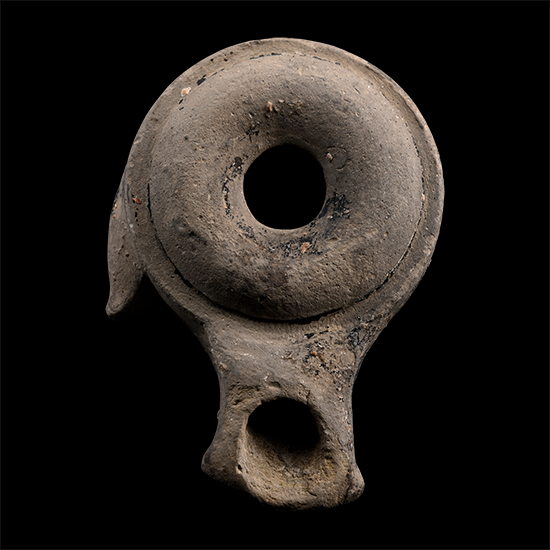
Greek Terracotta Oil Lamp
Circa 3rd-2nd century B.C.Sold for (Inc. bp): £91
Drum-shaped body with raised rim on the filler hole, long flared nozzle, lateral spur to sidewall. 68.5 grams, 84.4 mm
From the private collection of Mr Brian Edwards, New Malden, Surrey, UK, formed from the late 1970s-early 1980s; thence by descent. -
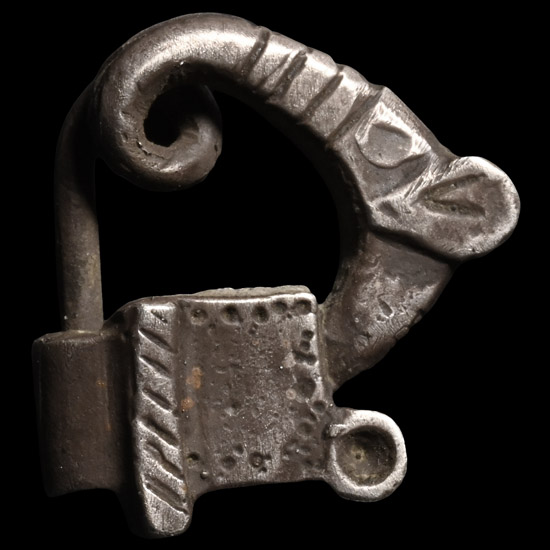
Phrygian Silver Bow Brooch
Iron Age, circa 8th-7th century B.C.Sold for (Inc. bp): £65
The bow formed as a stylised animal with teardrop-shaped ears and a long, curving trunk extending as the pin, square footplate with a small loop. 2.93 grams, 16.12 mm
From the private collection of a European gentleman (1942-2024), formed since the 1970s.
