
Loading, please wait...
LOT 0619
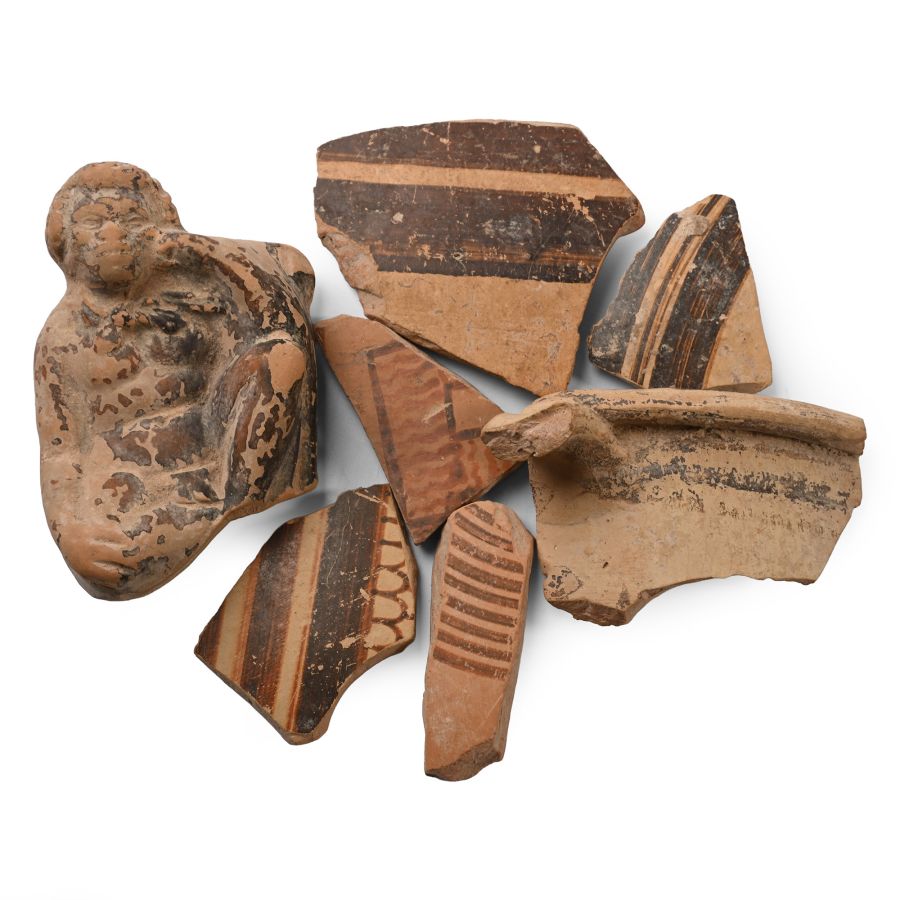
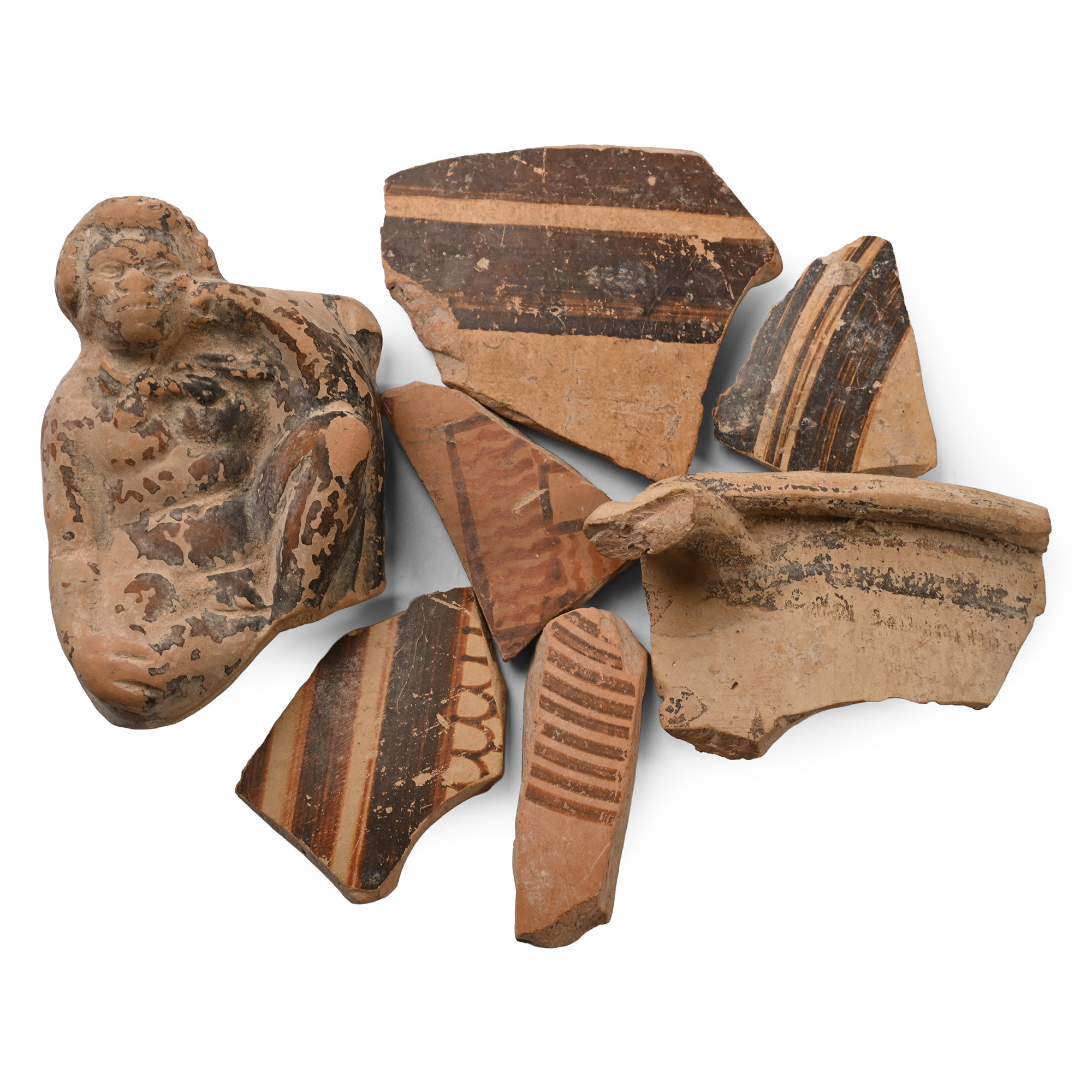
Greek Pottery Collection
5TH-3RD CENTURY B.C.
1 1/2 - 3 1/4 in. (120 grams total, 41-83 mm).
Comprising various vessel fragments with decoration, including a figural fragment of a pygmy carrying a dead crane, some with old pencil inscriptions. [7, No Reserve]
ProvenanceFrom a deceased estate, UK.
Acquired on the UK art market.
This lot is accompanied by an illustrated lot declaration signed by the Head of the Antiquities Department, Dr Raffaele D'Amato.
Cf. Nagwa Abdelnaby, A.I., ‘Two unpublished Figurines of Women Purifying themselves in the Greco-Roman Museum of Alexandria’ in Bulletin of the Center Payrological, 38 (1), November 2021, p.645-664, fig.F, p.663, for a similar terracotta of an African slave sleeping.
FootnotesThe small statuette of a naked man, who rests his head on his left arm, shows African features, and most likely belongs to the terracotta statuettes of Hellenistic or Alexandrian production of the 3rd-2nd century BC.
CONDITIONTimeLine Auctions follows a vetting process to ensure the authenticity and legality of all items, reinforcing our commitment to integrity and responsible trading. Each antiquity, antique, and coin lot undergoes thorough examination by a vetting committee of at least ten external specialists, professional trade association members, scientists, and archaeologists: Our Vetting Process
AUCTIONS:
TimeLine is a leading auction house specialising in antiquities, ancient art, collectables, natural history, coins, medals, and books. Our auctions offer museums, collectors, historians, and enthusiasts the opportunity to acquire unique and historically significant pieces.
-
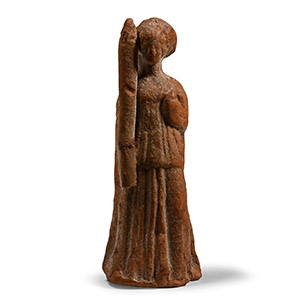
Greek Terracotta Goddess Figure
4th-3rd century B.C.Estimate: £500 - 700 (‡+bp*)
Opening Bid: £278
Tanagra type, hollow-formed with a void to the reverse, standing female in tiered robe wearing a diadem and with her hair drawn back, applied torch in her right hand. 18 grams, 12 cm
European art market. Acquired in Münich in 2012. European private collection. This lot is accompanied by an illustrated lot declaration signed by the Head of the Antiquities Department, Dr Raffaele D’Amato. This lot is accompanied by an illustrated lot declaration signed by the Head of the Antiquities Department, Dr Raffaele D'Amato. -
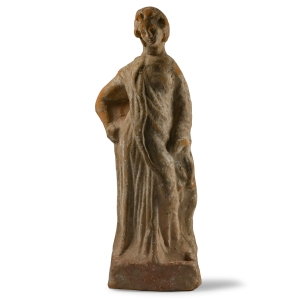
Hellenistic Terracotta Statuette of a Wreathed Young Woman
Late 4th-3rd century B.C.Sold for (Inc. bp): £286
Standing on a rectangular base, hair divided in regular stripes with voluminous locks, head slightly bowed, the bare arm resting on her right hip; the left leg is visible under the pleated undergarment chiton and slanted himation. 257 grams, 17.5 cm
Traces of white engobe and polychromy in the folds of the robe and on the base. The added chignon lost, otherwise intact.
Ex Belgian art market, 2020. This lot is accompanied by an illustrated lot declaration signed by the Head of the Antiquities Department, Dr Raffaele D’Amato. This lot is accompanied by an illustrated lot declaration signed by the Head of the Antiquities Department, Dr Raffaele D'Amato.
The statuette finds comparisons among examples that can be dated between the 4th century and the middle of the 3rd century B.C. It shows some traces of the original polychromy, characterised by strongly contrasting hues, keeping in with the local style. -
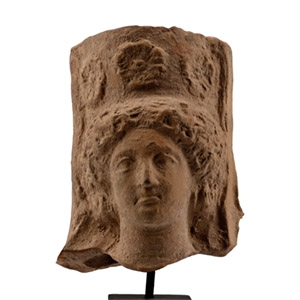
Greek Terracotta Head of a Goddess
5th-3rd century B.C.Sold for (Inc. bp): £845
Hollow-formed moulded head of a goddess with band of rosettes above; mounted on a custom-made stand. 149 grams total, 16 cm including stand
Acquired on the European art market in the early 2000s. with Galerie Rhéa, Zurich, Switzerland. This lot is accompanied by an illustrated lot declaration signed by the Head of the Antiquities Department, Dr Raffaele D'Amato.
