
Loading, please wait...
LOT 0309
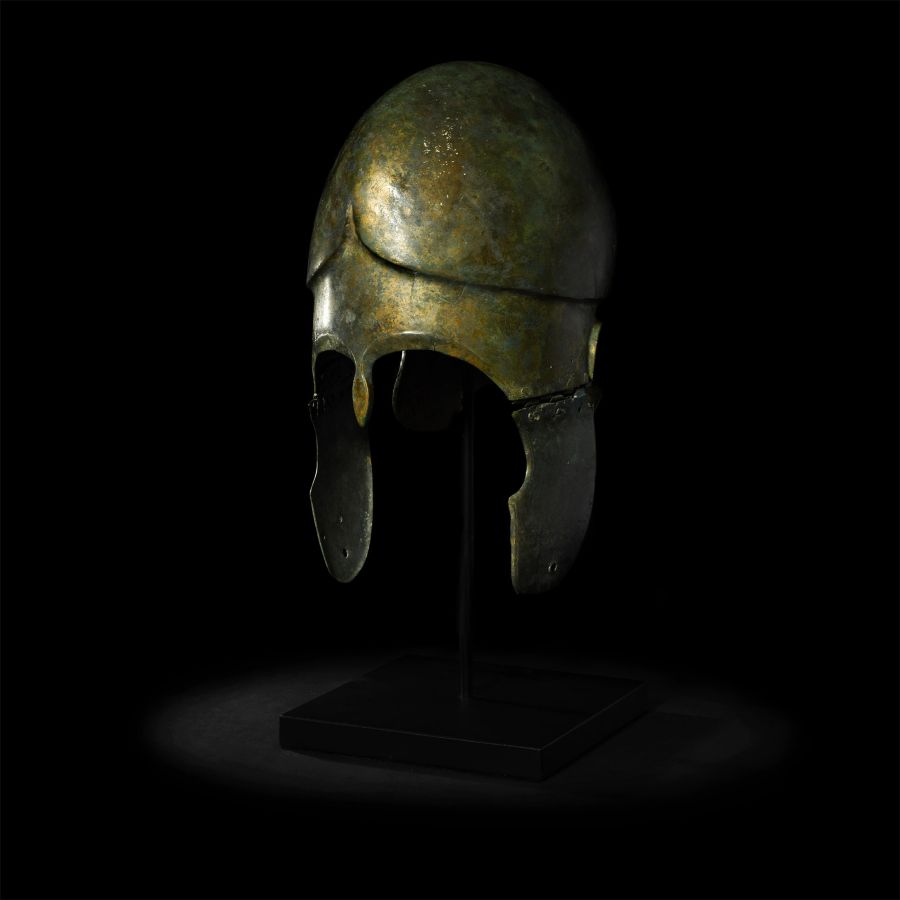
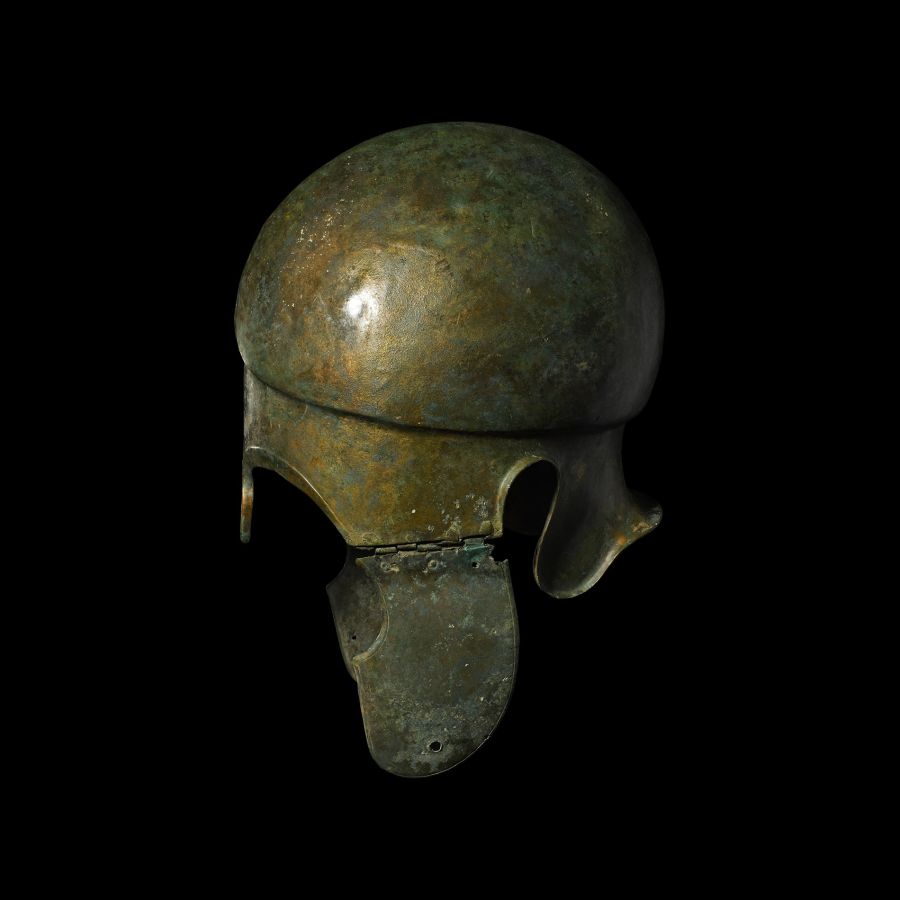
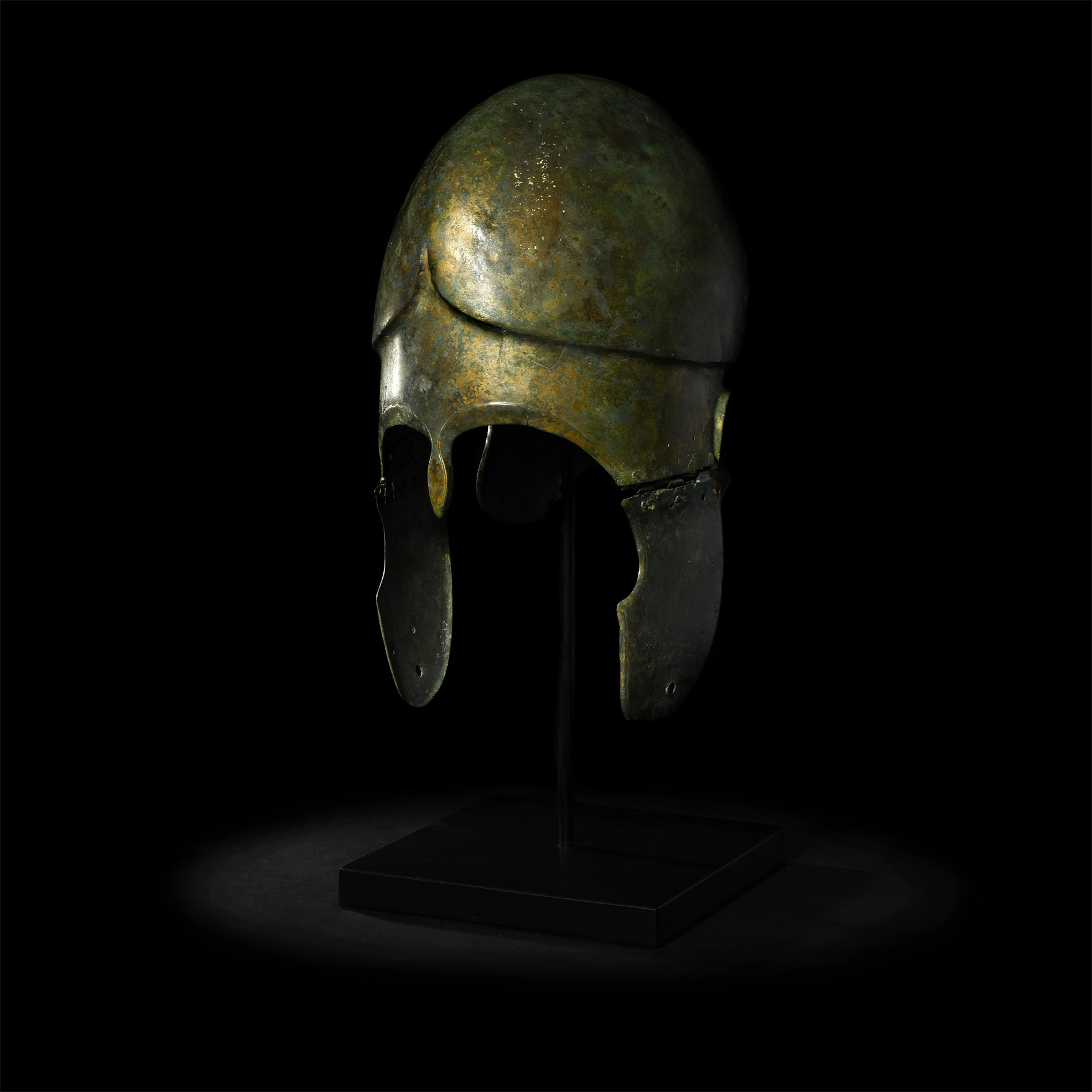
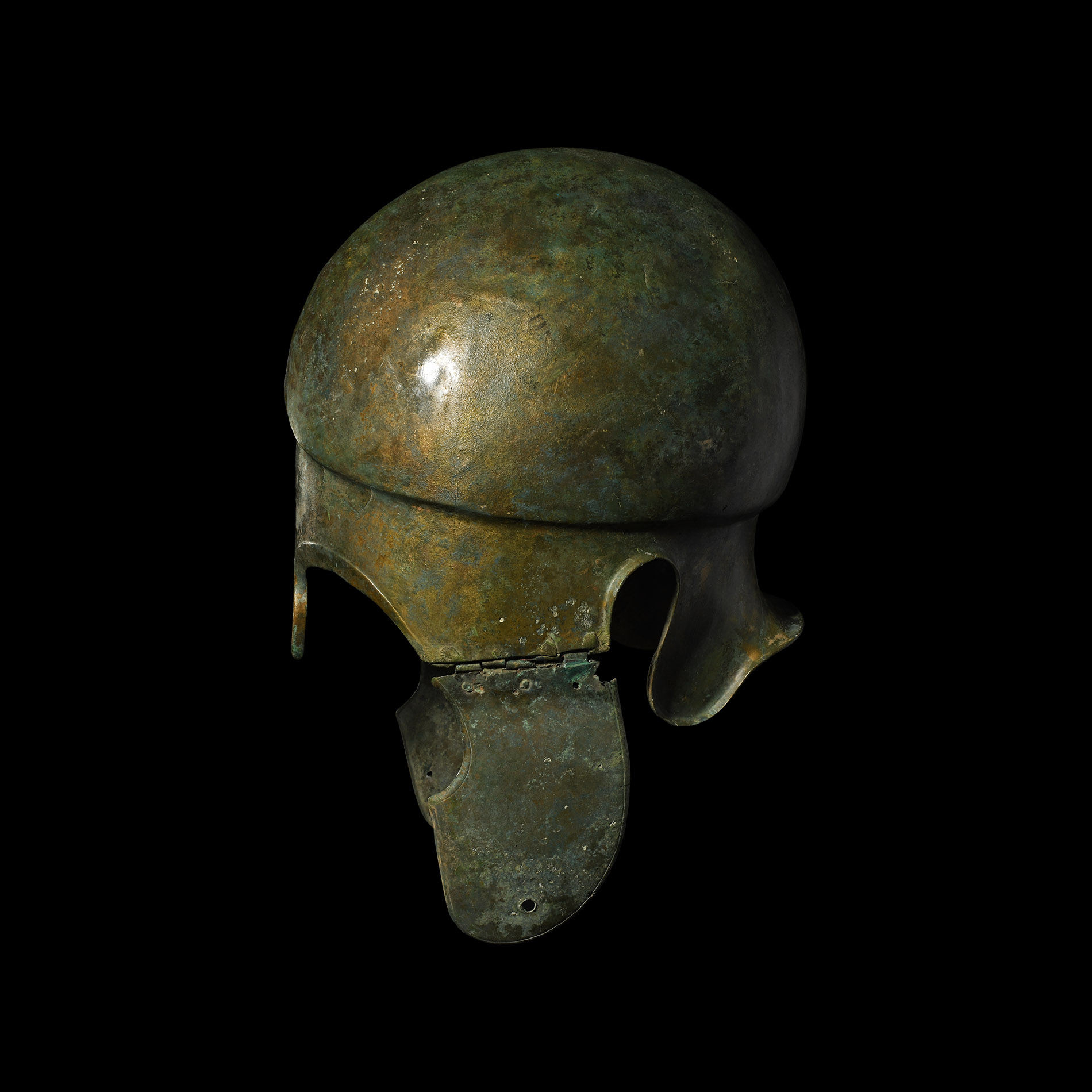
Greek Pontic Chalcidian Helmet
5TH-4TH CENTURY BC
13" (17") (960 grams, 33cm high (2.8kg total, 43cm including stand)).
A bronze helmet of Chalcidian typology with carinated crown, bowl forged from a single piece of metal, flared edges above the eyes and ears, flanged neck guard and long nasal (restored); the cheek-pieces connected to the bowl by a three part hinge, each D-shaped with a contoured forward edge, pierced through the lower edge for the attachment of a chin strap; accompanied by a custom-made display stand.
ProvenancePrivate collection of Mr M.B., Mainz, Germany, since the 1990s.
Property of a London businessman.
Accompanied by an archaeological report by military specialist Dr Raffaele D'Amato.
Accompanied by a positive metal test number 183944/HM1469 from an Oxford specialist.
This lot has been checked against the Interpol Database of stolen works of art and is accompanied by AIAD certificate number no.11083-183944.
See Pflug, H., 'Chalkidische Helme' in: Antike Helme, RGZM Monographien 14, Mainz, 1988, pp.137-150; Chernenko, E.V., The Scythians 700-300 BC, Hong Kong, 1998; Hixenbaugh, R., Ancient Greek Helmets, a complete guide and catalogue, New York, 2019, figs.X218-X229; in particular the helmet has a good parallel with the type found in Northern Greece during the construction of a railway line at Kitros, see Pandermalis, Alexander the Great, Treasures from an Epic Era of Hellenism, Onassis Public Benefit Foundation, 2004, p.54, no.3.
FootnotesAmong the types of Chalcidian helmets, the fifth and the last typology, corresponding to the Kunze group VII (Pflug, 1988, p.138), was characterised by the presence of detached cheek-guards. By the end of the 5th century BC, the fixed cheek-pieces had been entirely abandoned on the Chalcidian helmets in favour of these more versatile hinged cheek pieces. In common with the majority of Greek helmets of the 5th and 4th centuries BC, very few originals have been found in areas of Greek colonisation. Several regional district workshops produced such helmets by the 5th century BC: mainland Greece, the Black Sea coast, Thrace, Southern Italy and Iberia. Although some specimens of this category have been found in Macedonia, Thrace, continental Greece and South Italy, the Chalcidian Black Sea group has been found mainly in the area of Greek colonisation and trade, especially around the territories of the Crimea and to the East in what is now Georgia and Abkhazia.
CONDITIONTimeLine Auctions follows a vetting process to ensure the authenticity and legality of all items, reinforcing our commitment to integrity and responsible trading. Each antiquity, antique, and coin lot undergoes thorough examination by a vetting committee of at least ten external specialists, professional trade association members, scientists, and archaeologists: Our Vetting Process
AUCTIONS:
TimeLine is a leading auction house specialising in antiquities, ancient art, collectables, natural history, coins, medals, and books. Our auctions offer museums, collectors, historians, and enthusiasts the opportunity to acquire unique and historically significant pieces.
3rd millennium BC
Lot No. 1247 Opening bid: £315
10th-5th century BC
Lot No. 1256
Sold for (Inc. premium): £46
12th-late 13th century AD
Lot No. 0354
Sold for (Inc. premium): £4,160
