
Loading, please wait...
LOT 0069
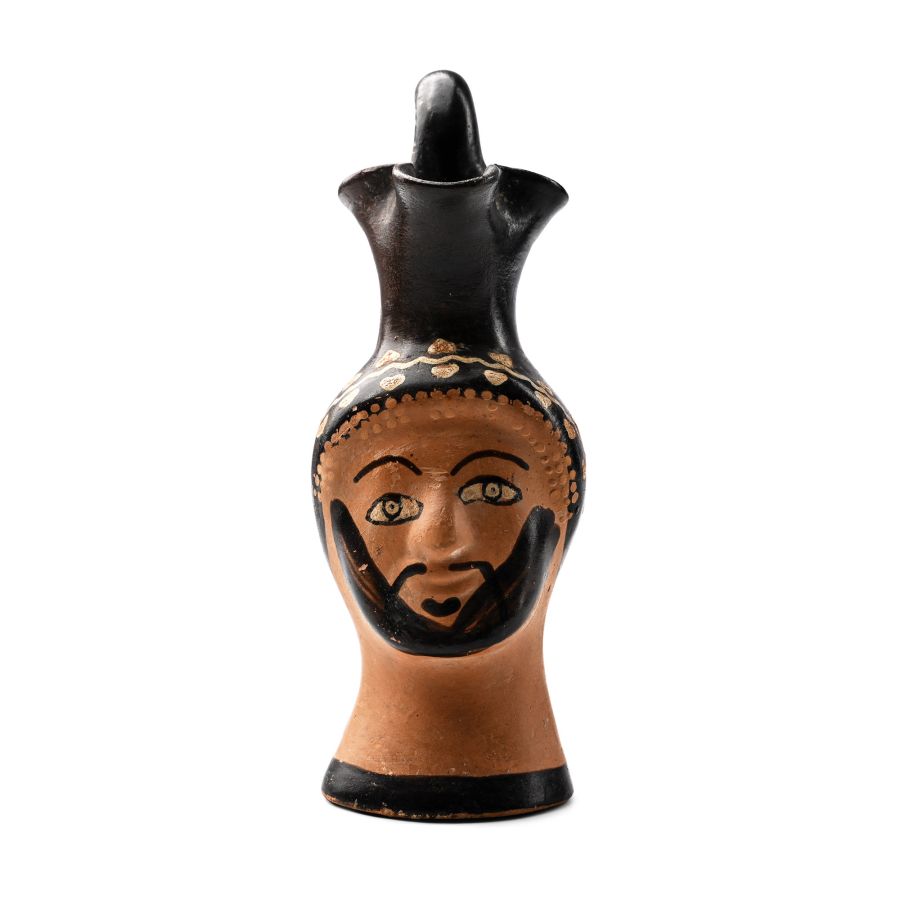
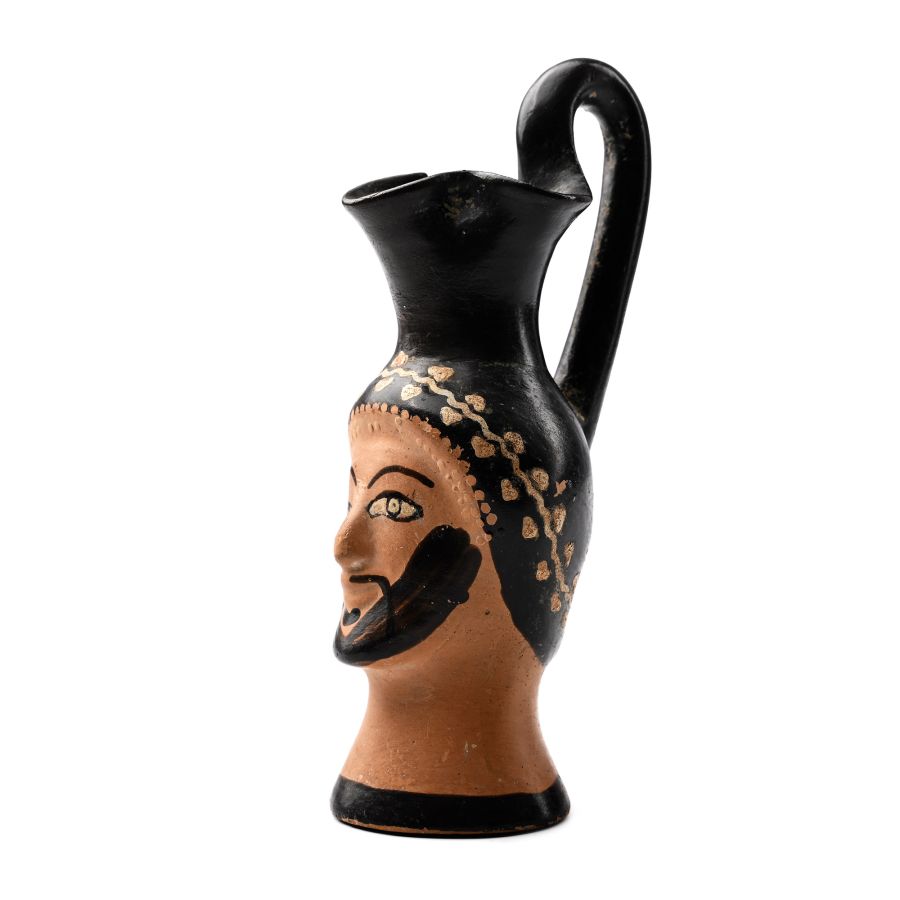
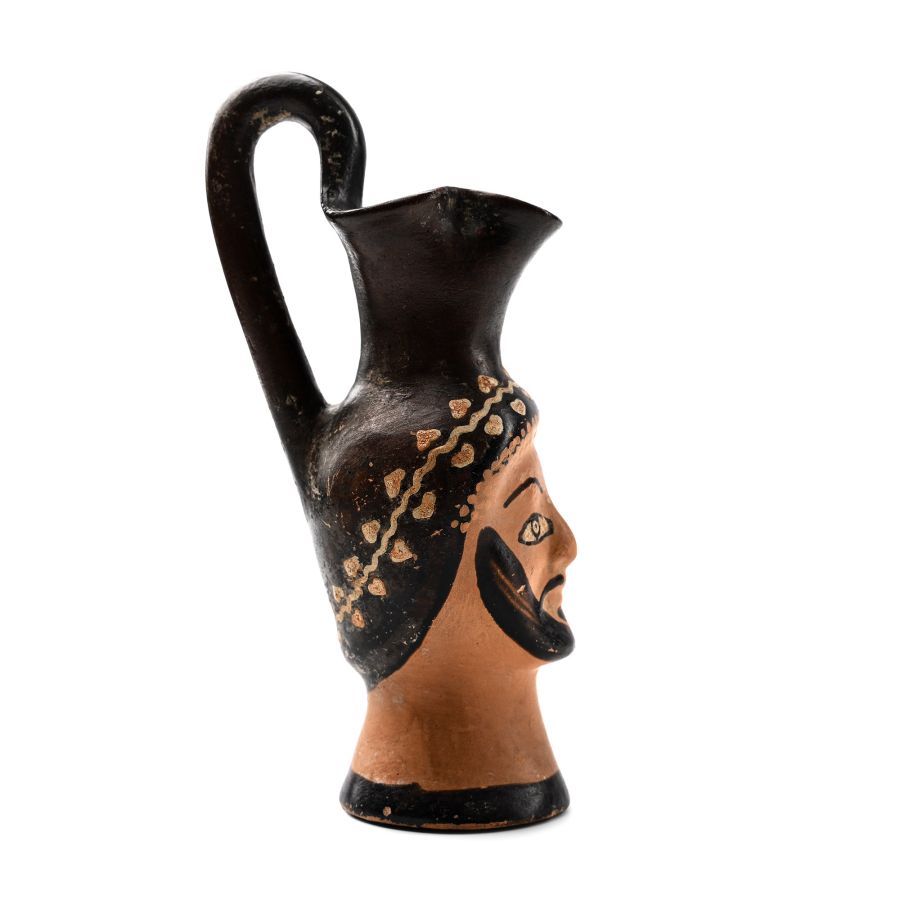
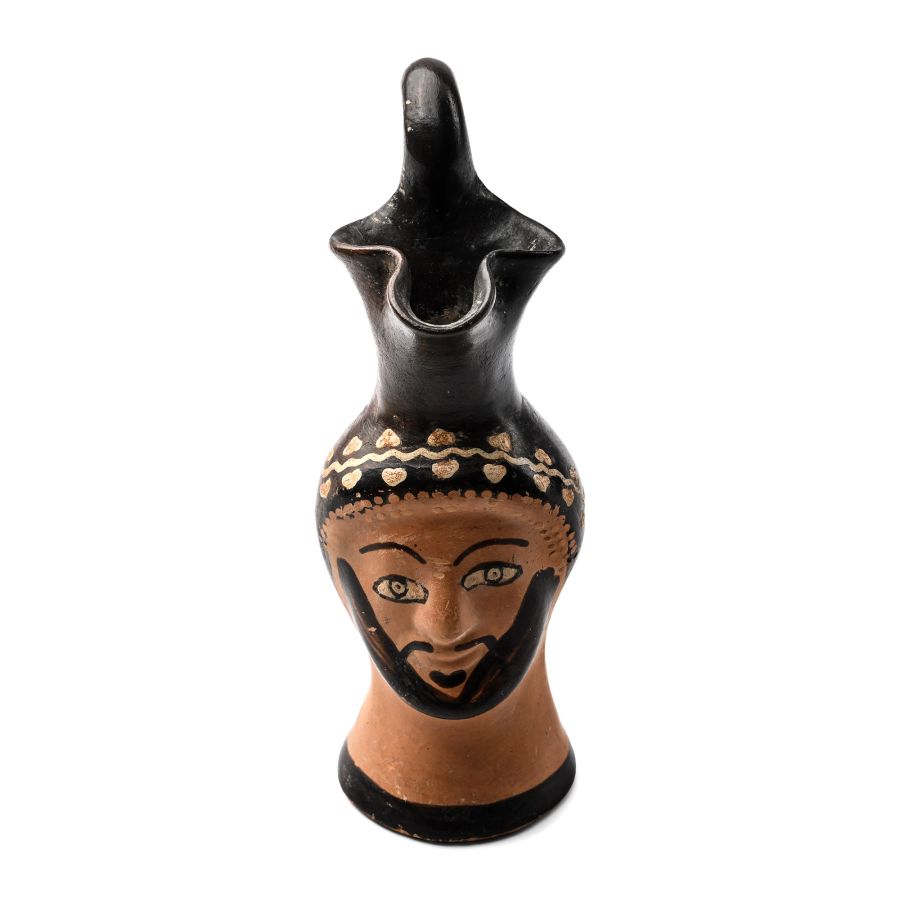
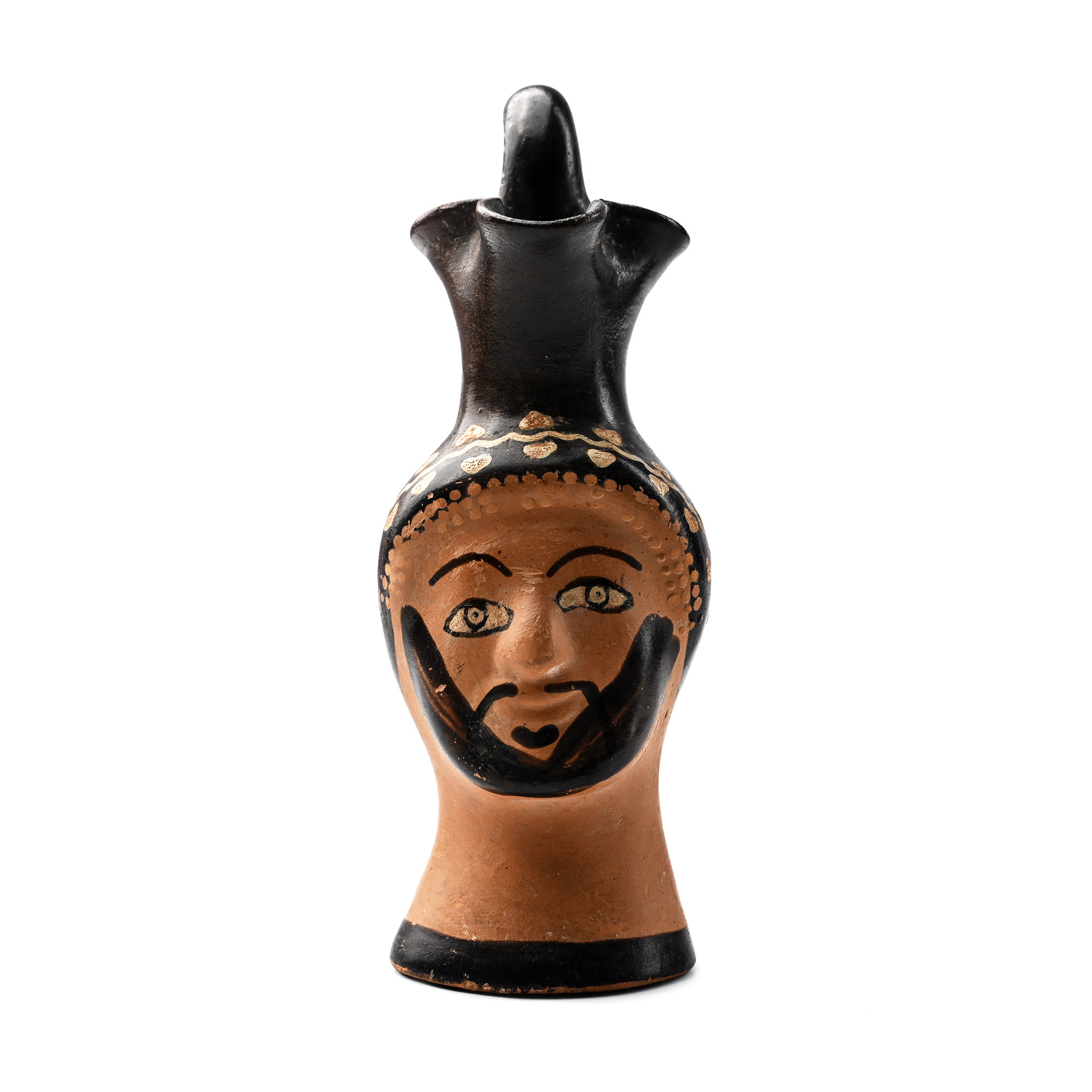
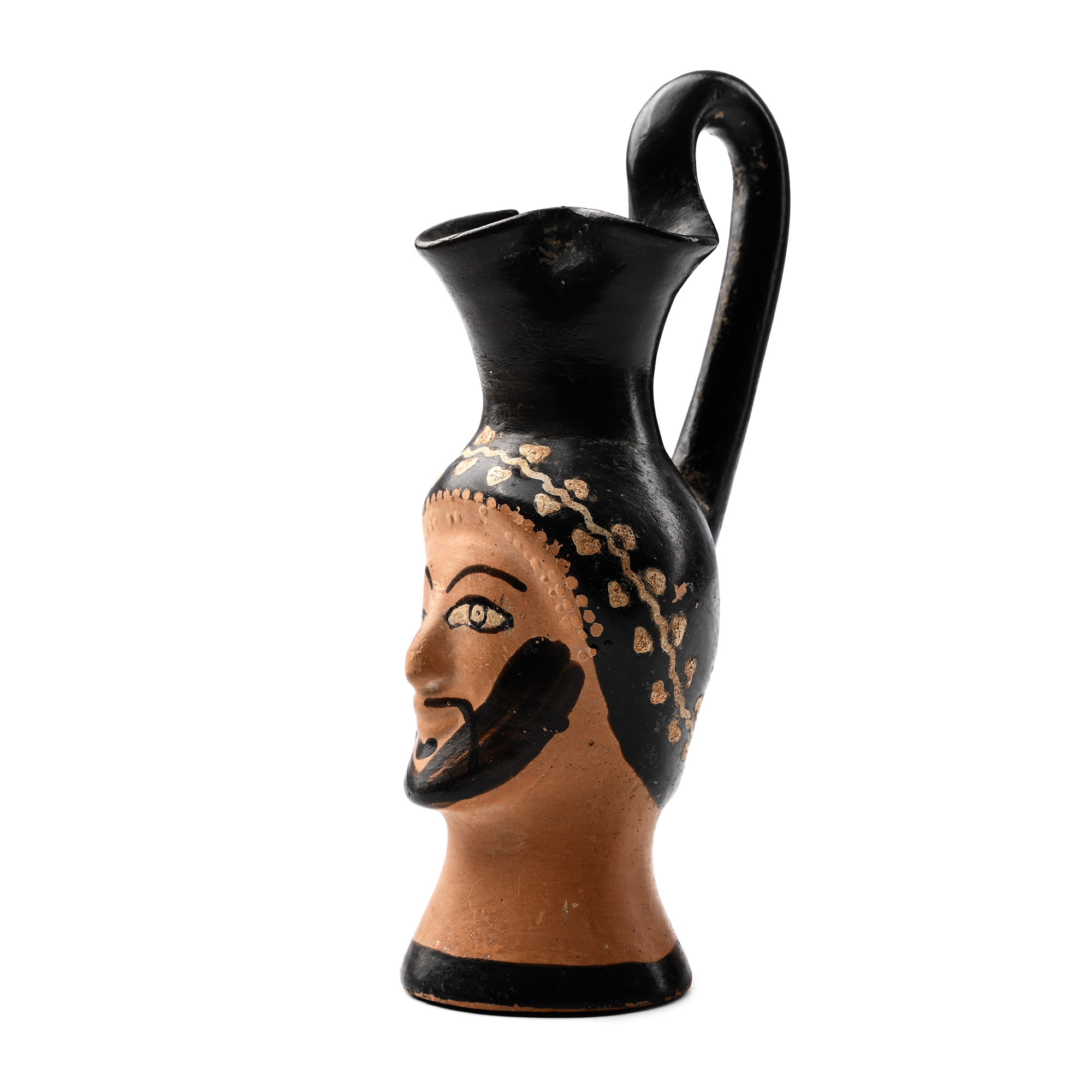
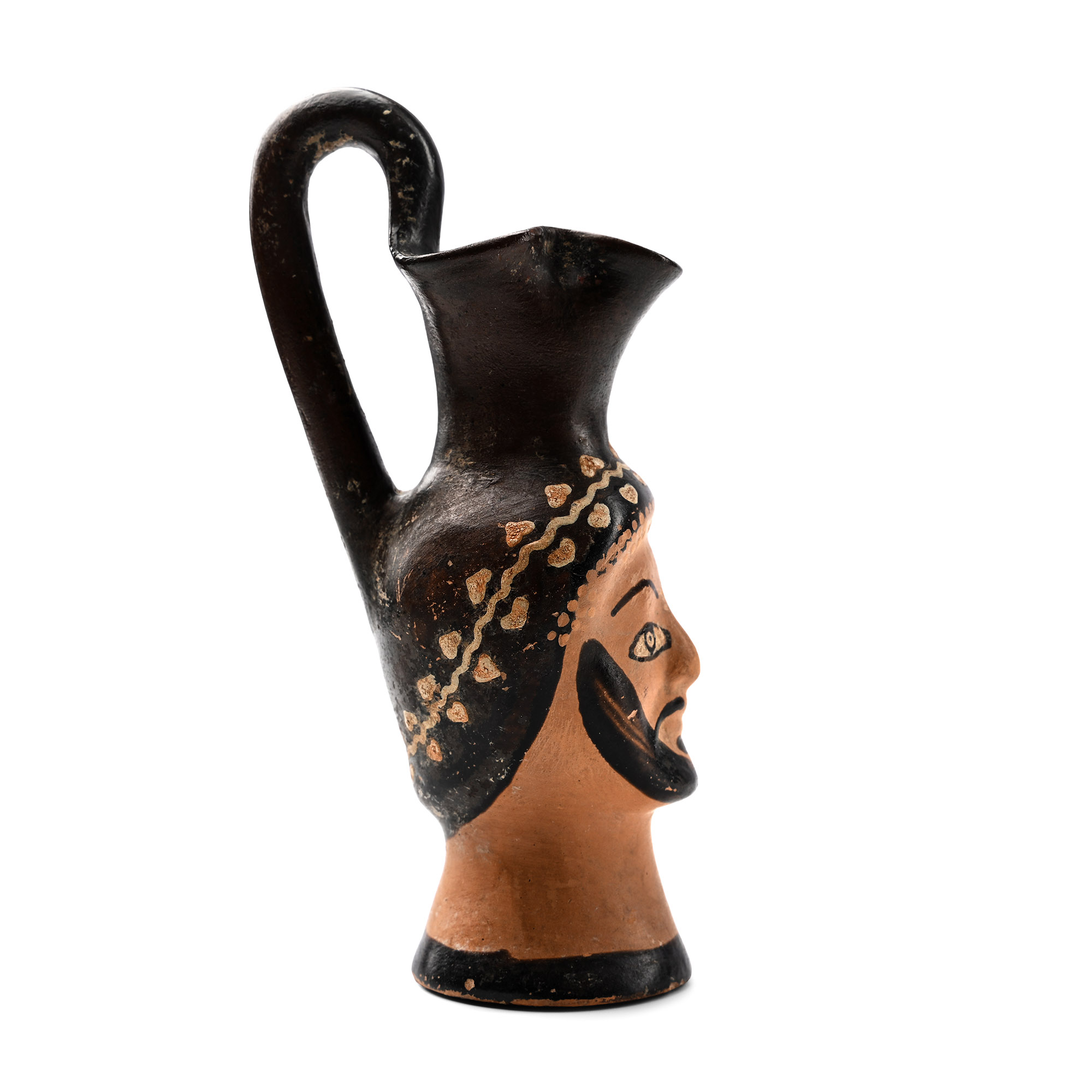
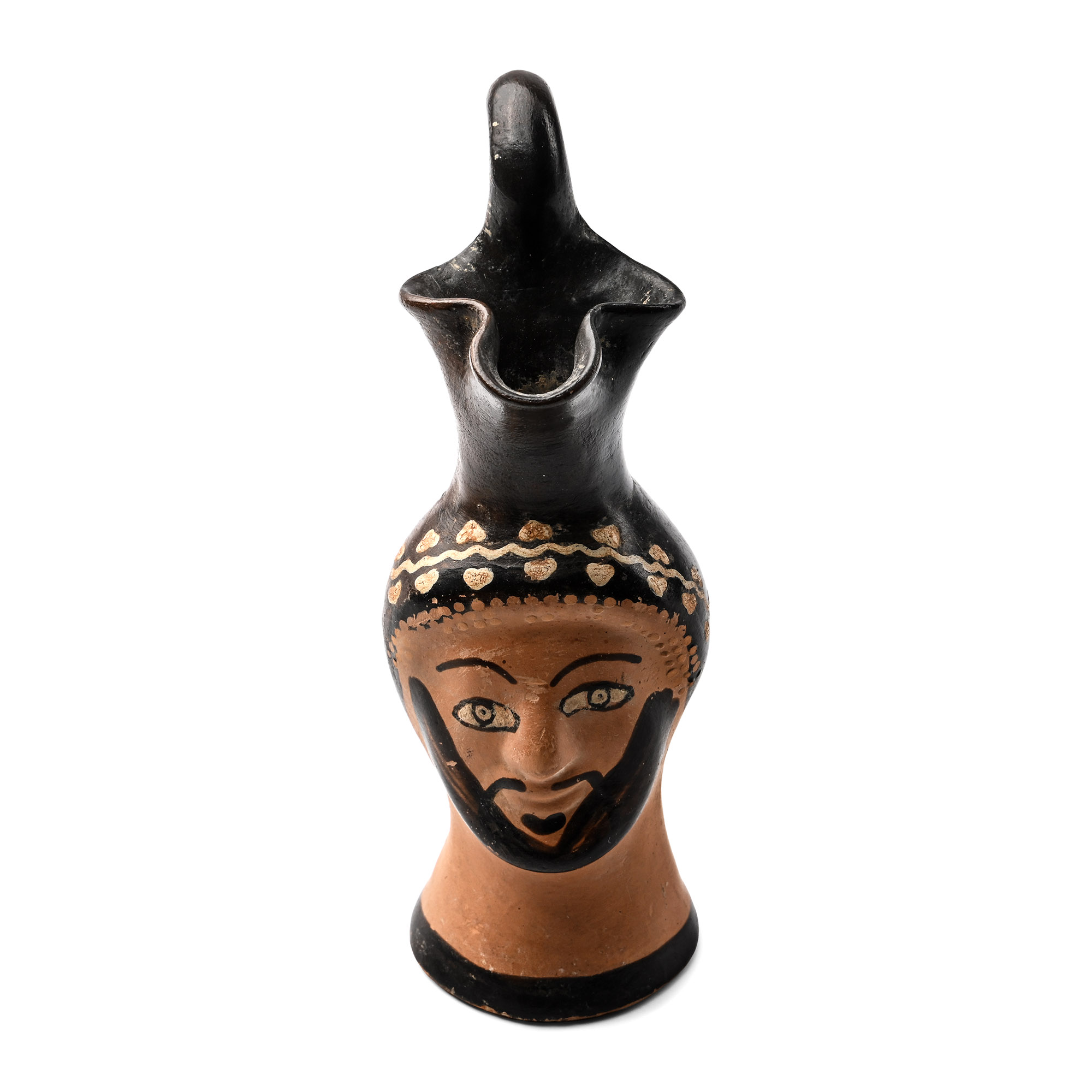
Greek 'Plastic' Oinochoe with a Bust of a Bearded Man
5TH CENTURY B.C.
4 5/8 in. (77 grams, 11.8 cm).
The body formed as a male head with his elongated neck forming the foot of the vessel; wearing an ivy-leaf crown, stylised, painted facial features and a full beard, two rows of stylised curls above the forehead; the neck of the vessel emerging from the top of his head, trefoil mouth and a handle to the rear; some repainting.
ProvenanceSwiss private collection formed in 1960s-1970s.
Accompanied by an academic report by Dr Raffaele D'Amato.
This lot has been checked against the Interpol Database of stolen works of art and is accompanied by search certificate number no.13016-246780.
Cf. Beazley, J.D., ‘Charinos, Attic Vases in the form of Human Heads’ in Journal of Hellenic Studies, 49 (1929), pp.38-78, fig.14 (specimen from Thebes); Beazley, J.D., Attic Red-Figure Vase-Painters, Oxford, 1963, 1539.6, for another plastic vase featuring Herakles; see also MET, accession no.01.8.7. for a similar Attic oinochoe with female features; cf. for other female counterparts, Christie's, Antiquities, 8th December 2021, London, 2021, lot 49; a specimen in the Archaeological Museum of Rhodes, inventory no.12913 in Corpus Vasorum Antiquorum, Italia, Museo Archeologico dello Spedale dei Cavalieri di Rodi 2, Roma, 1934, nos. III K a b c, pl.1,1-2.
FootnotesHead vases first appeared in the late 7th century B.C. in eastern Greece. The potters of Attica adopted this shape in the late 6th century, with a clear preference towards female heads, but not excluding male heads, especially when referring to mythological heroes or characters. The work, with its finely modelled features, is the product of an Attic workshop. According to the Beazley classification, the oinochoe should belong to the group N (Cook Class), generally dated to the 480-460 B.C. and widespread around the Mediterranean and Black Sea (a similar female example was found in Aphytis – Chalcidika).
CONDITIONTimeLine Auctions follows a vetting process to ensure the authenticity and legality of all items, reinforcing our commitment to integrity and responsible trading. Each antiquity, antique, and coin lot undergoes thorough examination by a vetting committee of at least ten external specialists, professional trade association members, scientists, and archaeologists: Our Vetting Process
AUCTIONS:
TimeLine is a leading auction house specialising in antiquities, ancient art, collectables, natural history, coins, medals, and books. Our auctions offer museums, collectors, historians, and enthusiasts the opportunity to acquire unique and historically significant pieces.
LOT 0069
Greek 'Plastic' Oinochoe with a Bust of a Bearded Man
Sold for (Inc. bp): £3,380
-
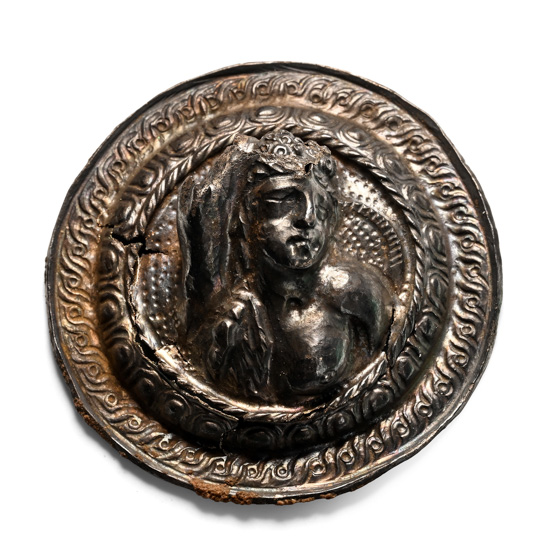
Greek Silver Phalera with Dionysus
3rd-2nd century B.C.Sold for (Inc. bp): £1,560
Discoid in plan with returned rim, guilloche to the outer field and egg-and-dart to the dome; central bust of Dionysus modelled in high-relief with garland in his hair. 5.28 grams, 41 mm
Private collection, assembled in the 1950s-1970s, thence by descent. -
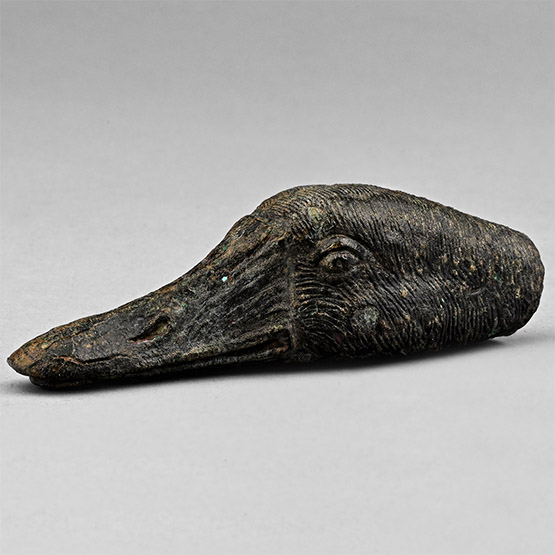
Greek Bronze Duck's Head
3rd-2nd century B.C.Sold for (Inc. bp): £1,690
Modelled in the round with realistic features, textured plumage, rounded beak. 236 grams, 10.1 cm
Acquired in the mid 1980s-1990s. Private collection, Switzerland, thence by descent. Private collection, since the late 1990s. This lot has been checked against the Interpol Database of stolen works of art and is accompanied by a search certificate number no.12378-226677. -
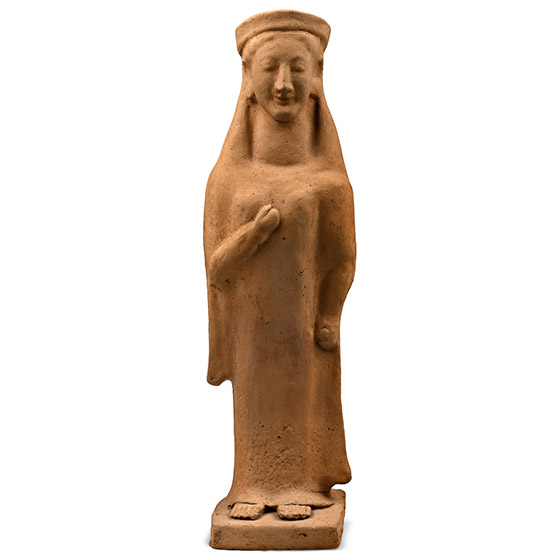
Large Greek Terracotta Figure of a Kore
6th century B.C.Estimate: £5,000 - 7,000 (‡+bp*)
Opening Bid: £2,778
Hollow-formed with scaphoid headdress, long hair hanging behind the shoulders, heavy peplos dress extending to the floor with splayed hem and feet visible beneath; left hand held straight at the thigh, right hand in a fist between the breasts; mounted on a custom-made stand. 6.7 kg total, 57 cm including stand
Swiss private collection, assembled in the 1970s-1980s. with Galerie Serodine, Ascona, Switzerland, 1993. Collection of Dr E.N., Zug, acquired in 1995. This lot has been checked against the Interpol Database of stolen works of art and is accompanied by a search certificate number no.12858-241755.
