
Loading, please wait...


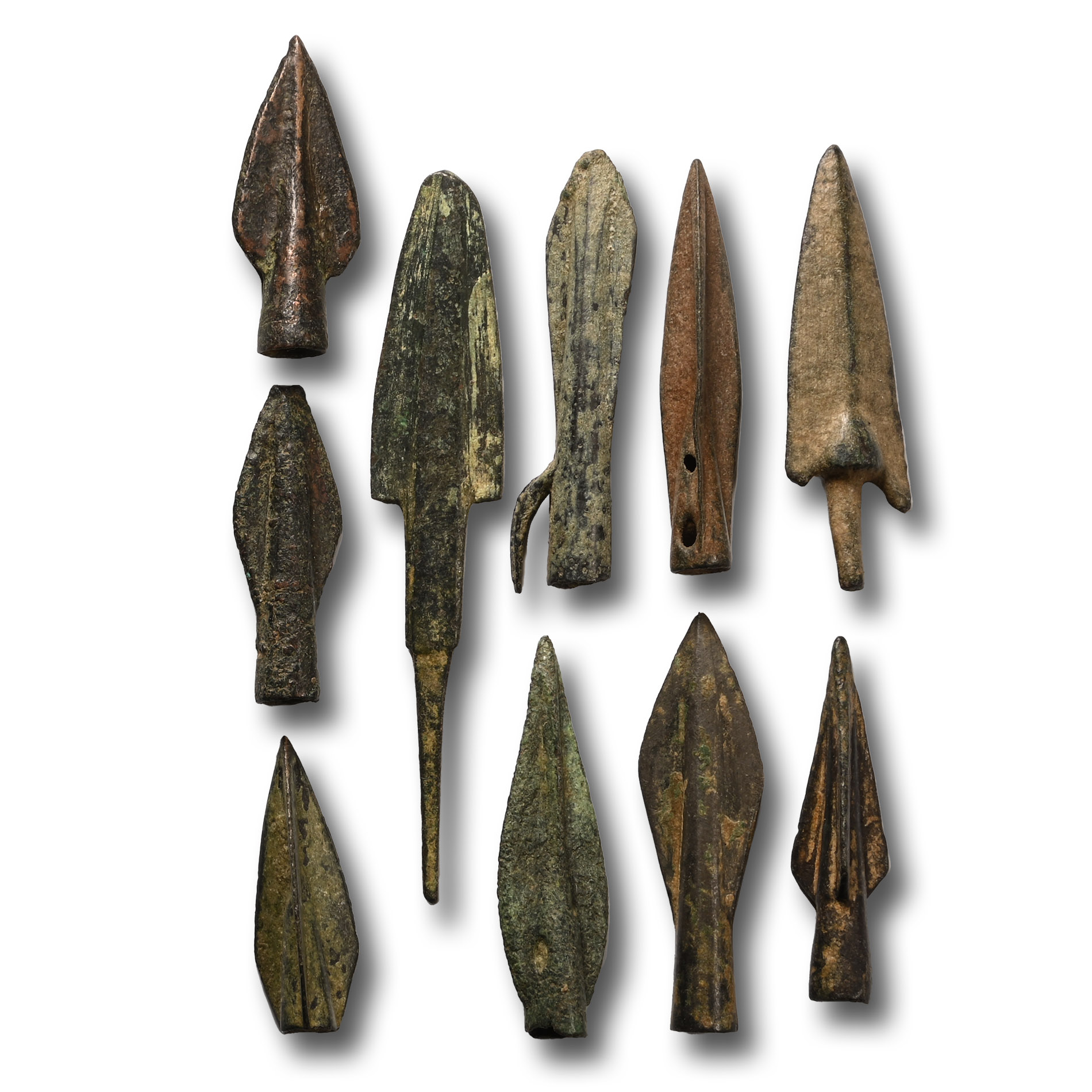
LOT 1604
Greek Period Large Bronze Arrowhead Collection
5TH-3RD CENTURY B.C.
1 1/4 - 3 1/8 in. (61 grams total, 32-81 mm).
High-quality, including triangular-section, barbed-and-tanged and other types. [10, No Reserve]
ProvenanceFrom an English collection formed before 2000.
This lot is accompanied by an illustrated lot declaration signed by the Head of the Antiquities Department, Dr Raffaele D’Amato.
TimeLine Auctions follows a vetting process to ensure the authenticity and legality of all items, reinforcing our commitment to integrity and responsible trading. Each antiquity, antique, and coin lot undergoes thorough examination by a vetting committee of at least ten external specialists, professional trade association members, scientists, and archaeologists: Our Vetting Process
AUCTIONS:
TimeLine is a leading auction house specialising in antiquities, ancient art, collectables, natural history, coins, medals, and books. Our auctions offer museums, collectors, historians, and enthusiasts the opportunity to acquire unique and historically significant pieces.
-
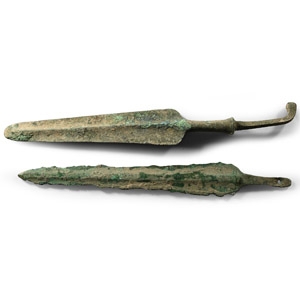
Luristan Bronze Spearhead Group
13th-11th century B.C.Estimate: £100 - 140 (+bp*)
Opening Bid: £50
Comprising a tanged spearhead with heavily ridged and tapered blade, short collared shaft and square-section tapered tang bent at the tip; a spearhead with foliate narrow blade, short tang with fastening hole. 300 grams total, 26.2-28.7 cm
Acquired 1980-2015. Ex Abelita family collection. This lot is accompanied by an illustrated lot declaration signed by the Head of the Antiquities Department, Dr Raffaele D’Amato.
Both types of spearheads were found in Amlash and Marlik, and are connected with the types 1 and 2 of the Khorasani classification. The type 1 is characterised by a bent tang and was the evolution of a typology which began much earlier in Mesopotamia and the fertile crescent, the type 4 of the Stronach classification, with straight square-section tang, usually thickened at the base with a button tang. -
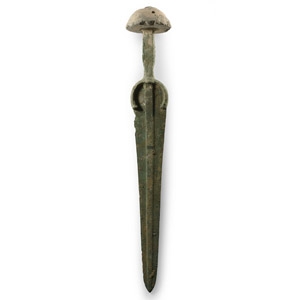
Luristan Bronze Sword
Late 2nd millennium B.C.Sold for (Inc. bp): £468
With solid cast hilt and penannular guard, a massive grip with a later mushroom pommel, blade with central flat midrib tapering to a sharp tip. 967 grams, 52.5 cm
Acquired 1980-2015. Ex Abelita family collection. This lot is accompanied by an illustrated lot declaration signed by the Head of the Antiquities Department, Dr Raffaele D’Amato.
This sword is typical of the North-Western Iranian regions at the end of 2nd millennium B.C. Corresponding specimens found in Amarlu or other localities (Gheshlag Mazandaran Province) show that they were fitted with hollow-cast bronze mushroom pommels. The hilt was solid cast with penannular guard, and the blade was usually multi-fullered, but the specimen from Northern Iran published by Khorasani is fitted with a single fuller like our sword. -
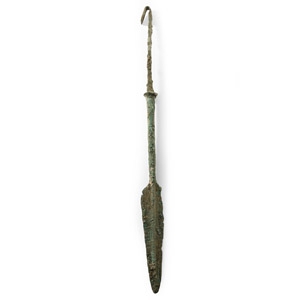
Mesopotamian Bronze Javelin Head
3rd-2nd millennium B.CSold for (Inc. bp): £117
With foliate blade, rhomboidal in section, raised mid-rib, medium length stem widening at its base and forming a small stop, rectangular-section tang with bent terminal. 208 grams, 43.2 cm
Acquired 1980-2015. Ex Abelita family collection. This lot is accompanied by an illustrated lot declaration signed by the Head of the Antiquities Department, Dr Raffaele D’Amato.
The specimen belongs to the category of tripartite spears with long pointed biconvex blade and single bevelled tang. They seem to be a Mesopotamian and Susian (Elamite) variant, and this type also includes decorated blades, like the spear from Tello with the inscription 'King of Kish'.
