
Loading, please wait...
LOT 1510
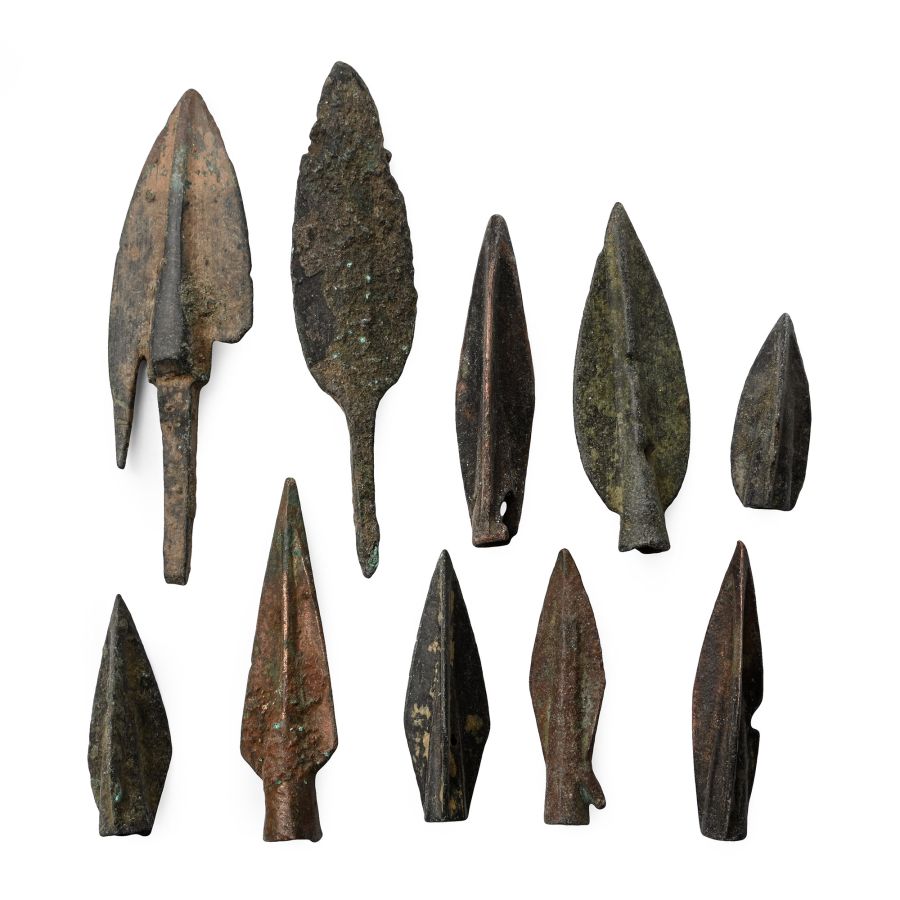
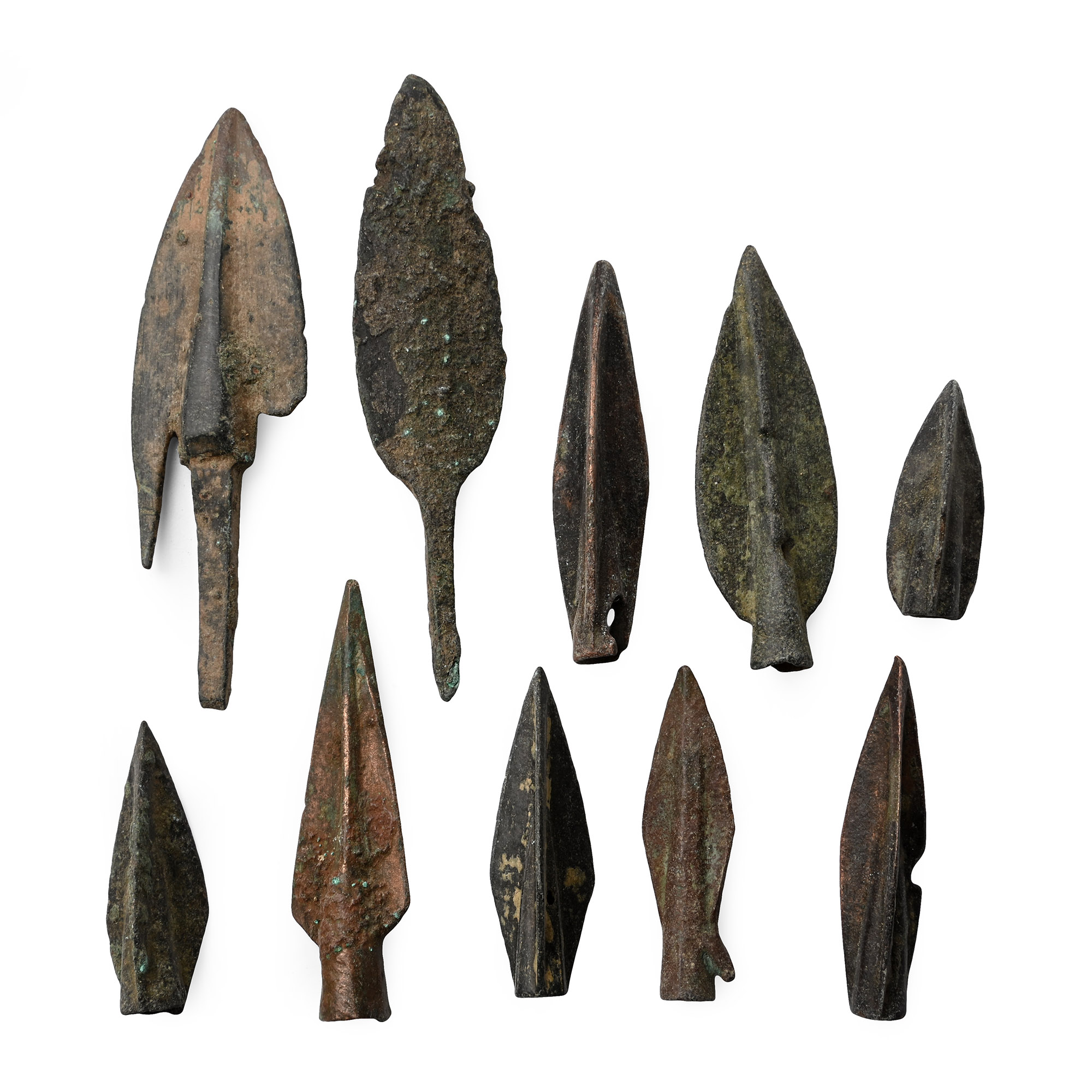
Greek Period High Quality Bronze Arrowhead Collection
5TH-3RD CENTURY B.C.
1 - 2 5/8 in. (51 grams total, 24-66 mm).
Mainly triangular-section and socketted leaf types. [10, No Reserve]
ProvenanceFrom an English collection formed before 2000.
This lot is accompanied by an illustrated lot declaration signed by the Head of the Antiquities Department, Dr Raffaele D'Amato.
TimeLine Auctions follows a vetting process to ensure the authenticity and legality of all items, reinforcing our commitment to integrity and responsible trading. Each antiquity, antique, and coin lot undergoes thorough examination by a vetting committee of at least ten external specialists, professional trade association members, scientists, and archaeologists: Our Vetting Process
AUCTIONS:
TimeLine is a leading auction house specialising in antiquities, ancient art, collectables, natural history, coins, medals, and books. Our auctions offer museums, collectors, historians, and enthusiasts the opportunity to acquire unique and historically significant pieces.
-
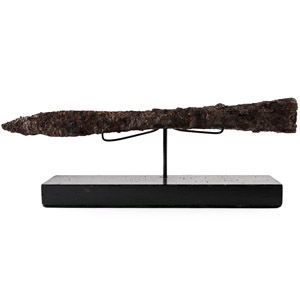
Viking Socketted Iron Spearhead
9th-11th century A.D.Sold for (Inc. bp): £98
Leaf-shaped blade and tapering, round-section socket, pierced for attachment to a shaft; accompanied by a custom-made display stand. 162 grams, 22 cm long (229 grams total including stand)
Fair condition.
UK gallery, acquired in the 2000s. Property of an English gentleman. This lot is accompanied by an illustrated lot declaration signed by the Head of the Antiquities Department, Dr Raffaele D'Amato. -
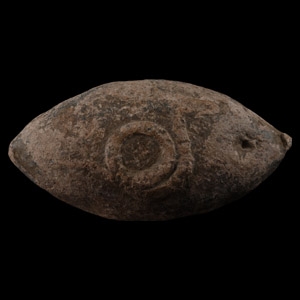
Greek Slingshot with Snake
4th-1st century B.C.Estimate: £300 - 400 (‡+bp*)
Opening Bid: £150
Lentoid in form with raised figure of a coiled snake to one face, possible legend to reverse. 31.2 grams, 31 mm
Private collection, Austria. Private collection, Europe. This lot is accompanied by an illustrated lot declaration signed by the Head of the Antiquities Department, Dr Raffaele D'Amato. -
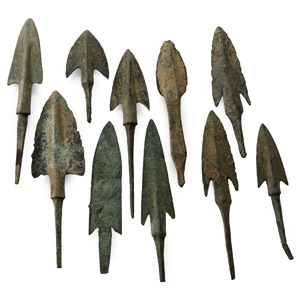
Luristan Bronze Arrowhead Collection
2nd-1st millennium B.C.Sold for (Inc. bp): £130
Comprising: five triangular arrowheads with barbed shoulders and rounded midrib; four narrow arrowheads with barbed corners; one foliate arrowhead with rectangular shaft and short tang. 115 grams total, 50-90 mm
Acquired in the 1990s. Ex Abelita family collection. This lot is accompanied by an illustrated lot declaration signed by the Head of the Antiquities Department, Dr Raffaele D'Amato.
Most arrowheads belong to the type V of the Khorasani classification: subtype C and A, arrowheads with triangular shape with barbed shoulders and convex sides, and a raised midrib with a sharp central line. These types of arrowheads were commonly used in Anatolia and Mesopotamia from the 2nd millennium B.C., but apparently their employment began earlier in this area, where types like these occur alongside the non-barbed, predominantly ribbed and tanged types.
