
Loading, please wait...
LOT 0584
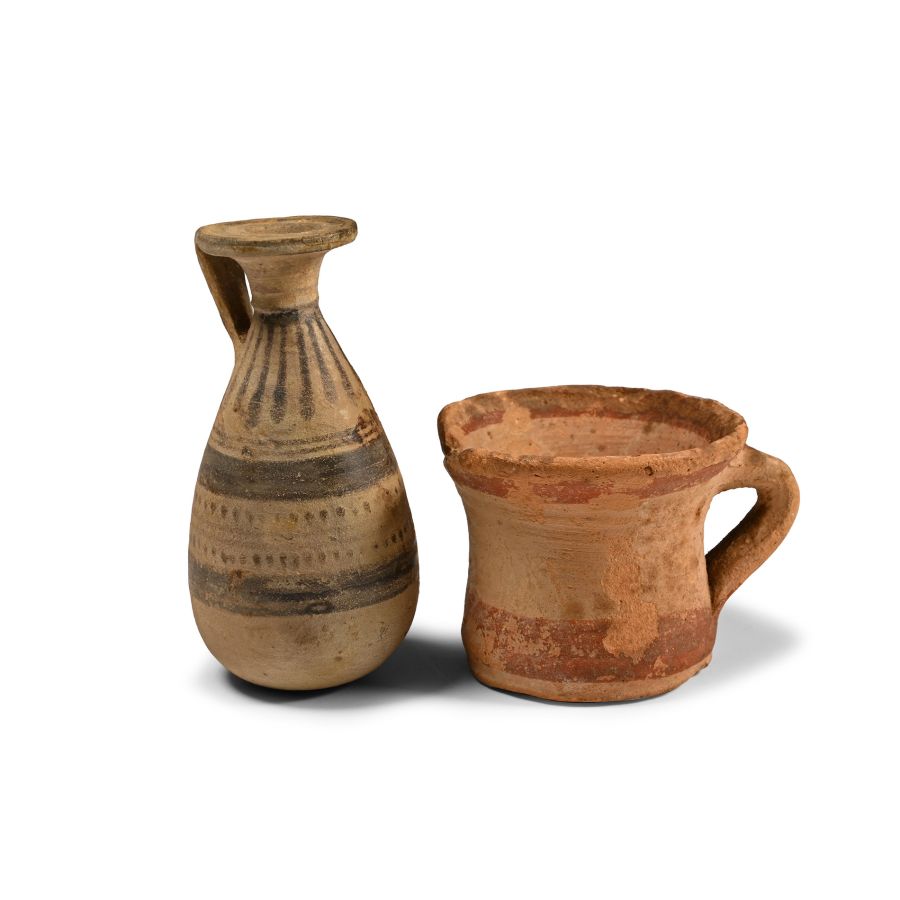
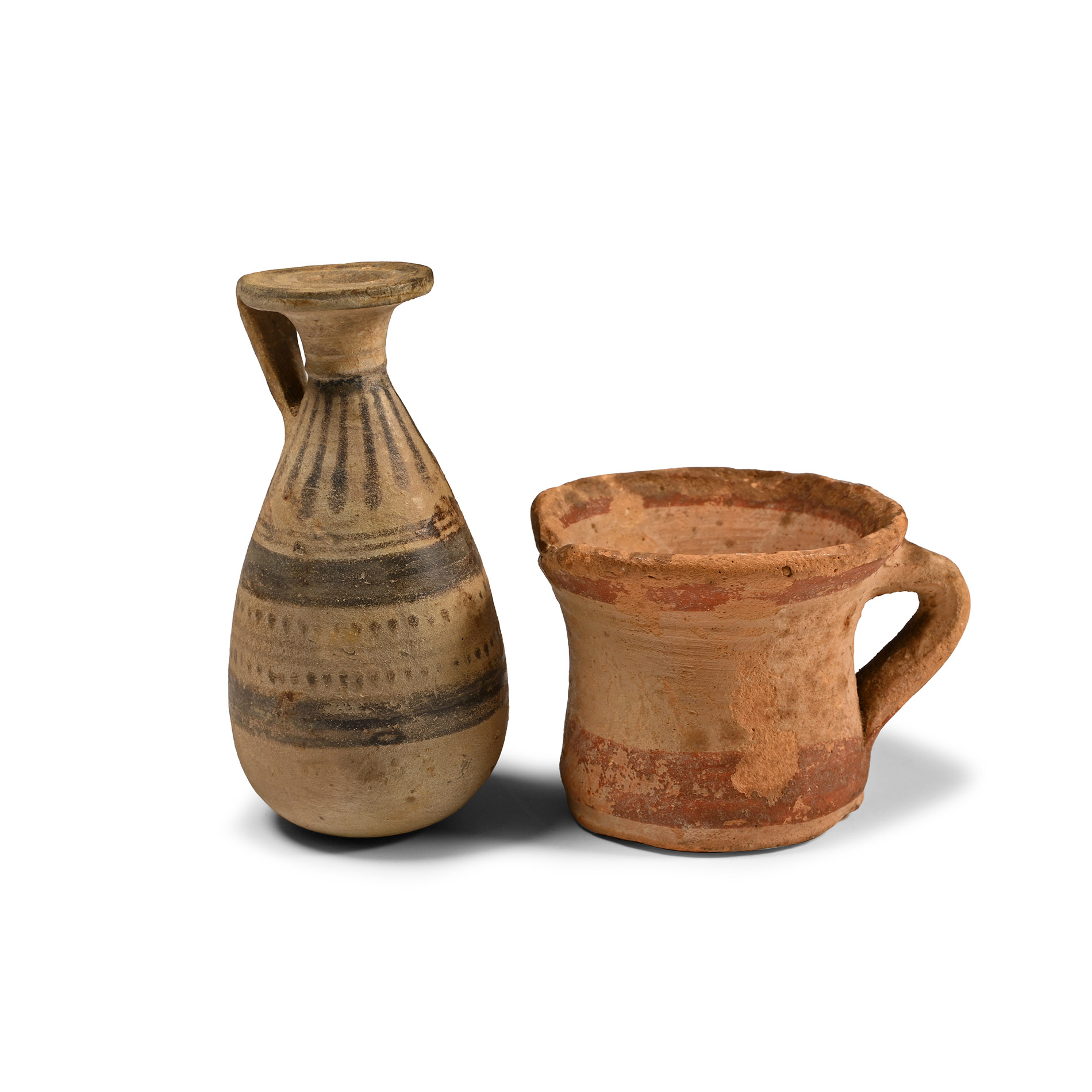
Greek Painted Vessel Group
6TH-5TH CENTURY B.C.
2 1/4 - 2 7/8 in. (63.5 grams total, 58-73 mm).
Comprising: miniature aryballos with strap handle, painted radiating bands and pellets; squat cup with painted bands to rim and base. [2]
ProvenanceFrancesc Cambó i Batlle (1876-1947) a prominent Spanish politician, art patron and philanthropist.
Gifted to his friend, the archaeologist Josep Gilbert i Buch.
Acquired from Gilbert's family by the present owner's grandfather in the early 1980s.
Private collection of a European noble.
Francesco Cambó i Batlle was a notable figure in early 20th-century Spain, best known for his role in politics as a leader of the Catalan nationalist movement and as a patron of the arts. He was a key benefactor of the Museo del Prado and left a significant legacy through his art collections. His deep connection to the cultural and artistic life of Spain makes items from his collection particularly valuable and historically significant.
CONDITIONTimeLine Auctions follows a vetting process to ensure the authenticity and legality of all items, reinforcing our commitment to integrity and responsible trading. Each antiquity, antique, and coin lot undergoes thorough examination by a vetting committee of at least ten external specialists, professional trade association members, scientists, and archaeologists: Our Vetting Process
AUCTIONS:
TimeLine is a leading auction house specialising in antiquities, ancient art, collectables, natural history, coins, medals, and books. Our auctions offer museums, collectors, historians, and enthusiasts the opportunity to acquire unique and historically significant pieces.
-

Graeco-Roman Silver Spoon with Lion Head
1st century B.C.-1st century A.D.Sold for (Inc. bp): £1,040
Deep piriform bowl with scooped repoussé rear, baluster formed as a lioness's head with applied rosette to the brow, twisted handle with knop finial. 9.42 grams, 15.2 cm
From the collection of a gentleman, acquired on the London art market in the 1990s. -
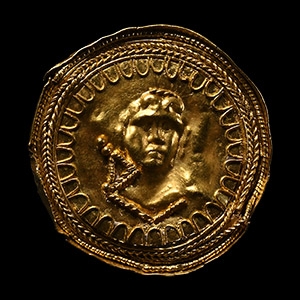
Greek Gold Ring with Roundel
Hellenistic, 3rd-1st century B.C.Estimate: £1,800 - 2,400 (‡+bp*)
Opening Bid: £1,000
Flat-section hoop and discoid cell with inset panel, filigree ropework border enclosing band of U-shaped filigree and repoussé central motif of a facing bust with applied granule detailing. 4.14 grams, 23.21 mm overall, 18.15 x 16.08 mm internal diameter (approximate size British N, USA 6 1/2, Europe 13.72, Japan 13)
Private collection, Germany. with Artemis Gallery, Munich, 1990s. Private European collection, 2001. This lot has been checked against the Interpol Database of stolen works of art and is accompanied by a search certificate number no.12091-218184. -
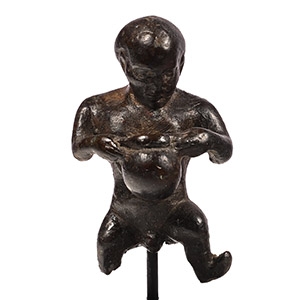
Hellenistic or Roman Bronze Statuette of a Grotesque Holding a Jar
Alexandria, 1st century B.C.-3rd century A.D.Sold for (Inc. bp): £156
Modelled standing nude in a contorted pose with legs spread, holding a jar or bag to his chest; mounted on a custom-made stand. 73.7 grams total, 68 mm including stand
From a collection acquired on the UK art market from various auction houses and collections mostly before 2000. From an important Cambridgeshire estate; thence by descent.
Such figures are often described as ‘grotesques’, yet typically constituted overstated representations of people with dwarfism. Such individuals are invariably shown with exaggerated features such as pot bellies, hunched backs, bald heads, large phalli and angry facial expressions.
